During a Christie's auction in 2018, I observed a fascinating scene: two collectors fiercely disputed an 18th-century aristocratic portrait, while a sublime romantic landscape remained unbid for long minutes. This disparity haunted me for months. How to explain that a historical portrait could elicit so much passion when the landscape, technically flawless, left people indifferent?
Here's what the value of historical paintings reveals: an emotional connection with humanity’s past, an often underestimated heritage investment, and a capacity to radically transform the atmosphere of a contemporary interior.
The frustration is real when wanting to acquire a piece of historical art: how to assess whether a portrait is really worth more than a landscape? What objective criteria exist beyond a simple crush? Confusion reigns, fueled by tenacious preconceived notions about the hierarchy of pictorial genres.
Rest assured: the value of a historical painting is not measured solely by its financial quotation. It encompasses historical, decorative and emotional dimensions that we will explore together. You will discover how portraits and landscapes complement each other rather than compete with each other, and above all, how to choose the work that resonates authentically with your space and sensitivity.
The art market speaks: what the figures reveal
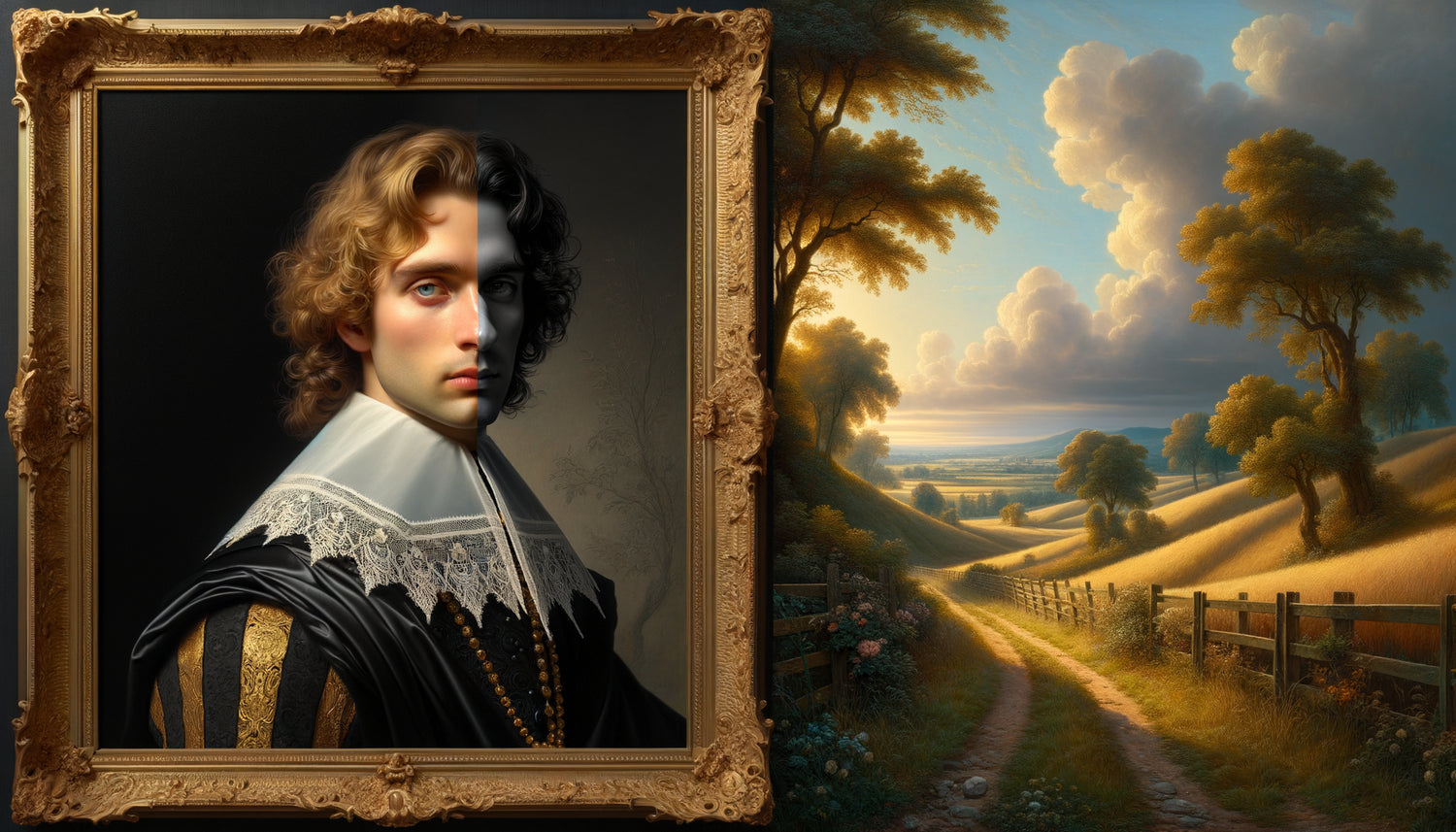
Historical portraits by old masters have seen an average appreciation of 34% between 2015 and 2023, while landscapes of the same period showed an increase of 28%. This difference, although modest, hides more nuanced realities.
Portraits signed by great names like Frans Hals, Thomas Gainsborough or Elisabeth Vigée Le Brun regularly reach peaks at auctions. Their rarity explains in part this valuation: a commissioned portrait represents a unique testimony of a person who actually existed, with their history, social status and aspirations. It is a fragment of existence captured for eternity.
Conversely, historical landscapes, however beautiful, have often been produced in series by artists. A romantic painter could produce a dozen variations on the same natural site, diluting the singularity of each canvas. This does not detract from their beauty, but modifies their positioning on the art market.
However, beware of generalizations: a historical painting landscape signed Turner or Constable will always surpass in value a mediocre portrait by a minor artist. The signature and provenance remain decisive, beyond the simple pictorial genre.
The intimacy of the gaze: why portraits fascinate us
There's a particular magic in historical portraits that landscapes cannot replicate. When you hang a 17th-century portrait in your living room, you literally invite a human presence into your daily life. These eyes that have watched over you for centuries create a silent, almost unsettling dialogue.
I remember one client who had acquired a portrait of a French countess from the 18th century. She confided in me that she felt a benevolent presence in her library, as if this unknown aristocrat was watching over her readings. This psychological dimension of historical portraits is impossible to quantify, but it fully contributes to their emotional value.
Portraits also tell stories of fashion, power and social conventions. The clothing, jewelry, and frozen postures reveal the codes of an era. An informed collector can read all the symbolism of the Protestant Reformation in a 16th-century Flemish portrait, while a Versailles portrait from the reign of Louis XIV exudes the splendor and court etiquette.
Landscape: A Window to Infinity
Historical landscapes offer a complementary value: that of escape and contemplation. A 17th-century Dutch landscape painting, with its vast skies and golden lights, instantly creates a feeling of space and serenity. In our often confined urban interiors, this visual openness has a real therapeutic value.
Historical landscapes also document the transformation of our environment. A Venetian veduta by Canaletto shows La Serenissima before modernity, a Barbizon school landscape captures pre-industrial France. These works become valuable geographic and ecological testimonies, their value increasing as the sites depicted transform or disappear.

Decorating with history: the impact in our contemporary interiors
The real question may not be which genre is worth more, but which dialogues best with your living space. I have found that historical portraits work beautifully in intimate spaces: libraries, offices, bedrooms. Their human dimension creates a warm, almost familial atmosphere.
An antique portrait on a concrete plastered wall or next to a contemporary design sofa creates a striking contrast that enriches both eras. This juxtaposition affirms a taste for cultivated eclecticism, far from standardized interiors. The historical portrait then becomes a decorative manifesto: I refuse uniformity, I embrace temporal complexity.
Historical landscapes, for their part, excel in circulation areas and large reception rooms. A Dutch maritime landscape in an entrance hall immediately establishes a majestic tone. In a dining room, a pastoral landscape evokes abundance and the pleasures of the table, creating an atmosphere conducive to convivial gatherings.
The art of historical wall composition
An emerging trend is seen among discerning decorators: mixing portraits and historical landscapes in the same composition. This approach, inspired by 18th century aristocratic galleries, creates extraordinary visual richness. A small magistrate's portrait framed in gold borders a sepia-toned Italian landscape, all orchestrated in a skillfully unbalanced symmetry.
This strategy also allows for the creation of an accessible collection. Rather than investing considerable sums in a single masterpiece, you can acquire several historical paintings of intermediate quality, thus creating a personal visual narrative that crosses eras and genres.
Evaluation criteria beyond pictorial genre
After twenty years spent examining historical paintings, I can say that the genre (portrait or landscape) often ranks third or fourth in the hierarchy of value criteria. Here's what really matters:
Attribution and signature remain paramount. An anonymous 17th century portrait, even magnificent, will always have less market value than a landscape signed by a recognized master. The traceability of the work, its mention in raisonné catalogs, its passage at public auction: all this builds its legitimacy.
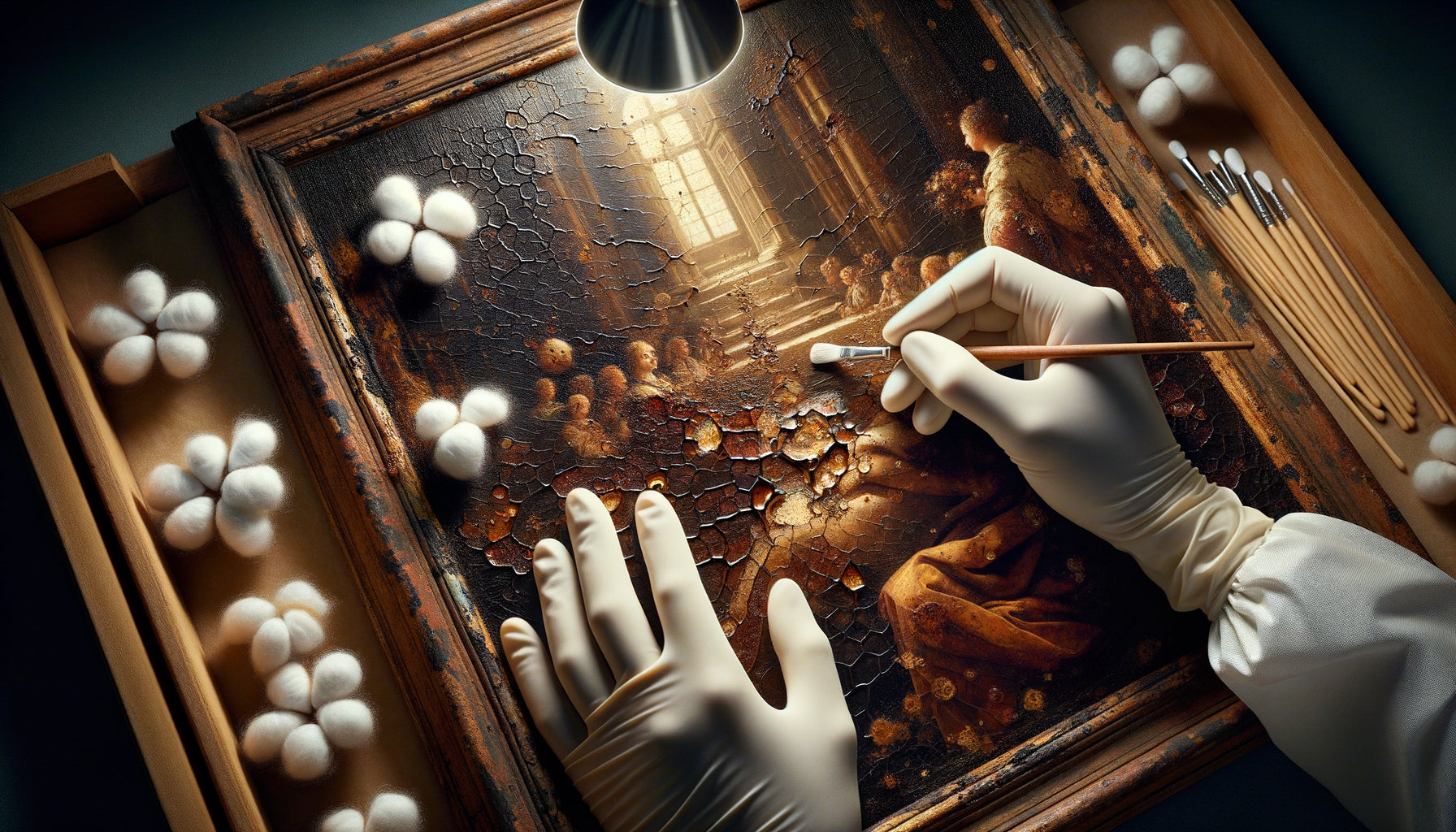
The state of conservation drastically influences value. A historical portrait repainted 60% or a landscape whose varnish has yellowed lose considerable authenticity. Informed collectors prefer works that have retained their original chromatic freshness, even if it implies some minor acceptable wear and tear.
Documented provenance adds a fascinating narrative layer. A portrait belonging to a noble family since its creation, or a landscape collected by an enlightened 19th century collector, acquire additional historical value. This biography of the object enriches the work beyond its intrinsic qualities.
The emotional dimension: the invisible criterion
Finally, and perhaps most importantly for a private collector: personal resonance. I have seen clients moved to tears by a modest 19th-century child's portrait, while a spectacular landscape left them unmoved. This mysterious alchemy between a work of art and its viewer remains the decisive factor for an acquisition intended to embellish a home.
A historical painting that you contemplate every day should nourish your imagination, trigger reveries, accompany you in your moods. This value of daily use outweighs, for a private individual, all speculative considerations of the art market.

Investing wisely in historical art
If your approach has a patrimonial dimension, certain strategies deserve to be considered. Portraits of children and women from the 18th and 19th centuries are currently experiencing increasing demand, after having been undervalued for a long time compared to male portraits. This gradual correction of the market offers interesting opportunities.
Landscapes of lesser-known regional schools (Lyon school, Provençal school, Scandinavian painters) also represent promising segments. Their technical quality often rivals that of prestigious schools, but their lower notoriety makes them financially accessible while offering significant appreciation potential.
Diversification remains the golden rule: creating a mixed collection of historical portraits and landscapes dilutes risks while enriching your aesthetic experience. You thus benefit from the different dynamics of these two segments of the antique art market.
Your interior deserves a soul that transcends the centuries After examining the mercantile, emotional, and decorative values, one thing becomes clear: historical portraits and landscapes are not in competition but in conversation. In the grand heritage interiors that I have had the opportunity to study, these two genres always coexist harmoniously. The portrait embodies individual memory, the trace of a particular existence. The landscape represents collective memory, the shared territory, the environment that has shaped generations. Together, they weave a complete narrative of human experience through the ages. Imagine your living room: a 17th-century gentleman's portrait engages in dialogue with a pastoral landscape from the same period. The former questions you with its gaze, the latter shows you the world it may have contemplated from the windows of its castle. This juxtaposition creates a narrative depth that each work, isolated, could not produce. Your choice should therefore free itself from the binary question of superior value. Instead, ask yourself: what story do you want to tell in your interior? What emotion are you seeking to cultivate daily? Your answer will naturally guide you towards the portrait, the landscape, or ideally, a combination of both. Historical paintings, whether they depict faces or horizons, all share an essential virtue: they are time machines. Every glance cast upon them reactivates the painter's gesture, resurrects the atmosphere of an old workshop, perpetuates an unbroken chain of aesthetic contemplation. This temporal magic constitutes their most valuable asset, far beyond any financial quotation. Authenticating a historical portrait requires several complementary examinations. First, observe the signature and compare it with documented references of the artist. Then examine the support (canvas, wooden panel) and its frame: are they consistent with the supposed period? The craquelure of the varnish should present a natural network impossible to perfectly imitate. For an important acquisition, consult an expert sworn who can perform technical analyses (infrared reflectography, UV fluorescence) revealing repaints and the underlying structure of the work. Documented provenance remains your best guarantee: a portrait accompanied by certificates, mentions in exhibition catalogs or a traceable family history offers maximum security. Be wary of abnormally low prices for prestigious attributions, and prefer reputable galleries and auction houses that assume responsibility for the authenticity of the works offered. Absolutely, and this association even creates spectacular results! The contrast between a historical landscape and a contemporary interior generates a fascinating aesthetic tension that enriches both universes. A 17th-century Dutch maritime landscape on an immaculate white wall, framed simply, becomes a striking temporal window. Contemporary design furniture, with its clean lines, highlights the pictorial complexity of the antique artwork without creating visual confusion. This juxtaposition affirms a taste for cultivated eclecticism and timelessness. Here are some practical tips: prioritize discreet museum lighting that enhances the nuances of the painting without creating reflections, choose a location where the work benefits from a visual breathing space, and dare to use large formats in rooms with generous volumes. Contemporary interior designers specifically seek these historical pieces that humanize and personalize minimalist spaces, giving them soul and narrative depth. The market for historical paintings has considerable amplitude, accessible to different budgets. For a European school portrait or landscape from the 19th century, signed by a secondary artist but of fine workmanship, count between 800 and 3000 euros. This segment offers excellent opportunities to start a collection. Works from the 18th century by regionally recognized artists generally start between 3000 and 15000 euros. Beyond that, you enter the realm of listed old masters, where prices skyrocket quickly. The state of conservation significantly influences the price: a work requiring restoration will naturally be less expensive to purchase, but restoration costs must be anticipated (count 500 to 2000 euros depending on the extent of the interventions). Favor regional auctions and specialized antique shops to find undervalued gems. Art galleries specializing in old masters offer more security and advice, with a slightly higher price but a guarantee of authenticity. Start modestly, educate your eye, and gradually progress towards more ambitious acquisitions.
Discover our exclusive collection of historical paintings that will transform your walls into private galleries rich in history and emotions.Portraits and landscapes: a revealed complementarity
Frequently Asked Questions
How can I tell if a historical portrait is authentic?
Is a historical landscape suitable for a modern interior?
What budget to consider for a quality historical painting?