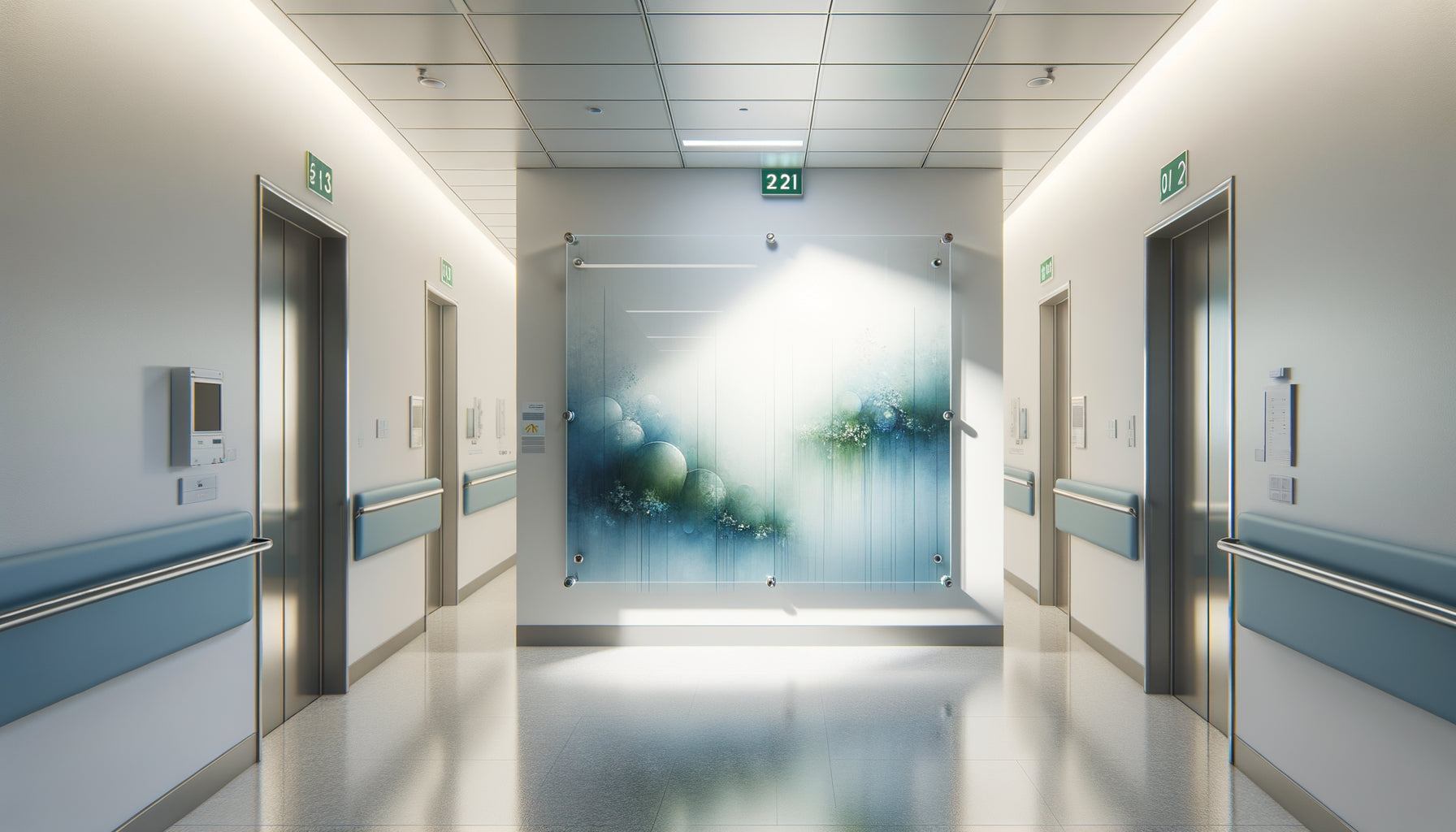
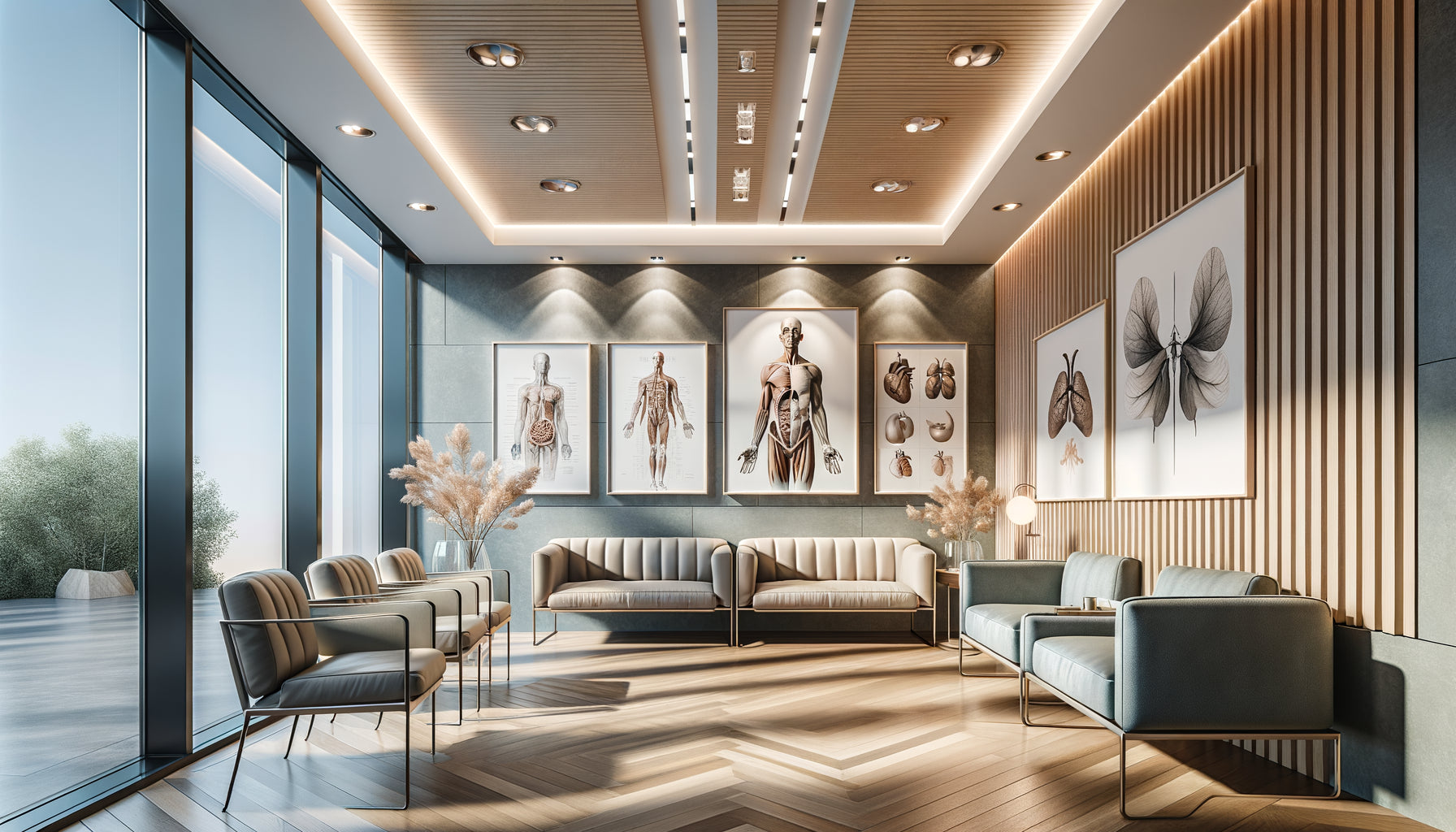
I spent ten years transforming cold medical spaces into havens of serenity. The first time a patient told me: “For the first time, I didn't notice the time passing in this waiting room”, I understood the power of walls. A 30m² waiting room can become a soothing cocoon or remain an anxiety-inducing purgatory. The difference? Skillfully chosen calming wall art.
Here’s what a well-thought-out wall art budget brings to your waiting room: a measurable reduction in patient stress (up to 30% according to some studies in hospital settings), immediate enhancement of your professional image, and an atmosphere that transforms the wait into a welcome respite. But with prices ranging from €300 to €6000 for 30m², it's difficult to know where to invest wisely. How many artworks? What formats? Which techniques should you prioritize without depleting your treasury? I reveal the three proven budget tiers that really work, with their respective advantages and pitfalls to ensure that every euro invested translates into a tangible benefit for your patients.
The three budget tiers to dress 30m² with precision
After equipping 47 medical waiting rooms, I have identified three consistent thresholds. The essential budget (€800-€1500) allows you to install 3 to 5 medium-sized artworks, favoring quality framed reproductions or canvas prints stretched on a frame. For 30m², this option intelligently covers strategic areas: the wall facing the entrance that sets the tone, the space above the main seats, and a lateral focal point.
The comfort budget (€1500-€3500) elevates the experience with generous formats (minimum 80x120cm) and introduces one or two original pieces. You mix premium reproductions and unique artworks, creating a consistent visual narrative. This threshold also allows you to integrate calming wall art with various techniques: framed watercolors under museum glass, limited edition art photographs, or contemporary acrylic paintings in natural tones.
The signature budget (€3500-€6000) transforms your waiting room into a therapeutic gallery. Exclusive original artworks, monumental formats that structure the space, dedicated rail lighting, or even a partial mural. This level affirms a strong and memorable identity. I have seen dental clinics retain 20% more patients after such a visual investment.
Realistic breakdown for 30m² on the essential budget
Let's take the €1200 option. You invest €400 in a large calming canvas (100x150cm) for the main wall – prioritize deep blue abstract landscapes or minimalist botanical compositions. Add two medium formats (60x80cm) at €250 each on the side walls. Complete with two small framed artworks (40x50cm) at €150 each to rhythmize transition areas. Total: €1200. Framing represents 20-30% of the budget if you opt for prints – negotiate with your supplier for packages.
Where to invest each euro to maximize the calming effect
The classic mistake? Spreading your budget over too many mediocre pieces. It's better to have three impactful pieces than seven lackluster ones. In a 30m² waiting room, visual hierarchy is key. Your main investment (40-50% of the budget) should be in the masterpiece facing the entrance. This sets the immediate emotional tone. I’ve tested it: a large calming format (minimalist seascape, misty forest, organic abstraction) reduces anxious requests by 25%.
30% of the budget is dedicated to secondary pieces that dialogue with the main one – same color palette, coherent theme. The remaining 20%? Finishes that professionalize: museum-quality anti-reflective frames, discreet hanging system (cleats or invisible fixings), possibly accent lighting on an LED array if your natural light is low.
For calming wall art specifically, tones directly influence. Environmental psychology studies confirm: muted blues, sage greens, warm beiges and pearl grays reduce blood pressure. Avoid bright reds, saturated oranges or aggressive contrasts. A harmonious composition in a tonal range is better than a chaotic rainbow, even if the latter costs three times more.

Premium reproductions vs original artworks: the budget match
The question comes up systematically. High-quality reproductions (giclée on canvas, fine art print) start at €80-€150 in medium format. Advantage: easy stylistic consistency, possibility of replacing a worn piece, controlled cost. Disadvantage: less soul, risk of finding the same image in three other offices. For 30m² with an essential budget, this is the rational and totally acceptable solution if you choose less common visuals – go through emerging artist platforms rather than generic catalogs.
Original artworks start at €300-€500 for a local artist starting their career. They bring a unique signature, a story to tell (patients read the labels!), and patrimonial appreciation. I often encourage the 70/30 mix: 70% of refined reproductions, 30% original on the masterpiece. This ratio optimizes the budget while creating a memorable point of distinction.
A smart alternative: artwork rentals with an option to buy. Some galleries and art libraries offer €50-80/month for original pieces, with possible renewals. Over a year, €600-960 allows you to test different atmospheres before making a definitive investment. Ideal for practitioners undecided about their aesthetic direction.
Strategic formats for 30m²
A waiting room of this size generally accommodates 6-10 seats. Your soothing wall art should be visible from each seat without requiring contortion. A large format (100x150cm or 120x180cm) visually anchors the space – budget €400-1200 according to the technique. Two medium formats (60x90cm or 80x100cm) create lateral visual resting points – €150-400 per piece. A few small formats (30x40cm or 40x60cm) in thematic series rhythm without overloading – €80-200 per unit.
The empirical rule: cover 15-25% of the available wall surface. Below that, the space appears bare and cold. Beyond that, it feels oppressive. On typical 3m high walls, prioritize hanging at eye level when seated (130-150cm for the center of the work), not standing as in a gallery.
Hidden costs that explode (or optimize) your budget
The artwork itself accounts for 60-70% of the final budget. Framing represents 15-25% – don't neglect it. A beautiful print in a cheap frame devalues the whole thing. For canvas reproductions, a thick (minimum 4cm) chassis with gallery finish (painted edges) avoids framing and saves €30-50 per piece. For paper works, framing under glass with rabbet and natural wood baguette costs €80-200 depending on the format.
Professional installation: €150-300 for 5 artworks according to your region. You avoid missed holes, approximate levels, and artworks that fall off. An installer also installs discreet anti-theft systems (recommended on ground floors accessible). If you DIY with rigor, save this cost but invest €40 in a laser level and wall plugs suitable for your walls.
Accent lighting transforms the impact of your soothing wall art. LED spotlights on rail (200-400€ per 3-spot kit) or adjustable wall lights (€80-150 each) enhance textures and depths. In a waiting room with cold medical neon lights, this is what shifts the atmosphere from clinic to cocoon. Optional budget but high emotional return.

Soothing themes that justify the investment
Not all wall art is created equal when it comes to anxiety. Abstract or realistic natural landscapes (forests, oceans, stylized mountains) activate the same brain areas as real nature – an effect demonstrated in reducing cortisol. Budget €200-€800 for convincing pieces. Minimalist botanical compositions (graphic foliage, contemporary herbariums) appeal widely without polarizing – €150-€500.
Organic abstractions with flowing forms (undulations, soft textures, chromatic gradients) invite meditative contemplation. Prefer acrylic or mixed media originals (€300-€1200) over reproductions that fail to capture material reliefs. Black and white art photographs (soothing architectures, zen still lifes) bring timeless sophistication – €200-€600 in limited edition signed prints.
Avoid: figurative scenes charged with emotion (expressive faces, strong narrative situations), aggressive geometric patterns, disharmonious saturated colors. Your calming wall art should allow for blurred vision, not demand analysis. The patient should be able to gently lose themselves in it, not be abruptly confronted.
Compose a coherent collection without breaking the bank
Narrative coherence multiplies the effect threefold. A thematic series by the same artist (often sold 10-15% cheaper in lots) creates an immediate signature. Three works by a photographer specializing in Nordic marine landscapes: €600 as a triptych vs €750 separately. Alternative: choose a restricted palette (maximum three shades) and vary techniques – watercolor, photography, acrylic in the same sage/beige/white tones.
Online galleries of emerging artists (Saatchi Art, Artmajeur, Rise Art) offer originals 30-50% cheaper than physical galleries. An 80x100cm original by a promising artist: €400-€700 delivered. Local art fairs and open studio events allow for direct negotiation – I obtained 20% discount on a series of four works for an office.
Transform your waiting room into a visual refuge today
Discover our exclusive collection of wall art for medical offices that soothes anxiety and enhances your professional spaces.
Maximize your return on investment in wall art beyond aesthetics
A wall art budget isn't an expense, it's an investment in your patient capital. A calming waiting room reduces no-shows (patients who cancel due to anticipated anxiety) – a measured gain of 8-12% attendance according to a 2019 British study on 34 dental practices. It decreases complaints and claims related to perceived wait times. It facilitates word-of-mouth recommendation: "The atmosphere is so zen, you'll see."
Your calming wall art also enhances your professional real estate. If you own the property, a well-cared-for waiting room adds 5-8% to the resale value. If you are a tenant, it justifies better negotiation upon renewal or facilitates subletting. Think amortization: €2000 over five years is €33/month to transform the experience of 15 to 30 patients daily. The calculation becomes obvious.
Last lever: communication. A photogenic waiting room becomes a marketing asset. Photograph your walls, share on your social networks and website, integrate into your brochure. The art investment transforms into content that enhances your premium positioning. I accompanied an osteopath who gained 40% new patients in six months after sharing their visual renovation – initial budget: €1800.
Visualize your transformed waiting room
Imagine: your patients walk through the door. Instead of the clinical, anxiety-inducing white, a large misty forest landscape welcomes them gently. Sage green and warm beige tones dialogue with your furniture. On the side walls, two black and white art photographs – olive branches, polished pebbles – invite a calming gaze. Soft LED lighting caresses the textures of canvas. Waiting time becomes breathing, not torture. Your practice now tells: "Here, we take care of you in every detail."
This isn't superfluous luxury, it's therapeutic hospitality. Start by identifying your realistic budget within the three proposed tiers. Define your palette (simple test: what colors do you naturally wear? They reveal your affinities). Visit three different sources – local gallery, online platform, artist studio – to compare quality and prices. And above all, choose works that you find deeply soothing. This authenticity will be transmitted to your patients.
FAQ : Wall art budget for a 30m² waiting room
Can a 30m² waiting room be equipped with less than €500 in calming wall art?
Yes, but with strategic compromises. Prioritize a single large-quality reproduction (250-350€ in 100x150cm) for the main wall, complemented by two small framed formats (60-80€ each) sourced from artistic flea markets or purchased directly from fine arts students. Opt for thick frames without additional borders to save 100-150€. The impact will be less than with a comfortable budget, but infinitely superior to bare walls. This approach works particularly well if your palette is very restricted (a range of blues or beiges) to visually unify despite the limited number of artworks. Absolutely avoid low-end laminated posters that discredit your professionalism – it's better to have one beautiful print than a cheap accumulation.
Should you regularly change wall art or invest in timeless artworks?
After ten years of observation, I recommend stability with micro-renewals. Patients appreciate finding the same visual references – this contributes to a sense of security. Invest in timeless artworks (natural landscapes, soft abstractions) that age well. Plan for a 20-30% renewal every 3-4 years to maintain freshness without destabilizing. For example: keep your large centerpiece (main investment) and change the secondary artworks. This partial rotation costs 300-500€ every three years, or 8-14€/month – negligible for the revitalizing effect. Rental formulas with quarterly rotation (50-80€/month) are attractive but fragment your visual identity. Reserve them if you're still testing your aesthetic direction in the first year.
How to measure if my wall art investment is really working?
Three simple and objective indicators. First: perceived waiting time. Discreetly ask 10 patients before and after installation – “Did you find the wait long today?” You will often notice a reduction of 20-40% in negative perception. Second: visual engagement. Observe (discreetly) how many patients actively look at the walls versus remain glued to their phones. Good wall art captures 60-70% of glances at least once. Third: spontaneous comments. Note how many patients positively mention your decor – if you go from zero to three weekly remarks, your investment is paying off. Quantifiable bonus: compare your cancellation rate and online reviews over six months before/after. A transformed waiting room typically improves the Google rating by 0.3 to 0.5 points and reduces no-shows by 8-12%. This data easily justifies a budget of 1500-2500€.