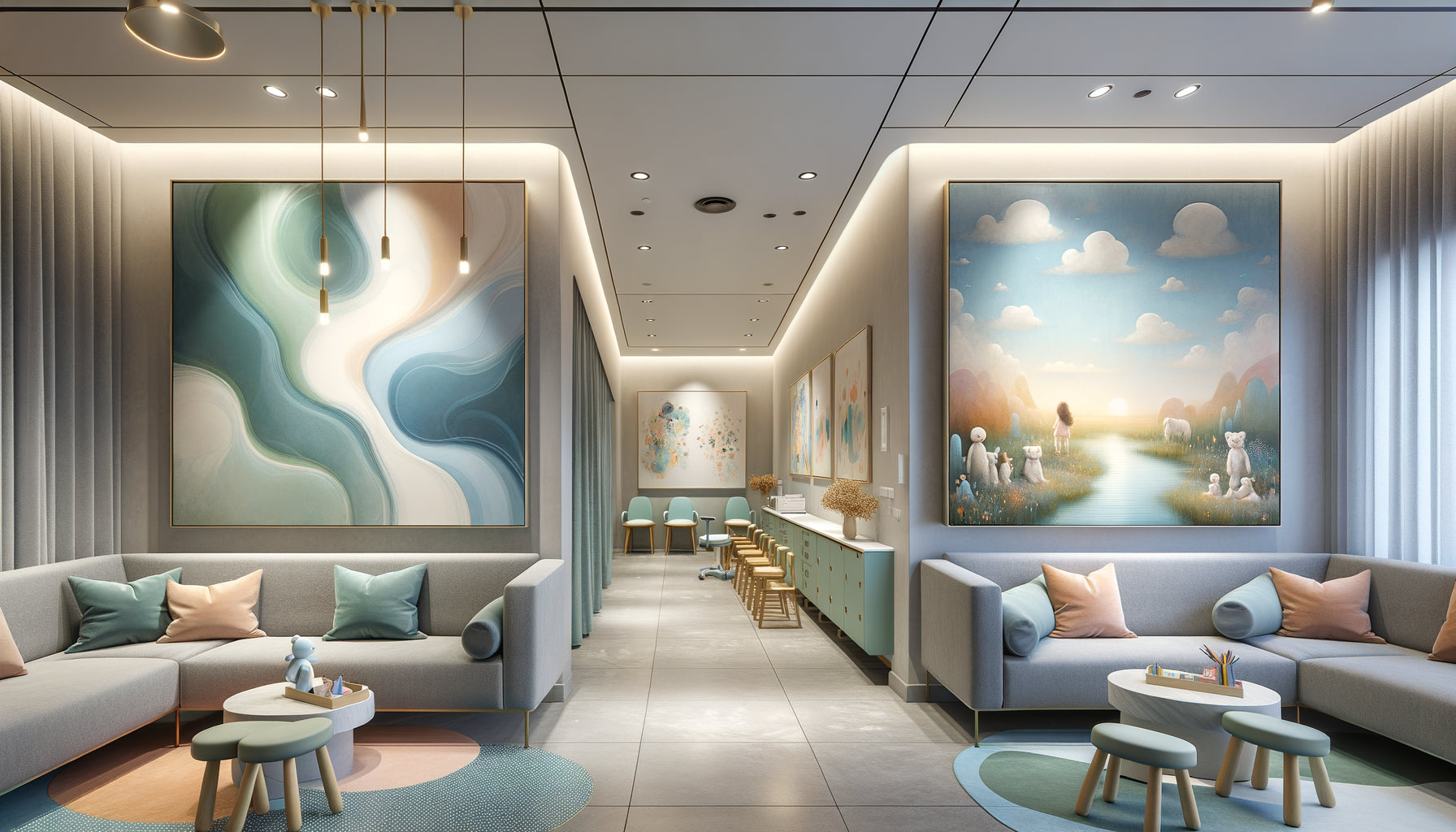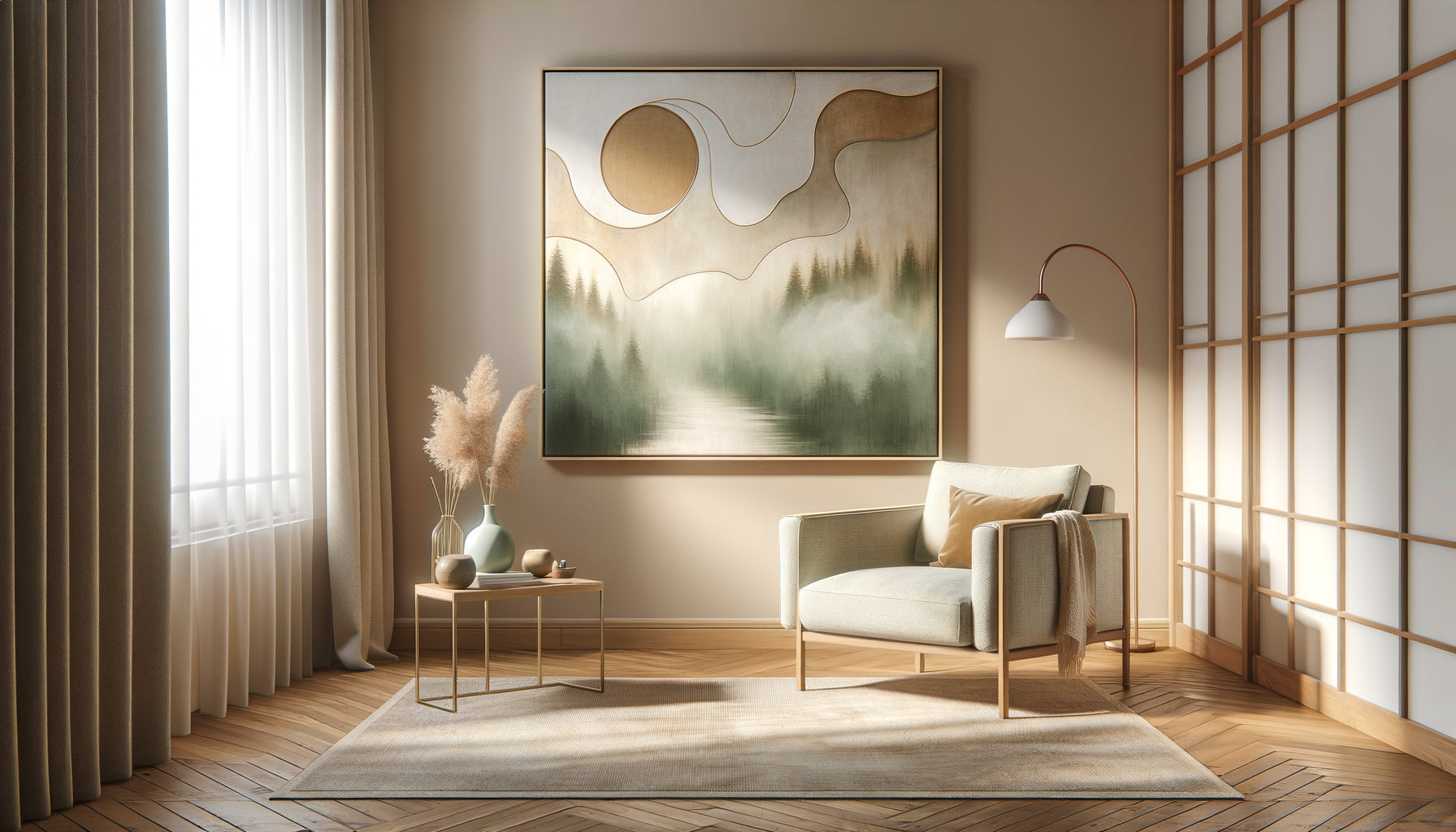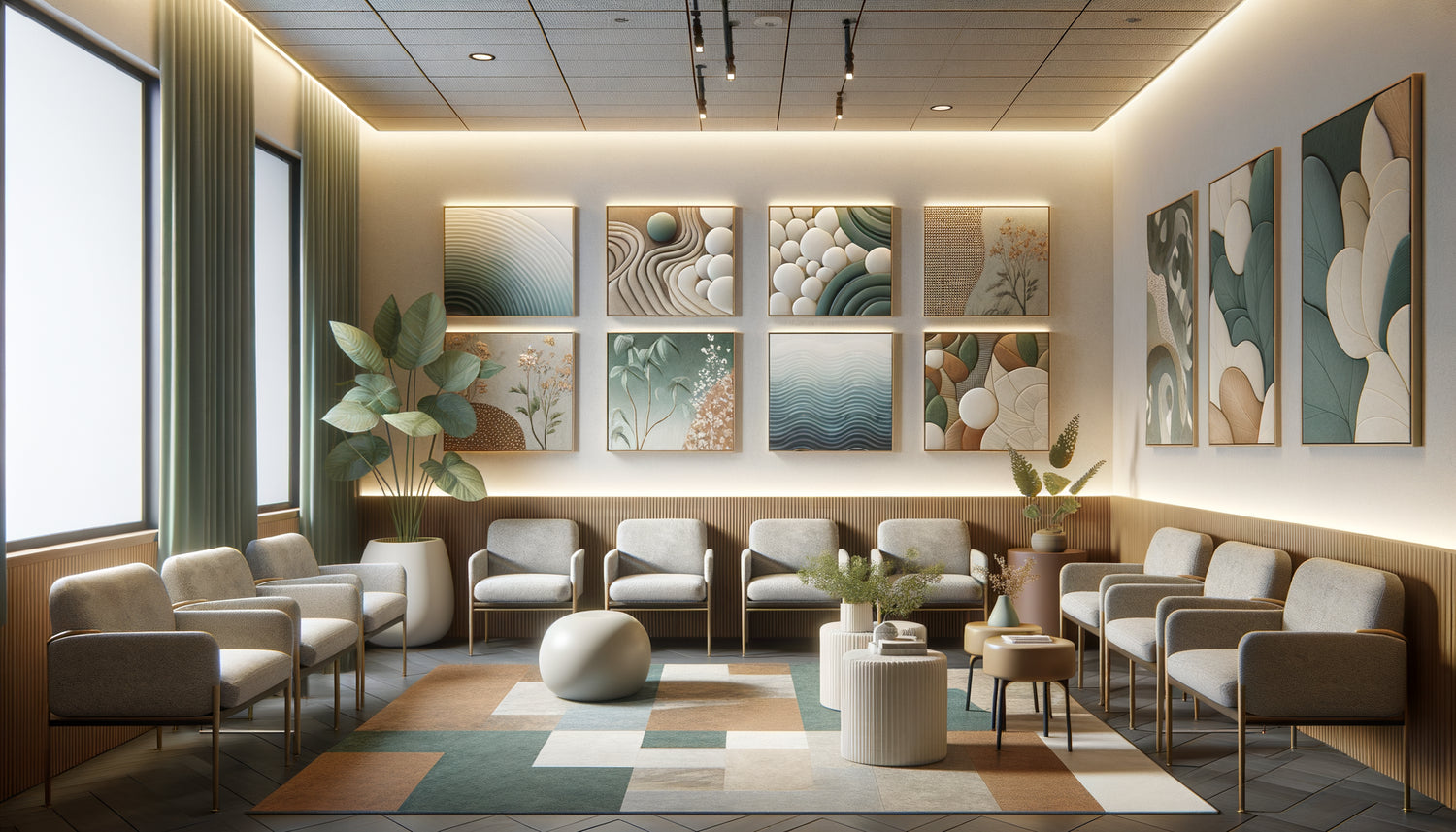
In the waiting room of a Brussels clinic, I observed a revealing scene: a Moroccan patient smiled at a geometric abstraction with tile-like patterns, while a Korean couple photographed a minimalist floral composition. These wall artworks were not mere decorations, but silent cultural bridges that transformed anxiety into contemplation. That day, I understood that multicultural medical art was not a constraint, but an extraordinary opportunity to create truly universal spaces.
Here's what a thoughtful selection of wall artworks adapted brings to your practice: a measurable reduction in patient anxiety, an inclusive visual identity that values your practice, and a silent dialogue that transcends language barriers.
Yet, faced with this diverse patient population, many practitioners find themselves paralyzed. How to avoid symbols that could offend? Should you multiply styles to please everyone? And if, instead of soothing, these works unintentionally create discomfort?
Rest assured: there are universal visual codes and proven strategies for composing a collection that respects every sensibility. After supporting dozens of medical practices in their visual transformation, I will reveal how to transform your walls into truly inclusive welcome spaces.
The visual languages that speak to all horizons
When decorating a practice welcoming patients from different cultures, the first instinct is often to seek to represent each community. Fatal error. I have seen waiting rooms transformed into awkward multicultural catalogs, with touristy clichés that ring false.
The real solution lies in universal visual archetypes. Nature first: a bamboo forest evokes serenity for an Asian patient as much as for a European. Aquatic landscapes, starry skies, organic textures transcend cultural boundaries.
Geometric abstraction is your second ally. Geometric patterns appear in all artistic traditions, from Moroccan zellige to Tibetan mandalas, from Byzantine mosaics to Polynesian tattoos. A wall artwork composed of pure shapes and soothing colors finds its resonance in all visual memories.
Soft and natural colors form the third pillar. Earth tones, aquatic blues, green plants create a chromatic harmony that soothes without specific cultural reference. Avoid colors with strong symbolic connotations: aggressive red, funereal black in some cultures, white associated with mourning in Asia.
What to absolutely avoid in a multicultural medical space
After fifteen years of observing patient reactions, I have identified the recurring pitfalls that compromise the effectiveness of wall artworks in a medical setting.
Religious symbols, even subtle ones, have no place in a secular medical space. A cross, even stylized, Arabic calligraphy, a Buddhist symbol: these elements immediately create inclusion for some and exclusion for others.
Representations of humans require particular vigilance. In some conservative Muslim traditions, figurative images pose a problem. Opt for abstract silhouettes, suggestions rather than detailed portraits. If you choose characters, opt for obvious diversity and universal representations.
Animals carry contradictory meanings according to cultures. The dog, a faithful companion in the West, is impure in Islam. The pig, elevated to the rank of good luck charm in Japan, is taboo elsewhere. Birds and butterflies remain safe bets, almost universal symbols of freedom and transformation.
Be wary of scenes specific to one culture: a Parisian café, a Japanese temple, an Italian square. These images, although aesthetically pleasing, can create a sense of strangeness for part of your patient population. A newly arrived patient should never feel like a spectator of a culture that is not their own in your waiting room.

The balanced collection strategy
Rather than a single large, imposing wall art piece, I recommend a harmonious collection of several works that offers varied anchor points. This approach allows each patient to find a piece that resonates with their personal sensitivity.
Imagine this composition: a large abstract landscape in oceanic tones as a focal point, flanked by two minimalist botanical compositions, and punctuated by three small geometric studies. Each work dialogues with the others while offering a distinct visual experience.
The rule of thirds works remarkably well: one-third natural works (flowers, landscapes, aquatic elements), one-third geometric or textured abstractions, one-third minimalist or monochrome compositions. This distribution creates visual richness without cacophony.
Also think about the seasonal rotation. Some clinics I work with change a few pieces three or four times a year. This strategy maintains the visual interest of regular patients and allows you to adapt the atmosphere: luminous floral compositions in spring, fresh abstractions in summer, warm tones in autumn, pure snowy landscapes in winter.
The formats and installation that create harmony
The impact of a suitable wall art piece depends as much on its installation as on its content. Height, lighting, grouping: each decision influences intercultural perception.
The standard international height places the center of the artwork 145-150 cm from the floor, at natural seated eye level. In a waiting room where patients spend time in a seated position, this rule makes perfect sense. An artwork that is too high creates an intimidating distance, while one that is too low loses its presence.
Regarding formats, prioritize balanced proportions. Square formats (50x50 cm, 80x80 cm) have a reassuring stability. Panoramic formats (120x40 cm) evoke openness and the horizon. Avoid overly vertical formats that can create a feeling of instability in a medical space.
Indirect lighting radically transforms the perception of an artwork. Warm white LED lighting (2700-3000K) restores colors naturally without creating aggressive reflections. I have observed that patients look up to three times longer at a properly lit painting than one drowned in general lighting.
For groupings of artworks, the gallery arrangement works wonderfully in medical spaces. Maintain a constant spacing of 5 to 8 cm between each frame to create a visual unity while allowing each artwork to breathe.

When art becomes a therapeutic tool
Wall artworks in medical offices are not just aesthetic: they actively participate in the healing process. Studies in environmental psychology demonstrate that a multicultural patient population perceives the quality of care through attention to the visual environment.
A Bangladeshi patient confided in me that she had changed gynecologists after discovering an office decorated with care: “The soothing paintings told me that this doctor paid attention to detail, and therefore probably also to my symptoms.” This perception is not anecdotal.
Positive distraction effect works particularly well with children from immigrant families. A painting depicting colorful bubbles or soft organic shapes captures their attention and reduces pre-consultation anxiety. Parents, seeing their children calmed, are in turn soothed.
Contemplative artworks also create moments of mental pause. Faced with the linguistic challenges encountered by some patients, the silent contemplation of an abstract landscape or a geometric composition offers a cognitive refuge, a decompression space before the consultation.
I observed in a cardiology clinic that patients looked at the wall art for an average of 4 minutes and 30 seconds before their appointment. These minutes are not wasted: they lower blood pressure, regulate heart rate, prepare a favorable emotional state for medical exchange.
Composing your collection: the practical guide
Now that you understand the principles, here's how to practically build your collection of wall art suitable for a multicultural patient base.
Step 1: Map out your spaces. Identify prolonged waiting areas (main waiting room), transition zones (corridors), and intimate areas (consultation rooms). Each space requires a different approach. The waiting room welcomes more elaborate compositions, corridors favor coherent series, and consultation rooms opt for unique, soothing pieces.
Step 2: Define your color palette. Choose 3 to 5 dominant colors that will run throughout your collection. Winning combinations: aquatic blue + beige sand + touches of sage green; pearl gray + off-white + subtle gold accents; earth tones (ochre, softened terracotta, warm brown) + ivory white.
Step 3: Select by categories. For a waiting room accommodating 8 to 12 people, aim for 5 to 7 varied format artworks. Compose with 2 natural works, 2 geometric abstractions, 2 minimalist compositions, and 1 textured or organic piece. This diversity ensures that each patient finds a point of resonance.
Step 4: Visually test. Before the final purchase, print large-format temporary versions or use AR visualization apps. Observe patients' reactions for a week. Do glances naturally turn to these locations? Do expressions relax?
Create a truly inclusive medical space
Discover our exclusive collection of wall art for Medical Clinics that transforms anxiety into contemplation and makes your waiting room a universal welcome space.
Transforming waiting time into an experience
Imagine your waiting room in six months. A Senegalese patient arrives stressed for her consultation, her gaze rests on a refined floral composition with soft tones. Her shoulders relax. A Chinese patient, a few seats away, contemplates a geometric abstraction that reminds him of the motifs of his childhood without falling into cliché. A Syrian child, intimidated by this new environment, smiles at colorful bubbles floating against a soothing background.
These wall artworks are no longer mere decorations: they have become the silent ambassadors of your medical approach. They say "You are welcome, all, as you are" without uttering a word. They transform the universal anxiety of a medical consultation into a moment of shared contemplation.
Art adapted to a multicultural patient base is not a luxury; it's a natural extension of your care ethic. Each artwork you choose sends a message: "I thought of you. I created this space for you to feel comfortable." And in a often impersonal medical journey, that message makes all the difference.
Start with a single piece. Observe reactions. Listen to comments. Then gradually build your collection, guided by the simple but powerful goal of creating a visual haven where each patient, regardless of their origin, finds a moment of peace before their consultation.
Frequently Asked Questions
How many wall artworks should I install in a 25m² waiting room?
For a 25m² space welcoming a multicultural patient base, I recommend 5 to 7 varied size artworks rather than a single large composition. This approach offers several points of visual interest without overwhelming the space. Prioritize a large format (80x120 cm or 100x100 cm) as a visual anchor, complemented by 3 to 4 medium formats (50x70 cm or 60x60 cm) and 2 small formats (30x40 cm) to create rhythm. The common mistake is to underestimate: walls that are too empty create an anxious clinical coldness, while a reasonable density naturally soothes. Space the artworks 5 to 8 cm apart to maintain visual consistency while allowing each piece to breathe.
Should I change the artworks regularly to maintain the interest of regular patients?
Rotating wall artworks has real therapeutic benefits, especially for long-term patients. I advise a hybrid strategy: keep 60 to 70% of your collection permanently to maintain a stable and reassuring visual identity, and renew 30 to 40% of the artworks two to three times per year. This approach preserves visual landmarks while creating a sense of renewal. Seasonal changes work particularly well: bright floral compositions in spring, fresh abstractions in summer, warm tones in autumn. For clinics with tight budgets, even simply moving existing artworks to other walls creates a surprising effect of novelty. The goal is not constant stimulation but avoiding visual boredom for your loyal patient base.
How do I know if my artworks really suit my multicultural patient base?
The most reliable assessment combines direct observation and informal feedback. For two weeks after installation, discreetly observe behaviors: do patients spontaneously look at the artworks? Do their features relax? Do they photograph certain pieces? These non-verbal cues are more revealing than formal questionnaires. Then create opportunities for natural feedback: "We have recently changed our decoration, I hope the atmosphere is pleasant" during consultations. Patients readily share their impressions when invited without formality. Pay particular attention to children's reactions, infallible emotional barometers. If a painting consistently elicits prolonged gazes and relaxed expressions from patients of various backgrounds, you have found a truly universal work. Beware of silence: if no one ever looks at a piece, it is not fulfilling its function, regardless of its aesthetic quality.