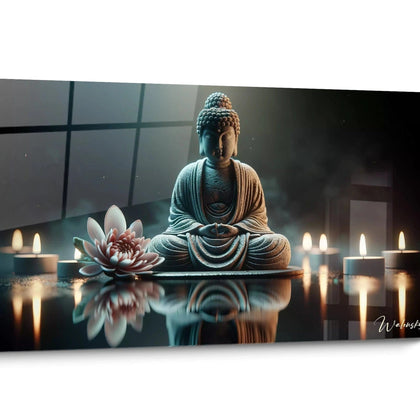
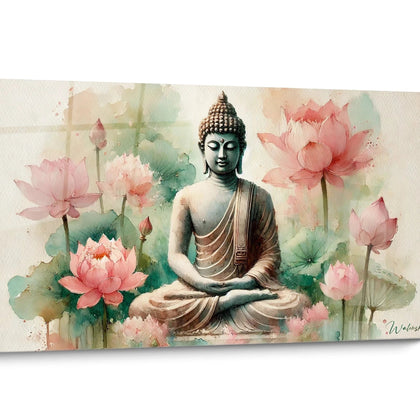
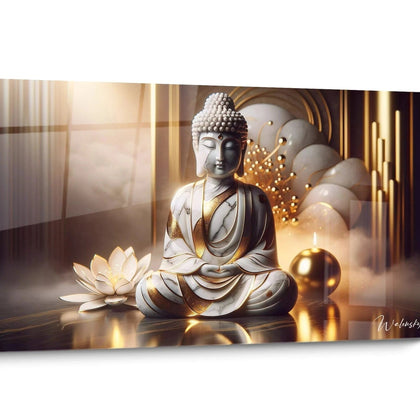
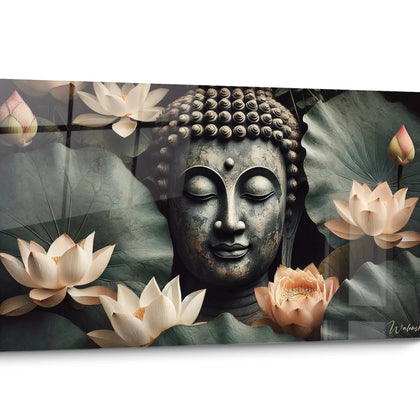
The white zen lotus canvas embodies spiritual purity and the awakening of consciousness in the Buddhist tradition. This artistic representation captures the essence of the sacred flower emerging from troubled waters, a universal symbol of personal transformation and illumination. Our large-format creations elevate spaces dedicated to contemplation, meditative practices, and the quest for inner serenity, transforming each room into a sanctuary of peace.
The Deep Symbolism of the White Lotus in Zen Art
The white zen lotus canvas transcends simple decoration to become a support for visual meditation. In Eastern philosophy, the white lotus represents the highest degree of spiritual purity, associated with primordial wisdom and perfect awakening. This particular flower, unlike pink or red varieties, symbolizes the state of meditative emptiness and transcendence of material attachments.
Why is the white lotus considered superior to other colors in spirituality?
The white lotus occupies the pinnacle of Buddhist symbolic hierarchy because it embodies the state of bodhi, the complete awakening of the mind. Advanced meditation practitioners choose this representation to strengthen their connection with higher states of consciousness. A large-format canvas amplifies this energetic presence, creating a powerful focal point for prolonged contemplation sessions and facilitating entry into deep meditative states.
Visual Anchoring in Contemplative Practices
For practitioners of zazen or vipassana, a large-format white zen lotus canvas serves as a visual anchor during meditation sessions. Gentle eye focus on the refined petals promotes one-pointed concentration, a fundamental technique for calming an agitated mind. Our white zen lotus canvas stands out for its ability to reflect natural light, creating subtle shadow play that evolves throughout the day, accompanying the circadian rhythm of spiritual practices.
The Visual Metaphor of Personal Transformation
Each morning facing this representation becomes a silent reminder of the potential for transformation. The white lotus grows in mud but rises immaculate above water, a powerful metaphor for anyone going through difficult periods of personal growth. Holistic therapists frequently recommend this imagery for their consultation spaces because it instantly communicates the possibility of rebirth and emotional purification without requiring verbal discourse.
The generous dimensions of our creations allow us to capture botanical details with remarkable precision: delicate petal veins, symbolic dewdrops, the golden pistil contrasting with virginal whiteness. This visual richness nourishes the eye and spirit during repeated contemplations.
Energy Harmonization Through White Lotus Zen Art
Installing a white zen lotus canvas in an environment triggers a measurable energetic transformation. According to feng shui principles applied to healing spaces, the lotus white activates metal energy, associated with mental clarity, precision, and letting go. This specific color differs fundamentally from pink lotuses that activate fire energy or blue lotuses linked to the water element.
The Calming Effect on the Nervous System
Contemplative neuroscience confirms that visual exposure to symbols of purity and natural symmetry reduces amygdala activity, the brain's stress response center. A monumental format creates an encompassing visual field that facilitates parasympathetic relaxation response. Yoga nidra practitioners often integrate these representations in their dedicated rooms, noting faster entry into alpha and theta brain waves in their students.
How does the white zen lotus canvas influence a room's atmosphere?
Beyond aesthetics, this representation functions as an atmosphere regulator. The luminous white of the lotus reflects and diffuses natural brightness, creating an ethereal atmosphere particularly beneficial in spaces with limited direct sunlight exposure. Interior architects specializing in therapeutic design exploit this property to counterbalance stagnant energies in north-facing rooms.
The combination of the white zen lotus canvas with natural elements like bamboo, pebbles, or indoor fountains multiplies the soothing effects. This decorative synergy creates a sensory microclimate that naturally lowers the heart rate and blood pressure of occupants, a phenomenon documented in several studies on healing environments.
White as a Catalyst for Mental Clarity
Unlike colorful artworks that stimulate mental activity, the white lotus on a refined background encourages mental emptiness, a state sought in contemplative traditions. Creative work spaces integrating this imagery report improved sustained concentration and reduced eye strain. The large size allows constant peripheral perception without requiring direct focus, thus maintaining a continuous soothing presence during daily activities.
Creating a Personal Sanctuary with the White Lotus
Setting up an authentic meditation space requires more than just a quiet corner. The white zen lotus canvas becomes the visual soul of this intimate sanctuary, instantly defining the sacred function of the place. Meditation masters recommend precise positioning facing the meditation cushion, at eye level when seated, creating a natural line of vision that guides attention effortlessly.
What elements should be combined with the white zen lotus canvas to deepen practice?
The effectiveness of a meditative space relies on sensory coherence. Around the canvas, prioritize natural sound-absorbing materials: plant fiber rugs, kapok cushions, raw linen curtains. White sandalwood incense or dried lotus creates an olfactory correspondence reinforcing mental anchoring. Absolutely avoid discordant elements like visible technology or bright colors that would fragment the unified attention fostered by contemplating the immaculate lotus.
Orientation According to Traditional Principles
Vajrayana traditions specify that the white lotus should be oriented toward the east, the direction of illumination and daily renewal. This arrangement allows the first light of dawn to naturally illuminate the representation, creating optimal spiritual awakening for morning practices. The imposing formats capture this glancing light with an intensity that transforms the work into a living lantern, a phenomenon impossible to reproduce with smaller dimensions.
For evening sessions, indirect lateral lighting in warm temperature preserves the sacred character without creating disturbing reflections. The generous dimension of the white zen lotus canvas allows clear visibility even under reduced light conditions, essential for meditation practices at twilight.
Spiritual Progress Reflected in Observation
Experienced meditators testify that their relationship with the canvas evolves with their practice. Initially perceived as an aesthetic object, it gradually reveals subtleties invisible to the untrained eye: infinitesimal tonal variations, the ascending dynamic of composition, visual breathing of empty spaces. This growing perceptual depth confirms the progress of contemplative consciousness, with the canvas becoming a faithful mirror of inner evolution.
Is a white zen lotus canvas suitable for meditation beginners?
Absolutely. The visual simplicity of the white lotus makes it particularly accessible to novices who may feel overwhelmed by complex representations. The clarity of its universal symbolism requires no prior knowledge to feel its calming effects, while offering progressive levels of understanding for advanced practitioners.
What size of white zen lotus canvas should you choose for a yoga studio?
For collective use, prioritize formats exceeding 120 cm in width, guaranteeing optimal visibility from all mats arranged in the space. The monumental presence creates a point of energetic convergence perceptible by the entire group, strengthening the cohesion of synchronized practices.
Does the white zen lotus canvas require special maintenance?
Our large-format creations are designed for high-energy environments. A gentle monthly dusting is sufficient to preserve their brilliance. Avoid direct exposure to intense sunlight which could alter the subtle shades of white, and maintain stable ambient humidity to protect structural integrity over time.


 Lotus Painting Pure Grace - lotus flower edition213,90 €
 Lotus Inner Peace Wall Art - lotus flower edition213,90 €
 Lotus Flower Floating Soul Painting - Lotus Flower Edition213,90 €
 Lotus Flower Eternal Grace Painting - Lotus Flower Edition233,90 €
 Lotus Painting Awakening of the Waters - Lotus Flower Edition233,90 €
 Sacred Purity Wall Art - Zen Lotus Flower Edition233,90 €