


Hyperrealistic Portrait Painting
The Hyperrealism Painting Portrait celebrates the art of capturing humanity with spectacular precision. These works transcend photography by revealing every detail, every emotion, every nuance of the human soul.Hyperrealistic portrait art transforms your space into a contemporary gallery where virtuoso technique meets profound expression. Each hyperrealistic portrait modern is a testament to exceptional craftsmanship, sublimating faces in a striking intensity that fascinates the eye.
 Woman Crimson Lips Portrait Painting - hyperrealism edition273,90 €
 Woman Connection Marine Painting - hyperrealism edition273,90 €
 Woman Portrait Painting Shadow Marble - hyperrealism edition273,90 €
 Man with Doves Artwork Serene White — hyperrealism edition273,90 €
 Portrait Painting Deep Ocean Eyes Artwork - hyperrealism edition273,90 €
 Female Portrait Painting Contemplative Grace - hyperrealism edition273,90 €
 Female Portrait Painting Eternal Roses - hyperrealism edition273,90 €
 Portrait Wall Art Protective Hands - hyperrealism edition273,90 €
 Elegant Woman Painting - Pure Elegance Edition Hyperrealism273,90 €
 Mirror Liquid Portrait Wall Art - hyperrealism edition273,90 €
 Botanical Fusion Portrait Painting - Hyperrealism Edition273,90 €
 Portrait Painting Jungle Interior - Hyperrealism Edition273,90 €
 Man Artwork Morning Warmth - hyperrealism edition273,90 €
 Couple Tenderness Intimate Wall Art - hyperrealism edition273,90 €
 Woman with Crystalline Freckles Painting - hyperrealism edition273,90 €
 Woman with tea painting Precious moment - hyperrealism edition273,90 €
 Face painting troubled surface - hyperrealism edition273,90 €
 Dove Communion Silent - Hyperrealism Edition Wall Art273,90 €
 Ocean Eyes Portrait Painting - hyperrealism edition273,90 €
 Woman Forbidden Vision Painting - hyperrealism edition228,90 €
 Face Painting Aquatic Emergence - hyperrealism edition228,90 €
Explore further
In Hyperrealistic Portrait Painting
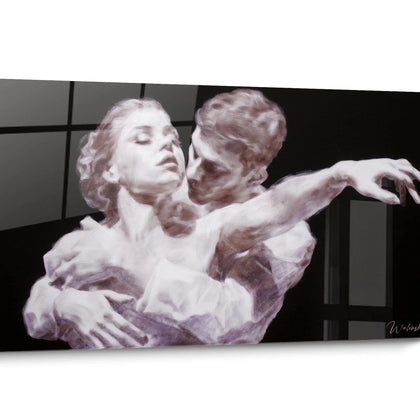
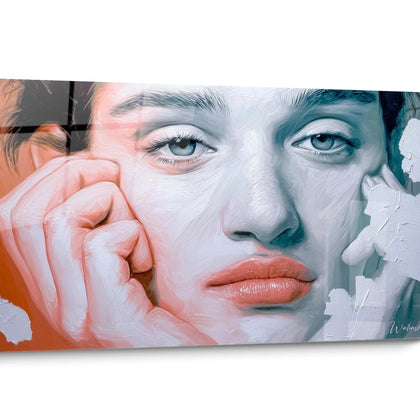
All about Hyperrealistic Portrait Painting
- Painting Presentation Hyperrealism Portrait
- Hyperrealistic Facial Representation
- Captured Gaze and Expressiveness
- Integration and Decorative Impact
A hyperrealism portrait painting represents the technical culmination of contemporary figurative painting, where each anatomical detail, each micro-expression, and each skin texture are reproduced with photographic fidelity. This demanding artistic approach transforms the human face into a true visual archive, capturing not only physical features but also the psychological depth of the subject. The monumental formats we offer amplify this intensity, creating an almost tangible human presence in your space. Hyperrealistic portraiture is distinguished by its ability to freeze the moment with surgical precision, revealing pores, wrinkles, eye reflections, and imperceptible chromatic variations. These works become striking testimonies of humanity, inviting prolonged contemplation where each observation reveals new details.
The Hyperrealistic Technique at the Service of Facial Anatomy
The hyperrealism portrait painting relies on exceptional mastery of epidermal nuances and subtle tonal variations that compose the human face. Hyperrealistic artists layer dozens of transparent pigment layers to reproduce the natural translucency of the skin, creating this characteristic depth where light seems to penetrate the surface rather than simply reflect off it. This successive glazing technique allows capturing the vascular undertones, areas of warmth and coolness that bring the portrait to life.
How does hyperrealism capture facial microstructures?
Microstructures such as dilated pores, superficial capillaries, and skin grain variations between oily and dry areas are meticulously mapped and reproduced with ultrafine brushes or extreme pointillism techniques. This attention to skin topography radically distinguishes the hyperrealistic portrait from traditional approaches. The large-scale formats we market reveal these details with stunning intensity, transforming each observation into an anatomical discovery.
The underlying bone structure and its representation
Beyond the epidermis, hyperrealistic portraiture excels in suggesting the underlying cranial structure. Artists study bone anatomy to understand how cheekbones project specific shadows, how the jaw defines the lower contour of the face, and how the orbital cavities influence the depth of the gaze. This three-dimensional understanding translates into tonal modulations that give the hyperrealism portrait painting a sculptural presence, almost holographic as natural light evolves throughout the day.
Hair: a technical challenge of hyperrealism
Hair representation constitutes one of the technical peaks of this artistic movement. Each strand must be treated individually, with its variations in shine according to the angle of incidence of light, its partial transparencies allowing the scalp or background to be seen, its complex interweaving creating areas of shadow and light. Specular reflections on the hair fiber, which vary depending on the nature of the hair (oily, dry, colored), require microscopic observation and infinite patience. These large-format works transform this technical feat into a fascinating visual spectacle.
The Intensity of the Gaze and the Capture of Fleeting Emotions
The true power of a hyperrealism painting portrait lies in its ability to crystallize raw and authentic emotion through the subject's gaze. Hyperrealistic eyes are not merely colored spheres: they reproduce the optical complexity of the iris with its radial streaks, Fuchs' crypts, limbic contraction rings, as well as the vitreous transparency of the cornea which creates multiple and superimposed reflections. This anatomical precision transforms the painted gaze into an authentic psychological window.
Why does the hyperrealistic gaze seem to follow the observer?
This perceptual phenomenon results from an exact reproduction of the eye geometry and the precise positioning of light reflections on the curved cornea. Hyperrealist artists meticulously calculate the viewing angle to create this illusion of direct eye contact, regardless of the observer's position. In monumental formats, this eye presence becomes hypnotic, establishing an immediate emotional connection with the viewer. The humidity of the tear film, reproduced with translucent glazes, accentuates this impression of vibrant life.
Micro-expressions and their emotional significance
Hyperrealism excels at capturing the micro-muscle contractions that betray authentic emotional states: the imperceptible furrowing of the corrugator supercilii suggesting intense concentration, the slight elevation of the grand zygomatic announcing a restrained smile, the tension of the platysma revealing a suppressed emotion. These physiological subtleties, often invisible in traditional portraits, give the hyperrealism painting portrait an extraordinary psychological depth. The work becomes an emotional document, an archive of a specific psychic moment.
Facial symmetry and individual peculiarities
Unlike idealized representations, hyperrealism celebrates the natural asymmetries that define individuality: an eyelid slightly more drooped, a lip corner slightly more raised, a nostril differently proportioned. These "imperfections" are precisely what humanizes the portrait and creates authenticity. Collectors seek out works like those in our gallery, sometimes including chromatic variations such as a hyperrealism blue painting, for their ability to transcend simple photographic reproduction and reveal the unique essence of the subject represented.
Monumental Presence and Spatial Transformation by Portrait
The installation of a hyperrealism painting portrait in a large format in a residential or professional space creates a radically different spatial dynamic than that generated by other artistic typologies. The human presence at life-size, or even larger, introduces a quasi-social dimension into the environment: the painted gaze establishes a visual axis that structures the space, influences movements, and creates zones of silent dialogue between the work and the occupants.
How does a hyperrealistic portrait influence the atmosphere of a room?
The human face constitutes the most powerful visual stimulus for our brain, instantly activating our facial recognition and empathy circuits. A monumental hyperrealistic portrait thus becomes the absolute psychological focal point of any space, irresistibly attracting the gaze and conditioning the ambient mood according to the expression captured. A contemplative expression instills a meditative atmosphere, an intense gaze generates dynamic tension, a serene expression diffuses a soothing tranquility. The formats we offer amplify this emotional influence.
Strategic positioning to maximize impact
Unlike abstract compositions, a hyperrealistic portrait requires thoughtful placement, taking into account the painted gaze direction and facial orientation. Placing the artwork facing the main entrance creates a striking visual welcome, while a lateral installation generates an intriguing perspective tension. The hanging height should align the portrait's eyes with the natural gaze line of standing observers (generally 160-170 cm from the floor) to maximize the eye contact effect. Circulation spaces particularly benefit from these artworks that visually accompany movement.
Interaction with existing architectural lighting
The infinitesimal tonal variations of a hyperrealistic portrait painting react spectacularly to natural and artificial light changes. Morning grazing light accentuates the relief of micro-details, creating a striking three-dimensional presence. Midday zenithal lighting softens shadows and reveals the color palette in all its subtlety. Evening amber lighting transforms skin tones, adding a nostalgic warmth. This continuous metamorphosis justifies the investment in imposing formats that reveal these evolving nuances with maximum intensity.
What differentiates the experience of a monumental hyperrealistic portrait?
Monumental scale transforms observation into an immersive experience where the viewer becomes almost the subject of the painted gaze rather than a passive observer. This perceptual inversion creates an unusual sense of self, a psychological reflectivity where contemplating becomes being contemplated. Details invisible at reduced scale – the sclerotic veins, the density variations of eyelashes, the texture of the labial mucosa – become elements of fascination, justifying prolonged observation that continuously reveals new visual information. This exploratory depth fundamentally distinguishes the hyperrealistic portrait from photographic reproductions.
Does a hyperrealistic portrait require specific storage conditions?
These artworks require protection from direct exposure to UV rays, which can gradually alter the most delicate pigments, particularly those reproducing skin undertones. LED lighting with a neutral color temperature (4000-5000K) with UV filtration preserves chromatic integrity while faithfully revealing nuances. Stable relative humidity (40-60%) prevents dimensional tensions that could affect superficial pictorial layers.
Can multiple hyperrealistic portraits be combined in the same space?
The multi-portrait composition creates a fascinating narrative dynamic, particularly when the painted gazes are oriented along convergent or divergent axes. This visual choreography transforms the space into a psychological stage where the tensions between the different subjects generate implicit narratives. The stylistic uniformity of hyperrealism allows for these ambitious combinations without aesthetic cacophony, provided that scale and light intensity consistency is respected between the different pieces.
What is the durability of a museum-quality hyperrealistic portrait?
Contemporary hyperrealism techniques, using certified lightfast pigments and UV-filtration protective varnishes, guarantee centuries of durability under controlled exposure conditions. The artworks in our collection benefit from creation protocols aligned with museum conservation standards, ensuring that the microscopic precision of the details – the very essence of hyperrealism – remains intact for future generations. This durability transforms acquisition into a tangible heritage investment.
L'art qui suscite l'envie
Maison belge d'art mural grand format
14 jourspour changer d'avis*
Protection Walenskyincluse
Fabriquéen Italie
FormatXXL
Kit de fixationtoujours fourni
* Hors tableaux personnalisés et tailles personnalisées


