


Blue Hyperrealism Painting
The Hyperrealistic Painting Blue embodies the quintessence of contemporary artistic precision. This collection celebrates blue hyperrealistic art, where each work reveals exceptional technical mastery and a striking fidelity. The shades of blue, from deep cobalt to bright cyan, create compositions of remarkable visual intensity. Perfect for demanding collectors, these contemporary blue hyperrealism creations transform your interior into a refined art gallery.
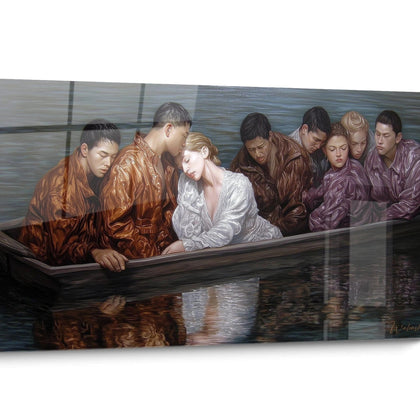
 Woman Connection Marine Painting - hyperrealism edition273,90 €
 Surrealist seascape painting Chess at Sea - hyperrealism edition273,90 €
 Portrait Painting Deep Ocean Eyes Artwork - hyperrealism edition273,90 €
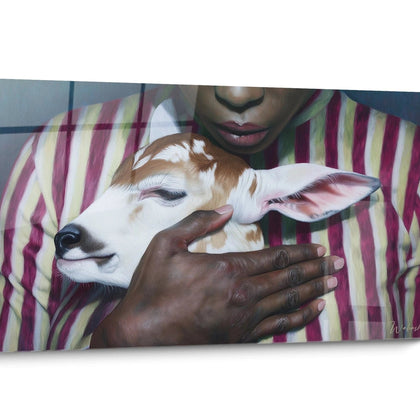
 Portrait Wall Art Protective Hands - hyperrealism edition273,90 €
 Giant Arctic Iceberg Painting - hyperrealism edition273,90 €
 Portrait Painting Jungle Interior - Hyperrealism Edition273,90 €
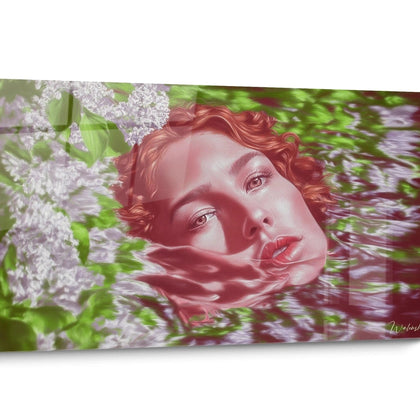
 Face painting troubled surface - hyperrealism edition273,90 €
 Ocean Eyes Portrait Painting - hyperrealism edition273,90 €
 Woman Forbidden Vision Painting - hyperrealism edition228,90 €
 Face Painting Aquatic Emergence - hyperrealism edition228,90 €
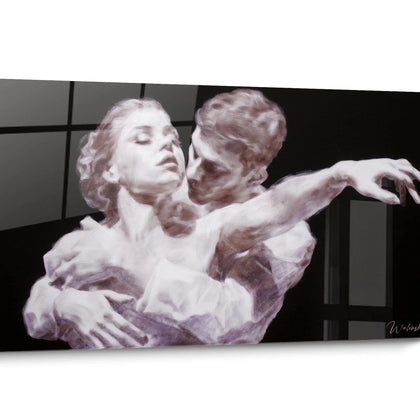
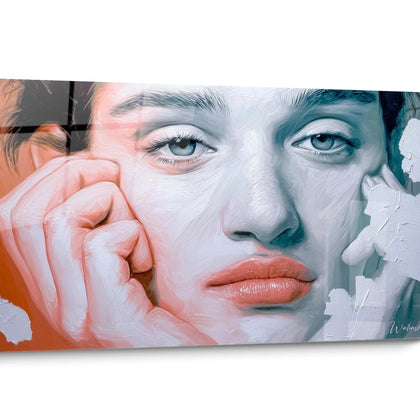
All about Blue Hyperrealism Painting
- Presentation Painting Hyperrealism Blue
- Blue Hyperrealistic Aesthetics
- Intense Chromatic Depth
- Large Format Visual Impact
A painting hyperrealism blue radically transforms the atmosphere of a space thanks to its unique ability to manipulate the perception of depth and natural light. This form of artistic expression pushes the limits of pictorial representation by creating works of photographic precision where the color blue becomes the vector of complex emotions and singular spatial sensations. Collectors seek out these creations for their exceptional ability to capture infinite chromatic nuances while maintaining absolute fidelity to the microscopic details of reality.
The Technical Excellence of Blue Hyperrealistic Representations
The creation of a painting hyperrealism blue requires an incomparable technical mastery where each chromatic gradation obeys rigorous rules of optics. Hyperrealistic artists work with dozens of shades of blue to recreate the complexity of aquatic surfaces, atmospheric skies, or modern architectural structures. This methodical approach involves the use of successive glazing techniques to obtain a transparency and luminosity impossible to reproduce with traditional methods.
How do hyperrealistic artists exploit the psychology of blue?
The psychological dimension of the color blue in hyperrealism goes far beyond simple visual representation. Creators consciously exploit the soothing and contemplative properties of azure tones to induce specific emotional states in observers. In high-end professional spaces such as law firms, private medical clinics, or the headquarters of financial companies, a large-scale blue hyperrealistic painting instantly creates an atmosphere of professional serenity and institutional reliability.
The microscopic precision of blue textures
Blue hyperrealism is distinguished by its ability to reproduce with microscopic fidelity the textural variations present in nature. Whether it is the subtle undulations of an ocean surface capturing the reflections of the sky, the complex crystallizations of blue mineral formations, or the cellular structures of bioluminescent jellyfish, every detail is rendered with surgical precision. This extraordinary attention to micro-textures allows collectors to acquire pieces that constantly reveal new layers of visual complexity, similar to what is found in hyperrealistic floral compositions where each petal has its own textural signature.
The technical challenges of blue hyperrealistic representation
Artists specializing in blue hyperrealistic paintings face considerable technical challenges related to the particular optical properties of this color. Blue has the shortest wavelength of the visible spectrum, which profoundly influences its spatial perception and its ability to create illusions of recession. Hyperrealistic masters must compensate for these physical properties by meticulously adjusting tonal values and contrasts to maintain the illusion of three-dimensionality while preserving the characteristic chromatic intensity of saturated blue compositions.
The Emotional Dimensions of Blue Hyperrealistic Compositions
A painting in hyperrealistic blue acts as a powerful emotional catalyst in contemporary environments thanks to its ability to simultaneously evoke oceanic vastness, celestial immensity, and meditative depth. Discerning buyers specifically seek out these works for their transformative power in reception areas, corporate meditation rooms, or boutique hotel lobbies where visual impact must be immediate and memorable.
Why does hyperrealistic blue transform spatial perception?
The physical properties of blue create a perceptual expansion of space that significantly amplifies the effect of the large dimensions characteristic of contemporary hyperrealistic paintings. In urban apartments where every square meter counts, a monumental hyperrealistic blue painting installed on a main wall generates a sensation of openness and architectural breathing space. This optical illusion works particularly well in spaces with standard ceilings where the chromatic depth of blue visually creates a perceptual elevation.
The interaction between natural light and hyperrealistic blue pigments
Hyperrealistic blue compositions reveal their full potential when interacting with the natural cycles of light throughout the day. In the morning, blue tones capture the first rays of sunlight, creating chromatic vibration effects that awaken the space. At noon, the maximum saturation of blue under zenithal lighting transforms the work into a magnetic focal point. At dusk, deep indigo and Prussian blue nuances gradually emerge, offering a completely renewed visual experience that fully justifies the investment in these collector's pieces.
Specific decorative associations for hyperrealistic blue paintings
The successful integration of a hyperrealistic blue painting into a sophisticated environment requires a thorough understanding of chromatic and material balances. Interior designers prefer associations with natural materials such as white travertine, Carrara marble, or light Scandinavian woods that amplify the visual presence of blue without creating chromatic competition. Natural linen textiles, artisan white ceramics, and brushed brass metal elements constitute ideal complements that respect the visual dominance of the hyperrealistic work while enriching the overall sophistication of the space.
Investment and Valuation of Hyperrealistic Blue Works
Acquiring a painting in hyperrealistic blue represents a strategic investment in the contemporary art market where demand for large-scale hyperrealistic compositions is experiencing sustained growth. Savvy collectors recognize that these works combine traditional technical excellence with a contemporary aesthetic perfectly suited to current decorative expectations, creating lasting heritage value.
What criteria determine the value of a hyperrealistic blue painting?
The market value of a hyperrealistic blue composition depends on multiple interconnected factors, the complexity of which constitutes the first indicator. Works presenting exceptional representation challenges such as superimposed aquatic transparencies, multidirectional reflections, or bioluminescence effects command higher valuations. Dimension also plays a crucial role, monumental formats intended for contemporary architectural spaces benefiting from a significant premium due to their relative scarcity and incomparable visual impact in high-end professional and residential environments.
Preferred environments for hyperrealistic blue compositions
Large-scale blue hyperrealist paintings find their optimal expression in specific architectural contexts where their intrinsic qualities can fully express themselves. Contemporary minimalist spaces with immaculate white walls and generous volumes constitute the ideal setting for these masterful works. Renovated industrial lofts with exceptional ceiling heights allow for the installation of monumental vertical compositions that exploit the upward perception naturally associated with celestial blue tones. Penthouses with panoramic views particularly benefit from these creations, which create a fascinating visual dialogue between the vastness of the exterior nature and the hyperrealistic interior representation.
The aesthetic durability of hyperrealistic blue compositions
Unlike ephemeral decorative trends, the blue hyperrealist painting possesses a timelessness that transcends fleeting fashions. This aesthetic stability is explained by the archetypal universality of the color blue in the collective human experience, associated for millennia with fundamental natural elements such as water and the sky. Collectors who invest in these works acquire pieces whose aesthetic relevance remains constant regardless of stylistic fluctuations, thus ensuring regular patrimonial appreciation in diversified contemporary art portfolios.
Is a blue hyperrealist painting suitable for professional spaces?
Absolutely, these creations exert a particularly beneficial psychological impact in corporate environments where they simultaneously project professionalism, controlled creativity, and technical excellence. Architecture firms, design studios, and technology companies widely adopt these works for their ability to visually embody rigorous innovation and a forward-looking vision.
How does the perception of a blue hyperrealist painting evolve over time?
The richness of microscopic details guarantees a progressive discovery that extends over years, each observation revealing subtleties previously imperceptible. This inexhaustible visual depth creates a growing emotional attachment that reinforces the satisfaction of acquisition and fully justifies the initial investment in these exceptional collector's pieces.
What is the technical durability of the blue hyperrealistic works?
Contemporary hyperrealist artists use museum-quality pigments with maximum permanence indices, guaranteeing exceptional chromatic stability over several generations. Phthalo blue and modern synthetic ultramarine resist photodegradation remarkably, ensuring that the characteristic visual intensity of these compositions remains intact for decades under standard domestic exposure conditions.
Further reading
Our articles on this topic
L'art qui suscite l'envie
Maison belge d'art mural grand format
14 jourspour changer d'avis*
Protection Walenskyincluse
Fabriquéen Italie
FormatXXL
Kit de fixationtoujours fourni
* Hors tableaux personnalisés et tailles personnalisées


