


Hyperrealism Flower Canvas
The Hyperrealism Painting Flower celebrates botanical beauty with stunning photographic precision. This collection features hyperrealistic floral paintings where each petal, each shade and each texture are reproduced with remarkable accuracy. The artists in this collection master the art of capturing the living essence of flowers in ultra-detailed botanical artworks. Perfect for enhancing your interior, these creations bring elegance and refinement.
 Female Portrait Painting Eternal Roses - hyperrealism edition273,90 €
 Flowering Branch Contemplation Red Wall Art - hyperrealism edition273,90 €
 Cherry Blossoms with Pink Reflections - Hyperrealism Edition273,90 €
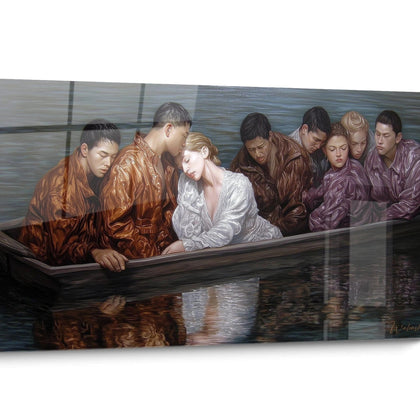
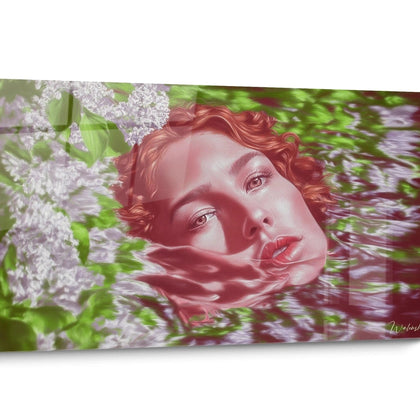
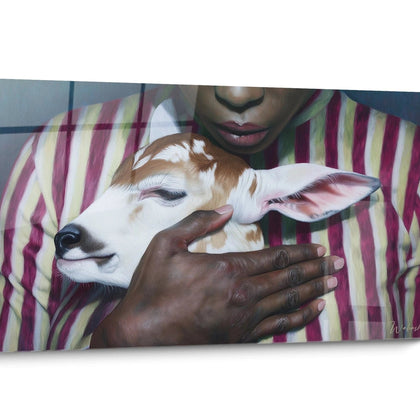
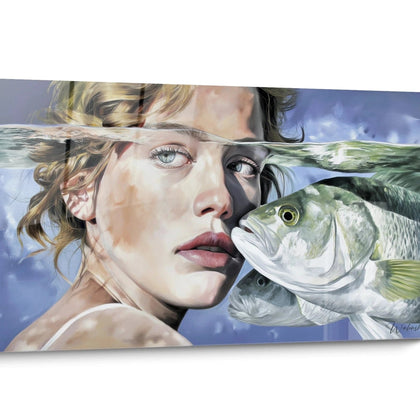
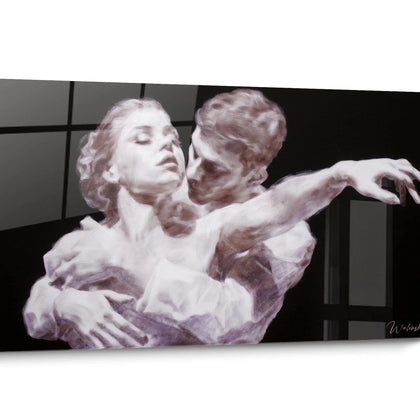
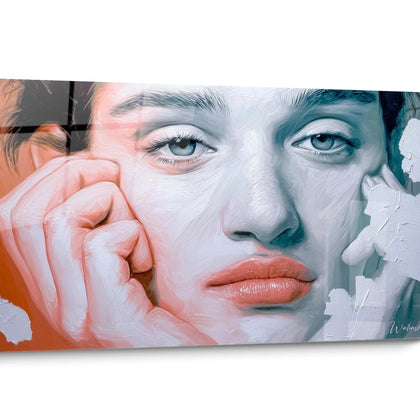
All about Hyperrealism Flower Canvas
- Presentation Painting Hyperrealism Flower
- Botanical Precision and Details
- Grand Format Decorative Impact
- Optimal Choice and Placement
A hyperrealism flower painting radically transforms the atmosphere of your space thanks to exceptionally faithful photographic reproduction. This artistic approach captures every nuance, texture, and detail of the vegetation with microscopic precision that defies visual perception. Hyperrealistic floral creations are distinguished by their ability to immortalize the ephemeral beauty of petals, pistils, and stamens in a monumental composition that magnifies the natural botanical structure.
The Technical Virtuosity of Floral Hyperrealism
A hyperrealism flower painting requires exceptional artistic mastery where every petal vein, chromatic gradient, and translucent surface variation is reproduced with scientific accuracy. Hyperrealistic artists dedicate hundreds of hours to microscopic observation of floral specimens to capture the organic complexity invisible to the naked eye. This method reveals the fractal patterns of corollas, the subtle iridescences of plant membranes, and the micro-reliefs that bring each composition to life.
Why does floral hyperrealism surpass decorative photography?
Unlike standard photographic reproductions, floral hyperrealism allows for selective amplification of the most captivating botanical characteristics. The artist can intensify the saturation of certain pigment zones, accentuate the contrast between velvety and shiny surfaces, or sublimate the transparency of backlit petals. This creative freedom produces works that transcend simple documentation to reach a contemplative, almost meditative dimension. Collectors particularly seek hyperrealistic representations of antique roses, arboreal peonies, or exotic orchids where every anatomical detail becomes a subject of wonder in itself.
Chromatic variations in monumental floral creations
Large-format hyperrealistic floral paintings exploit sophisticated color palettes that go far beyond primary hues. Monochromatic tulip compositions reveal dozens of ivory, cream, and pearl nuances while representations of purple dahlias reveal gradients from deep burgundy to powdery pink. This tonal richness creates exceptional visual depth that attracts the eye at different observation distances. Some collectors also combine these floral creations with works like a hyperrealism blue painting to create sophisticated chromatic dialogues between vegetal naturalism and monochromatic abstractions.
Techniques for rendering organic plant textures
The hyperrealistic representation of floral surfaces requires a thorough understanding of the physics of light on organic materials. The waxy petals of magnolias, the velvety down of thoughts, the translucent epidermis of hellébores, or the roughness of floral barks require radically different technical approaches. Specialized artists develop unique methodologies to simulate subsurface light dispersion in semi-transparent plant tissues, thus creating this palpable illusion of life that characterizes the best hyperrealistic creations. These works become botanical windows that transform residential spaces into contemplative scientific galleries.
The Visual Impact of Monumental Floral Formats
A hyperrealistic painting of a flower in imposing dimensions creates an immersive presence that completely alters the spatial perception of an interior. Formats exceeding 150 centimeters allow for a near-real or enlarged scale of botanical specimens, transforming a rose or a peony into a three-dimensional visual sculpture. This floral monumentality generates an intimate sense of proximity to nature that powerfully contrasts with the contemporary urban environment, offering a contemplative pause in overloaded living spaces.
How to maximize the spectacular effect of XXL floral compositions?
The installation of a hyperrealistic flower painting of large dimensions requires precise architectural consideration to optimize its visual impact. Vertical compositions of slender floral stems (irises, gladioli, delphiniums) are ideally suited to spaces with double height or stairwells, where they naturally guide the eye upwards. Horizontal panoramic formats presenting alignments of flowers or close-up views of open corollas are particularly suitable for spaces above low furniture such as entrance consoles or dining room buffets. This monumental floral presence acts as a magnetic focal point that structures the entire surrounding decorative arrangement.
The psychological effects of hyperrealistic floral representations
Research in environmental psychology demonstrates that detailed botanical representations significantly reduce stress levels and improve cognitive concentration. A large-format hyperrealistic flower painting amplifies these benefits by creating an almost biophilic visual connection with nature. Floral compositions in soothing tones (blue hydrangeas, pale pink peonies, white camellias) are particularly suitable for bedrooms and relaxation areas, while more dynamic representations (sunflowers, poppies, zinnias) stimulate vitality in social spaces. This neuroaesthetic dimension makes hyperrealistic floral works much more than simple decorative elements.
Strategies for integration into contemporary minimalist architectures
Floral hyperrealism paradoxically finds its most powerful expression in pure interiors where it creates a striking contrast between lush organicism and strict geometry. In spaces with stripped-down architectural lines and neutral palettes, a monumental painting representing an explosion of peonies or an extreme enlargement of an orchid brings that essential touch of organic complexity to the visual balance. This juxtaposition of botanical hyperrealism and architectural minimalism generates a sophisticated aesthetic tension particularly sought after by contemporary interior architects. Discerning collectors often create thematic collections combining different hyperrealistic floral species to create permanent wall gardens that evolve according to artwork rotations.
Selection and Enhancement of Your Hyperrealistic Floral Artwork
The choice of a hyperrealistic flower painting represents a significant aesthetic investment that deserves careful consideration of the coherence between the artwork, your personality, and your environment. Selection criteria go far beyond superficial decorative considerations to encompass symbolic, emotional, and even cultural dimensions. Certain floral species carry particular meanings: peonies evoke prosperity and honor in Asian tradition, roses embody emotional complexity, while proteas or exotic orchids signal an affinity for the exceptional and the rare.
What floral species should you choose based on your color scheme?
The harmony between a hyperrealistic floral painting and its environment relies on a subtle understanding of chromatic interactions. For interiors dominated by cool tones (gray, white, blue), representations of flowers with warm tones (orange dahlias, deep red tulips, yellow ranunculus) create a thermal contrast that energizes the space. Conversely, in warm environments (beige, terracotta, natural wood), floral compositions with cool tones (blue delphiniums, purple hydrangeas, green hellebores) bring a balancing visual freshness. Sophisticated collectors often opt for works presenting complex color ranges that incorporate subtle complementary notes, allowing for harmonious integration regardless of future decor changes.
The importance of visual distance for monumental formats
A large-scale hyperrealistic floral painting requires a minimum viewing distance to fully reveal its overall composition while allowing appreciation of microscopic details when approaching. The general rule recommends a distance equivalent to 1.5 times the width of the artwork for optimal perception. In constrained spaces, prioritize vertical floral compositions or aerial views that work effectively even with limited distance. Panoramic formats of aligned flowers (tulip alignment, poppy sequence) require more lateral space but create a spectacular kinetic effect as the viewer moves parallel to the artwork.
Conservation considerations for hyperrealistic floral artworks
The long-term preservation of a hyperrealistic floral painting requires particular attention to environmental conditions. Direct exposure to UV rays progressively degrades the subtle pigments that constitute the delicate tonal transitions of petals and foliage. Spaces benefiting from indirect natural lighting or UV-protected glazing preserve the chromatic integrity of the artworks. Excessive humidity variations can also affect the supports, particularly in bathrooms or kitchens where the installation of floral hyperrealism requires adapted ventilation systems. Informed collectors photographically document their acquisitions to track chromatic evolution over time and anticipate periodic rotations to preserve the visual excellence of their artistic investments.
Can multiple paintings of hyperrealistic flowers be combined in the same space?
The accumulation of multiple hyperrealistic floral artworks creates an immersive wall garden effect that is particularly striking, provided botanical or chromatic consistency is respected. The best wall compositions combine different scales of the same floral species or species sharing natural chromatic affinities.
What is the difference between a hyperrealistic floral painting and a classical floral still life ?
Hyperrealistic floral art is distinguished by its extreme photographic fidelity and quasi-scientific approach to botanical detail, while classical still life favors artistic interpretation and symbolic composition. Hyperrealism captures the microscopic instantaneity where the traditional pictorial floral explored allegorical narratives.
How to identify a genuine, museum-quality hyperrealistic floral painting?
Quality indicators include the anatomical accuracy of floral structures (exact number of stamens, natural arrangement of veins), the consistency of the light direction across the entire composition, and above all the subtlety of tonal transitions that eliminate any visible demarcation between color zones. Close observation reveals technical virtuosity without betraying the construction methods of the image.
L'art qui suscite l'envie
Maison belge d'art mural grand format
14 jourspour changer d'avis*
Protection Walenskyincluse
Fabriquéen Italie
FormatXXL
Kit de fixationtoujours fourni
* Hors tableaux personnalisés et tailles personnalisées


