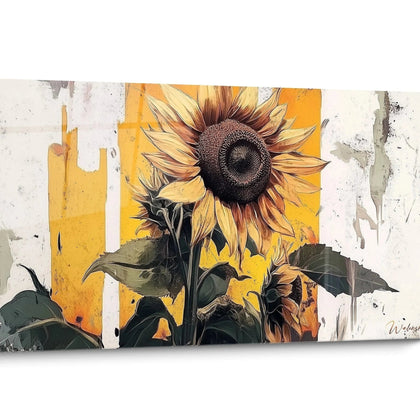
The modern sunflower wall art embodies an audacious fusion between floral energy and the refined aesthetics of contemporary design. This monumental work reinterprets the iconic sunflower motif through current visual codes: simplified geometric lines, sophisticated color palettes, and asymmetrical compositions that capture solar essence without falling into traditional bucolic registers. Unlike classical representations, these large-format creations exploit graphic stylization to transform the heliotropic flower into a genuine architectural statement, perfectly suited to demanding urban interiors seeking a botanical connection without compromising formal modernity.
Contemporary Expression of the Helianthus Motif in Urban Spaces
The modern sunflower wall art distinguishes itself radically from traditional botanical interpretations through its resolutely contemporary approach to floral representation. In industrial lofts and minimalist apartments, these large-format works function as architectural focal points, where the recognizable sunflower silhouette undergoes audacious graphic deconstruction. Contemporary creators exploit geometric stylization techniques that transform petals into angular flat tints, hearts into hypnotic concentric structures, thus creating visual tension between botanical recognition and formal abstraction.
Which color palettes redefine the sunflower in modern versions?
Chromatic innovation constitutes one of the major departures of modern sunflower wall art from classical pictorial heritage. Beyond the expected golden yellow, these compositions explore sophisticated monochromatic ranges: anthracite sunflowers on off-white backgrounds, ultra-minimalist sepia variations, or interpretations in metallic blue gradients that preserve the floral structure while shifting into industrial design territory. This chromatic freedom enables integration of the helianthus motif into environments with strict color codes, such as refined Scandinavian interiors or lofts with raw cement tones.
Visual architecture and asymmetrical solar composition
Extra-wide panoramic formats constitute the privileged terrain for these works, where multiple stylized sunflowers organize according to contemporary composition principles: pushed rule of thirds, calculated asymmetry, dramatic scale play positioning a monumental flower in dialogue with miniaturized satellite elements. This architectural approach transforms floral representation into genuine spatial planning, particularly effective above long modular sofas or facing unobstructed structural walls of residential open spaces. The work then dialogues with the structural lines of the space rather than simply decorating it.
Dialogue between artistic heritage and formal innovation
Though radically different in execution, modern sunflower wall art maintains conceptual affiliation with movements such as expressionist sunflower wall art, sharing the desire to transcend simple naturalistic representation to express vital energy. However, where expressionism favored emotional charge and tormented material, the modern approach opts for structural clarity and measured visual sophistication, creating works that function as integrated design elements rather than sentimental explosions.
Integration of Modern Sunflower Wall Art in Minimalist Environments
Adopting a modern sunflower wall art in a refined interior represents a precise decorative strategy: introducing an organic reference without disrupting rigorous formal harmony. Large-format versions function particularly well in spaces with fluid circulation, where their monumental presence accompanies the eye's movement without creating visual saturation. Master bedrooms with Japanified lines, entrance halls with generous volumes, or open-plan dining rooms find in these compositions a rare balance between symbolic warmth of the solar motif and contemporary aesthetic discipline.
How does stylized sunflower influence spatial perception?
Beyond its purely decorative dimension, modern sunflower wall art acts as a spatial modifier in contemporary environments. Verticalized compositions, featuring slender stems ascending toward stylized capitules, accentuate ceiling height and create upward dynamism particularly valuable in square-proportioned rooms. Conversely, extra-wide horizontal formats presenting geometric sunflower alignments generate lateral visual expansion, ideal for correcting the perception of corridor-like spaces. This architectural function transforms the work into an active spatial design tool.
Contemporary materials and premium finishes
Print supports and surface treatments constitute decisive criteria for successful integration of modern sunflower wall art into high-end interiors. Matte anti-reflective finishes preserve graphic detail legibility even under intense overhead lighting, while rigid aluminum composite supports guarantee the perfect flatness essential for strict geometric compositions. Some publishers offer selective textured surface treatments, where only certain zones benefit from localized varnish, creating brightness plays that subtly animate the work according to viewing angle.
Decorative associations within the modern design ecosystem
Modern sunflower wall art naturally fits within a network of design objects sharing common formal philosophy. It harmonizes beautifully with refined Scandinavian furniture lines, minimalist sculptural lighting, restrained geometric patterned textiles. To create optimal visual coherence, prioritize decorative complements that either echo the work's chromatic codes (cushions in the same monochromatic tones) or its structural principles (cylindrical vases with studied proportions, asymmetrical modular shelving). This systemic approach transforms the room into a harmonious environment where each element reinforces global aesthetic logic.
Acquisition Strategies and Valuation of Modern Sunflower Wall Art
Investment in large-format modern sunflower wall art responds to thoughtful interior planning, where the work becomes foundational piece of a space's visual identity. Monumental formats, often exceeding 120 centimeters in width, require preliminary spatial planning: identification of the display wall, verification of visual clearances allowing adequate observation distance, anticipation of natural and artificial light sources to prevent parasitic reflections. This projective dimension transforms acquisition into genuine architectural decision, comparable to selecting custom storage systems or structuring wall coverings.
Which criteria distinguish premium modern sunflower wall art?
Qualitative evaluation of such a work relies on several specific technical indicators. Print resolution constitutes the first filter: for formats exceeding one linear meter, minimum definition guarantees geometric contour sharpness even at close viewing distance. Color consistency between light and dark areas reveals process control mastery, particularly critical for compositions playing on marked contrasts. Finally, dimensional stability of the support over time prevents deformations that would compromise the integrity of strict lines characteristic of modern design. These technical parameters differentiate standardized industrial productions from premium editions destined for demanding interiors.
Stylistic evolution and aesthetic longevity
Unlike ephemeral decorative trends, modern sunflower wall art inscribes itself within durable aesthetic continuity, simultaneously benefiting from the permanence of the universal floral motif and the timelessness of contemporary design principles. This dual anchoring guarantees prolonged relevance even facing decorative mode evolutions. Owners frequently observe that these works traverse multiple redecorating cycles without losing pertinence, adapting to furniture modifications through their sophisticated formal neutrality. This longevity justifies initial investment in generous formats and superior manufacturing qualities.
Optimization of monumental visual presence
Impact of large-format modern sunflower wall art maximizes through strategic installation choices. Visual isolation constitutes a fundamental rule: the work gains power when benefiting from a dedicated wall, freed from visual competition (overloaded shelving, secondary frame accumulation). Lateral breathing spaces, corresponding to approximately 20% of the total work width on each side, permit the eye to apprehend composition in its entirety. This spatial generosity transforms the work into architectural event rather than mere decorative object among others, maximizing its efficiency in defining overall ambiance.
Does modern sunflower wall art suit contemporary professional offices?
Absolutely, these works find particular relevance in design work environments where they bring organic touch tempering technological coldness without compromising ambient professionalism. Reception spaces, meeting rooms, and executive offices particularly benefit from their sophisticated presence.
What optimal observation distance for large-format modern sunflower wall art?
To fully appreciate composition of works exceeding 100 centimeters in width, plan minimum observation distance equivalent to 1.5 times the work's diagonal. This distancing permits overall visual structure apprehension while authorizing close approach to explore graphic details.
Does modern sunflower wall art harmonize with industrial-influenced interiors?
Versions exploiting dark monochromatic palettes, affirmed geometric structures, and marked contrasts dialogue remarkably well with industrial aesthetics. The organic sunflower motif, when treated with formal rigor, creates sophisticated botanical counterpoint to raw materials such as metal, polished concrete, or exposed brick.


 Sunflower Wall Art No. 1 - Nature Edition233,90 €
 Sunflower Painting No. 6 - Nature Edition233,90 €
 Sunflower Wall Art No. 5 - Nature Edition233,90 €
 Sunflower Painting No.4 - Nature Edition233,90 €
 Sunflower Painting No.3 - Nature Edition233,90 €
 Sunflower Wall Art No. 2 - Nature Edition233,90 €