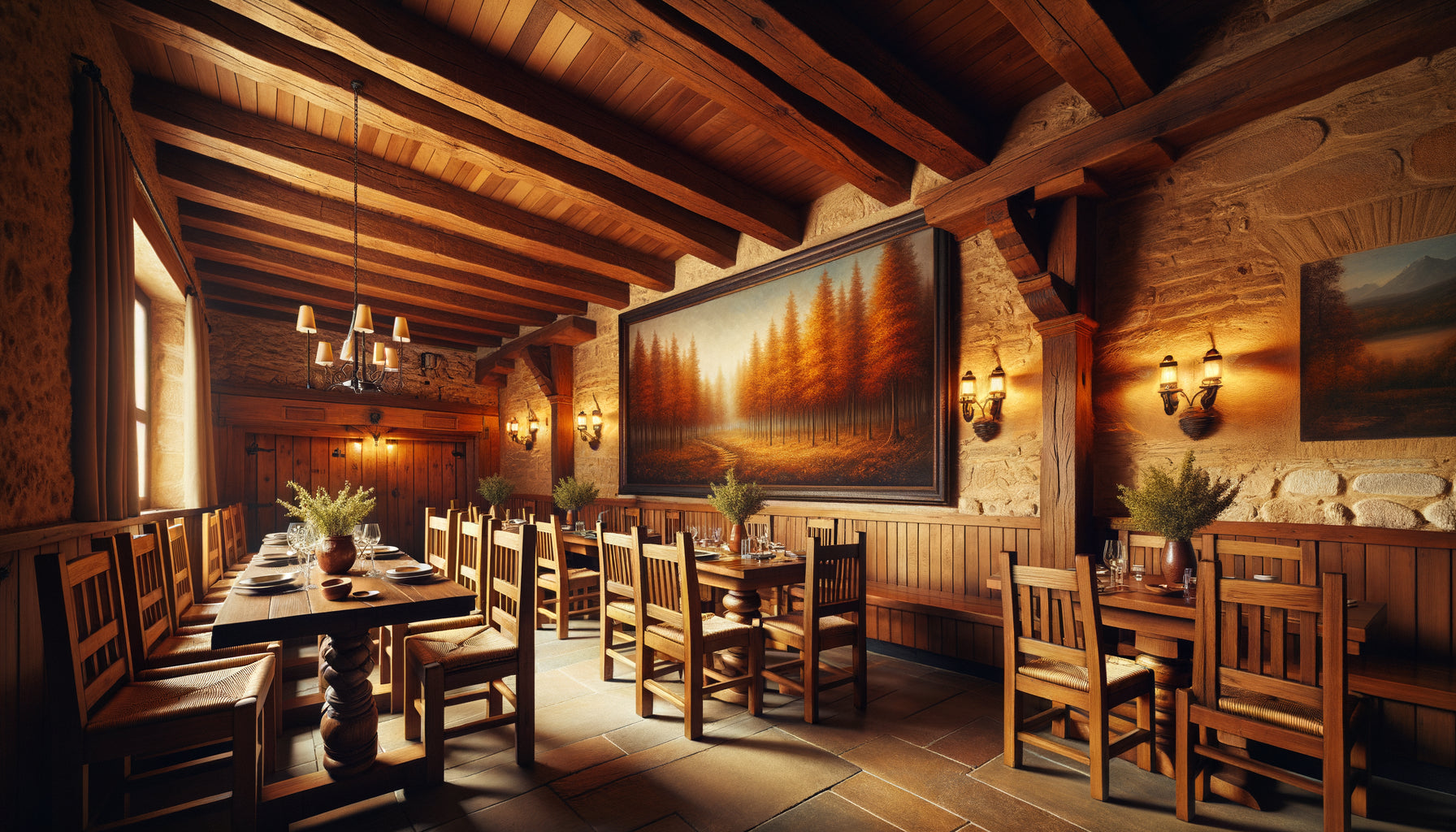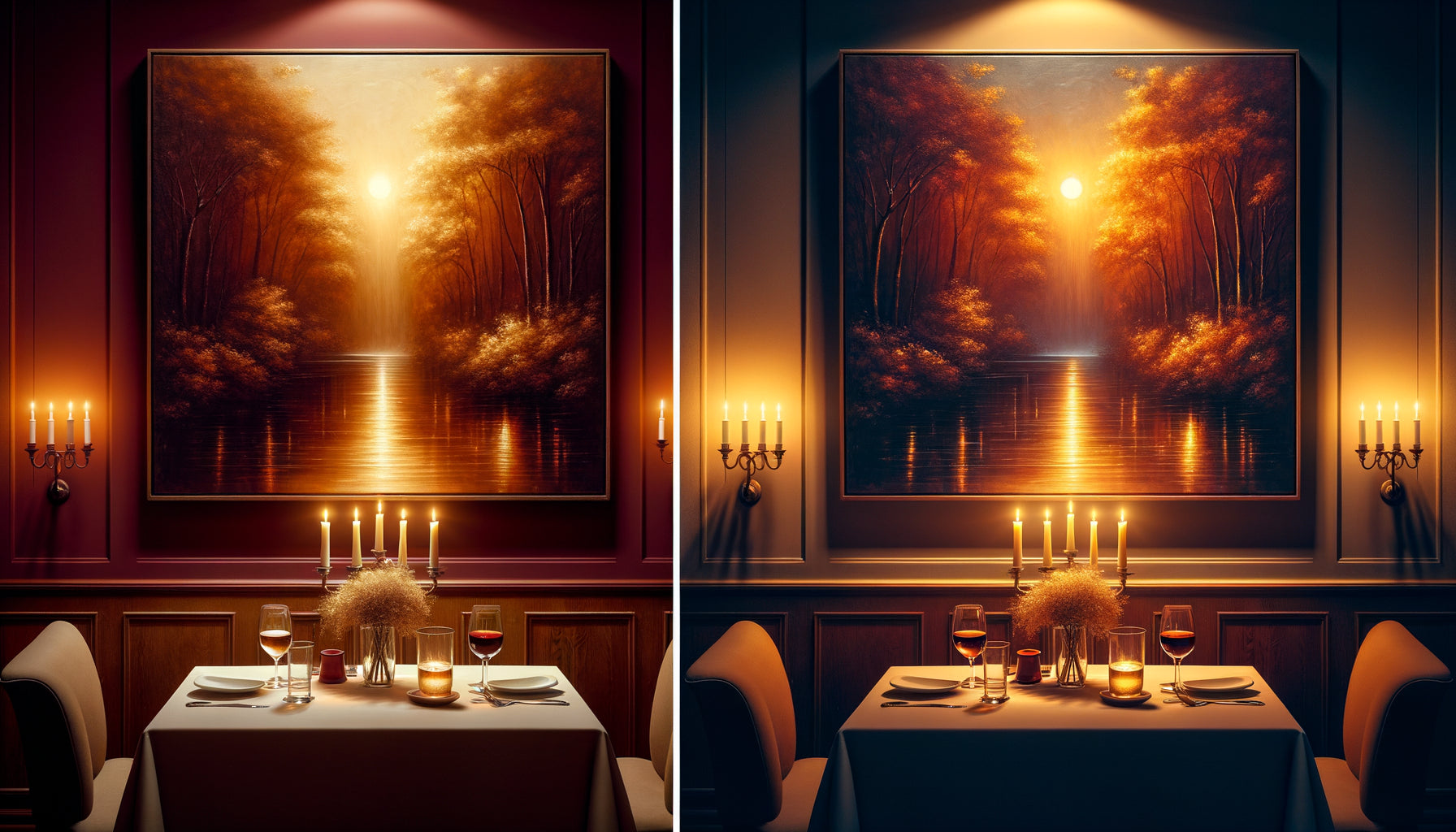
Last summer, during the opening of a Mediterranean bistro near the port of Marseille, I observed a revealing scene. The first customers admired the walls adorned with vibrant canvases depicting the sea and the calanques. Everything seemed perfect until a morning light streamed through the bay windows and revealed the sad reality: the canvases were slightly deformed, creating unsightly ripples. The owner, dismayed, realized that his decorative investment gave an impression of compromise rather than excellence.
Here's what the right canvas weight brings to your restaurant: durability that lasts for years without alteration, perfect rigidity that keeps the artwork taut as on the first day, and that premium visual presence which transforms a simple decoration into a true aesthetic signature of your establishment.
In the demanding world of catering, where every detail builds the customer experience, many restaurateurs invest in paintings without understanding that the support counts as much as the image itself. You may have experienced the frustration of seeing canvases lose their luster, sag with kitchen humidity, or simply look cheap under the ambient lighting in your dining room.
Rest assured: understanding canvas weight requires no technical expertise. With the right guidelines, you can make choices that will instantly elevate the perception of your space. I'm going to share the decisive criteria that I have identified after supporting dozens of establishments in their visual transformation.
Canvas weight explained: why 350g/m² changes everything
The canvas weight, expressed in grams per square meter, literally represents the thickness and density of the fabric. In restaurant rooms where the atmosphere fluctuates constantly – heat from kitchens, humidity, repeated passages – this factor becomes decisive for the longevity of your works.
Light canvases of 180 to 250g/m², often offered as an entry-level option, are suitable for small temporary formats. They have a fine surface that marks easily and tends to warp with humidity changes. For a restaurant, it's the equivalent of installing low-end melamine furniture: functional, but revealing a visible economic approach.
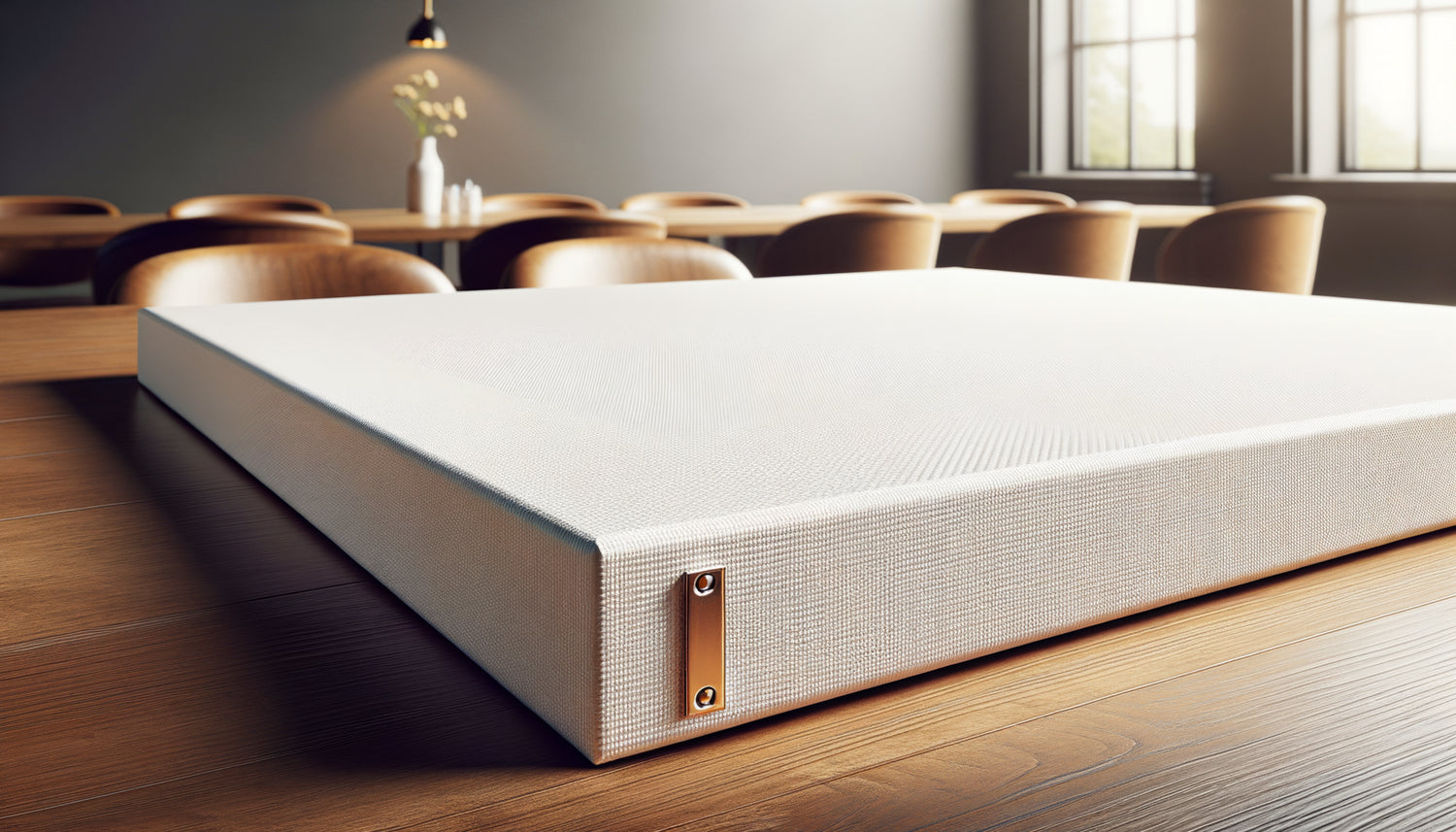
Professional quality canvases start at 350g/m². This thickness offers natural rigidity which maintains the tension of the frame, even in imposing formats. The surface remains perfectly flat, colors retain their depth, and the texture has that subtle grain that beautifully captures light. It is precisely this weight that gives that professional look immediately perceptible by your customers.
The sensory difference that your customers notice without naming it
During a consultation for a contemporary brewery, I placed two identical canvases side by side: one in 240g/m², the other in 380g/m². The owner immediately pointed to the second as more luxurious, without being able to explain why. It was the canvas density that created this impression of superior quality – a more assertive physical presence, a different light absorption.
This unconscious perception directly influences the overall experience. In a gourmet restaurant where the average bill exceeds 60 euros, a thin canvas betrays an inconsistency in positioning. Conversely, a professional grammage of 350g/m² or more naturally harmonizes with the level of requirement you display in your kitchen and service.
Adapt the grammage to your concept and spaces
Not all restaurants require the same approach. The optimal grammage depends on three essential parameters: the format of your canvases, the lighting ambiance, and exposure to the elements.
For small formats up to 60x80 cm, a grammage of 300-320g/m² is generally sufficient. The natural tension of the frame compensates for dimensional variations. These formats are perfect for multiple wall compositions, very popular in bistros or restaurants with a relaxed atmosphere.
The medium formats from 80x120 cm to 100x150 cm – the most common in restaurant decoration – absolutely require a minimum grammage of 350g/m². This thickness guarantees perfect flatness even after several years of exposure. It is the professional standard for any establishment wishing to project a refined image.
For large wall compositions exceeding 150 cm, I systematically recommend 380-400g/m². These imposing formats become major focal points in your decoration. A canvas that sags slightly transforms your masterpiece into a visual weakness. High grammage prevents this gradual devaluation.
Risk areas in your establishment
Some locations subject your canvases to particular constraints. Near open kitchens, humidity and temperature variations attack the fibers. In these areas, always choose a grammage greater than 360g/m², or opt for canvases with water repellent treatment.
Walls exposed to direct natural light also require special attention. UV radiation gradually degrades lightweight fibers, creating irreversible deformations. A thick canvas is more resistant to these daily aggressions while preserving its initial color rendering.

Beyond Grammage: Additional Criteria for a Professional Finish
Grammage alone does not guarantee excellence and must be accompanied by other quality factors. The fabric composition plays a major role: 100% cotton canvases offer a natural and noble surface, while polycotton blends (typically 65/35) provide increased moisture resistance – a valuable asset in restoration.
The weave directly influences the final visual rendering. A tight weave creates a smooth surface ideal for photographs and contemporary images. A more visible weave gives this artistic texture that enhances reproductions of paintings or abstract creations. For a restaurant, I generally prefer medium weaves which offer presence and refinement without dominating the artwork.
The coating – this layer of preparation applied to the raw canvas – determines how inks adhere and age. Professional acrylic coatings create a protective barrier that preserves color intensity for decades. It is this combination of high grammage + quality coating that produces this durable professional finish sought by demanding restaurateurs.
The Investment That Enhances Your Visual Identity
The question of cost inevitably arises in my discussions with restaurant owners. A 350g/m² canvas does indeed cost 30 to 50% more than a 240g/m² version. But this difference represents only a few dozen euros per artwork – a negligible sum compared to the overall budget for restaurant design.
Consider instead the lifespan: a professional canvas retains its visual impact for 10 to 15 years without intervention. A lightweight canvas begins to show signs of weakness after just 2-3 years, forcing you to prematurely replace your decorative elements. The return on investment clearly favors initial quality.
More fundamentally, your walls tell a story about your establishment. They communicate your level of requirement before your customers even consult the menu. Cheap-looking canvases create cognitive dissonance with refined cuisine. Artwork with professional grammage reinforces, on the contrary, the consistency of your premium positioning.
The Simple Test Before Buying
If you are unsure between several options, always request a physical sample. Hold the canvas at arm's length in natural light. A professional-quality canvas has total opacity – no transparency even when backlit. Slightly bend a corner: a 350g/m² canvas resists and immediately returns to its shape, whereas a lighter version retains a marked crease.
Also run your hand over the surface. The texture should be firm, homogeneous, without soft or uneven areas. It is this tactile density that guarantees durability and preserves the intensity of printed colors.
Ready to transform the atmosphere of your establishment with exceptional artworks?
Discover our exclusive collection of wall art for Restaurant that combines professional paper weight and unique creations to sublimate your visual identity.

Your decoration as a signature of excellence
Imagine your customers entering your restaurant during an important evening. Their eyes naturally scan the walls, unconsciously recording thousands of details that build their first impression. The canvases that adorn your space are not mere decorations – they are silent ambassadors of your vision, your attention to detail, this excellence that you infuse into every aspect of your craft.
Choosing a professional canvas paper weight of 350g/m² minimum is not an expense, it's an investment in this consistency that transforms a restaurant into a memorable destination. It’s the guarantee that in five years, your walls will always tell the same story of uncompromising quality.
Start by evaluating your current formats and the exposure conditions of your spaces. Then establish a progressive renewal schedule if necessary, prioritizing the most visible areas – the entrance, the main room, the spaces photographed by your customers. Each canvas replaced with a professional version instantly elevates the overall perception of your establishment.
Lasting beauty doesn't require revolution, just informed choices. And the paper weight of your canvases is undeniably part of those discreet decisions that create an exceptional experience.