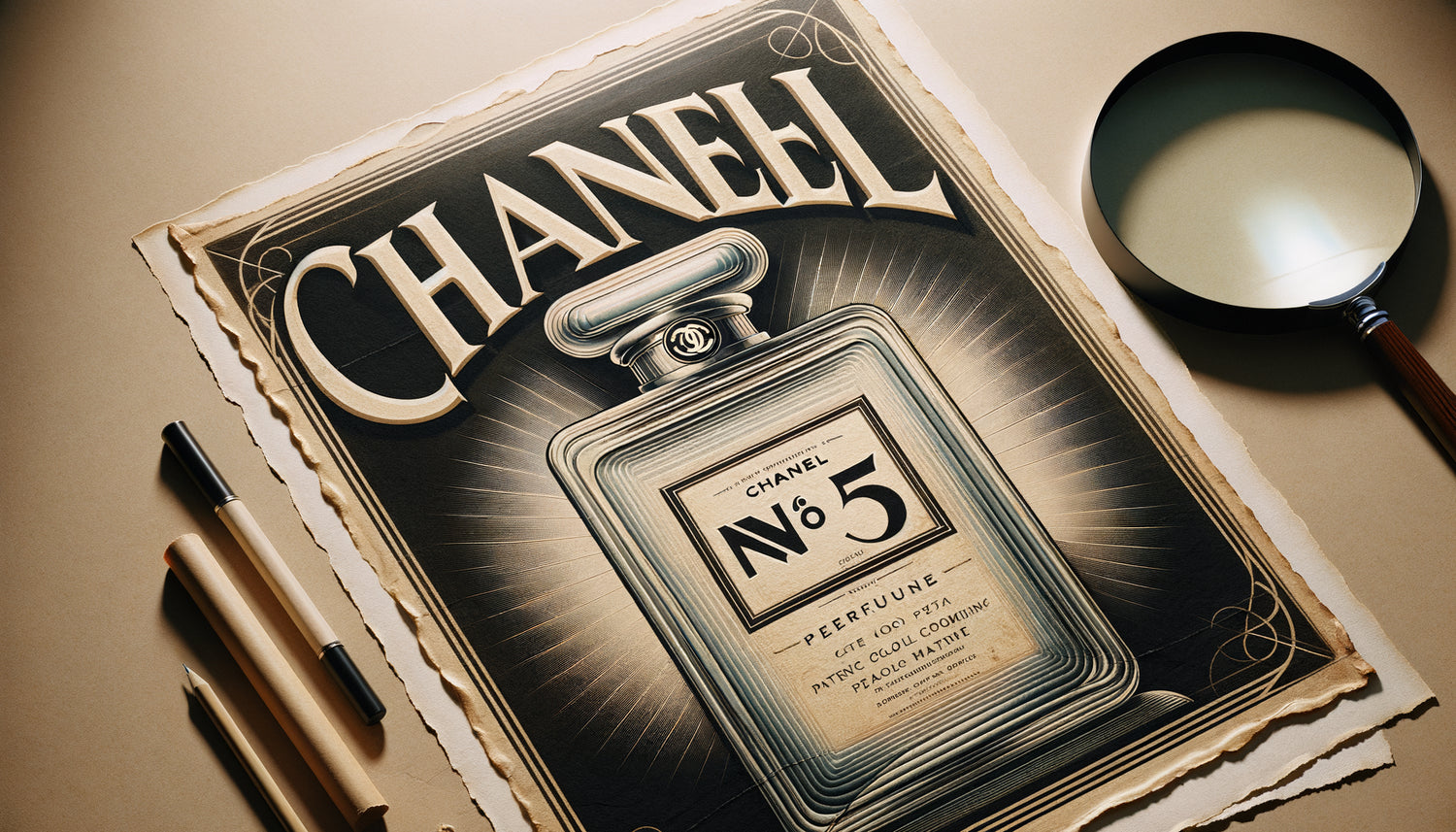
When I discovered my first Chanel advertising poster from the 1960s in a Parisian flea market, my heart raced. But quickly, doubt crept in: was it authentic or just a simple reproduction? This question haunts all collectors and decoration enthusiasts who dream of hanging a piece of Chanel's history on their walls. An authentic vintage Chanel advertising poster instantly transforms a space into a private art gallery, brings timeless sophistication, and represents a growing heritage investment. Yet, the market is full of reproductions that can deceive even experienced eyes. The line between real and fake can seem blurry, especially when you are starting out in the world of collecting. Rest assured: with a few precise clues and a trained eye, you can learn to distinguish an authentic Chanel advertising poster from a copy. I'm going to share the essential criteria that I've learned to decipher over the years to assess the authenticity of these graphic treasures.
Examining the paper: your first revealing clue
Paper always tells a story. An authentic vintage Chanel advertising poster from the 1950s to 1980s has specific textures and compositions that immediately betray modern reproductions. The paper of the era generally has a particular thickness, often between 150 and 200 grams, with a slight roughness to the touch. Original Chanel advertising posters mainly used high-quality offset paper, sometimes slightly yellowed by time in a uniform way.
Gently run your hand over the surface: an authentic poster reveals a certain natural rigidity, while a reproduction on contemporary paper will appear either too smooth or artificially aged. Also examine the edges: an authentic vintage Chanel advertising poster often shows traces of wear consistent with its age, micro-tears or slight browning of the contours. Reproductions sometimes try to imitate this aging, but the result seems too uniform, almost calculated.
Printing techniques: decoding manufacturing secrets
Offset lithography dominated the luxury advertising industry during Chanel's golden age. This technique leaves microscopic signatures that are impossible to perfectly reproduce with modern technologies. Arm yourself with a jeweler's loupe (minimum x10 magnification) and carefully observe the texture of the ink. On an authentic Chanel advertising poster, you will distinguish a characteristic halftone pattern of offset lithography, with a slight thickness perceptible to the touch.
Colors also deserve your careful attention. Vintage inks have a particular depth and saturation. The iconic black of Chanel often exhibits slightly faded nuances on authentic posters, testifying to the passage of time. Reproductions generally display too intense blacks, almost digital, or colors that are too vibrant and lack this natural patina. An original vintage advertising poster sometimes reveals tiny printing imperfections, totally absent from modern copies that are too perfect.

Legal mentions and typography: details that never lie
Each era has its own typographic and legal codes. An authentic Chanel advertising poster systematically includes printer's marks, often discreetly placed at the bottom or on the sides. Look for the name of the printing house, sometimes accompanied by a Parisian address or a print run number. Historic printing houses like Draeger, Karquel or Bedos collaborated with Chanel and their signature is a guarantee of authenticity.
The typography used for the Chanel logo and advertising texts evolves according to the decades. In the 1960s, Chanel advertising posters favored elegant serif fonts, while the 1970s saw the emergence of bolder and more modernist characters. An informed collector immediately recognizes an anachronistic typeface. Also check the spacing between the letters of the interlaced double C: on authentic posters, these proportions respect precise standards that counterfeiters rarely reproduce accurately.
Provenance and history: tracing the journey of your find
A vintage Chanel advertising poster always has a story. Authentic pieces generally come from traceable sources: old collections, inheritances, documented auctions or recognized specialist shops. Be wary of sellers unable to provide any information about the origin of their poster. A serious collector or professional antique dealer systematically documents his acquisitions.
Request a certificate of provenance or any document attesting to the history of the poster. Prestigious auction houses provide detailed appraisals for vintage advertising posters of value. If you are buying from a private individual, question them about the circumstances of the acquisition: was it inherited, purchased in a gallery, preserved for decades? A coherent and detailed story significantly reinforces the credibility of authenticity. Modern reproductions sold as originals rarely come with a convincing narrative.

Dimensions and formats: respecting the standards of the time
The French advertising industry used standardized formats for posters, and Chanel was no exception. Common dimensions included the 40x60 cm format, the 60x80 cm or the large format 120x160 cm for major campaigns. An authentic Chanel advertising poster generally respects these classic proportions. Unusual or non-standard dimensions are a potential warning sign.
Measure your poster precisely and compare it to documented historical formats. Contemporary reproductions are often resized to fit modern frames or current decorative preferences, creating slightly offset proportions. An original vintage poster may show slight variations due to manual cutting or paper removal over time, but remains fundamentally faithful to the standards of its production era.
Professional expertise: when to contact specialists
For pieces of significant value, the eye of an expert remains irreplaceable. Auctioneers specializing in vintage advertising posters, graphic art galleries or houses of experts in fashion and luxury objects have sophisticated analysis tools. They can examine the poster under ultraviolet light to detect invisible alterations, analyze the chemical composition of inks or compare your piece with extensive databases.
Do not hesitate to invest in an appraisal before acquiring an authentic Chanel advertising poster at market price. Appraisal fees, generally between 100 and 300 euros depending on complexity, represent a prudent protection against counterfeits. Some experts also offer preliminary authentications by photograph, although physical examination remains the most reliable method. This professional approach also provides you with valuable documentation for insurance and future resale of your collection.
Transform your interior into a contemporary art gallery
Discover our exclusive collection of fashion paintings that captures the timeless elegance of major fashion houses and enhances your living spaces with refinement.
Cultivate your collector's eye with passion and patience
Authenticating a vintage Chanel advertising poster becomes intuitive with experience. Visit decorative arts museums, antique poster exhibitions, specialized shows where you can observe authenticated pieces. Browse catalogs of historical auction sales that faithfully reproduce Chanel advertising posters from different eras. This visual immersion refines your sensitivity to detail and develops the valuable intuition that seasoned collectors possess.
Create a personal reference file with high-resolution photographs of authentic posters, noting recurring characteristics, stylistic variations by decade. This documentation becomes your mental library, your instant comparison tool when faced with a new discovery. Authenticating a vintage Chanel advertising poster is as much about technical knowledge as it is about cultivated aesthetic sensitivity.
Conclusion: the art of collecting with discernment
Evaluating the authenticity of a vintage Chanel advertising poster transforms simple acquisition into a truly exciting investigation. Each criterion examined – the paper, the printing, the typography, the provenance, the dimensions – constitutes a piece of the puzzle that gradually reveals the truth of your find. Imagine the satisfaction of hanging an authentic 1960s poster in your living room, knowing that you have been able to distinguish the real from the fake thanks to your discerning eye. This piece will not only be a sophisticated decorative element, but a tangible testament to the advertising history of a legendary house. Start modestly, document yourself abundantly, do not hesitate to consult experts for your first important acquisitions. Your collection of authentic Chanel advertising posters will gradually build up, each piece adding its note of timeless elegance to your world.
FAQ
Can I authenticate a vintage Chanel advertising poster solely with photos?
Photographic authentication offers a preliminary assessment but remains limited for definitive certification. Images allow examination of the overall composition, typography, and certain visual details such as printer's marks. However, crucial elements like paper texture, ink thickness, support rigidity, or subtle color nuances require physical inspection. If you are considering purchasing a poster remotely, request high-resolution photographs from different angles and lighting conditions, including close-ups of text areas and edges. A seller in good faith will accept these requests. For pieces with a value exceeding 500 euros, always prioritize direct examination or professional expertise before finalizing the transaction.
What is the price difference between an authentic Chanel poster and a reproduction?
The value gap is considerable and justifies full vigilance when authenticating. A modern quality reproduction typically costs between 20 and 150 euros depending on size and finish. In contrast, an authentic vintage Chanel advertising poster from the 1950s-1980s sells for between 800 and 5000 euros for common pieces in good condition, and can reach 15000 euros or more for rare creations signed by famous photographers or from iconic campaigns. Posters featuring Marilyn Monroe for Chanel N°5 or those from the early Coco Chanel campaigns achieve peaks at auctions. This price difference reflects not only rarity and authenticity but also the potential investment heritage value of an original piece versus a reproductive decoration.
Do vintage reproductions have value for collectors?
This question raises an interesting debate in the collecting world. Some older reproductions, made in the 1980s-1990s with traditional techniques and authorized by Chanel, are gradually acquiring their own value among collectors. They will never be considered originals but can testify to a period of rediscovery of the brand's advertising heritage. Their value remains modest, rarely exceeding 100-300 euros. For an interior designer or a fan of the Chanel universe without a significant budget, these vintage reproductions offer an honest alternative, provided they are clearly identified and sold as such. The essential thing remains transparency: a reproduction presented honestly retains legitimate decorative interest, while a counterfeit sold as original constitutes unacceptable deception.