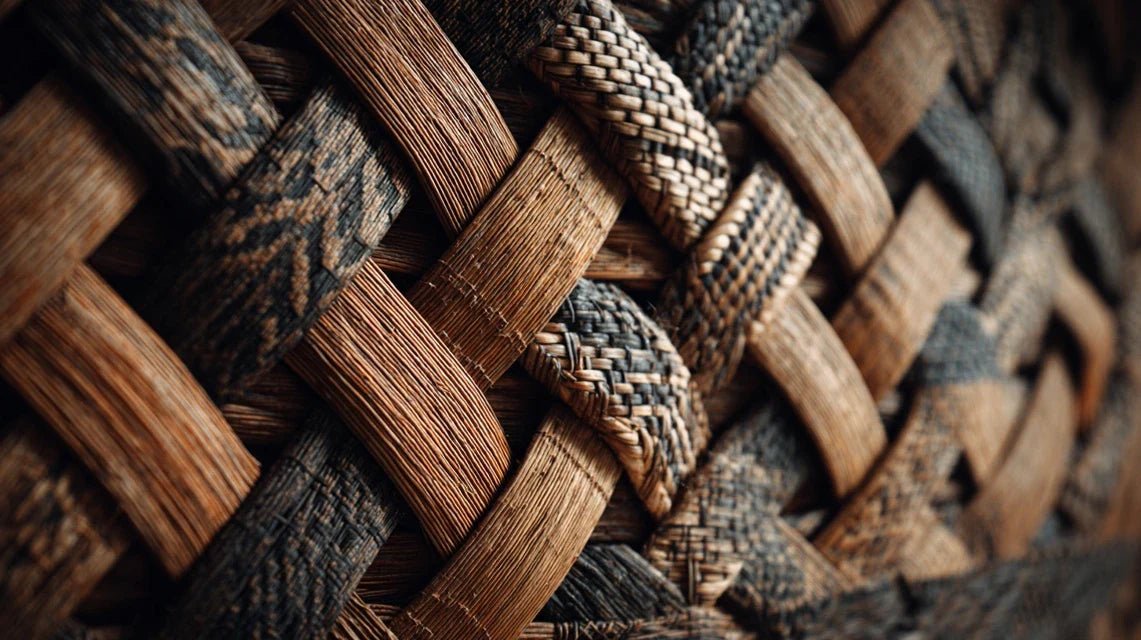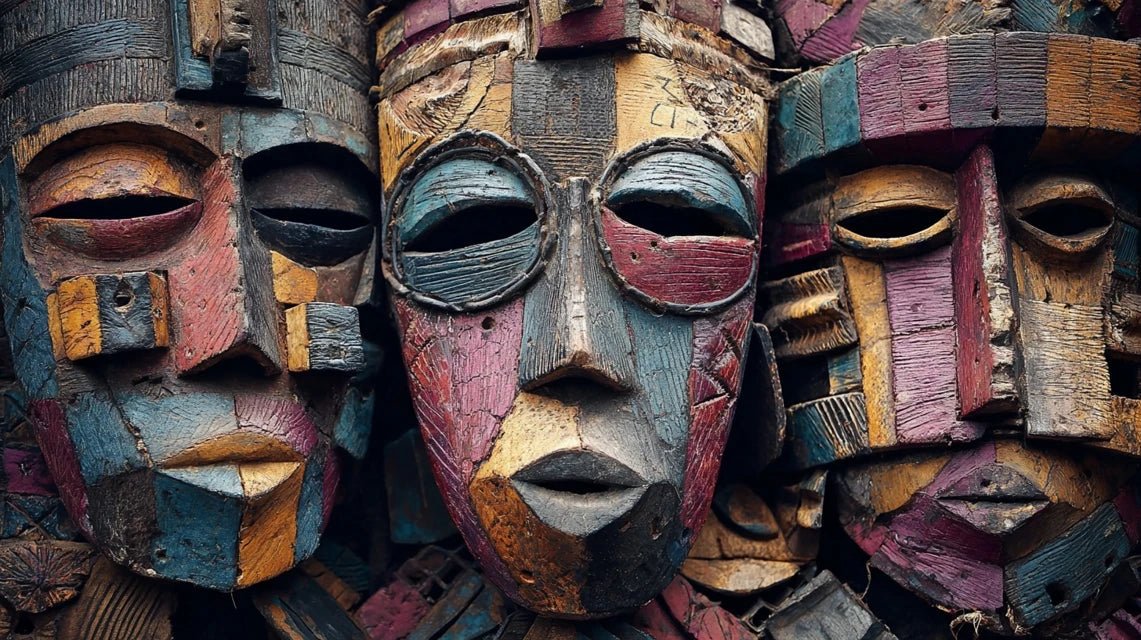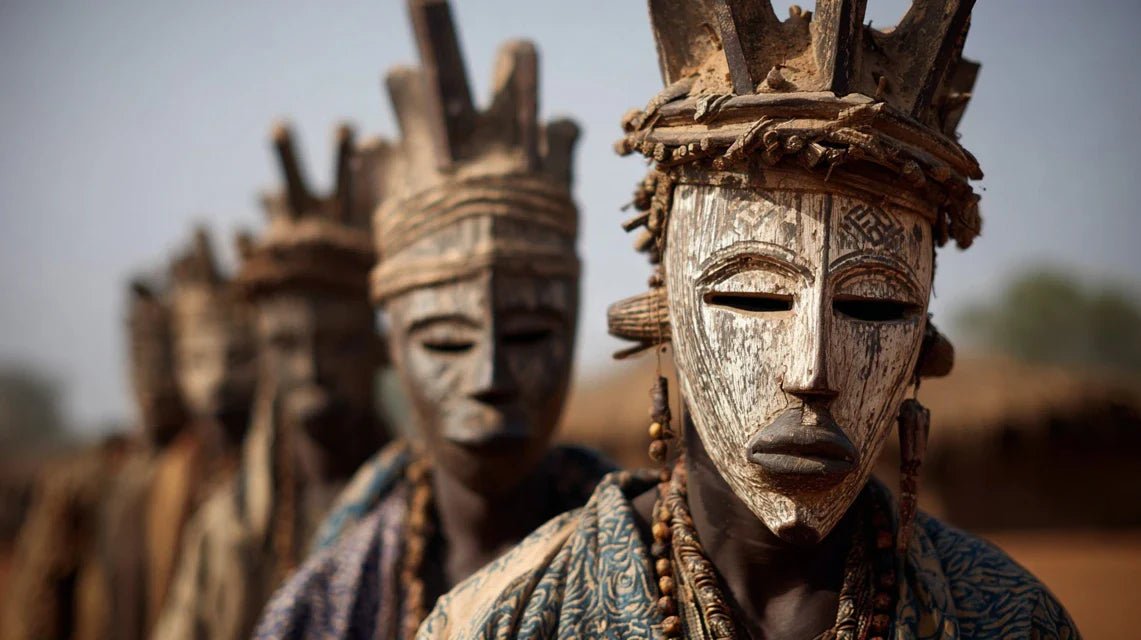
I discovered my first mask Bwa during an auction in Paris in 2009. This sculpted wooden panel, over two meters long, adorned with hypnotic geometric patterns in black, white and red, seemed to vibrate with a particular energy. Little did I know that day that I was coming into contact with one of the most fascinating artistic heritages of West Africa. Bwa masks from Burkina Faso are not mere decorative objects: they are guardians of millennial traditions, sought-after contemporary artworks, and powerful symbols of spiritual connection. You may admire African art in museums or on Instagram, but you wonder what makes these masks so special? Why do these geometric shapes capture the attention of collectors and designers around the world? Rest assured, understanding the heritage of Bwa masks does not require a degree in ethnology. In this article, I invite you on a visual and cultural journey to discover how these ancestral creations continue to influence our vision of art and design today.
The sacred origin of Bwa masks: much more than sculpted wood
Bwa masks find their roots in the heart of Burkina Faso, in the central regions where the Bwa people perpetuate secular traditions. These works are not born from a simple aesthetic will, but from a deep spiritual necessity. For the Bwa, each mask embodies a spirit of nature, an ancestor or a cosmic force that protects the community.
The making of a traditional Bwa mask follows a precise ritual passed down from generation to generation. The sculptor, often initiated as a child, carefully selects the wood, usually from milkwood or kapok tree. The process can take several weeks, punctuated by rituals and offerings. This sacred dimension explains why authentic Bwa masks exude such a particular presence, even outside their original context.
The Bwa distinguish two main families of masks: sculpted wooden masks and vegetable fiber masks. The former, with their slender geometric shapes, are the most recognizable. Some reach three meters in height and represent mythical creatures like the butterfly, the serpent or the eagle. This impressive verticality is not insignificant: it symbolizes the connection between earth and sky, between the visible and invisible world.
The geometric language: decoding the patterns of Bwa masks
What immediately strikes you about a Bwa mask is its graphic design. These black and white checkerboards, concentric circles, red zigzags are not mere decorations. Each motif tells a story, transmits a coded message that only initiates can fully understand.
Essential motifs and their meaning
The checkerboard represents cultivated fields seen from the sky, a symbol of agricultural prosperity. The concentric circles evoke waves in water, the propagation of life and knowledge. The zigzag lines symbolize the path of water, essential in these semi-arid regions, but also the winding journey of human existence.
This geometric aesthetic profoundly influenced the European Cubist movement of the early 20th century. Picasso and his contemporaries, fascinated by African art, drew from these forms a new way to decompose reality. Bwa masks, with their radical abstraction, thus contributed to revolutionizing modern Western art.
Today, these motifs inspire interior designers worldwide. The influence of Bwa masks can be found in contemporary textiles, graphic wallpapers, and of course in African art collections that adorn the most sophisticated interiors. This timeless geometry integrates equally well into an industrial loft as it does into a minimalist Scandinavian apartment.

Discover this inspiring artwork
Masked ceremonies: when art comes to life
A Bwa mask displayed in a living room or museum is only part of the story. To truly understand its heritage, you must imagine these masks in motion, worn by dancers during community ceremonies.
Bwa mask outings punctuate the agricultural calendar and key moments in social life. Funerals, initiations, harvest celebrations: each important event justifies the appearance of these masked beings who mediate between the living and spiritual forces. The wearer of the mask does not simply put it on; he becomes the spirit it represents, in a complete transformation of his identity.
The dance of Bwa masks is spectacular. These sometimes gigantic structures spin, bend, seem to defy the laws of gravity. The dancer, whose face is completely hidden, brings the carved wood to life in a hypnotic ballet accompanied by drums and chants. This collective performance strengthens group cohesion and transmits essential community values to younger generations.
This performative dimension explains why the legacy of Bwa masks remains alive today. Unlike other African traditions threatened by modernization, the Bwa continue to regularly organize masked ceremonies, sometimes adapting rituals to contemporary realities while preserving their spiritual essence.
The influence of Bwa masks on contemporary design
Having collected and observed trends for twenty years, I have seen the influence of Bwa masks extend far beyond circles of tribal art enthusiasts. These Burkinabé creations now permeate many creative fields.
In interior decoration
Bwa masks bring dramatic verticality to a space. Unlike the round or oval masks of other African traditions, their slender shape draws the eye upwards, creating an impression of height and majesty. In a living room with a standard ceiling, a two-meter Bwa mask instantly transforms the perception of space.
Their limited color palette - generally black, white, red and natural brown - allows them to harmonize with very diverse interiors. I have seen authentic Bwa masks enhance both colorful bohemian decors and minimalist monochrome spaces. This versatility explains their growing popularity among interior designers.
In fashion and graphic design
The geometric patterns of Bwa masks regularly appear on runways. Designers like Yves Saint Laurent, and more recently ethical ready-to-wear brands, have borrowed these visual codes. The characteristic zigzags are found on textile prints, jewelry, accessories.
Contemporary graphic design also draws from this heritage. Clean logos and geometric visual identities owe much to this ancestral African aesthetic. Without always knowing it, digital designers work with a formal vocabulary partially inherited from Bwa masks and other artistic traditions of West Africa.

Discover this inspiring artwork
How to recognize an authentic Bwa mask
With the growing popularity of African art, the market has unfortunately become filled with reproductions of varying quality. Here are the criteria I use to assess the authenticity and value of a Bwa mask.
First, wear and patina. A traditional Bwa mask used in ceremonies shows signs of use: friction, small impacts, alteration of pigments. The surface is never uniformly smooth. The wood, exposed to heat, dust and sometimes libations, develops a unique patina that is impossible to artificially reproduce convincingly.
Next, the sculpture itself. A true Bwa mask is hand-carved, with the subtle irregularities that bear witness to it. The geometric patterns, while precise in their intention, are never perfectly symmetrical. This humanity in execution distinguishes authentic pieces from overly perfect industrial reproductions.
The structure and weight are also revealing. Traditional Bwa masks are relatively light despite their size, as they are carved from soft woods. They often feature an internal attachment system allowing the dancer to wear them. Tourist reproductions are frequently heavier and lack these functional elements.
Finally, documented provenance remains the ultimate criterion. A mask accompanied by period photographs, a clear collection history or a serious certificate of authenticity is obviously more valuable than a piece without context.
Do you dream of incorporating the visual power of African art into your interior?
Discover our exclusive collection of African paintings that capture the essence of the continent's artistic traditions and transform your walls into a contemporary art gallery.
The living heritage: Bwa masks in the 21st century
Unlike some traditional arts that have become purely museum pieces, Bwa masks maintain an active presence within their community of origin. In Burkina Faso, younger generations continue to learn carving techniques and ritual dances.
This transmission nevertheless poses challenges. Rural exodus, the influence of imported religions and cultural globalization exert pressure on these ancestral practices. Some families of sculptors have adapted their production, creating pieces intended for the art market while preserving sacred masks for exclusive ritual use.
This duality has given rise to a fascinating contemporary Bwa art. Burkina Faso artists trained in fine arts revisit traditional codes, creating works that dialogue with the ancestral heritage while also addressing current artistic issues. These hybrid creations enrich the heritage of Bwa masks rather than dilute it.
On the international scene, Bwa masks occupy a prominent place in African art museums and prestigious private collections. The Musée du Quai Branly in Paris, the Metropolitan Museum in New York or the British Museum in London possess remarkable examples. This institutional recognition contributes to preserving the memory of these traditions and sometimes funding preservation programs in communities of origin.
Integrating the spirit of Bwa masks at home without appropriation
Are you captivated by the visual power of Bwa masks and want to incorporate their aesthetics into your interior? This is a legitimate approach, provided it is done with respect and awareness.
Always prioritize knowledge before acquisition. Understanding the cultural significance of an object transforms your relationship with it. A Bwa mask is not just a decorative element; it is a testament to a worldview, a spirituality, and craftsmanship passed down through generations.
If you are buying an authentic mask, make sure it comes from an ethical source. Pieces sold legally with export certificates, or old masks acquired before international conventions on cultural heritage, constitute responsible choices. Avoid objects of dubious provenance, which may have been stolen or exported illegally.
For a more modest budget or out of respect for sacred objects, consider works inspired by Bwa aesthetics rather than ritual masks. Contemporary artists, African or otherwise, create pieces that celebrate this heritage without appropriating the sacred objects themselves. Declared paintings, modern sculptures or artistic reproductions can bring this powerful geometric aesthetic to your interior.
In your staging, give the mask or inspired work the place it deserves. A two-meter Bwa mask needs space to breathe, a clear wall where its vertical elongation can fully express itself. Lighting also plays a crucial role: sidelight emphasizes the sculpture and reliefs, while direct lighting creates dramatic shadows that amplify the presence of the artwork.
Imagine yourself in your living room, your gaze drawn to this slender silhouette with hypnotic patterns. Each time you contemplate it, you are connected to a human chain stretching back centuries, to hands that carved wood in the heat of Burkina Faso, to dancers who brought these forms to life during nocturnal ceremonies. It is this connection, beyond aesthetics, which constitutes the true heritage of Bwa masks: the ability of art to transcend time and space to touch something universal within us.
The legacy of Bwa masks extends beyond geometric shapes or sculpting techniques. It is an invitation to rethink our relationship with art, spirituality, and community. In an increasingly digital and disembodied world, these objects remind us of the power of physical creations, the value of transmitted traditions, the importance of ritual and sacredness in our lives. By welcoming their aesthetics into our interiors, we are not simply decorating our walls: we are creating a dialogue between cultures, between eras, between different ways of seeing and inhabiting the world.
Frequently Asked Questions
Can an authentic Bwa mask be hung in a modern interior without looking out of place?
Absolutely, and it’s even one of the strengths of Bwa masks! Their sleek geometric aesthetic blends remarkably well with contemporary interiors. The key is staging: give them enough space for their verticality to express itself, place them on a relatively neutral wall to avoid visual overload, and light them properly to highlight their sculpture. A Bwa mask brings an organic and cultural touch that warms up minimalist spaces, while maintaining a graphic sobriety that doesn't clash with a modern decor. I’ve seen Bwa masks enhance both industrial lofts with brick walls and all-white Scandinavian apartments. The essential thing is to treat the artwork as a centerpiece around which the space is organized, rather than as a simple accessory.
How to maintain a Bwa mask to preserve its patina and value?
Maintaining an authentic Bwa mask requires a delicate and respectful approach. Absolutely avoid water, chemicals or varnishes that would irreversibly alter the usage patina. For dusting, use a soft brush with natural bristles, gently following the reliefs of the sculpture. If the wood seems very dry after years of central heating, you can apply sparingly neutral vegetable oil (such as linseed oil) with a soft cloth, but do so in moderation - too much oil can darken the wood excessively. Protect the mask from direct sunlight which degrades pigments, and maintain a stable relative humidity (40-60%) to avoid cracking of the wood. If your mask has great historical or financial value, consult a restorer specializing in African art rather than attempting interventions yourself. The usage patina is precisely what makes these objects authentic and valuable, so the goal is never to make it 'like new', but to preserve its current condition.
What is the difference between a Bwa mask and other geometric African masks?
Excellent question, car plusieurs traditions africaines utilisent des formes géométriques ! Les masques Bwa se distinguent par plusieurs caractéristiques spécifiques. D'abord, leur forme générale : les masques Bwa en bois sont typiquement très élancés verticalement, souvent en forme de planche haute et relativement étroite, contrairement aux masques Dogon (leurs voisins) qui peuvent être plus massifs, ou aux masques Bobo qui privilégient parfois des formes circulaires. Ensuite, leurs motifs : les Bwa utilisent une géométrie très contrastée noir-blanc-rouge avec des damiers, cercles concentriques et zigzags caractéristiques, tandis que les masques Bamana (Bambara) présentent souvent des surfaces plus lisses avec moins de polychromie. La structure est également distinctive : beaucoup de masques Bwa représentent des animaux stylisés (papillon, serpent, aigle) avec des formes abstraites qui suggèrent l'animal plutôt que de le représenter littéralement. Enfin, l'utilisation rituelle diffère : les masques Bwa apparaissent lors de cérémonies communautaires spécifiques liées au calendrier agricole et aux initiations, avec des danses très acrobatiques. Ces nuances peuvent sembler subtiles au néophyte, mais elles racontent des histoires culturelles distinctes. C'est cette diversité qui rend l'art africain si riche et fascinant à explorer !