In my Accra workshop-gallery, a French client froze in front of a wall composition integrating a stylized Ashanti stool. "It's magnificent, but why a seat on the wall?" This question comes up constantly. These sacred objects, transformed into wall decorative elements, carry such profound symbolic meaning that they radically transform the atmosphere of a space.
Here's what the symbolism of Ashanti stools brings to your wall decor: an authentic spiritual connection with Akan culture, a piece of art steeped in millennia of history that becomes a natural focal point, and a visual dialogue between African tradition and contemporary aesthetics that intrigues and amazes your guests.
Many hesitate to integrate these powerful symbols, fearing cultural appropriation or not knowing how to respect their meaning while creating harmonious decor. Others think that these traditional elements clash with a modern interior.
Rest assured: understanding the symbolism of Ashanti stools and their wall transposition allows you to create a unique, respectful, and deeply personal space. Contemporary decorative art has perfectly integrated these ancestral codes.
I'm going to reveal how these sacred seats have become iconic wall decorations, their secret symbolic language, and how to integrate them properly into your interior.
The Immortal Soul Sculpted: Understanding the Traditional Ashanti Stool
In the Ashanti culture of Ghana, a stool is not just furniture. It's the sunsum, the receptacle of the soul. Each individual has their personal stool, sculpted according to specific codes that tell their identity, clan, and social rank.
The golden stool, the legendary Sika Dwa Kofi, embodies the collective soul of the Ashanti people. Descended from heaven according to oral tradition, this stool has never touched the ground and will never be sat upon. It represents unity, dynastic continuity, and the spiritual strength of a nation.
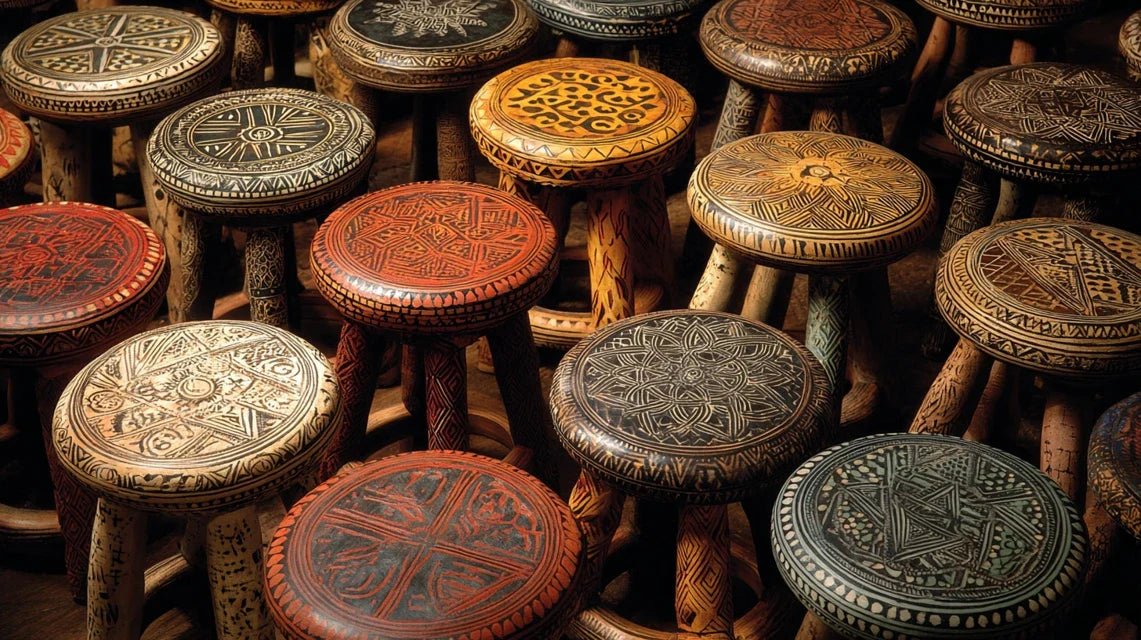
The sculpted motifs are never arbitrary. Geometric interlacing symbolizes the complexity of human relationships. Circular shapes evoke eternity and cycles of life. Arched supports represent the bridge between earth and sky, between the living and ancestors.
The Transformation into a Wall Decorative Element
Integrating Ashanti stools into wall art is not new. As early as the 1960s, artists of the African diaspora began representing these iconic forms in their works, creating a visual language that dialogues between tradition and modernity.
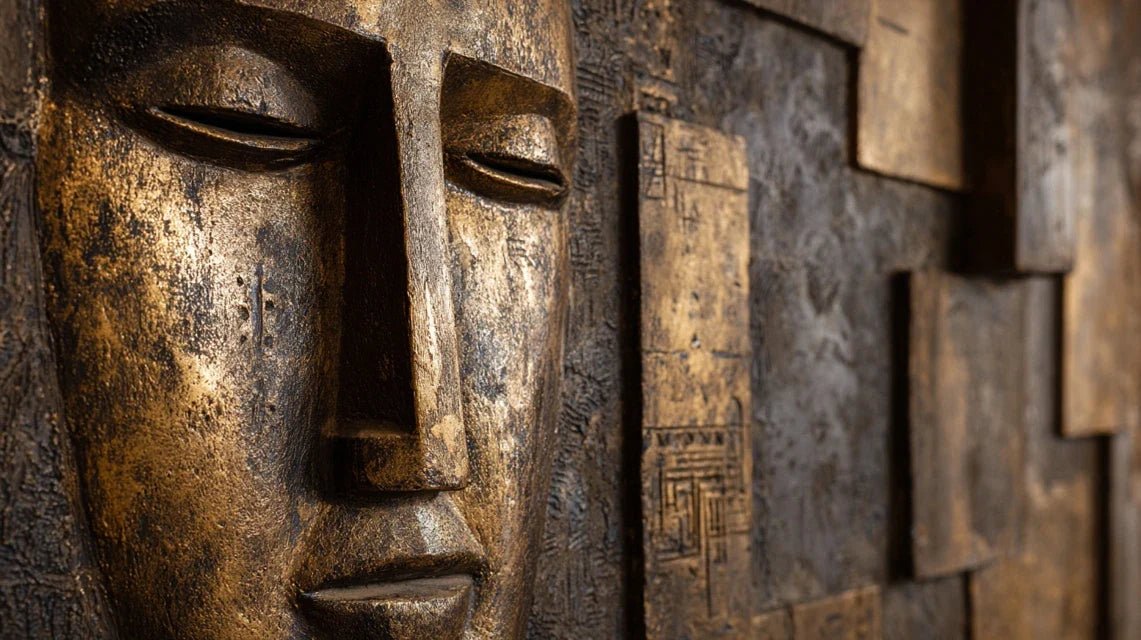
Today, this symbolism is expressed in wall decorative art through several approaches: large-format photographic reproductions, stylized illustrations, relief wall sculptures, mixed compositions integrating textile patterns and geometric shapes inspired by the structure of the stool.
The Secret Language of Forms: Decoding Decorative Symbolism
Each element of the Ashanti stool speaks a coded language that contemporary wall art reinterprets with intelligence.
The circular or rectangular seat symbolizes stability, social standing, and a place of power. In a wall composition, this shape becomes a visual anchor, creating a sense of solidity and permanence in the space.
The sculpted supports represent different values depending on their form. Smooth columns evoke simplicity and humility. Stair-step motifs symbolize spiritual progression. Anthropomorphic shapes recall that humans are the pillar of the community.
The Adinkra symbols often integrated into stools enrich the symbolism: Gye Nyame (supremacy of God), Sankofa (importance of the past), Dwennimmen (strength and humility). Recognizing these motifs in a wall artwork allows you to appreciate its full depth.
Colors also speak
The traditional color palette of the Ashanti stools carries its own symbolism. Gold evokes royalty and spiritual wealth. Black represents maturation and spiritual intensity. White symbolizes purity and joy. Red means sacrifices and vital force.
In modern wall decor art, these colors are reinterpreted: earthy tones for an organic atmosphere, black and gold contrasts for a dramatic effect, monochrome palette for a contemporary minimalist approach.

Discover this inspiring artwork
Compose a wall of history: integration into your decor
After fifteen years guiding collectors, I have identified the most successful approaches to integrating the symbolism of Ashanti stools into contemporary wall art.
The monumental approach: a large photographic reproduction or illustration of a stool becomes the centerpiece of a wall. Particularly effective in a living room or entrance, this composition immediately creates a focal point rich in meaning.
The narrative series: several representations of different stools, arranged in a composition, tell a visual story. Each piece brings its symbolic nuance, creating a rich dialogue between the elements.
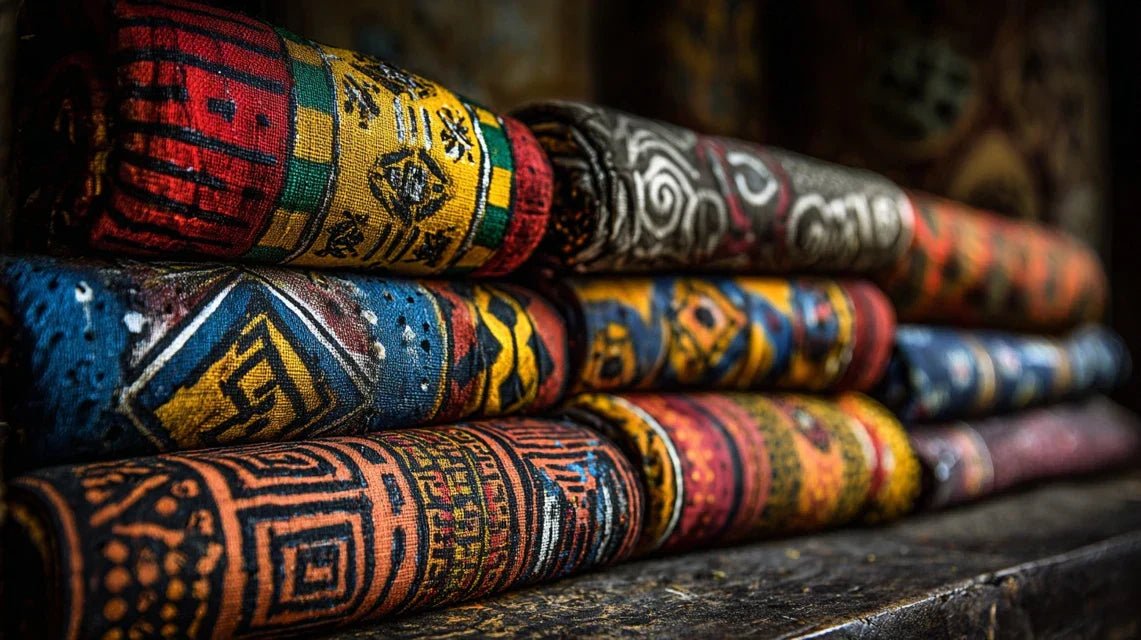
The mixed integration: combining a stool representation with Kente textiles, Adinkra motifs or masks creates a coherent cultural composition. This approach respects the akan aesthetic ecosystem.
Harmonize tradition and modernity
The challenge is to respect the symbolic charge while creating a harmonious contemporary decor. Here are my recommendations tested on hundreds of projects.
Pair an Ashanti wall art with streamlined furniture featuring simple lines. The contrast between the richness of the symbol and the sobriety of the furniture creates a sophisticated visual balance.
Work the lighting to highlight the sacred dimension. Indirect lighting or spotlights create shadow plays that reveal the depth of sculpted or illustrated motifs.
Let your composition breathe. An Ashanti stool represented on the wall deserves space around it. This empty area is not emptiness, it's a space for contemplation.
Beyond decoration: creating a spiritual connection
What distinguishes simple decor from a true atmosphere creation is intention. Understanding the symbolism of Ashanti stools transforms your view of these pieces.
In Akan tradition, the stool is an intergenerational link. Placed on your wall, its representation recalls the importance of roots, transmission, continuity. It invites reflection on our own heritage.
This spiritual dimension does not require religious adherence. It simply offers a contemplative pause in our often too functional interiors. A space to reconnect with fundamental values: community, respect for elders, humility before the sacred.
Respect without appropriating
The issue of cultural appropriation is legitimate. How to integrate these powerful symbols without distorting them?
First, educate yourself. Understanding the history and meaning of stools is not optional, it's the basis of respect. Then, prioritize works created by African artists or diaspora who reinterpret their own heritage.
Avoid decorative multiplication. A sacred stool is not a repetitive motif for wallpaper. Treat it as the precious object that it is: unique, meaningful, worthy of attention.
Finally, share this knowledge. When your guests admire your wall composition, tell the story. This transmission perpetuates respect and cultural appreciation.

Discover this inspiring artwork
Styles and inspirations: compositions that make a statement
Contemporary art decorative has developed several integration currents of the Ashanti symbolism in wall compositions.
The afro-minimalist style: neutral background, a single representation of stool in black and white or monochrome, clean lines. This approach appeals to Scandinavian or Japanese interiors seeking a strong cultural touch without visual overload.
The afro-maximalist style: mastered accumulation of representations of stools, textiles, patterns, vibrant colors. For bold personalities who assume a strong cultural statement.
The neo-traditional style: faithful reproduction of traditional shapes and colors, with a contemporary staging. Modern lighting, minimalist frames, but absolute respect for akan aesthetic codes.
The abstract-conceptual style: deconstruction of the stool's forms into geometric elements, games of lines and volumes inspired by the structure without literal reproduction. For lovers of contemporary art seeking a subtle cultural reference.
Transform your walls into cultural portals
Discover our exclusive collection of African art that celebrates the symbolic richness of Ashanti and akan traditions, creating spaces full of history and meaning.
Create your composition: step-by-step practical guide
Going from inspiration to realization requires method. Here is my proven process for integrating the symbolism of Ashanti stools into your wall art.
Step 1: Define your intention. What value do you want to embody? Family stability? Ancestral connection? Cultural elegance? This clarity will guide all your aesthetic choices.
Step 2: Choose your wall. Preferred locations are the main living room wall (for welcome and conviviality), the entrance (to set the atmosphere upon arrival), or the bedroom (for an intimate space of reflection).
Step 3: Select your representation. Art photograph, contemporary illustration, wall sculpture, canvas print... The medium must correspond to your overall style while respecting the symbolic load of the subject.
Step 4: Build the ecosystem. What complementary elements? Accent lighting? Green plants to recall natural origins? Echoing textiles?
Step 5: Test before fixing. Use repositionable adhesive tape to visualize the real effect for a few days. Observe how natural light plays on the artwork at different hours.
Mistakes to Absolutely Avoid
After seeing hundreds of installations, certain mistakes regularly recur and compromise the desired effect.
Do not mix cultural symbols. An Ashanti stool next to a Buddha and a dreamcatcher creates visual and cultural confusion. Stay consistent in your aesthetic universe.
Do not undersize. A small reproduction lost on a large wall loses all its power. The stool must have a presence, a visual stature.
Do not ignore the chromatic context. The colors of the wall and the environment must dialogue with the tones of your artwork, not fight them.
In conclusion, the symbolism of Ashanti stools in wall art offers more than just an ethnic touch to your interior. It is an invitation to integrate depth, history and spirituality into your daily life. Imagine yourself every morning, contemplating this millennial form that reminds you of the importance of roots, stability, transmission. Your wall then becomes an open book on a fascinating culture, a starting point for enriching conversations, a unique aesthetic anchor that distinguishes your space from all others. Start by identifying the wall that deserves this transformation, then let the power of these ancestral symbols work their decorative and spiritual magic.
Frequently Asked Questions
Can I integrate an Ashanti stool into my decor without knowing Ghanaian culture?
Absolutely, provided you adopt a respectful and curious approach. Unlike certain sacred objects that should not leave their ritual context, artistic representations of Ashanti stools are created precisely to share this culture with the world. The essential thing is to inform yourself about their meaning, to favor works created by African artists or validated by them, and to treat these pieces with the respect due to their symbolic charge. Consider your purchase as the beginning of an enriching cultural learning experience rather than a simple decorative transaction. Many collectors discover the richness of Akan culture in this way and develop a lasting passion for African art. What matters is not where you come from, but the intention and respect you put into this integration.
How to associate Ashanti symbolism with a contemporary minimalist interior?
It is precisely in minimalist interiors that the symbolism of Ashanti stools reveals its full decorative power. Minimalism values quality over quantity, intention over accumulation, just like the Akan philosophy. Opt for a single wall art piece representing a stool, in a stylized or black and white photographic version. Place it on a neutral wall, with plenty of breathing space around it. Lighting becomes crucial: a directed spotlight or indirect lighting creates shadows and reveals the depth of the patterns. This mono-work approach transforms the stool into a visual sculpture, a meditative focal point perfectly aligned with the minimalist spirit. I have seen Scandinavian interiors totally transformed by a single large representation of a golden stool on a white background, creating a striking cultural and visual contrast.
What are the most suitable wall art formats to represent an Ashanti stool?
The choice of format depends on your space and the desired effect, but some options prove particularly effective. Large format canvas prints (minimum 80x120 cm) create a striking presence ideal for large living room walls. Triptychs allow you to tell a story in three parts: origin, symbolism, contemporary interpretation. Wooden or metal wall sculptures bring a tactile dimension and create fascinating shadow play depending on the lighting. For small spaces, a series of four square format illustrations (40x40 cm) arranged in a grid works admirably. Prints on brushed aluminum give a modern and bright rendering particularly suitable for industrial interiors. Avoid formats that are too small which dilute the symbolic power, and always prioritize print quality to do justice to the sculpted details of traditional stools.