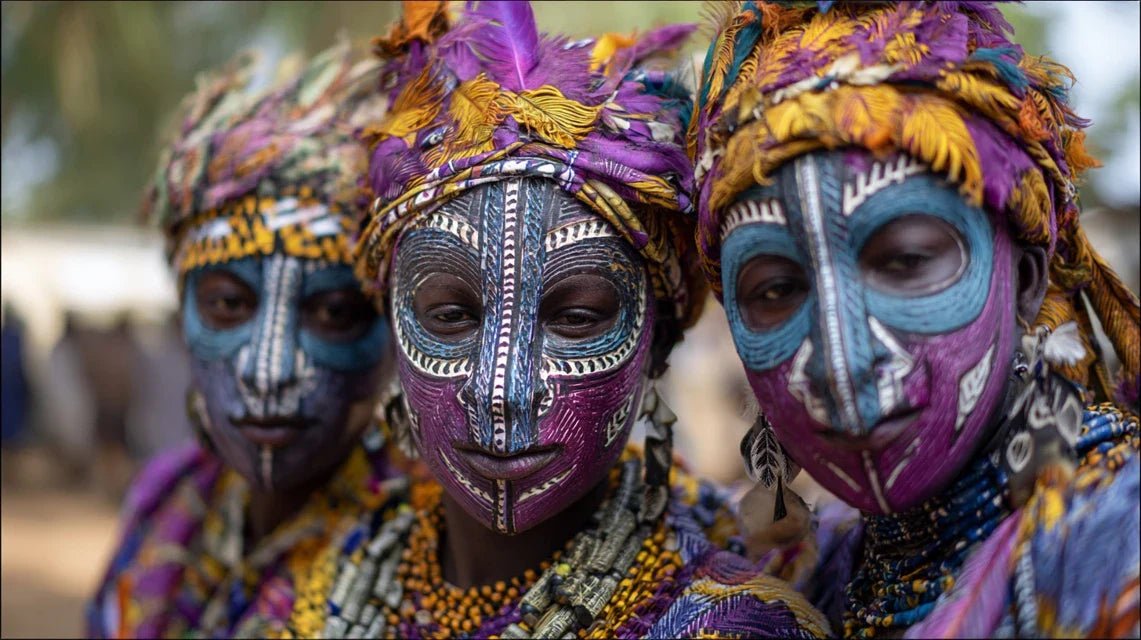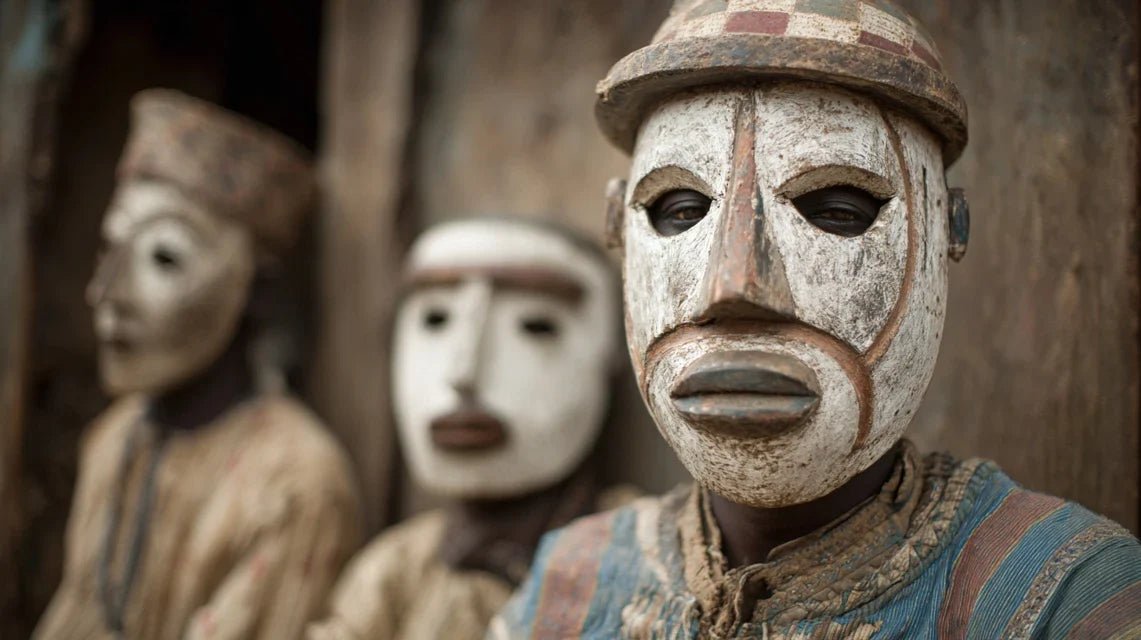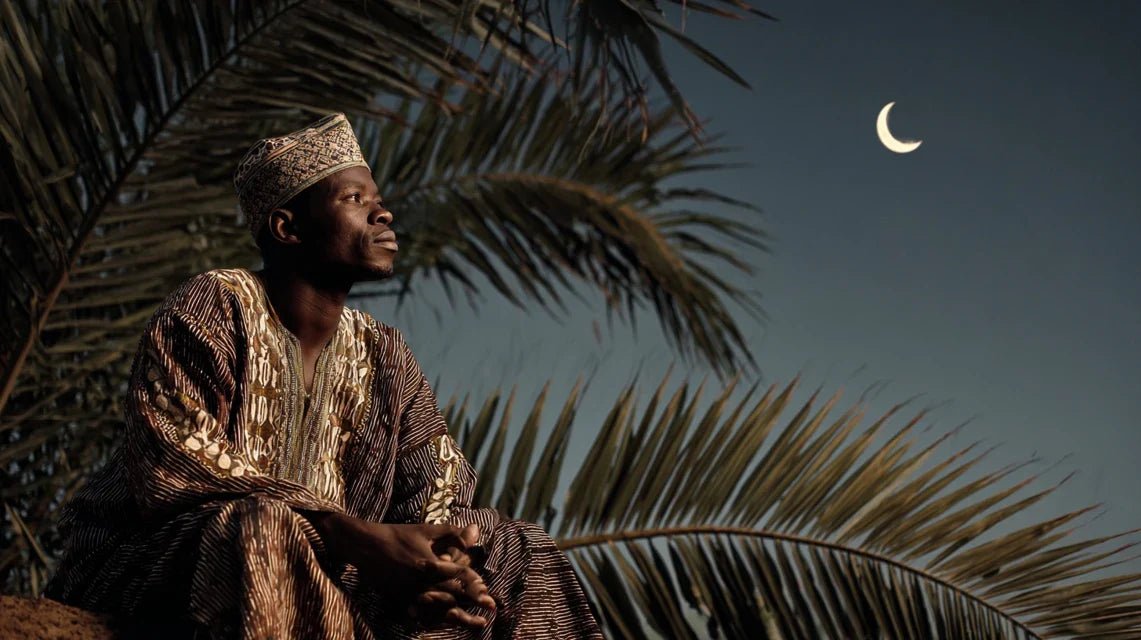
The first time I contemplated a Ciwara mask in a private collection in Bamako, I was struck by these delicate crescents carved on the temples. My guide, a Bamana sage from Ségou, smiled at me: “You see the moon? It has been watching us for centuries.” These lunar symbols are not mere ornaments. They embody a millennial cosmology where the nocturnal star dialogues with the earth, ancestors and living beings.
Here's what the lunar symbols among the Bamana bring: a profound understanding of the female cycle and fertility, an ancestral connection to natural rhythms, and a poetic vision of the balance between light and shadow. These sculpted, woven or painted motifs run through Bamana art like a silver thread connecting the visible to the invisible.
You may admire African aesthetics in your interior, but you feel that this narrative dimension, this soul that transforms an object into a carrier of history is missing. Rest assured: understanding the meaning of Bamana lunar symbols is accessing a universal visual language, that of cycles, rebirth and feminine wisdom. I take you on a journey to the heart of Mali, where each crescent moon tells a story.
The Moon as Cosmic Mother in Bamana Thought
Among the Bamana people of Mali, the moon is never just a celestial satellite. It embodies Mousso Koroni, a primordial female figure of creation. In their mythology, this turbulent and creative goddess brings the necessary disorder to life: menstruation, fertility, transformation. The Bamana lunar symbols carved on Ntomo masks or granary doors evoke this original feminine power.
The crescents of the moon engraved in wood represent the cyclical phases: the new moon symbolizes gestation and potential, the full moon embodies fulfillment and maturity. This cosmic reading permeates every ceremony. During female initiations Gwan, young girls wear adornments decorated with lunar motifs, marking their passage towards fertility. The moon thus becomes the celestial mirror of the female body and its metamorphoses.
The Crescent as an Agricultural Calendar
Lunar symbols among the Bamana also function as a living calendar. Farmers observe the phases of the moon to determine periods of sowing and harvesting. A crescent pointing upwards on a calabash indicates the rainy season, one pointing downwards announces drought. This astronomical wisdom is visually translated into everyday crafts, transforming each utilitarian object into a support for knowledge.
Ciwara Masks: When the Moon Meets the Antelope
The famous Ciwara mask, an emblem of the Bamana art, often combines stylized antelope horns with recessed or raised lunar motifs. This association is not insignificant. The mythical antelope Ciwara is said to have taught agriculture to humans, while the moon regulates growth cycles. The lunar symbols engraved on these sacred headdresses recall that all earthly abundance depends on celestial rhythms.
I witnessed a Ciwara dance in a village near Koutiala. The dancers, wearing these majestic sculptures topped with sculpted crescents, leaped, mimicking the antelope tilling the soil. Every movement evoked the dialogue between the nurturing earth and the fertilizing moon. The Bamana lunar symbols on these masks are not decorative: they perform a visual prayer for crop prosperity.
The sacred geometry of the crescent
Bamana artisans sculpt lunar crescents according to precise proportions inherited from blacksmiths, keepers of esoteric knowledge. A crescent that is too wide would unbalance the mask's energy, too thin would weaken its protective power. This sacred geometry reflects the quest for harmony between masculine (the sun, iron) and feminine (the moon, water) forces. Lunar symbols thus become energetic modulators in ritual space.

Discover this inspiring artwork
Weavings and pottery: the moon in domestic intimacy
Beyond ceremonial masks, Bamana lunar symbols permeate daily life. Weavers incorporate crescent motifs into bogolan cloths, these mud-dyed fabrics whose geometries tell silent epics. A crescent surrounded by lozenges evokes a pregnant woman protected by lunar ancestors. Wearing this cloth is to wrap oneself in a cosmic blessing.
Potters shape jars with necks adorned with engraved crescents before firing. These vessels serve not only to store water or millet: they transform their contents into symbolic offerings to the moon. Water drawn under the full moon, preserved in these marked jars, is said according to tradition to acquire purifying and curative properties. Lunar symbols act as spiritual seals on matter.
Integrating Bamana lunar wisdom into your space
How to honor this symbolic richness in a contemporary interior? An authentic Bamana mask or a respectful reproduction placed on a wall becomes a window into this cosmology. Observe the sculpted crescents: they dialogue with natural light, creating moving shadows that evoke lunar phases. Accompany it with a bogolan textile with geometric patterns to create a visual conversation between sculpture and weaving.
Lighting plays a crucial role. Indirect lighting, like that of a candle or a dimmed lamp, highlights the recesses of the Bamana lunar symbols, mimicking the glow of the moon in the African night. Avoid aggressive spotlights that flatten reliefs. Think about temporality: subtly move your pieces with the seasons, as the Bamana reorient their altars according to lunar cycles.
Create a lunar altar inspired by the Bamana tradition
In Bamana family courtyards, you often find a small altar where offerings are placed during the new moon. You can create your own space for contemplation: a console with a mask or statuette adorned with lunar symbols, accompanied by natural elements (moonstone, seashells, white feathers). This altar becomes a point of meditation on personal and natural cycles, a reminder that we are, like the moon, in perpetual transformation.

Discover this inspiring artwork
When lunar symbols meet contemporary design
Contemporary African designers are now reinterpreting lunar symbols among the Bamana in hybrid creations. The Malian collective Ndomo transfers these crescents onto luminaires made of recycled metal, creating shadow plays that project lunar phases onto walls. This approach honors tradition while inscribing it within a modern aesthetic.
Artist Abdoulaye Konaté, famous for his monumental textiles, integrates lunar motifs into abstract compositions where the crescent dialogues with colored bands symbolizing water and fire. These works prove that Bamana lunar symbols are not frozen in the past: they evolve, blend, while retaining their original spiritual charge. Introducing these pieces into an interior is participating in this living transmission.
Let lunar wisdom illuminate your everyday life
Discover our exclusive collection of African art that captures the mystical essence of Bamana lunar symbols and transforms your space into a sanctuary of serenity.
The moon as a bridge between worlds
Bamana lunar symbols exert a universal fascination because they speak to something deeply human: our need for rhythm, renewal, connection with the invisible. In a world dominated by artificial light and screens, these crescent shapes remind us of the importance of fertile darkness, contemplative silence, and cyclicity.
When you hang a work adorned with Bamana lunar symbols, you are not simply installing a decorative element. You invite a millennial philosophy that recognizes the value of shadow, waiting, and maturation. You create a space where time slows down, where the gaze rests and meditates. It is this contemplative dimension that is often lacking in contemporary interiors saturated with stimuli.
Imagine your space bathed in this lunar wisdom: walls breathing to the rhythm of natural cycles, objects telling stories of fertility and transformation, an atmosphere honoring both light and shadow. Bamana lunar symbols offer you this possibility. Start with a piece, a mask, a textile. Observe how it dialogues with your daily life, how it subtly changes your perception of space and time.
The next full moon, stand in front of your Bamana artwork. Watch the crescent shapes capture the nocturnal light. At that precise moment, you will understand that these symbols do not represent the moon: they are the moon, a living and protective presence in your home. And you will experience what the Bamana have known forever: we do not decorate our spaces, we consecrate them.
Frequently asked questions about Bamana lunar symbols
Can a Bamana mask with lunar symbols be displayed in any room?
Absolutely, provided you respect certain principles. The Bamana traditionally place these objects in passageways or gathering spaces, never in bedrooms where energy should remain calm. A living room, an entrance hall, or an office are ideal. Avoid excessive humidity (bathrooms) which could damage the wood. The essential thing is to create a clear space around the piece so that it breathes and the lunar symbols can deploy their presence. If you feel a particular attraction to place the object elsewhere, trust your intuition: in Bamana thought, sacred objects communicate their preferred location.
How to Distinguish an Authentic Bamana Lunar Symbol from a Reproduction?
Authentic Bamana lunar symbols exhibit natural wear and tear, as well as a patina of use if the object has been used ritually. The crescents are sculpted with subtle asymmetry, never perfectly symmetrical like in industrial productions. The wood used (often fromager or neré) develops specific density and color. Natural cracks follow the grain of the wood and testify to decades of exposure to climatic variations. Be wary of pieces that appear too new sold as antiques. A certificate of authenticity from an African art expert is recommended for significant acquisitions. That said, a respectful contemporary reproduction can fully carry symbolic weight if it is made using traditional techniques by Malian artisans.
Do Bamana Lunar Symbols Require Special Maintenance?
Carved wood requires little maintenance but appreciates consistency. Gently dust with a soft brush or dry cloth every two months. Avoid chemical products that alter the natural patina. If the wood seems dry, you can sparingly apply shea butter (traditionally used in Mali) or sweet almond oil with a cloth, rubbing in the direction of the grain. The Bamana nourish their sacred objects ritually: this maintenance gesture itself becomes an act of connection. Protect the piece from direct sunlight which discolors and weakens the wood. Finally, talk to your object, touch it occasionally: in Bamana cosmology, lunar symbols are strengthened by respectful human interaction.