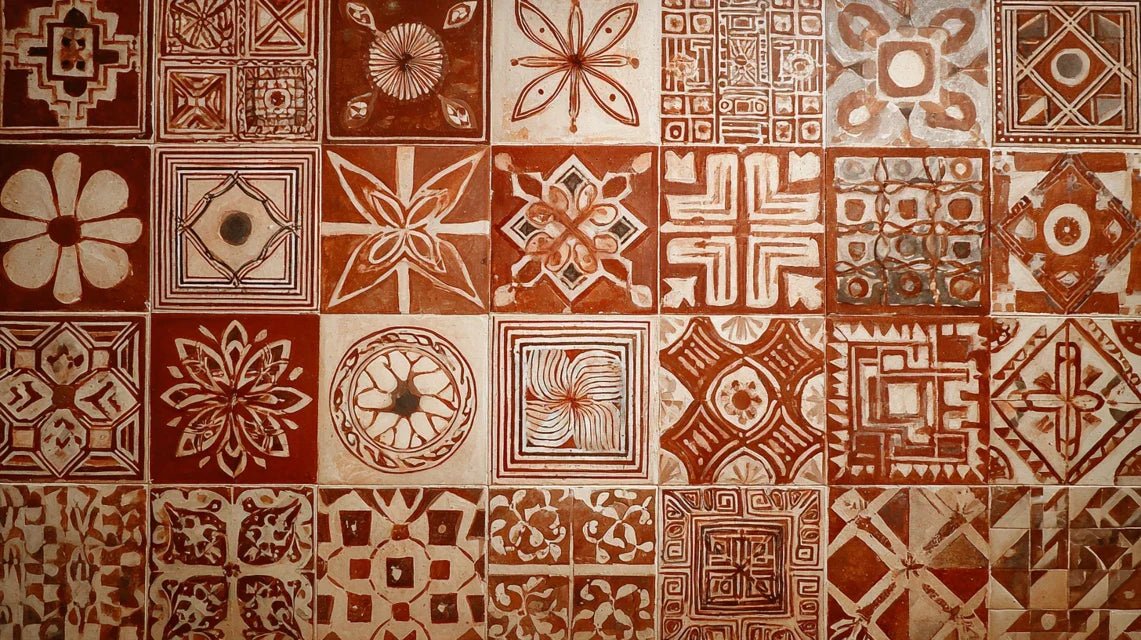
I discovered my first Zulu craft piece in a workshop in Durban fifteen years ago. An artisan was patiently carving ancestral patterns into the stretched leather of a ceremonial shield. These geometric lines, perfectly symmetrical, told the story of a warrior people whose visual aesthetic fascinates creators around the world today. These motifs, once worn into battle, now transform our interiors into veritable contemporary galleries.
Here's what the geometric patterns of Zulu shields bring to your wall decor: a graphic power that structures space, an authentic cultural connection that nourishes conversations, and a bold visual identity that marks people’s minds. More than just a decorative element, these ancestral geometric compositions create magnetic focal points in any room.
The problem with contemporary decoration? It often lacks soul. White walls all look the same. Streamlined Scandinavian posters flood interiors to the point of uniformity. You are looking for that distinctive touch that tells a story without falling into easy folklore or the accumulation of disparate ethnic objects.
Rest assured, incorporating the geometric patterns of Zulu shields does not mean transforming your living room into a museum reconstruction. These ancestral shapes naturally dialogue with modern aesthetics, Scandinavian design, and even minimalist interiors. Their graphic strength adapts to your existing universe.
In this article, I will guide you through the fascinating world of these millennial patterns to understand their deep meaning, discover how to integrate them properly into your decor, and explore the color associations that magnify their visual impact.
The graphic heritage of Zulu warriors
Traditional Zulu shields, called isihlangu, far exceeded their protective function. Each regiment had its own distinctive geometric patterns, allowing instant identification on the battlefield. These visual compositions obeyed specific codes: vertical lines symbolizing ascending strength, chevrons evoking the mountains of KwaZulu-Natal, diamonds representing the unity of the group.
The traditional color palette remained deliberately restricted: deep black, bright white, natural brown of cowhide leather. This chromatic sobriety paradoxically reinforced the visual impact of the geometric patterns of Zulu shields. Artisans carefully selected skins according to their natural coloration, creating striking contrasts without resorting to dyeing.
Perfect symmetry was a fundamental principle. A shield that was visually unbalanced was considered an omen of bad luck. This quest for geometric harmony particularly resonates today with our contemporary aspirations for spatial balance and thoughtful composition.
Visually Meaningful Codes
Contrary to popular belief, the geometric patterns of Zulu shields were never random. Each geometric configuration carried a military or spiritual meaning. Thick vertical bands indicated membership in the king's elite regiments. Checkerboard patterns suggested strategy and tactical thinking. Deliberate asymmetrical compositions sometimes signaled a particular status or warrior feat.
This semantic richness offers today a fascinating narrative depth for your wall decoration. You are not simply hanging abstract shapes, but visual symbols carrying a millennial history. This dimension radically transforms the perception of space.
How to integrate these patterns into a contemporary interior
The classic mistake is to isolate an ethnic element as an exotic curiosity. The geometric patterns of Zulu shields gain power when they dialogue with your existing furniture rather than contradicting it. In a clean, straight-lined interior, these geometric compositions create formal continuity while bringing organic warmth.
For a contemporary living room, prioritize a large wall format that fully assumes its presence. A triptych inspired by traditional Zulu motifs above a neutral sofa creates a masterful focal point. The key lies in proportion: these powerful compositions require space to breathe. Avoid accumulating other decorative elements on the same wall.
In a bedroom, opt for a muted chromatic version. The geometric patterns of Zulu shields declined in soft shades of gray anthracite and beige bring graphic structure without the visual intensity that could disturb rest. Place them facing the bed to create a meditative perspective upon waking.
The art of layered wall composition
A particularly effective technique is to visually layer references. Hang a painting with geometric patterns of Zulu shields above a Scandinavian light wood console. Add a contemporary metal sculpture on the console. This stratification creates a visual conversation between eras and cultures, a distinctive sign of cultivated interiors.
Corridors often neglected become ideal personal galleries. A series of three compositions inspired by Zulu motifs, spaced regularly, transforms a utilitarian passage into a visual experience. Vary the patterns slightly while maintaining chromatic consistency to create a dynamic rhythm.

Discover this inspiring artwork
The color schemes that enhance the impact
The original black-and-white-brown palette of the Zulu shield geometric motifs naturally fits into contemporary monochrome design trends. This sobriety allows for a smooth integration into practically all existing decorative schemes. A white wall welcomes these compositions like a blank canvas awaiting its graphic expression.
For those who are daring, chromatic transposition offers fascinating possibilities. Imagine the traditional patterns in deep blue and copper on an anthracite gray wall. Or in forest green and gold on a cream background. This contemporary reinterpretation respects the ancestral geometric structure while adapting it to your personal palette.
Combining with natural materials amplifies the organic presence of these compositions. A textured mineral plaster wall, raw linen curtains, a sisal or jute rug on the floor: these elements create a material coherence that anchors the Zulu shield geometric motifs in a warm atmosphere rather than a museum-like one.
Lighting as a revealer of depth
An often overlooked aspect: lighting radically transforms the perception of these patterns. Side lighting accentuates the contrasts and depth of the geometric compositions. The dark areas intensify while the light parts seem to vibrate. This sculptural dimension adds an unexpected three-dimensional quality.
For textured works inspired by the Zulu shield geometric motifs, install an adjustable spotlight track. Adjust the angle according to the time of day and desired ambiance. Your wall decoration becomes dynamic, subtly evolving throughout the day.
From warrior to designer: contemporary evolution
Contemporary African creators are brilliantly reinventing the Zulu visual heritage. They retain the ancestral geometric rigor while experimenting with contemporary mediums: textured acrylic, digital print on brushed metal, laser cutting on precious wood. This fusion of tradition and modernity produces unique pieces that transcend usual categories.
Some artists break down the geometric motifs of Zulu shields to extract fragments that they enlarge enormously. This change in scale reveals subtleties invisible in the original composition. A simple chevron becomes an abstract landscape. A vertical band transforms into a meditation on verticality and spiritual elevation.
Other creators superimpose multiple layers of patterns, playing with transparency and opacity. This contemporary approach creates a complex visual depth that captures the eye and invites prolonged contemplation. Each observation reveals new details, new interactions between forms.
The often forgotten tactile dimension
In the original universe of Zulu shields, the tactile dimension was as important as the visual. The worked leather, braided fibers, carved wood stimulated several senses simultaneously. The most accomplished contemporary creations respect this multisensory experience by offering textured surfaces, subtle reliefs, materials that invite touch.
This tactile quality greatly enriches the decorative experience. Your guests no longer simply admire passively; they want to approach, graze, understand the technique. The geometric motifs of Zulu shields thus become supports for conversation and human connection.
Transform your walls into a powerful visual statement
Discover our exclusive collection of African art that celebrates the graphic heritage of the continent with contemporary sophistication.

Discover this inspiring work
The successful integration of the geometric motifs of Zulu shields goes beyond the simple aesthetic question. It tells of your cultural openness, your appreciation for authentic craftsmanship, your rejection of decorative conformity. Each element of your interior should contribute to this coherent narrative.
Start with a significant centerpiece rather than accumulating several small elements. An imposing wall composition with authentic Zulu motifs anchors the space and defines the visual identity of the room. Around this focal point, gradually build with complementary elements: cushions with similar geometric patterns, a sculptural object reminiscent of shapes, an art book on Zulu culture placed strategically.
This layered approach creates a far more sophisticated narrative depth than a literal thematic decor. You suggest rather than impose. You evoke rather than reproduce. This subtlety distinguishes truly thoughtful interiors from simply furnished spaces.
Integrating the geometric patterns of Zulu shields into your wall decoration transcends the simple decorative trend. It establishes a millennial dialogue between the warrior craftsmanship of a proud people and your contemporary living space. These powerful geometric compositions visually structure the space while imbuing it with a deep narrative soul. They testify to your cultural sensitivity and your rejection of decorative standardization.
Start modestly if the style intimidates you. A single well-chosen piece, strategically placed, is enough to radically transform the atmosphere of a room. Observe how natural light interacts with the geometric contrasts throughout the hours. Note how your gaze instinctively returns to these structured compositions. This daily visual connection imperceptibly enriches your domestic environment.
The geometric patterns of Zulu shields are not a passing fashion destined to be replaced during the next decorative cycle. Their anchoring in a millennial tradition gives them an timelessness that ephemeral trends never possess. You invest in a durable aesthetic that will last through the years without losing its relevance or visual impact.
FAQ : Your questions about Zulu patterns in decor
Do the geometric patterns of Zulu shields suit a minimalist interior?
Absolutely, and it is even a particularly successful association. Minimalism rests on formal rigor, clean lines and chromatic sobriety, principles that also define traditional Zulu aesthetics. The geometric patterns of Zulu shields bring precisely what a minimalist interior seeks: a powerful graphic focal point without visual clutter. Favor a large-format piece in traditional neutral tones rather than several small compositions. The impact will be maximal while respecting the visual economy of minimalism. This combination creates a fascinating dialogue between two seemingly distant aesthetics but philosophically close in their quest for essence and their rejection of superfluity. The cultural contrast enriches without compromising overall stylistic consistency.
How to avoid the museum effect or inappropriate cultural appropriation?
The line between respectful cultural appreciation and awkward appropriation lies in intention and integration. Zulu shield geometric patterns honor an artistic tradition when presented with dignity and context, not as exotic curiosities accumulated without discernment. Absolutely avoid accumulating disparate ethnic objects that transform the space into a tourist bazaar. Instead, opt for one or two quality pieces, ideally created by contemporary African artists who reinterpret their heritage. Integrate them harmoniously into your existing decor rather than creating an isolated themed corner. Research the meaning of the patterns you choose; this knowledge transforms your relationship with the object. Finally, if guests question your choice, be able to explain what attracts you to this aesthetic beyond just the visual aspect. This conscious approach fundamentally differentiates sincere appreciation from superficial consumption.
What dimensions should you choose for optimal impact without overwhelming?
The general rule is that your wall composition occupies about two-thirds of the width of the furniture below, but Zulu shield geometric patterns benefit from a bolder approach. Their intrinsic graphic power requires space to fully express itself. For a 200 cm sofa, dare a composition 140 to 160 cm wide, or even an imposing vertical format of 100x150 cm that creates a masterful presence. In a narrow entrance or hallway, prefer a slender vertical format (40x120 cm) that accompanies the circulation without hindering it. The frequent mistake is to choose too small for fear of overwhelming, resulting in a timid presence that does not do justice to the patterns. These ancestral geometric compositions possess a visual authority that requires a significant size to reveal itself. Measure your wall, visualize mentally the scale, and consistently dare the dimension greater than your first intuition. Your space will gain character and definition.