In northwestern Benin, in the Atakora region, stand structures that defy time and Western architectural conventions. The tata somba – these earth-built fortress houses – emerge from the hilly landscape like organic sculptures, witnesses to a millennial know-how that integrates defensive architecture, spirituality and artistic expression into an absolute coherence. When I discovered these villages during my research on African vernacular housing, I immediately understood that it was not just about buildings, but about true materialized philosophical manifestos.
Here's what the architecture of the fortified Somba villages of Benin reveals: a conception of habitat where defense and spirituality merge, an ancestral mastery of earth construction that inspires contemporary architects, and a decorative system that transforms each facade into a visual narrative. These structures are not mere ethnographic curiosities – they offer a radically different vision of what it means to inhabit.
The problem with our fascination for traditional African architecture is that it often remains confined to museums or documentaries. We admire these forms without really understanding the technical and symbolic sophistication they contain. Worse, we perceive them as relics of the past, when they offer surprisingly relevant solutions to contemporary challenges of sustainable construction and bioclimatic habitat.
But rest assured: discovering the universe of the fortified Somba villages does not require an anthropology degree or an initiatory journey. It simply takes accepting looking at architecture with a new eye, understanding how form and function intertwine in an inexorable logic, and grasping why these structures continue to inspire designers and decorators around the world.
In this article, I invite you to explore the anatomy of these earth fortresses, decipher the visual language of their murals, and understand how this ancestral architecture dialogues with our current concerns. Prepare to reconsider what you thought you knew about traditional African habitat.
The anatomy of an earth fortress: when architecture becomes strategy
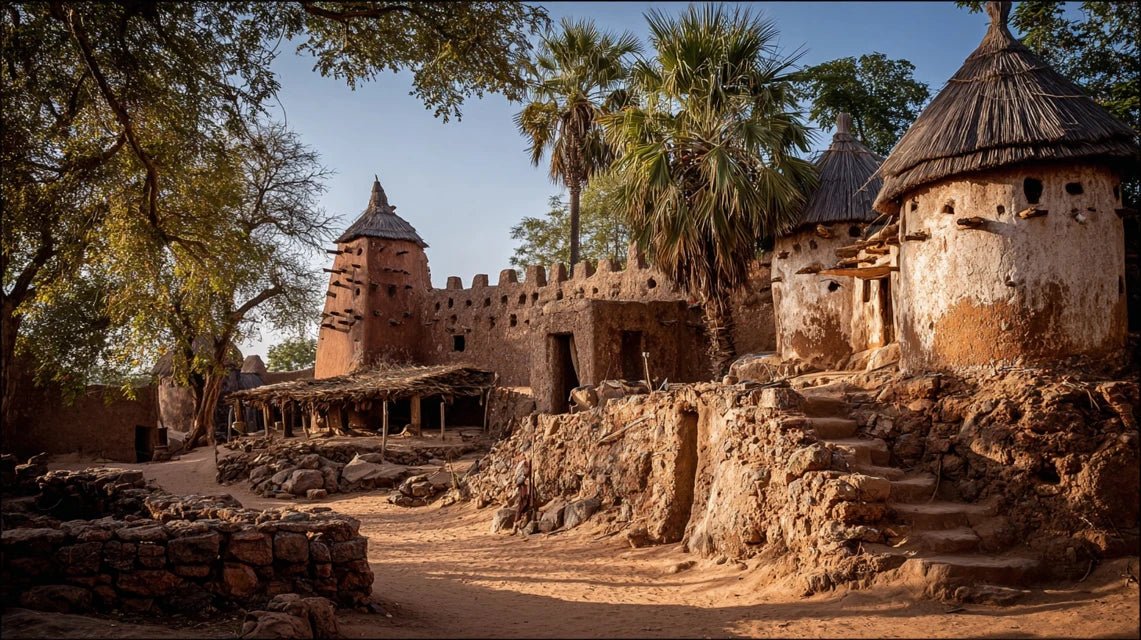
The tata somba – literally "Somba house" – is much more than a dwelling: it's a complete defensive system disguised as a family residence. Imagine a cylindrical structure 10 to 15 meters in diameter, with thick 40-centimeter earth walls, topped with a terrace accessible only by a removable ladder. This configuration is not an aesthetic choice, but an architectural response to the slave raids that marked the region for centuries.
What fascinates about the architecture of Somba villages is this ability to integrate defense into every constructive detail. The small openings in the shape of arrowslits allow ventilation while preventing intrusion. The granaries, these conical towers that punctuate the terrace, are not only used for storage: their height offers a vantage point over the surroundings. Even the outer enclosure which connects several tata together creates a defensive labyrinth where only the inhabitants know the passages.
The construction itself testifies to remarkable technical mastery. The Somba – or Betammaribé, their true name – use an clayey soil mixed with millet hulls and pebbles, applied in successive layers. This "banco" technique creates breathable walls that naturally regulate temperature and humidity. In the heart of the dry season, when the outside thermometer exceeds 40°C, the interior of a Somba tata remains surprisingly cool – a passive air conditioning principle that our « green » architects are rediscovering today.
The sacred terrace : living between sky and earth
If the ground floor of the fortified Somba villages houses animals and reserves, the real life takes place on the terrace. This horizontal space, smoothed to perfection and waterproofed by successive coats, constitutes the functional and spiritual heart of the dwelling. It is here that women prepare meals, children play away from danger, families sleep during warm nights.
But this terrace also has a sacred dimension often unknown. The small circular altars that punctuate it are not mere decorative elements: each corresponds to a specific deity or ancestor. Somba architecture of Benin never separates the profane from the sacred – it intertwines them in a precise spiritual geography where every corner has its meaning.
The conical granaries rising from this terrace draw a characteristic silhouette, immediately recognizable in the landscape of Atakora. Their shape is not arbitrary: it optimizes storage while minimizing the surface exposed to rain. Their arrangement follows specific rules related to family organization and social hierarchies. In a fortified Somba village, nothing is left to chance – every architectural element carries information about the social and cosmological organization.
The watchtowers : functional sculptures
These small towers that punctuate the terraces of the Somba tatas have a double function which perfectly illustrates the Betammaribé architectural thinking. From a practical point of view, they serve as elevated granaries, protecting harvests from humidity and rodents. But their height also makes them ideal observation posts, transforming each dwelling into a sentinel of the surrounding landscape.
What has always impressed me about these structures is their ability to be simultaneously sculpture, architecture and survival tool. A painting of the Somba villages would never decorate these towers purely ornamentally – every motif applied to their surface possesses a protective or propitiatory meaning.

Discover this inspiring artwork
The language of facades: when walls tell stories
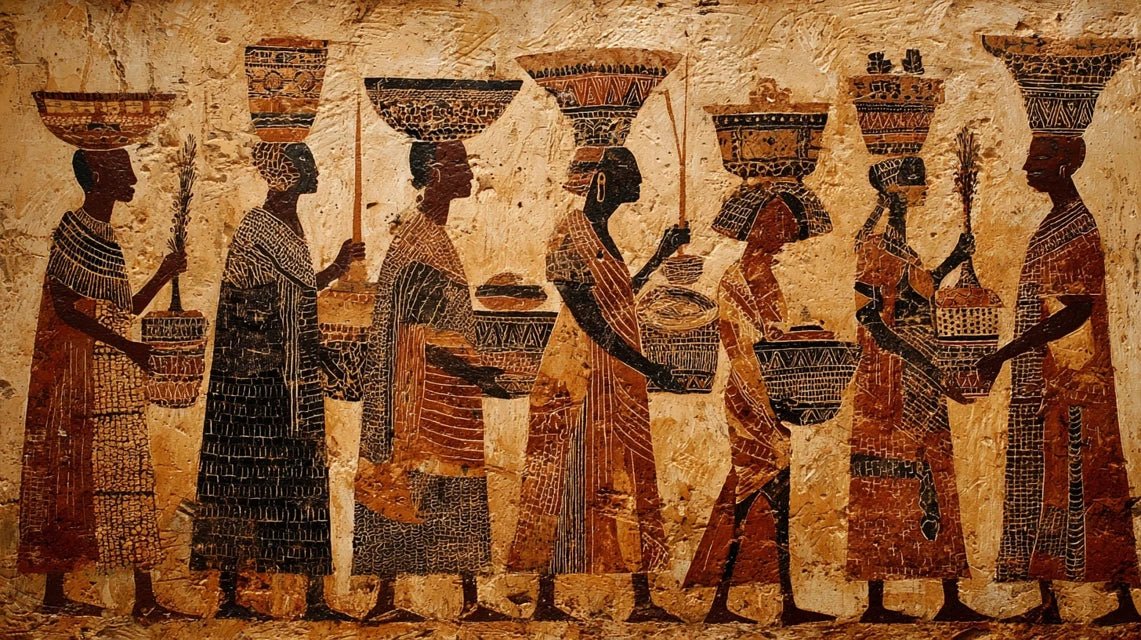
Approach a Somba house and you will discover that its walls are never bare. The paintings of the fortified Somba villages transform each facade into a narrative surface, using a codified graphic vocabulary passed down from generation to generation. These geometric motifs – lines, circles, chevrons, checkerboards – are not mere decorations: they constitute a true system of signs.
The pigments used come directly from the environment: red and yellow ochres extracted from ferruginous soils, white obtained from kaolin, black drawn from charcoal. This limited palette does not impoverish expression – on the contrary, it forces sophistication in composition and rhythm of motifs. The Betammaribé have developed a visual grammar of surprising richness from these few fundamental colors.
Each motif has a precise meaning. Zigzag lines can evoke the python serpent, a sacred animal and symbol of wisdom. Concentric circles represent the protective eye that watches over the household. Checkerboards evoke the chameleon's skin, master of camouflage and adaptation. The architecture and paintings of the Somba villages do not merely create physical shelter – they weave a network of symbolic protections around the inhabitants.
The hands that paint: a feminine knowledge
In the fortified villages of Benin, it is traditionally women who apply these murals. This responsibility is not insignificant: it confers on them a role as guardians of visual memory and symbolic codes. A young woman learns from her mother and aunts how to prepare pigments, trace basic motifs, compose a harmonious facade.
This oral and gestural transmission makes Somba paintings a living heritage, constantly renewed. Unlike frescoes frozen in time, these wall decorations are regularly redone, often before major ceremonies. Each new application is both repetition and variation, maintaining the tradition while allowing for subtle personal expression.
A construction system that defies time
One of the questions I am systematically asked concerns the durability of these mud-brick constructions. How can Somba fortified villages withstand the torrential rains of the wet season? The answer reveals a sophisticated understanding of material properties and water flow principles.
The Betammaribé have developed a remarkably effective preventive maintenance system. Each year, before the arrival of the rains, the walls receive a new protective coating. Terraces are carefully inspected and resurfaced to ensure their impermeability. This regular maintenance is not seen as a chore, but as a renewal ritual that strengthens the bond between inhabitants and dwelling.
The rounded shape of Somba tata is not only aesthetic: it minimizes surfaces exposed to prevailing winds and promotes natural water flow. Even modest roof overhangs protect the upper parts of the walls. The slight slopes integrated into the terrace direct water to specific drainage points. Every architectural detail testifies to a careful observation of climatic behaviors over several generations.

Discover this inspiring artwork
Contemporary inspiration: ancestral fortresses to modern interiors
What makes the architecture of Somba villages in Benin so relevant today is its ability to respond to contemporary challenges with solutions proven by time. Architects working on sustainable housing are rediscovering the bioclimatic principles integrated into these constructions: thermal mass of thick walls, natural ventilation, optimized orientation, use of local materials with a low carbon footprint.
But the influence of Somba fortified villages extends beyond the field of ecological construction. Designers and interior decorators draw on the graphic vocabulary of Somba paintings to create contemporary spaces connected to deep cultural roots. These geometric patterns, with their balance between rigor and vitality, blend remarkably well into minimalist or ethnic interiors.
I've seen fascinating projects where contemporary creators reinterpret the betammaribé visual codes: printed textiles echoing traditional patterns, ceramics inspired by the shapes of granaries, wall compositions transposing the logic of painted facades. This creative appropriation, when done with respect and knowledge, keeps a millennial aesthetic tradition alive while opening it up to new audiences.
Integrate the Somba spirit into your interior
You don't need to transform your apartment into a Somba tata to be inspired by this architectural tradition. The essence lies in understanding the principles: creating spaces that tell a story, using wall decoration as symbolic language, favoring natural materials that age with grace, designing interiors where each element has a function and meaning.
The ochre and earthy colors characteristic of Somba village paintings bring warmth and grounding to any space. Simple but rhythmic geometric shapes create visual dynamism without clutter. The idea of clearly defined functional areas, like the separation between the utilitarian ground floor and the living terrace, can inspire the organization of your interior spaces.
Transform your walls into visual narratives inspired by African traditions
Discover our exclusive collection of African paintings that capture the essence of traditional paintings and create focal points full of meaning in your interior.
Preserving a living heritage in the face of modernity
The Somba fortified villages of Benin are facing major challenges today. Rural exodus attracts young people to cities, sometimes leaving the tata abandoned. Modern materials – cinder blocks, corrugated iron – tempt builders with their ease of implementation, even if they create less thermally comfortable habitats. The ancestral know-how of building in rammed earth risks being lost with the generations that hold it.
However, encouraging initiatives are emerging. Inscribing the Koutammakou region – land of the Batammariba – on the UNESCO World Heritage List in 2004 has raised awareness of the exceptional value of this architecture. Responsible cultural tourism programs allow local communities to economically valorize their heritage. Training workshops bring together young and old to transmit traditional construction techniques.
The future of Somba villages depends on our collective ability to recognize that these structures are not folk curiosities, but relevant architectural solutions that have proven their worth over centuries. Their genius lies in this perfect fusion between defensive pragmatism, climatic efficiency, aesthetic expression and spiritual dimension – a holistic integration that modern architecture often struggles to achieve.
Conclusion : Earth fortresses speaking to the present
The architecture and paintings of the Somba fortified villages in Benin remind us that a building can be simultaneously shelter, work of art, defensive system and domestic temple. These earth-built structures, far from being relics of the past, offer a remarkably current vision of habitat: sustainable, bioclimatic, integrated into its environment, full of meaning.
Each tata somba embodies a philosophy of life where function and beauty never oppose each other, where the individual is inscribed in the collective without dissolving into it, where everyday life is woven with sacredness. Contemplating these organic fortresses emerging from the landscape of Atakora, we are not only looking to the past – we may be discovering keys to build the future.
So, next time you think about arranging your living space, remember these sculpture-houses where each wall tells a story, where each motif protects and embellishes, where architecture becomes language. The spirit of Somba villages can inspire far beyond their geographical borders, provided we are willing to listen to what these earth walls have to teach us.
FAQ : Everything you need to know about Somba architecture
Can you visit the Somba fortified villages in Benin?
Yes, absolutely! The Koutammakou region, in northwest Benin near the Togolese border, welcomes visitors wishing to discover Somba architecture. Several villages offer guided tours organized by the local communities themselves, which guarantees an authentic and respectful experience. The best time to visit is during the dry season, from November to March, when access roads are passable. I strongly recommend going through responsible tourism agencies that work directly with the Betammaribe communities – this ensures that your visit directly benefits the inhabitants and contributes to the preservation of this exceptional heritage. Allow at least two days on site to truly grasp the complexity of this architecture and, if possible, attend daily activities that bring these impressive structures to life. Remember that you are entering inhabited and sacred spaces: respect for local customs and authorization before any photography are essential.
How do the murals of tata somba withstand the weather?
The durability of the Somba village paintings relies on two main factors: the quality of natural pigments and a regular maintenance system perfectly integrated into the annual cycle. The ochres and mineral pigments used by the Betammaribé have excellent resistance to light and climatic variations – they are essentially colored earths that blend with the earth plaster of the wall. Unlike synthetic paints which create a film on the surface, these pigments penetrate slightly into the support, making them more durable. But the real key to their longevity lies in preventive maintenance: before each rainy season, women redo the protective plasters and refresh the motifs. This practice is not perceived as a constraint, but as a renewal ritual that strengthens the visual identity of each dwelling. In reality, the apparent "fragility" of these paintings is a strength: it imposes regular maintenance which keeps alive the tradition and know-how, whereas our modern "durable" paints often disconnect us from our homes.
Can the principles of Somba architecture inspire contemporary construction?
Absolutely, and it already is! The fortified villages of Somba embody many principles that sustainable contemporary architecture is rediscovering: construction with local materials with a low carbon footprint, bioclimatic design optimizing indoor temperature without mechanical systems, harmonious integration into the landscape, flexibility of use of spaces, preventive maintenance rather than replacement. Architects working on housing in tropical areas are directly inspired by the thermal solutions of the tata somba: thick walls creating thermal inertia, reduced and strategically placed openings, rounded shapes favoring air circulation. Beyond technical aspects, it is above all the overall philosophy that inspires: designing habitat as an integrated system where each element fulfills multiple functions, where aesthetics emerges naturally from the constructive logic, where maintenance creates connection rather than technological dependence. You don't need to build with raw earth to apply these principles – the essential thing lies in this holistic approach which simultaneously considers comfort, durability, beauty and meaning.