The School of Nice revolutionizes contemporary art by inventing a unique approach to New Abstract Realism between 1950 and 1975. This artistic effervescence transforms the French Riviera into an avant-garde laboratory, where unprecedented techniques for appropriating reality towards abstraction flourish.
The School of Nice and the foundations of New Abstract Realism
The School of Nice was born from the meeting between Yves Klein, Arman and Martial Raysse in 1947 on a beach in Nice, a founding event that seals the alliance between realism and abstraction. The critic Pierre Restany formalizes this movement in 1960 with the constitutive declaration of New Realism, defining an "direct appropriation of reality" that transcends simple representation.
This innovative approach opposes traditional abstract art and classical realism. The artists from Nice develop a unique plastic language: they no longer represent reality but present it in abstract form, creating a conceptual bridge between materiality and immateriality.
Parallel to this aesthetic revolution, the School of Nice brings together major personalities such as Ben Vautier, César, Raymond Hains and Daniel Spoerri. These creators share a common vision: to transform the urban and industrial environment into abstract raw material, revealing the hidden poetry of everyday life.
Techniques for abstract appropriation in the Nice New Realism
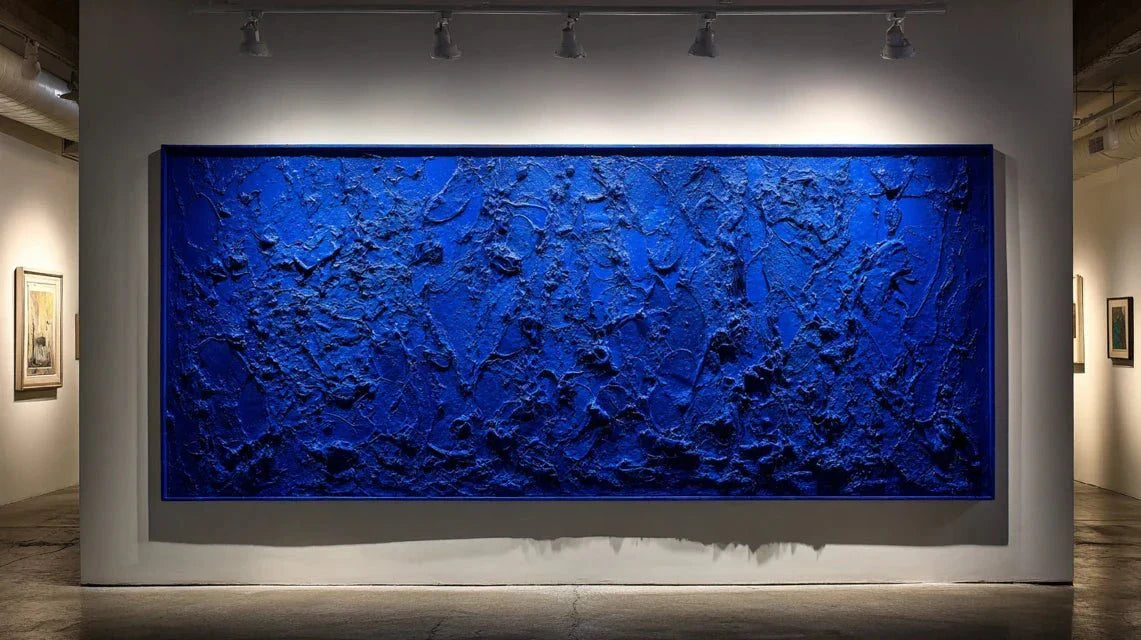
Within this creative dynamic, Yves Klein revolutionizes abstraction with his International Klein Blue (IKB), patented in May 1960. This technical innovation combines ultramarine pigment and Rhodopas M synthetic resin, preserving color intensity without fading. Klein thus creates more than 200 IKB monochromes, exploring "the passage from material to immaterial".
Simultaneously, Anthropometries embody this synthesis between New Realism and abstraction. Klein uses nude female models as "living brushes", their bodies coated in IKB leaving abstract imprints on the canvas. This technique transforms the act of painting into a conceptual performance.
In contrast to this spiritualistic approach, Arman develops his famous Accumulations, piling identical objects in transparent boxes. These abstract installations question consumer society while exploring the formal properties of repetition, dialectically opposing Klein's "void".
Similarly, César’s Compressions illustrate this industrial appropriation: the artist transforms automobiles into colored cubes by mechanical compression, creating abstract sculptures from manufactured objects. This mechanical technique erases traditional artistic subjectivity.
Concrete applications of abstraction in the School of Nice
These technical innovations find their expression in remarkable concrete achievements. Klein’s blue monochromes transcend traditional painting through their spatialization. Suspended 20 centimeters from the wall, these works create a levitation effect, questioning the limits between object and environment. As Klein stated: "Blue has no dimensions, it is beyond dimensions.".
In this experimental vein, Daniel Spoerri revolutionizes the art of assemblage with his Trap Tables, freezing real situations in abstract compositions. A meal becomes a conceptual sculpture, transforming the ephemeral into artistic permanence.
Parallel to this, Jacques Villeglé and Raymond Hains’ torn posters anticipate contemporary street art. These urban appropriations reveal the abstract beauty of public waste, creating fortuitous colorist compositions of striking modernity.
The influence of this approach endures today: contemporary abstract paintings draw directly from this Nice heritage, perpetuating the alliance between realistic appropriation and formal abstraction research.
Technical innovation in Nice abstraction
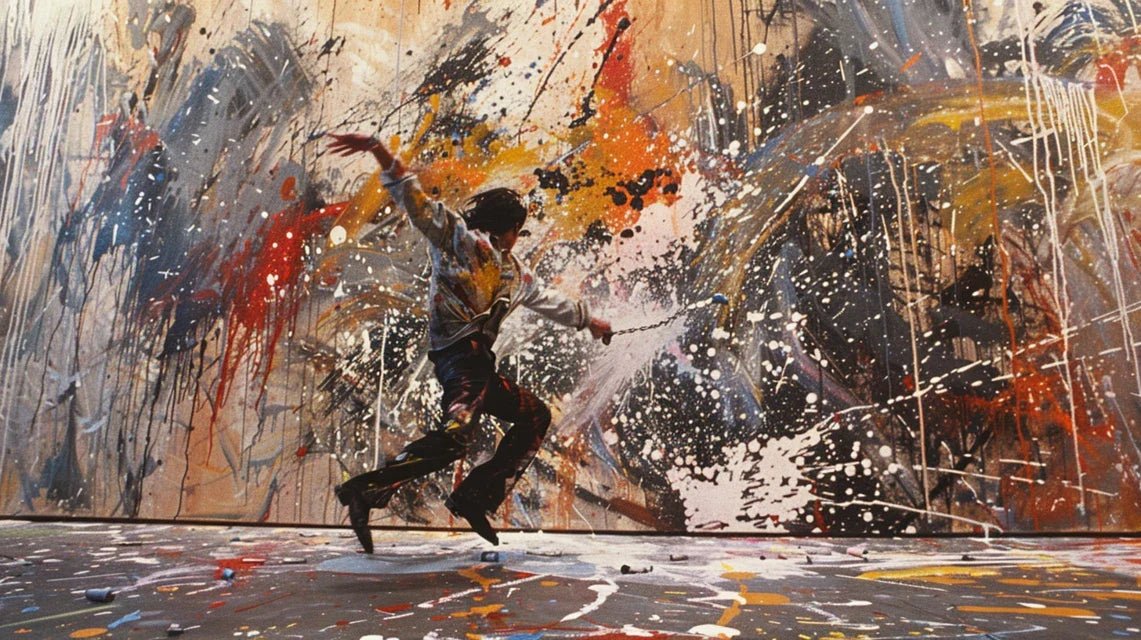
Beyond these emblematic achievements, the School of Nice revolutionizes artistic techniques through material experimentation. Klein not only develops IKB but also explores Fire Paintings, using flamethrowers and natural elements to create unprecedented gestural abstractions.
Concurrently, Jean Tinguely integrates mechanical movement into abstraction with his drawing machines. These automatons produce automated abstract works, questioning artistic originality and industrial reproducibility.
Statistics confirm the impact of the School of Nice: the MAMAC holds more than 1,300 works by 300 artists (Source: MAMAC Nice), testifying to this unique creative effervescence in provincial Europe.
Finally, Bernar Venet pushes conceptual abstraction to its limits with his mathematical equations transposed onto canvas, creating a pure conceptual art devoid of expressive subjectivity.
This synthesis between Nouveau Réalisme and abstraction forges the artistic identity of Nice: a direct appropriation of reality transformed by formal research, opening up new perspectives for international contemporary art. The School of Nice thus invents an innovative plastic language, anticipating current artistic issues around appropriation, reproduction and dematerialization of art.