









Zen Tree of Life Abstract Wall Art
The Zen Tree of Life Abstract painting embodies the perfect balance between spirituality and contemporary art. This sublime collection transforms your space into a haven of peace thanks to refined compositions where the tree of life unfolds in harmonious abstract forms. Ideal for a modern zen decoration, each work invites meditation and serenity. The flowing lines and soothing tones create an atmosphere conducive to well-being. Discover these spiritual artistic creations that celebrate the connection between nature and transcendence.
 Tree of Life Zen Dance of Seasons Wall Art273,90 €
 Ephemeral Harmony Wall Art - Zen Tree of Life Edition273,90 €
 Tree and Wind Fusion Wall Art - Tree of Life Zen Edition273,90 €
 Tree of Dreams Wall Art - Zen Tree of Life Edition273,90 €
Explore further
In Zen Tree of Life Abstract Wall Art
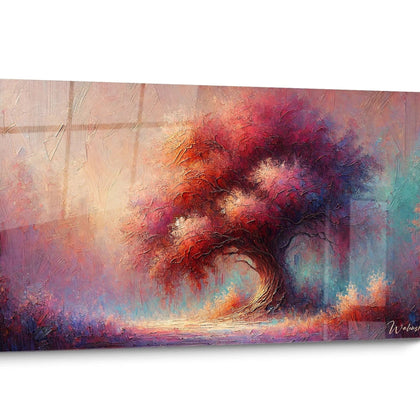
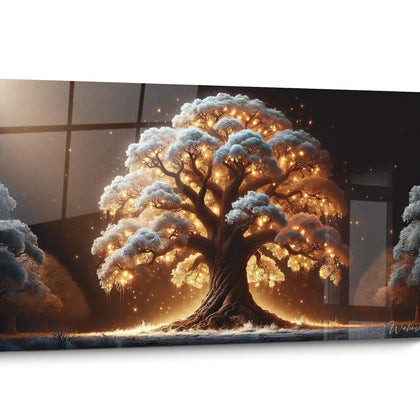
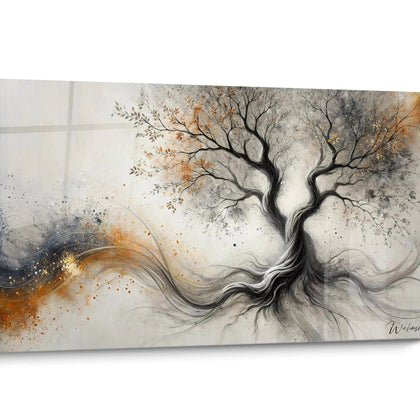
All about Zen Tree of Life Abstract Wall Art
- Zen Wall Art Presentation
- Symbolism & Energies
- Meditation Spaces
- Visual Harmonization
Discover our exclusive collection of abstract zen tree of life wall art, designed to transform your contemplation spaces into true sanctuaries of serenity. These large-scale creations merge the ancient iconography of the cosmic tree with refined geometric compositions, offering a unique meditative visual experience. Perfect for enhancing your mindfulness practices or elevating your yoga studios, these murals redefine contemporary contemplative art.
The Abstract Tree of Life: Bridge Between Grounding and Transcendence
The abstract zen tree of life wall art transcends traditional figurative representation to offer a geometric interpretation of this ancestral symbol. Refined lines and minimalist forms evoke earthly roots and celestial branches without becoming literal, allowing each observer to project their own spiritual quest onto the composition.
How does geometric abstraction strengthen the meditative dimension?
The abstract approach to cosmic tree representations fosters profound contemplative states by eliminating superfluous details that scatter attention. Refined forms, concentric circles, and fluid lines create natural focal points for dharana (concentration) practice. This visual simplification facilitates meditation entry, particularly in spaces dedicated to yogic practices or conscious breathing sessions.
Abstract compositions incorporating the tree of life symbol often use spiral motifs evoking upward energetic movement, reminiscent of chakras and prana circulation. These visual elements serve as visualization supports for advanced meditative techniques, transforming your wall into a true three-dimensional mandala.
Monumental dimensions for collective practice spaces
Our abstract zen tree of life wall art in large formats naturally command yoga studios, meditation rooms, or holistic therapy spaces. Their generous dimensions (often exceeding 120 cm) create a soothing presence without overwhelming visually, establishing a subtle balance between visual impact and contemplative harmony.
Which chromatic elements optimize the soothing effect?
Monochromatic palettes dominated by muted tones – slate gray, organic beiges, nocturnal blues – amplify the meditative effect of these abstract compositions. The use of gradual nuances recalls twilight transitions, naturally inducing slower heart rates and deeper breathing in observers. Soft contrasts between neutral tones and discreet metallic touches add contemplative depth without disturbing the soothing atmosphere.
Creating a Visual Meditative Sanctuary
Integrating an abstract zen tree of life wall art into your spiritual practice space immediately transforms the energetic ambiance of the location. These monumental works serve as visual anchors during seated meditation sessions, offering stable support for concentration without excessively capturing attention.
Strategic positioning to maximize meditative impact
In yoga practice rooms, ideal placement faces the meditation space, slightly above natural eye level when seated. This arrangement allows soft visual contact during transitions between postures, without requiring abrupt neck movement. For therapeutic spaces, prioritize a wall perpendicular to the practitioner's position, creating a soothing peripheral presence rather than direct focus.
The large dimensions of these creations allow harmonious integration even in spacious volumes with high ceilings, characteristic of converted loft wellness studios. Their imposing format visually compensates for spatial amplitude without resorting to decorative accumulations that would fragment contemplative unity.
Can these wall artworks be associated with other ritual elements?
The abstract zen tree of life wall art integrates perfectly within a spiritual ecosystem including meditation altars, Tibetan bowls, or essential oil diffusers. Its abstract nature allows it to dialogue with various contemplative traditions – from Zen Buddhism to modern shamanism – without imposing overly specific cultural reference. This symbolic neutrality makes it a universal support for all centering and introspection practices.
Influence on conscious breathing sessions
The circular and spiral patterns characteristic of these abstract compositions naturally harmonize with pranayama breathing rhythms. During alternate nostril breathing or heart rate coherence exercises, the gaze can follow the fluid lines of the artwork, creating subtle synchronization between eye movement, breath, and meditative intention. This multisensory synergy deepens presence states and facilitates entry into the modified states of consciousness sought during these practices.
Visual Purification and Energetic Space Balancing
Adopting an abstract zen tree of life wall art aligns with a comprehensive environmental harmonization approach inspired by feng shui and vastu shastra principles. These large-format creations function as visual energy regulators, channeling chi flows toward soothing and structured trajectories.
How do these artworks influence energy circulation?
In Eastern geobiological approaches, the tree of life symbolizes the central axis connecting earthly energies to cosmic energies. Its abstract representation avoids energy blockages associated with overly rigid forms, allowing chi fluidity similar to that observed in natural spaces. The undulating lines typical of these compositions create visual movements comparable to water stream meanders, gently dispersing stagnant energies while preserving coherent direction.
The imposing formats of these murals confer significant spatial influence capacity. In holistic consultation spaces or naturopathy offices, a single 150 cm artwork can suffice to establish the contemplative ambiance of the entire room, avoiding decorative overload counterproductive to relaxation.
Association with natural elements to amplify the effect
The pairing of an abstract zen tree of life wall art with air-purifying plants – such as snake plants or pothos – strengthens the symbolic connection between representation and botanical reality. This layering of abstract and concrete natural references deepens the space's biophilic anchoring, a phenomenon now documented for its beneficial effects on cortisol reduction and concentration improvement.
What perceptual evolution occurs through regular practice?
Regular meditation practitioners often observe an evolving relationship with these abstract compositions. The first weeks, the artwork functions as an external focal point; progressively, it becomes an automatic trigger for a calm mental state, comparable to anchors used in neurolinguistic programming. This conditioned association between visual perception and relaxation transforms the work into a true personal therapeutic tool.
Is an abstract zen tree of life wall art suitable for small meditation spaces?
Even in compact meditation corners, an imposing format paradoxically creates an impression of spatial expansion. Minimalist abstraction avoids visual saturation while occupying sufficient wall surface to clearly define the contemplative purpose of the space, transforming a simple corner into a true personal sanctuary.
Do these artworks adapt to different meditation schools?
The abstract approach transcends cultural specificities, allowing harmonious integration in vipassana, zazen, transcendental meditation, or secular mindfulness practices. The universality of the cosmic tree symbol, combined with formal refinement, offers neutral visual support adaptable to any sincere introspection approach.
What influence on sleep quality in a bedroom?
Unlike dynamic compositions, abstract zen tree of life wall art with soft tones promotes melatonin production when installed in rest spaces. Their soothing presence constitutes the final visual perception before sleep and the first upon waking, framing the circadian cycle within a contemplative continuity beneficial to autonomous nervous system regulation.
Further reading
Our articles on this topic
- How Does My (Interval) Structure the Composition of Zen Wall Art?
- What is the spiritual meaning of economy of means in Zen paintings?
- Spiritual Artwork: A Quest for Meaning and Visual Transcendence
- Subtle symbolism wall art, contemporary spirituality without signs
- Should you choose a minimalist Japanese artwork or something more contemporary Western?


