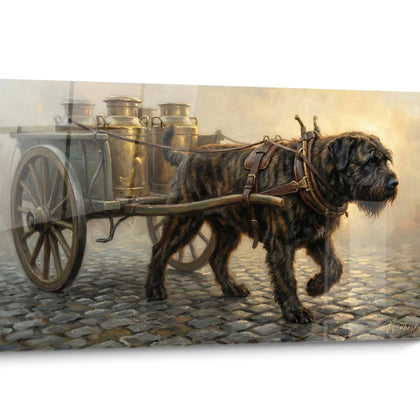
The Vintage Flemish Bouvier dog painting captures the rustic and noble essence of this emblematic breed originating from Flanders. This timeless artistic representation celebrates the hardworking character and imposing stature of this historic herding dog, immortalized in a retro style evoking bygone eras. Perfectly suited to expansive interiors seeking authentic heritage touches, this monumental format instantly transforms a room's atmosphere by creating a focal point laden with history and character.
The Rustic Soul of the Flemish Bouvier in Vintage Imagery
The Vintage Flemish Bouvier dog painting draws its authenticity from pastoral imagery of the nineteenth and early twentieth centuries, a period during which this robust breed accompanied Flemish farmers and shepherds in their daily labors. Sepia tones, ochre nuances and earthy hues naturally evoke the misty countryside of historic Flanders. This deliberately patinated chromatic approach imparts to each representation a melancholic depth that transcends mere decoration.
Why does vintage style particularly enhance the Flemish Bouvier?
Vintage aesthetics align perfectly with the centuries-long history of the Flemish Bouvier, a breed forged by centuries of intensive agricultural work. Ancient representation techniques—accentuated photographic grain, peripheral vignetting, softened contrast—faithfully reflect the golden age of this breed before its modern standardization. This temporal concordance creates particularly powerful emotional resonance among heritage canine enthusiasts and collectors of historical dog imagery.
Period typography and retro graphic elements
Vintage compositions frequently incorporate Victorian or art deco-inspired typography, ornamental cartouches and pseudo-advertising mentions evoking agricultural competitions of yesteryear. These complementary graphic elements reinforce immersion into the Bouvier's heritage universe, transforming the painting into a genuine visual archive of a bygone era. For those appreciating alternative aesthetic approaches, our modern Flemish Bouvier dog painting collection offers contrasting contemporary interpretations.
Artistic aging as authentic signature
Intentional aging effects—simulated cracks, strategic discoloration, stylized moisture stains—constitute far more than mere ornaments but fully participate in visual narration. This artificial patina suggests that the artwork traverses time, that it might originate from a family collection passed down through generations. This narrative dimension considerably amplifies perceived value and emotional attachment, transforming acquisition into genuine heritage investment for authenticity enthusiasts.
Chromatic Composition and Period Atmosphere
The Vintage Flemish Bouvier dog painting articulates around a deliberately muted restricted palette characterizing ancient photographic and lithographic imagery. Deep browns, anthracite grays and faded beiges dominate the composition, occasionally punctuated by ivory or cream touches evoking yellowed paper supports. This chromatic economy concentrates attention on the hirsute coat texture characteristic of the breed and on gaze intensity, central elements of the Bouvier's identity.
How do vintage treatments accentuate the Bouvier's personality?
The softened contrast and peripheral blur technique generates a dreamlike atmosphere that naturally magnifies the Bouvier's noble and meditative expression. Unlike hyperrealistic representations, this approach suggests rather than demonstrates, leaving room for viewer imagination. Pronounced shadow zones sculpture the dog's massive volumes while highlighted highlights draw the pelage's asperities, creating remarkable sculptural depth despite the support's flatness.
Integration of historical scenic elements
Numerous vintage compositions situate the Bouvier within its original context: agricultural cart in background, farming implements, misty bocage landscapes of Flanders. These contextual elements serve not merely as décor but establish complete narration, recalling this breed's legendary versatility used for hauling, livestock herding and farm protection. This scenic richness radically differentiates these paintings from simple canine portraits devoid of environmental grounding.
Texture treatment in vintage aesthetics
Representation of the Bouvier's characteristic pelage—dense, rough, slightly shaggy—particularly benefits from vintage techniques privileging textural suggestion. Accentuated photographic grain or imitated lithographic hatching visually create this tactile roughness without resorting to photographic hyperrealism. This evocative rather than descriptive approach paradoxically generates more intense presence, inviting the gaze to mentally complete suggested details.
Space Enhancement Through Vintage Bouvier Imagery
The Vintage Flemish Bouvier dog painting naturally finds its place in heritage interiors, rehabilitated industrial lofts and period residences. Its generous format instantly transforms a wall into personal gallery, particularly valued in spaces with significant ceiling height where its visual impact fully expresses itself. Paneled libraries, living rooms with exposed beams and majestic entrance halls constitute ideal settings for this type of monumental representation.
Which furnishings and decorative elements complement canine vintage style?
Furnishing accompaniment naturally privileges patinated woods, aged leathers and oxidized metals harmoniously dialoguing with the painting's retro aesthetic. Worn leather chairs, vintage travel trunks, industrial light fixtures with exposed filaments create immersive stylistic coherence. Discerning collectors often complete this ambiance with antique canine accessories: braided leather leashes, framed agricultural competition medals, bound volumes on historical dog breeding.
The psychological effect of large-scale vintage dimensions
Monumental format considerably amplifies vintage imagery's emotional impact, creating a temporal window toward a bygone era. This spectacular dimension transforms mere contemplation into genuine immersive experience, particularly sought in reception spaces where the artwork naturally becomes conversation subject. To discover other Bouvier interpretations, explore our complete Flemish Bouvier dog painting range adapted to various interior aesthetics.
Preserving vintage appearance in different environments
Vintage imagery advantageously supports indirect dimmed lighting reinforcing its nostalgic character without creating parasitic reflections. Spaces preserved from direct sun exposure durably maintain characteristic chromatic patina without alteration. This decorative robustness proves particularly valuable in secondary residences or country properties where exposure conditions vary seasonally.
Does the Vintage Flemish Bouvier painting suit minimalist contemporary interiors?
Absolutely, vintage-contemporary contrast association generates aesthetic tension sought by today's interior decorators. A monumental vintage painting on pristine white walls creates dramatic focal point humanizing modernist austerity while affirming assertive personality.
What's the main difference between a Vintage Flemish Bouvier dog painting and an antique photographic reproduction?
Vintage painting constitutes contemporary artistic creation inspired by period aesthetic codes, offering compositional freedom impossible with simple reproduction. This creative approach enables amplifying certain characteristic traits, optimizing composition for decorative impact and adapting format to modern architectural requirements.
How do you identify superior quality Vintage Flemish Bouvier dog painting?
Distinctive criteria include historical chromatic coherence, authenticity of applied aging techniques, morphological precision of Bouvier representation and richness of contextual scenic details. Balanced composition privileging suggestion over decorative excess likewise evidences refined artistic approach.


 Dog Painting on Battlefield in Black and White - Trench Survivor - Flanders Bouviers Edition233,90 €
 Bouvier des Flandres Pulling a Milk Cart - Rural Nostalgia - Bouvier des Flandres Edition233,90 €
 Sitting Dog Painting in Rustic Entrance - Faithful Guardian - Bouvier des Flandres Edition233,90 €
 Muddy Dog Pulling Cart Canvas - Rural Labor - Bouvier des Flandres Edition233,90 €