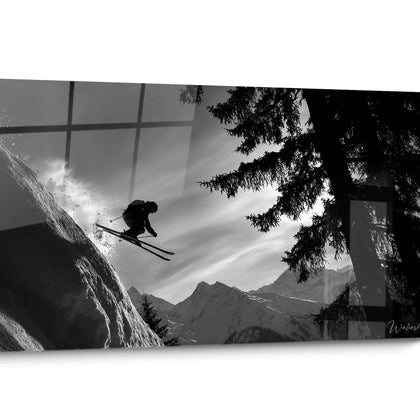
The vintage ski wall art embodies the golden age of winter sports, an era when alpine resorts competed in elegance and graphic creativity to attract snow enthusiasts. These reproductions of vintage posters capture the advertising aesthetic of the 1950s to 1980s, a prosperous period when manual illustrations dominated mountain tourism communication. Unlike contemporary compositions such as abstract ski art, these vintage creations prioritize nostalgic imagery and retro graphic codes from promotional campaigns of yesteryear. Each visual evokes period ski lifts, skiers in colorful outfits, and that particular atmosphere of winter vacations from days gone by.
Retro Aesthetics for Your Alpine Décor
The vintage ski wall art transforms your space into a true sanctuary of alpine culture from times past. These graphic representations draw directly from advertising posters that once adorned railway stations and travel agencies, inviting mountain getaways. The sepia tones, blocks of primary colors, and characteristic typography from the 1960s-1970s impart incomparable visual authenticity.
Why choose décor inspired by historic resorts?
Mountain chalets, urban apartments of ski enthusiasts, and professional spaces related to alpine tourism find natural decorative cohesion in these retro visuals. The vintage imagery evokes red-cabin cable cars, groomed slopes under generous sunshine, and that carefree spirit unique to winter vacations of a bygone era. These large-scale compositions immediately capture attention through their saturated color palette and expressive illustrations.
How to integrate the spirit of skiing's golden years into contemporary interiors?
Pairing vintage ski wall art with Scandinavian furniture creates harmonious contrast between refined modernity and graphic nostalgia. Light woods, natural textiles, and minimalist lighting fixtures highlight the visual richness of these period reproductions. For commercial spaces dedicated to winter sports—specialty shops, mountain bars, alpine hotels—these visuals strengthen thematic identity while recalling the glorious history of ski resorts.
The impact of vintage advertising graphic codes
Manual illustration techniques, dynamic framing, and evocative slogans from past tourism campaigns constitute an immediately recognizable visual language. These graphic elements—stylized skiers in full descent, simplified mountain panoramas, legendary resort logos—generate particular emotion among multi-generational skiing enthusiasts. The large-scale dimension of these artworks amplifies their evocative power, transforming an ordinary wall into a time window toward skiing's glorious recreational era.
Mythical Resorts Immortalized Through Advertising Art
The vintage ski wall art celebrates emblematic alpine destinations that shaped the history of European winter sports. Courchevel, Megève, Chamonix, Val d'Isère, and Saint-Moritz generated extraordinarily rich advertising imagery, documenting the architectural and social evolution of mountain villages transformed into skiing capitals. These reproductions capture the particular atmosphere of each ski resort at its apex.
Which alpine resorts marked vintage ski imagery?
Promotional posters from French, Swiss, and Austrian Alps constitute exceptional graphic heritage. Each resort developed distinctive visual identity: glamorous illustrations for upscale destinations, family compositions for vacation villages, sports visuals for technically renowned domains. This stylistic diversity allows you today to select wall art corresponding precisely to your personal memories or decorative aspirations.
Equipment evolution and its graphic representation
T-bar lifts, primitive detachable chairlifts, tracked snow groomers, and even cogwheel trains appear in these nostalgic compositions. This documentary dimension adds historical depth appreciated by collectors and mountain heritage enthusiasts. Clothing—fitted colored jumpsuits, oversized panoramic sunglasses, pom-pom beanies—also testify to successive fashions throughout recreational skiing's development decades.
How do these visuals strengthen attachment to mountain destinations?
For owners of alpine secondary residences or regulars at a particular resort, vintage wall art representing their favorite vacation spot creates powerful emotional connection. These reproductions function as memory triggers, reviving sensations of first runs, hot chocolate on sunny terraces, and family moments on snowy slopes. The imposing scale of these murals transforms this nostalgic feeling into permanent decorative presence, daily celebrating mountain passion.
Cultural Heritage and Alpine Legacy Valorization
Vintage ski wall art transcends simple decorative function to become witness of a pivotal era in mountain tourism development. Between democratization of winter sports and preservation of a certain alpine way of life, these visuals document sociological transformations accompanying mass skiing's rise. They capture this transitional period when elegance still coexisted with increasingly accessible ski resorts.
Why does vintage advertising imagery fascinate new generations so much?
Graphic simplicity, communicative optimism, and perceived authenticity of these retro visuals contrast sharply with contemporary digital saturation. Young skiers discover through these reproductions a romantic mountain dimension, less commercial than current marketing campaigns. This generational rediscovery explains renewed success of vintage aesthetics in urban interiors of skiing enthusiasts who didn't directly experience this era.
Chalet architecture and its visual evolution
Architectural representations present in these compositions—traditional wooden stone chalets, early modernist high-altitude residences, characteristic hotel infrastructure—constitute valuable documentation. For architects, decorators, and mountain heritage enthusiasts, these artworks offer exploitable style references for contemporary projects respecting alpine identity. The generous proportions of these visuals allow appreciation of architectural details often neglected in standard formats.
How do these works participate in transmitting mountain culture?
In educational spaces related to winter sports—ski schools, alpine museums, training centers—vintage ski wall art fulfills pedagogical function. It materializes recent history of sports disciplines in constant technical and cultural evolution. Ski clubs, mountain associations, and local authorities use these reproductions to valorize their tourism heritage and strengthen territorial identity of alpine valleys against global standardization.
Which vintage ski wall art suits retro-chic décor enthusiasts?
Prioritize reproductions of French resort posters from the 1960s-1970s, when manual illustration reached creative peak. Compositions with vibrant colors and bold framing integrate perfectly into contemporary vintage or eclectic interiors.
How does vintage ski wall art associate with other alpine décor elements?
These retro visuals naturally dialogue with authentic objects—vintage skis, period equipment, black-and-white photographs—creating coherent scenography. However, avoid thematic overload by balancing nostalgic references with refined contemporary elements.
Why invest in large format for this visual type?
Original advertising posters were designed to be viewed from distance in public spaces. Reproducing these compositions in imposing dimensions respects their original function while maximizing decorative impact, particularly in generous volumes of mountain residences or urban lofts.


 Vintage Ski Wall Art - Snow Heritage - Ski Edition233,90 €
 Skier in Descent Painting - Blue Powder - Ski Edition213,90 €
 Skier Painting Mountain - Spectacular Jump - Sports Black and White Edition233,90 €