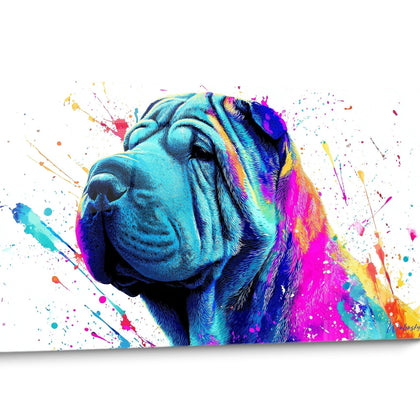
This black and white Shar Pei dog wall art embodies the timeless elegance of monochrome to highlight every characteristic wrinkle of this emblematic breed. The absence of color focuses attention on the unique textures, deep shadows, and striking contrasts that define the Shar Pei's visual signature. This two-dimensional artistic approach transforms a canine portrait into a true aesthetic statement, perfect for demanding contemporary spaces.
Monochromatic Aesthetics at the Service of Shar Pei Character
The black and white Shar Pei dog wall art exploits gray nuances to magnify the emblematic wrinkles of this Asian breed. Each fold becomes a cascade of shadows and light, creating a sculptural depth impossible to achieve with colored tones. This visual translation in grayscale accentuates the natural three-dimensional aspect of the wrinkled coat, transforming each texture into apparent relief.
Why does monochrome intensify the expression of the Shar Pei?
Chromatic elimination forces the eye to focus on distinctive morphology: broad muzzles, wrinkled foreheads, penetrating gazes. The tonal variations between deep black and luminous white create dramatic contrasts that emphasize the noble and mysterious attitude inherent to this breed. This pure graphic translation is particularly suited to refined architectural interiors where each decorative element must justify its presence through visual strength.
Gray variations and their psychological impact
A large-format black and white Shar Pei wall art generates a quiet yet imposing presence in the space. Subtle gradations between tones create a contemplative atmosphere, while contrasting flat areas infuse graphic dynamism. This duality suits reflective professional spaces as well as modern lofts seeking a bold decorative signature without chromatic saturation.
Complementarity with other canine representations
The monochromatic approach stands in radical contrast to colored interpretations. If you appreciate warm chromatic renderings, also explore the golden Shar Pei wall art that offers an opposite luminous ambiance. This alternation between black-and-white versions and warm tones allows you to create contrasting wall galleries where each piece dialogues with the others.
Contemporary canine art collectors often favor bichromatic series for their timelessness: unlike ephemeral chromatic trends, black and white transcends decades without aging aesthetically. This stylistic permanence guarantees a lasting decorative investment, particularly relevant for monumental formats intended to durably structure a space.
Integration into Minimalist and Industrial Decorative Universes
The black and white Shar Pei dog wall art naturally asserts itself in environments governed by chromatic sobriety. Scandinavian interiors, with their neutral palettes and raw materials, welcome this representation as an organic focal point within strict geometric lines. The wrinkled texture of the Shar Pei brings welcome visual complexity to deliberately pared-down spaces where each element must combine formal simplicity and detail richness.
How to create visual dialogue with interior architecture?
In lofts with raw concrete walls or exposed brick, this type of canine representation establishes a bridge between animality and urbanity. Large formats create visual breathing spaces on imposing wall surfaces, breaking mineral coldness with a living presence without introducing chromatic dissonance. The metallic reflections of industrial structures resonate with subtle brilliance in the lighter areas of the depicted coat.
Strategies for association with contemporary furniture
The straight lines of Nordic or Italian design furniture find their ideal counterpoint in the organic curves of Shar Pei wrinkles. A black leather sofa or chairs with chromium tubular structures create formal echoes with the painting's contrasts, establishing decorative coherence without literal repetition. This approach avoids the pitfall of overly coordinated interiors lacking creative tension.
Which spaces benefit most from this monochromatic presence?
Spacious entryways require impactful artworks: a large-format black and white Shar Pei wall art fulfills this function by creating a memorable first impression. Professional offices seeking discreet sophistication find in this representation a balance between bold personality and acceptability in formal contexts. Contemporary bedrooms benefit from the calming atmosphere generated by tonal gradations, promoting an environment conducive to rest without excessive chromatic stimulation.
Transition spaces like long, narrow corridors are transformed by installing this representation in series: multiple views of the same Shar Pei from different angles create a rhythmic visual journey, converting a simple passageway into a private gallery. This strategy fully exploits the imposing format to architecturally structure the space.
Expressive Power and Psychological Depth of Bichromatic Rendering
The translation of the Shar Pei into black and white transcends simple photographic reproduction to reach an interpretative dimension. The artist who eliminates color makes a radical choice: to reveal essence rather than appearance. The interplay of cast shadows on the multiple wrinkles creates abstract patterns that transform each wall art into a unique graphic composition, even when multiple pieces represent the same breed.
The intensity of the gaze captured in monochrome
The eyes of the Shar Pei, often partially masked by facial wrinkles, acquire magnetic presence when rendered in gray gradations. The contrast between the dark pupil and lighter periocular zones creates a depth of field that gives the illusion of genuine visual exchange with the observer. This emotional connection works particularly well in intimate spaces where the wall art becomes a silent companion.
How do textures reveal themselves without chromatic information?
The absence of color forces the brain to mentally reconstruct tactile sensations. Shaded areas suggest the softness of short coat, while sharp contrasts evoke the firm edges of skin folds. This indirect sensory engagement involves the observer in an active contemplative experience, where imagination completes what the eye perceives. Monumental formats amplify this effect by literally immersing the spectator in the represented texture.
Temporality and timelessness of monochromatic imagery
A black and white Shar Pei dog wall art escapes temporal markers: it is impossible to date the work by its chromatic choices, which might have revealed a specific decorative trend. This temporal neutrality guarantees lasting decorative relevance, particularly valuable for acquisitions intended to structure an interior long-term. Discerning collectors privilege these representations for their ability to transcend stylistic renewals without losing impact.
Association with other artistic mediums
Monochrome naturally dialogues with fine art photography, engraving, and contemporary drawing. This versatility allows integration of the wall art into heterogeneous collections without aesthetic rupture. Graphic art enthusiasts particularly appreciate this compatibility, which allows creating coherent gallery walls mixing varied techniques and subjects, united by chromatic restriction.
Is a black and white Shar Pei dog wall art suitable for colorful interiors?
Absolutely. In an environment with vibrant tones, this monochromatic representation functions as a strategic visual rest. It anchors the space in sophisticated neutrality that prevents chromatic saturation while bringing formal complexity through textures and contrasts.
What observation distance optimizes appreciation of details?
Large formats reveal different reading levels: from afar, the overall silhouette and composition; up close, the richness of tonal nuances and finesse of transitions between shadows and light. This dual reading justifies installation in spaces allowing both distance and approach.
Does black and white rendering accentuate perception of the dog's actual size?
The striking contrasts and elimination of chromatic information effectively create an impression of increased volume. Monumental formats exploit this effect to generate an almost sculptural presence, where the Shar Pei seems to physically emerge from the two-dimensional support.


 Shar Pei Profile Monochrome Painting - Contemplative Portrait - Shar Pei Edition233,90 €
 Shar Pei Portrait with Closed Eyes - Canine Serenity - Shar Pei Edition233,90 €
 Dog Portrait Painting with Expressive Wrinkles in Black and White - Contemplative Gaze - Shar Pei Edition213,90 €