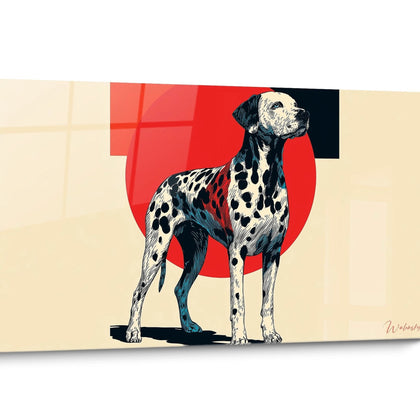
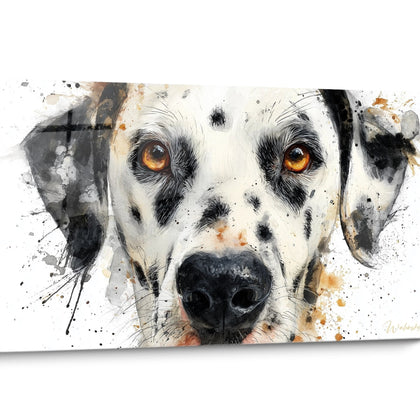
The black and white dalmatian wall art constitutes a bold artistic statement for contemporary interiors. This monochrome representation of the famous spotted dog captures the very essence of graphic minimalism while preserving the visual intensity inherent to this emblematic breed. Lovers of refined décor seek precisely this bicolor approach which amplifies the natural contrast of the dalmatian's coat, transforming each spot into a sculptural element.
Graphic Architecture of the Black and White Dalmatian
The black and white dalmatian wall art distinguishes itself through its ability to transform an animal motif into abstract composition. The characteristic spots of the dalmatian coat become geometric elements that structure the wall space, creating visual rhythm comparable to Op Art movement works. This natural abstraction offers a sophisticated alternative to conventional decorative patterns.
How does monochrome contrast intensify the wall presence of the dalmatian?
The elimination of chromatic nuances concentrates all attention on gray values and tonal contrasts. This chromatic radicality amplifies the visual depth of each spot, transforming the flat surface into optical relief. Large dimensions accentuate this three-dimensional effect, particularly in contemporary architectural spaces where white walls serve as neutral canvas. The large-scale black and white dalmatian wall art thus becomes an architectural element in its own right.
The minimalist visual vocabulary of the spotted coat
The random distribution of black spots on white background creates a unique visual language that escapes the repetitive structures of conventional patterns. This organic irregularity brings dynamic tension to Scandinavian minimalist or industrial interiors. Collectors notably seek representations where spot density varies, generating zones of visual breathing and focal points of graphic intensity.
For those wishing to explore more colorful interpretations of this iconic breed, our pop art dalmatian collection offers vibrant versions that reinterpret this spotted motif in bold contemporary aesthetics.
What is the spatial psychology of the monochrome dalmatian motif?
Perception neuroscience demonstrates that irregular black and white patterns stimulate peripheral attention without saturating the central visual field. A black and white dalmatian wall art thus creates constant yet non-intrusive presence, ideal for concentration spaces such as contemporary offices or private libraries. This balanced attentional quality explains its success in premium professional environments.
- Amplification of architectural contrasts in industrial lofts
- Creation of graphic focal points without chromatic disruption
- Resonance with raw materials: polished concrete, brushed steel, glass
- Instant adaptation to decorative palette changes
Animal Minimalism and Monochrome Sophistication
The black and white dalmatian wall art fits into a major decorative trend: refined zoomorphism. This minimalist approach to animal representation rejects sentimental anecdote to privilege pure graphic power. Buyers seek precisely this tension between immediate subject recognition and formal abstraction, characteristic of sophisticated contemporary interiors.
Balance between figuration and geometric abstraction
The dalmatian's particularity lies in its naturally graphic coat that lends itself to radical stylization without losing identity. A black and white dalmatian wall art can oscillate between photographic hyperrealism and near-abstraction, depending on spot treatment. Versions where spots fragment or blend into white create dissolution effects particularly sought in Japanese-inspired minimalist interiors.
Can monochrome dalmatian wall art be integrated into industrial décor?
Industrial aesthetics rest on authentic raw materials and absence of superfluous ornamentation. The black and white dalmatian wall art perfectly meets these requirements: its monochrome character naturally dialogues with concrete, steel and raw wood, while its organic motif provides the touch of life necessary to humanize these spaces. In conversions of industrial buildings into residential lofts, these refined animal representations create a bridge between architectural rawness and domestic comfort.
Generous dimensions amplify this impact in atypical volumes: exposed brick walls, high ceilings, open-plan spaces. The spotted motif creates visual texture that activates large wall surfaces without weighing down the atmosphere.
Chromatic neutrality as an enduring decorative strategy
Investing in black and white dalmatian wall art constitutes a strategic choice for evolving interiors. Unlike polychrome works that impose their colors on the entire room, this monochrome palette adapts to all changes in furniture, textiles or accessories. This decorative flexibility explains why interior architects favor these representations for premium residential projects.
- Complete compatibility with gray and white Scandinavian palettes
- Reinforcement of refinement in contemporary zen interiors
- Chromatic dialogue with monochrome abstract works
- Brightness amplification in naturally poorly lit spaces
Visual Impact and Decorative Presence of Monochrome Dalmatian
The black and white dalmatian wall art functions according to specific optical principles that make it a powerful spatial design tool. The irregular distribution of black spots generates visual movement that guides the eye through the composition, creating wall dynamics comparable to kinetic artworks. This quality transforms a static wall into a vibrant surface.
How does the spotted motif structure architectural space?
The dalmatian's spots naturally create multiple visual anchoring points that simultaneously fragment and organize wall space. In large open volumes, a large-scale black and white dalmatian wall art functions as an optical separator that defines zones without physical partitioning. Interior designers exploit this property to create visual transitions in contemporary multifunctional spaces.
Variable spot density also allows creation of illusory depth effects: densely spotted zones appear to advance toward the observer, while clear areas recede, generating perceptual spatial stratification.
The visual temporality of black and white animal art
Unlike colored representations that can quickly date according to chromatic trends, black and white dalmatian wall art possesses timelessness transcending fashion. This aesthetic permanence is explained by black and white's anchoring in photography and cinema history, universal and transgenerational cultural references. Collectors appreciate this heritage quality guaranteeing decorative relevance over time.
What is the emotional signature of monochrome dalmatian?
While colored dalmatian representations often evoke childhood nostalgia or popular culture, the black and white version radically transforms this emotional reading. It rather invokes the universe of animal art photography, graphic documentary and museum aesthetics. This symbolic elevation explains why buyers of black and white dalmatian wall art seek decorative sophistication distinct from conventional imagery.
- Graphic elegance suited to contemporary corporate interiors
- Chromatic sobriety for premium reception spaces
- Strong visual presence without chromatic aggression
- Compatibility with monochrome photographic art collections
Is black and white dalmatian wall art suitable for small spaces?
Paradoxically, large dimensions work better in restricted spaces as they create a visual window that perceptually widens volume. The monochrome motif doesn't weigh down the atmosphere and spot fragmentation avoids compact mass effect. Prioritize placement facing the entrance to maximize immediate spatial impact.
How to pair black and white dalmatian wall art with other wall pieces?
Chromatic neutrality facilitates associations with colorful abstract works or other monochrome animal representations. Create visual rhythm by alternating horizontal and vertical formats, maintaining coherence in graphic treatment rather than thematic approach. Generous spacing between pieces preserves individual impact of each work.
Does black and white dalmatian wall art require specific lighting?
Direct frontal lighting diminishes contrasts; therefore favor grazing lateral lighting or adjustable spotlights that accentuate optical depth of spots. Neutral white LED lighting preserves purity of blacks and whites without chromatic drift. Avoid overly powerful lighting creating reflections on glossy surfaces.


 Dalmatian Dog Portrait Painting Looking Upward - Contemplative Gaze - Dalmatian Edition213,90 €
 Dog Portrait Canvas with Golden Eyes - Piercing Gaze - Dalmatian Edition233,90 €
 Dog Portrait Painting with Amber Eyes - Expressive Gaze - Dalmatian Edition233,90 €
 Complicit Dalmatian Duo Painting - Cross Gazes - Dalmatian Edition233,90 €
 Dalmatian Portrait Wall Art Black and White with Elegant Hand - Canine Elegance - Dalmatian Edition233,90 €
 Dalmatian Black and White Canvas Tilted Head - Playful Gaze - Dalmatian Edition213,90 €
 Black and White Dalmatian Canvas in Elegant Pose - Spotted Grace - Dalmatian Edition233,90 €
 Expressionist Dog Wall Art Black and White with Bow Tie - Canine Elegance - Dalmatian Edition233,90 €
 Elegant Black and White Dog Canvas on Parquet - Artistic Portrait - Dalmatian Edition233,90 €
 Dalmatian Dog Portrait Black and White Canvas Tilted Head - Tender Gaze - Dalmatian Edition233,90 €