The first time I hung a bamboo painting in my meditation space, something unexpected happened. The silence deepened. The air seemed to circulate differently. This millennial plant, a symbol of resilience and flexibility in Asian culture, possesses this mysterious ability to instantly soothe a room. But not all bamboo paintings create that magic.
Here's what authentic bamboo paintings bring to your interior: they immediately establish a meditative atmosphere, invite nature into your urban spaces, and create that subtle serenity we all seek after a chaotic day. Bamboo is more than just a decorative motif; it’s a visual philosophy.
You've probably already felt this frustration: buying a painting meant to create calm, only to end up with a cold, soulless image that transforms nothing. You look at these generic reproductions in stores and wonder why they don’t evoke the promised sense of peace. That's normal. The authenticity of a zen atmosphere isn’t created with just any representation of bamboo.
Good news: there are specific criteria for identifying bamboo paintings that truly possess this transformative power. I’m going to share what I’ve learned after years of observing, comparing, and living with these works. You'll discover how to choose a painting that doesn’t just decorate your walls, but genuinely alters the energy of your space.
Chinese ink painting: the soul of zen bamboo
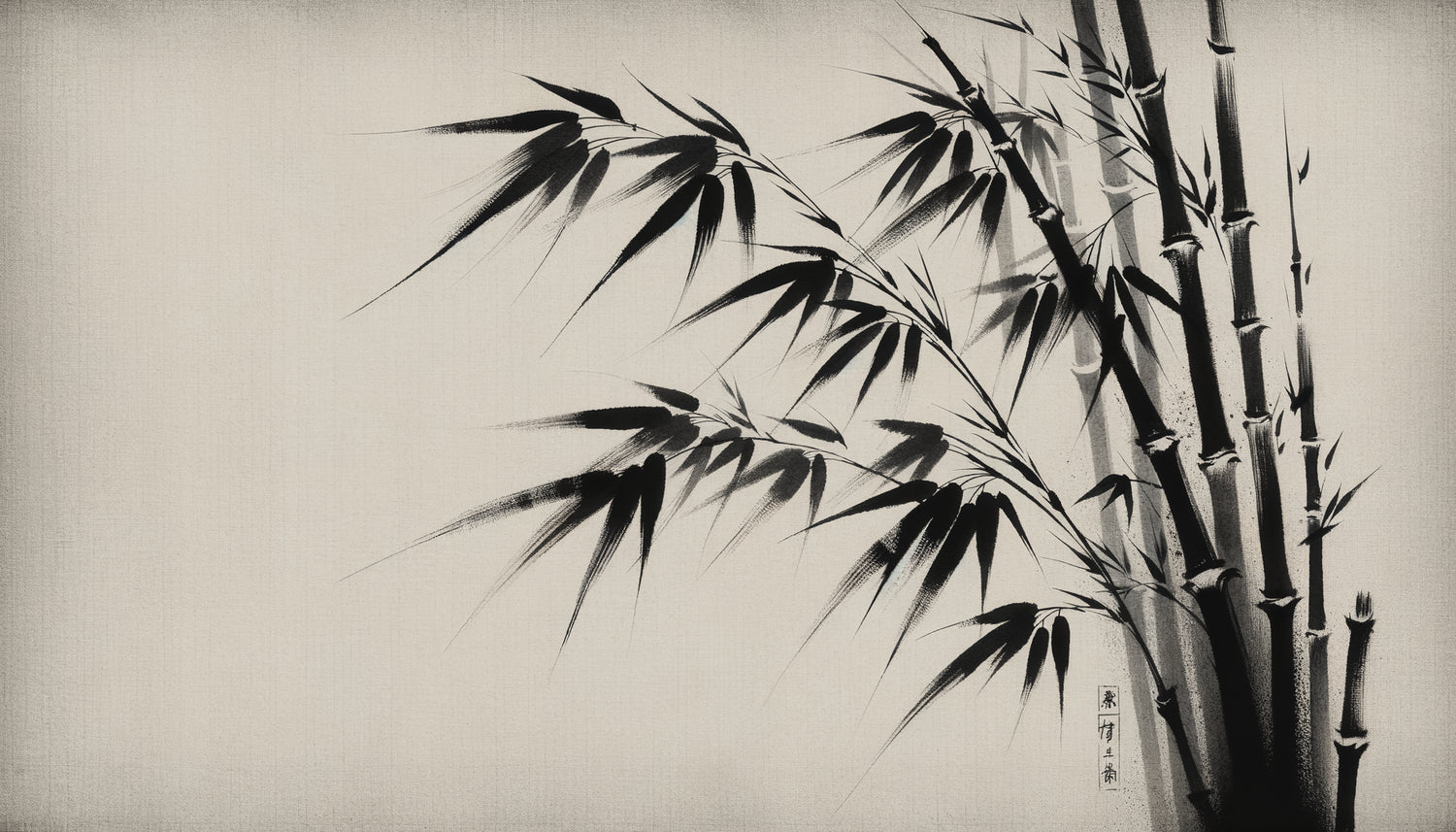
The most authentic bamboo paintings are directly inspired by the tradition of sumi-e, this Japanese ink painting where every brushstroke counts. In these compositions, bamboo is never overloaded with details. On the contrary, a few slender stalks suffice, traced with a confident and fluid gesture.
What makes these works so powerful is their ability to suggest rather than show. The empty spaces, called ma in Japanese philosophy, are as important as the bamboo itself. This void isn't a lack; it’s a visual breath. When you observe a Chinese ink bamboo painting, your gaze naturally rests in these clean white or beige areas.
Favor paintings where bamboos appear with shades of black, gray and very soft green. Subtle gradations obtained by diluting the ink create an organic depth impossible to reproduce with uniform blocks of color. You will recognize these works by their controlled spontaneity: each leaf seems to have been placed in a single movement, without hesitation.
Vertical formats that elevate space
Bamboo naturally grows towards the sky. This verticality is fundamental to creating an authentic zen atmosphere. Vertical bamboo paintings, particularly traditional kakemono scrolls, respect this upward dynamic which invites the gaze to rise.
I’ve noticed that vertical bamboo artworks completely transform the perception of a room. They create a sense of space even in compact interiors. A vertical triptych of bamboos, for example, beautifully structures a wall while preserving this essential lightness to a zen atmosphere.
The dimensions that really work
For a living room or bedroom, a bamboo artwork 60 to 90 cm high creates enough presence without dominating the space. In a narrow hallway, a 120 cm kakemono brings this slender touch of nature that guides the eye. For meditation or yoga spaces, XXL formats of 150 cm and more generate total immersion.
The common mistake? Choosing an artwork that is too small to get lost on a large wall. Bamboo must have presence so that its soothing energy spreads throughout the room. A well-sized bamboo artwork becomes a natural visual anchor point.

When black and white reveals the essence
Black and white bamboo artworks possess an incomparable meditative power. This minimalist palette eliminates all visual distractions and focuses attention on the very essence of bamboo: its structure, its movement, its rhythm.
In an authentic zen atmosphere, black and white is never austere. On the contrary, it becomes contemplative. The shades of gray create a softness that soothes the eye. The contrast between the dark stems and the light background generates mental clarity, as if the image visually organized your thoughts.
These artworks work particularly well in bedrooms where they promote calm before sleep, or in workspaces where they help maintain concentration. Combined with natural materials such as linen, raw wood or stone, they create perfect aesthetic consistency.
The touches of green that awaken nature
If black and white brings contemplation, green bamboo artworks literally invite nature into your interior. But be careful: not all greens create the same atmosphere. Bright or saturated greens break the zen harmony. It is the soft, slightly grayed greens or translucent jade greens that work.
Search for paintings where green appears in transparency, as if light were passing through the leaves. This delicate luminosity evokes bamboo forests at dawn, when dew still clings to the stems. Some works harmoniously combine black ink for the stalks and touches of green watercolor for the leaves, creating a perfect balance between structure and lightness.
The association with other natural elements
The most sophisticated bamboo paintings sometimes integrate other zen symbols: a cherry blossom branch suggesting renewal, a bird evoking freedom, or a few calligraphic ideograms recalling wisdom. These complementary elements enrich the composition without weighing it down, provided they remain discreet.
One detail I've learned to appreciate: the presence of a traditional red seal in the corner of the painting. This small mark authenticates the Asian inspiration of the work and adds a touch of warm color that subtly warms up the composition.

The material of the support: more than a technical detail
An authentic zen bamboo painting does not live the same way on all supports. The final rendering depends enormously on the chosen texture. Prints on textured canvas recall traditional rice paper and bring that tactile dimension which reinforces authenticity.
Paintings on wood create an additional natural connection: the represented bamboo joins the wood of the support in a coherent material dialogue. This option works beautifully in Scandinavian-zen or Japandi interiors. For care spaces like spas, prints on brushed aluminum offer exceptional durability while maintaining a surprising finesse.
Avoid supports that are too glossy or laminated which immediately betray the artificiality of the work. The matte or semi-matte preserves this essential contemplative quality. When light does not bounce brutally on the painting but seems absorbed and then gently redistributed, you know that the support is right.
Transform your interior into a sanctuary of serenity
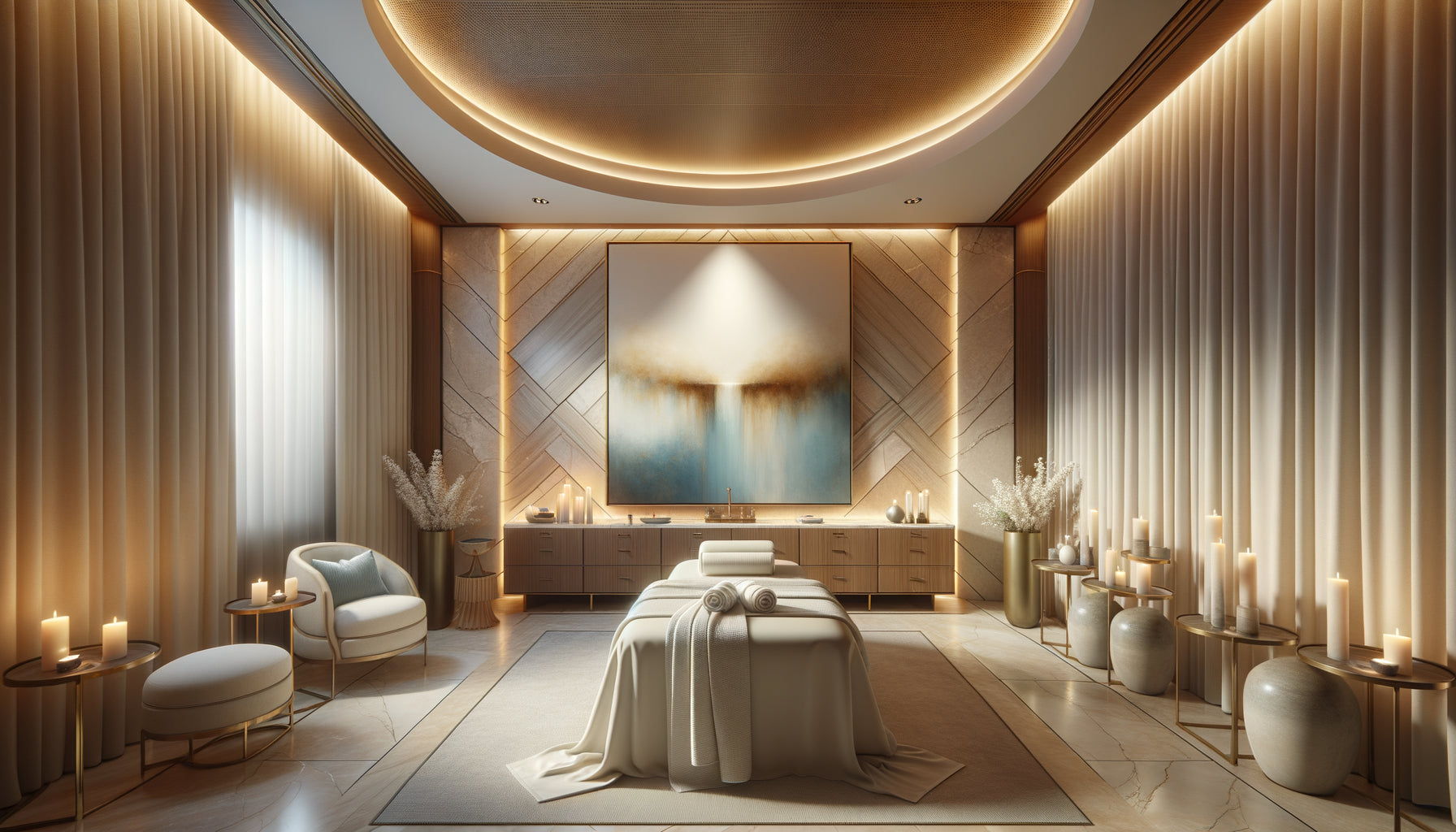
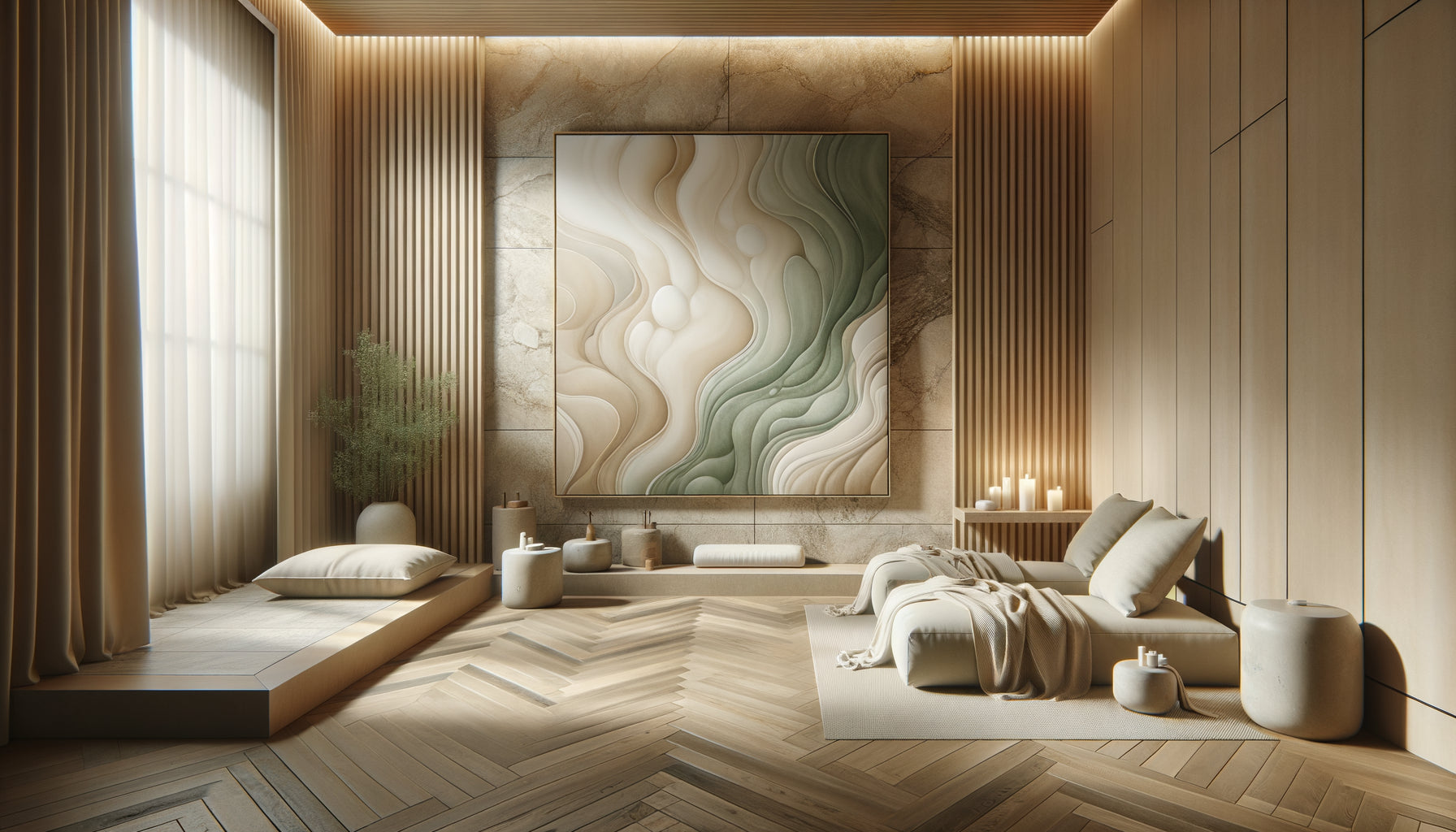
Discover our exclusive collection of wall art for spa that captures the soothing essence of bamboo and zen natural elements.
How to place your bamboo artwork to maximize its zen effect
Having the right bamboo artwork is not enough. Its placement determines all its energetic effectiveness. In a bedroom, place it facing the bed, at eye level when you are lying down. This will be the first and last image of your day, a visual anchor that calms the mind.
In a living room, bamboo artworks work wonderfully above a low sofa or on a wall perpendicular to the windows, where natural light gently touches them without creating reflections. If you practice yoga or meditation, position your bamboo artwork as a focal point, slightly above the horizon when seated.
A secret that few people know: the space around the artwork is crucial. Let your work breathe. A bamboo artwork cluttered with other decorations immediately loses its soothing power. The minimalism of the surroundings amplifies the zen impact of the image. Consider the 30 to 50 cm around the artwork as a sacred zone, an intentional empty space.
The mistakes that break the zen authenticity
After observing countless interiors, some errors consistently recur. The first one: multiplying bamboo artworks in the same room. One or two are enough. Beyond that, the effect becomes decorative rather than meditative. Repetition dilutes the visual message.
Second trap: associating bamboo artworks with overly ornate frames. Gilded moldings, baroque frames, or finishes that are too elaborate conflict with the zen simplicity of bamboo. Favor thin wooden natural frames, matte black frames, or even better, frameless artworks for a perfect continuity with the wall.
Third mistake: choosing hyperrealistic photographic representations. As beautiful as they may be, photos of bamboo rarely create this contemplative dimension. Artistic interpretation, with its share of stylization and refinement, leaves room for your imagination. It is in this space that meditation is born.
Finally, beware of overloaded compositions where dozens of bamboos intertwine in all directions. The zen authenticity lies in eloquent simplicity : a few stems are enough to evoke an entire forest. As in the Zen philosophy itself, less naturally becomes more.
Visualize your transformation
Imagine walking home after a long day. You open the door, and your gaze immediately meets these slender bamboo stalks, suspended in their perfect balance. Your breathing naturally slows down. The tension in your shoulders begins to dissolve. This artwork isn't just decoration; it’s a daily visual reminder that calm exists, that it is accessible, that it awaits you.
Choosing the right bamboo artwork is like installing a silent guardian of your serenity. It's creating a visual anchor that constantly brings your attention back to the present moment. Start by identifying the space that most needs this soothing energy. Then look for the work that resonates with your personal sensitivity. You’ll recognize it immediately: it will instantly create the inner silence you seek.
The real question isn't whether you need a zen bamboo artwork in your life. It’s discovering which one is waiting to transform your interior into a sanctuary of peace.
FAQ : Your questions about zen bamboo artworks
What’s the difference between a decorative bamboo artwork and a truly zen artwork?
The difference lies in the artistic intention and composition. A decorative artwork seeks to fill a space with bamboo motifs, often colorful and detailed. An authentic zen artwork favors simplicity, empty spaces, and a restricted palette. It draws inspiration from the principles of Japanese sumi-e where every element has meaning. You’ll recognize a true zen artwork by its ability to calm your gaze rather than attract it with visual effects. If you feel an immediate sense of peace when observing it, without visual saturation, you are facing an authentically zen work. Zen artworks also possess this timeless quality: they never go out of style because they transcend decorative trends.
Can a bamboo artwork be combined with other styles of decoration?
Absolutely, and that's even one of the strengths of the zen bamboo artwork. Its simplicity allows it to integrate harmoniously into different universes. In a Scandinavian interior, it reinforces the natural and minimalist dimension. In an industrial style, it brings the gentle organic touch that balances raw materials. Even in more classic decors, a black and white bamboo artwork creates a welcome contemporary breath. The essential thing is to respect a few principles: avoid decorative overload around the artwork, prioritize natural materials in the same space, and maintain a consistent color palette. Bamboo works beautifully with wood, linen, cotton, stone, and neutral tones. It’s this discreet versatility that makes the bamboo artwork a judicious choice for almost all interiors.
How long does it take to feel the soothing effect of a bamboo painting?
The effect is often immediate but deepens over time. From the moment you hang it, you will notice a change in the atmosphere of the room, a certain visual softness. But the real magic happens in the following weeks, when the painting integrates into your daily routine. You will begin to look at it unconsciously during moments of stress, and it will become an automatic trigger for relaxation. It's like training: the more you consciously focus on your bamboo painting while taking deep breaths, the more your brain associates this image with calm. After a month, many people report that simply catching sight of their bamboo painting in their peripheral vision is enough to refocus them. To maximize this effect, get into the habit of observing your bamboo painting for a few deep breaths each morning. You will create a soothing ritual that anchors the day in serenity.