In a Chelsea gallery, I saw a collector spend fifteen minutes in front of a portrait of a mannequin mounted on aluminum. He examined the angles, brushed the edges, scrutinized the surface under different lighting conditions. That day, I understood that the excellence of a backing is revealed in these details invisible at first glance. Yet, between two seemingly identical prints, one can last for decades without fail while the other begins to degrade within a few years.
You may have just acquired a beautiful fashion photograph, or you are considering investing in a haute couture portrait. But faced with these technical terms – aluminum backing, composite substrate, cold lamination – you feel overwhelmed. How can you distinguish the work of a master craftsman from an approximate assembly? Here's what a quality backing guarantees you: perfect flatness that enhances the photograph, exceptional durability that protects your investment, and visual depth that magnifies every nuance of the mannequin photo.
Rest assured: evaluating the quality of a backing does not require technical expertise or specialized equipment. I will reveal to you the decisive criteria that I use to authenticate impeccable work, these subtle clues that distinguish excellence from mediocrity.
Flatness: The True Test of the Backing
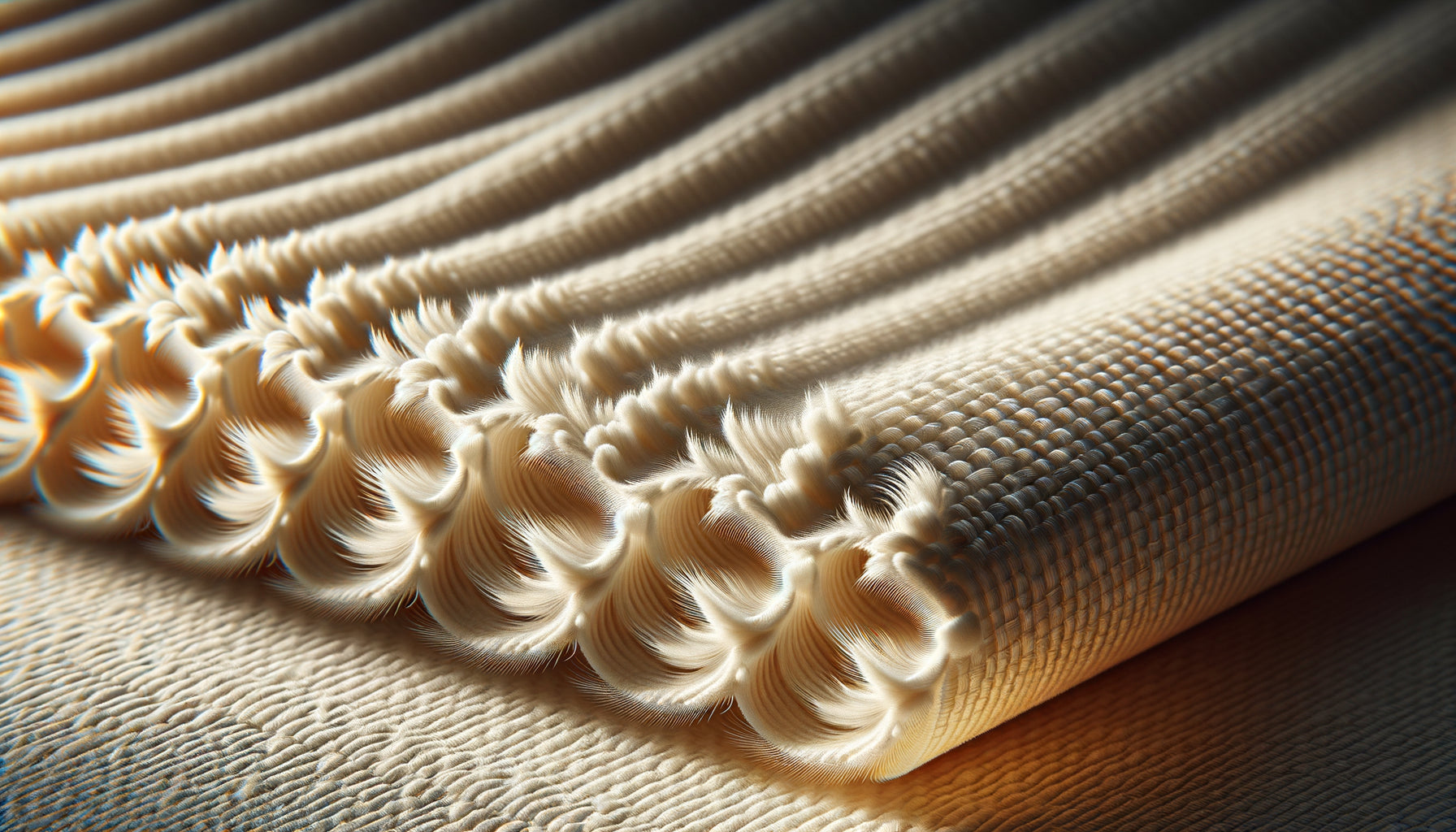
Place the backed photograph at eye level, perpendicular to a natural light source. An exemplary aluminum backing presents a surface of absolute regularity, without the slightest ripple. Run your gaze along the diagonals: no distortion should appear, even on formats exceeding 120 centimeters.
High-quality aluminum composite – generally a Dibond of at least 3mm thickness – offers exceptional rigidity. On a mannequin photograph, this flatness becomes crucial: the slightest bulge alters the proportions of the face, distorts the lines of the silhouette, compromises the photographer's artistic intention.
The Light Pressure Test
Apply gentle pressure to the center of the backing with your palm. A professional assembly hardly flexes at all. If you perceive suspicious flexibility, it reveals either an aluminum support that is too thin or an imperfect adhesion between the print and the substrate. This structural weakness heralds future deformations, particularly dangerous on portraits where every millimeter counts.
Adhesion: The Invisible Link That Changes Everything
Carefully examine the edges of the aluminum backing. On a museum-quality work, the mannequin photograph embraces the aluminum with absolute intimacy. No lifting, even microscopic. No air bubbles. The print and the support form a single material.
Slightly tilt the artwork under a grazing light. This technique ruthlessly reveals adhesion defects. Micro-bubbles create tiny shadows, areas of future peeling appear as subtle variations in sheen. A professional backing presents perfect uniformity: the light glides over the surface without revealing the slightest irregularity.
The lamination technique makes the difference
Artisans of excellence use cold lamination under high pressure. This process guarantees molecular adhesion between the photographic emulsion and the aluminum substrate. In contrast, hot techniques or ordinary glues create internal stresses that, over time and with temperature variations, cause peeling. On a fashion photography, where the sharpness of the face and the texture of the fabrics constitute the very essence of the work, these defects become disastrous.

The finishes: where craftsmanship is revealed
Observe the edges of the backing. Quality artisanal work presents clean cuts, without smudges, with perfectly straight 90-degree angles. The borders of the aluminum must be slightly chamfered to avoid any risk of cuts, but not excessively so as to degrade the aesthetics.
On high-end backings, the edges are often painted black matte or covered with a matching finish. This attention to detail transforms the object: your fashion photography becomes a museum piece, not just a mounted print. Check that this finish does not spill over onto the recto, a sign of hasty work.
The invisible mounting system
Gently turn over the aluminum backing. A professional installs an embedded mounting system, invisible from the front. Spacers – usually aluminum shims – create a space between the wall and the artwork, offering that spectacular depth to fashion photographs that seem to float in space. These fixings must be positioned according to weight distribution calculations, not approximately.
The quality of the photographic print itself
The best aluminium backing won't save a mediocre print. On an excellent fashion photography, scrutinize the density of the blacks: they must be deep, saturated, without traces of greyness. The highlights – on skin, in reflections – retain subtle details, no uniformly white burnt-out areas.
Approach within a few centimeters. Sharpness must be impeccable, even at this extreme proximity. Skin pores, textile fibers, strands of hair: every detail testifies to a museum quality print. If you distinguish a visible grain or excessive grain, the original file was probably undersized or the print poorly calibrated.
The revealing color balance
The skin tones of a fashion photography constitute the ultimate test. A greenish, yellowish or too magenta cast betrays an approximate calibration. Professionals use calibration probes and large format printers perfectly profiled. This level of requirement is immediately perceived: the skin breathes, the colors vibrate naturally, the subtle nuances of makeup and clothing are preserved.

The guarantees and traceability: valuable clues
A craftsman proud of his aluminium backing documents his work. Demand information about the substrate used (Dibond, Alupanel, other composite), the exact thickness, the type of adhesive, the laminating technique. This transparency distinguishes the professional from the approximate provider.
Quality backings generally come with a warranty of at least five years against delamination and deformations. This assurance commits the manufacturer: he has confidence in his processes. For a fashion photography representing a significant investment, this protection becomes essential.
Durability: thinking long term
A professional aluminium backing lasts for decades without visible alteration. Aluminium does not rust, does not warp with humidity, resists thermal variations. Unlike mounts on wood or cardboard, it is not afraid of insects, mold or warping.
To assess this durability, find out about the recommended storage conditions. A quality backing supports varied environments, from a heated Parisian apartment to a climate-controlled New York loft. If you are subjected to drastic hygrometry or temperature constraints, be careful: this often reveals fragile materials or techniques.
Transform your spaces with timeless elegance
Discover our exclusive collection of fashion artworks that celebrate photographic art with backings on aluminum made to the most demanding standards.
Your gaze transformed forever
From now on, when you contemplate a model photograph mounted on aluminum, your perception will be different. You will see beyond the image itself. You will assess this impeccable flatness, this invisible but crucial adhesion, these finishes that distinguish excellent craftsmanship. You will understand why some backings justify their price when others, seemingly similar, will not survive a few years of exposure.
This week, visit a specialized gallery or showroom. Apply these assessment criteria. Compare backings at different quality levels. Your eye will quickly become educated, and you will never compromise on excellence – because an exceptional model photograph deserves a support worthy of its art.