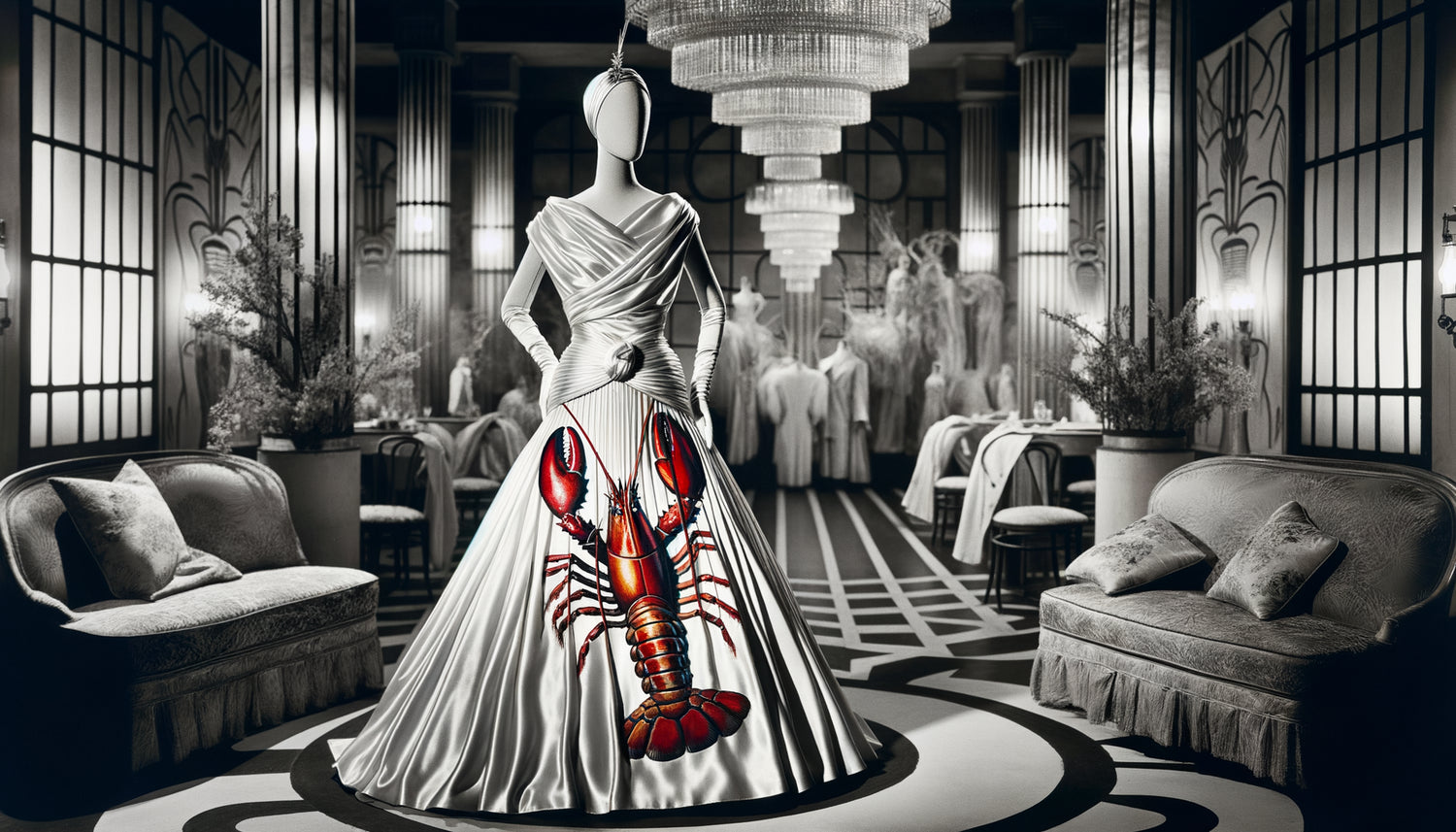
Paris, 1937. A dress parades on the catwalk with a giant lobster painted on white silk, accompanied by strategically placed parsley sprigs. Spectators hold their breath. This is not a waking nightmare, but the result of an explosive collaboration between two geniuses: Elsa Schiaparelli and Salvador Dalí. Their creative alliance revolutionized fashion by imbuing it with a dreamlike dimension, transforming each garment into an artistic manifesto.
Here's what the collaboration between Schiaparelli and Dalí brings: a complete redefinition of the boundaries between fashion and surrealist art, the creation of shocking and poetic atmospheres that defy conventions, and inspiration to transform the ordinary into the extraordinary. Their joint work transcended simple clothing design to become a cultural movement.
Today, we wear practical, functional, often anonymous clothes. We have forgotten that fashion can be a cry, a dream, a provocation. Faced with uniformity and fast-fashion, we aspire to rediscover that emotional and artistic dimension that Schiaparelli and Dalí embodied so strongly. How did these two iconoclasts manage to create a surreal atmosphere that still resonates today?
Rest assured: their approach was not reserved for initiates. It rested on bold but understandable principles, a unique collaborative method, and a shared vision of Surrealism as a vector of creative emancipation. Let's explore together the secrets of this legendary alliance that continues to inspire designers and creators around the world.
The meeting of two rebellious minds
When Elsa Schiaparelli meets Salvador Dalí in the early 1930s, it is the collision of two creative meteorites. The Italian designer, settled in Paris, seeks to shake up the codes of haute couture by injecting humor, unexpectedness, and absurdity. Dalí, already a central figure in the Surrealist movement, explores the unconscious through his hallucinatory paintings.
Their collaboration was not built on a client-artist relationship, but on a genuine intellectual complicity. Schiaparelli does not commission drawings from Dalí: she dialogues with him, shares her obsessions, her clothing fantasies. The painter doesn't just illustrate: he conceptualizes with her pieces that materialize their shared dreams.
This alchemy rests on a common foundation: the rejection of bourgeois propriety. While Coco Chanel advocated discreet elegance, Schiaparelli and Dalí wanted to provoke, question, destabilize. Their surreal atmosphere is born from this shared desire to transform the female body into a living canvas, a walking manifesto.
The creative process: from dream to garment
How do you transform a dreamlike vision into a wearable dress? The working method between Schiaparelli and Dalí was as unconventional as their creations. Dalí often began with spontaneous drawings, quick sketches where female bodies, détourned objects, and Freudian symbols mingled.
Schiaparelli then translated these sketches into textile prototypes, working with her workshops to solve technical challenges: how to hold a lobster on a dress? How to create the illusion of a hat-shoe? This materialization phase was crucial: it was necessary to preserve the strangeness of the concept while creating a functional garment.
The duo used unexpected materials to reinforce the surreal atmosphere: cellophane, metal, colored synthetic fur. Dalí suggested shocking visual associations – a telephone on a hat, drawers on a suit – which Schiaparelli transformed into wearable accessories. This bidirectional collaboration created a fertile creative tension.
The importance of disturbing details
In their shared creations, every detail counted. A pocket was not simply functional: it became a symbolic drawer suggesting the secret compartments of the unconscious. A button took the form of a golden insect. These accumulated micro-provocations built an overall atmosphere where nothing was trivial, where each element invited reflection or delicious discomfort.

The iconic creations that marked history
The Lobster dress of 1937 remains their most famous collaboration. Dalí paints directly onto the white fabric a giant crustacean, accompanied by parsley – a reference to gastronomic presentation but also an erotic symbol in surrealist language. Wallis Simpson, future Duchess of Windsor, wears it for a legendary photoshoot, propelling this surreal atmosphere into the heart of the world elite.
The hat-shoe, created in 1937-1938, perfectly embodies their shared vision. This upside-down headgear, literally a turned-over heel placed on the head, questions our relationship with objects: why couldn't a hat be a shoe? This playful transgression of categories creates an immediate feeling of strangeness.
The Skeleton dress of 1938 uses an anatomical trompe-l'oeil to reveal the skeletal structure beneath the skin. Dalí draws ribs and vertebrae with almost medical precision, transforming the body into an elegant memento mori. This piece illustrates how their collaboration addressed morbid themes with sophistication, creating an atmosphere that is both unsettling and fascinating.
The Torn Suit, with its false tears revealing a flesh-toned lining, plays on the ambiguity between damaged clothing and exposed skin. This unsettling illusion creates a calculated discomfort, a signature of their shared approach: elegance should never be comfortable.
The surreal atmosphere as a political manifesto
Beyond aesthetics, the Schiaparelli-Dalí collaboration carried a subversive dimension. In the 1930s, as Europe slid towards war, their creations offered a dreamlike escape but also a social critique. Transforming a woman into a lobster or skeleton support questioned the decorative status assigned to women in high society.
Their surreal atmosphere functioned as a distorting mirror of bourgeois reality. Absurd accessories – gloves with golden nails, phone-shaped bags – gently ridiculed objects of social distinction. Wearing these creations was displaying one's belonging to an intellectual avant-garde that rejected conventions.
Schiaparelli consciously used this collaboration to affirm her status as an artist rather than a simple seamstress. By associating with Dalí, a respected figure in the art world, she legitimized fashion as a form of artistic expression in its own right. Their joint work thus contributed to elevating couture to the rank of fine arts.

Techniques to recreate a surreal atmosphere today
How to draw inspiration from this legendary collaboration in our interiors or contemporary creative approach? First principle: unexpected association. Schiaparelli and Dalí juxtaposed elements that should never have met. In your decoration, dare to marry a precious object with a trivial element, a classic work with a humorous detail.
Second technique: object détournement. Like Dalí's phone-hat, transform the initial function of an element. A vase can become lighting, a chair sculpture. This displacement creates that characteristic surreal tension in their work.
Third approach: illusion and trompe-l'œil. Their dresses constantly played on appearance versus reality. Integrate elements that deceive the eye: perspective wallpaper, mirrors arranged strategically, oversized objects that disrupt usual proportions.
Color as a vector of strangeness
Schiaparelli invented shocking pink, a provocative hue unlike anything found in nature. Dalí incorporated it into their collaborations as a visual signal of transgression. In your world, choose an unexpected signature color, almost uncomfortable, that affirms your rejection of reassuring neutrality.
Transform your interior into a surreal gallery
Discover our exclusive collection of fashion paintings that capture the avant-garde spirit of Schiaparelli and extend this surreal atmosphere into your living space.
The living legacy of a revolutionary collaboration
The influence of the Schiaparelli-Dalí collaboration still resonates in contemporary fashion. Designers like Alexander McQueen, Iris van Herpen or Rei Kawakubo have inherited their approach: fashion as conceptual performance. Their manifestos and sculptural pieces extend this tradition of calculated strangeness.
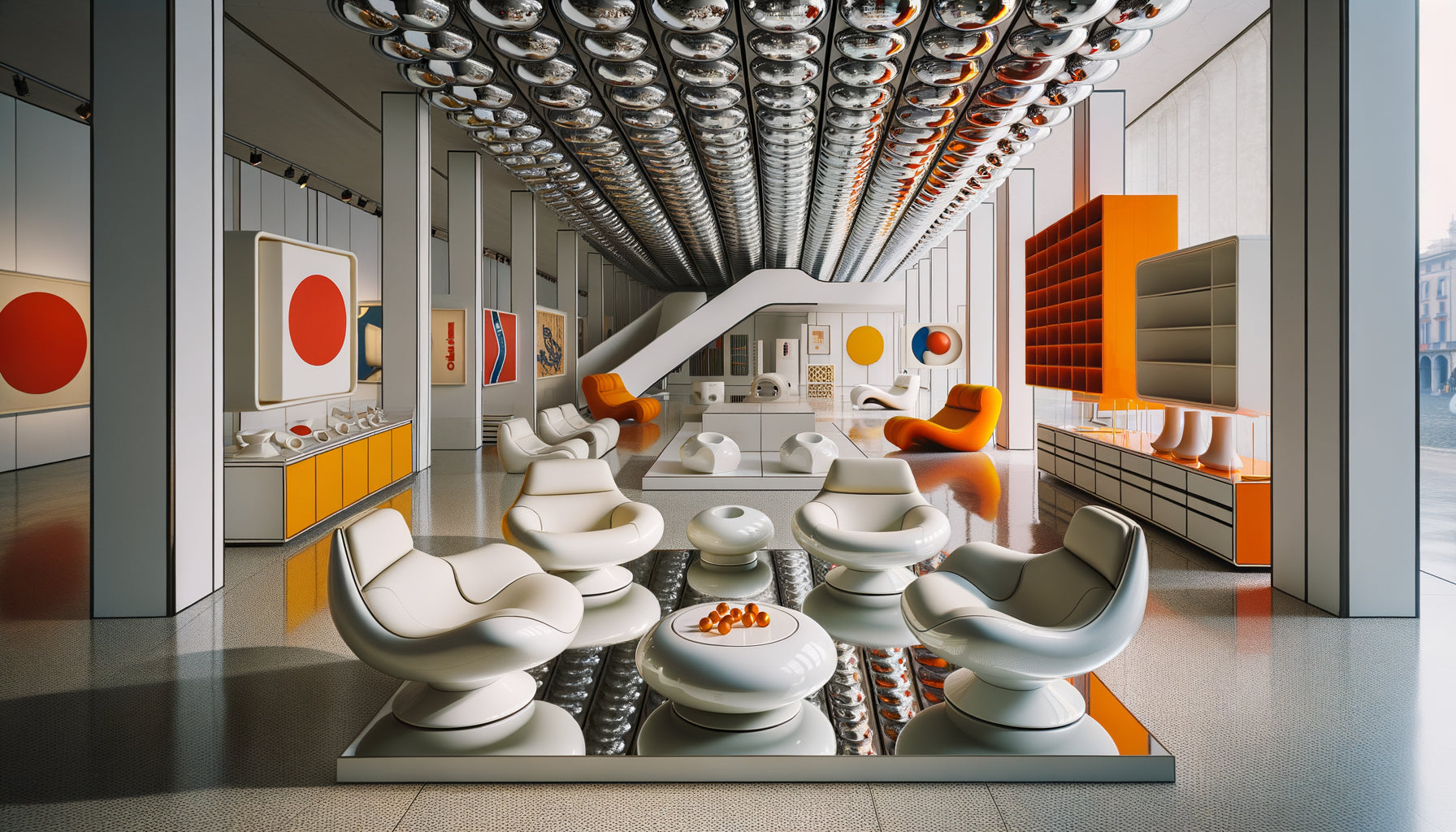
In interior design, the movement of contemporary surrealism draws directly from their visual vocabulary. Anthropomorphic furniture, organic lighting fixtures, trompe-l'œil textiles are all descendants of their shared vision. This atmosphere that challenges our spatial certainties finds its roots in their textile experiments.
More deeply, Schiaparelli and Dalí bequeathed us a creative permission: the freedom to reject logic, embrace the absurd, transform our environment into an intellectual playground. Their collaboration reminds us that art is not reserved for galleries; it can invest our clothes, our homes, our daily lives.
Imagine yourself in a space where every object tells a story, where every detail intrigues or amuses, where normality gives way to wonder. This is the concrete legacy of this creative alliance: the conviction that the extraordinary can be lived, worn, inhabited. By integrating even a touch of their surreal audacity into your world, you extend their poetic rebellion against banality.
Start small: a repurposed object, an improbable color, an unexpected visual association. Then observe how this surreal spark transforms your view of your surroundings. Schiaparelli and Dalí didn't create clothes; they created permanent invitations to the waking dream. It is now up to you to accept this invitation and compose your own atmosphere where the impossible becomes deliciously tangible.