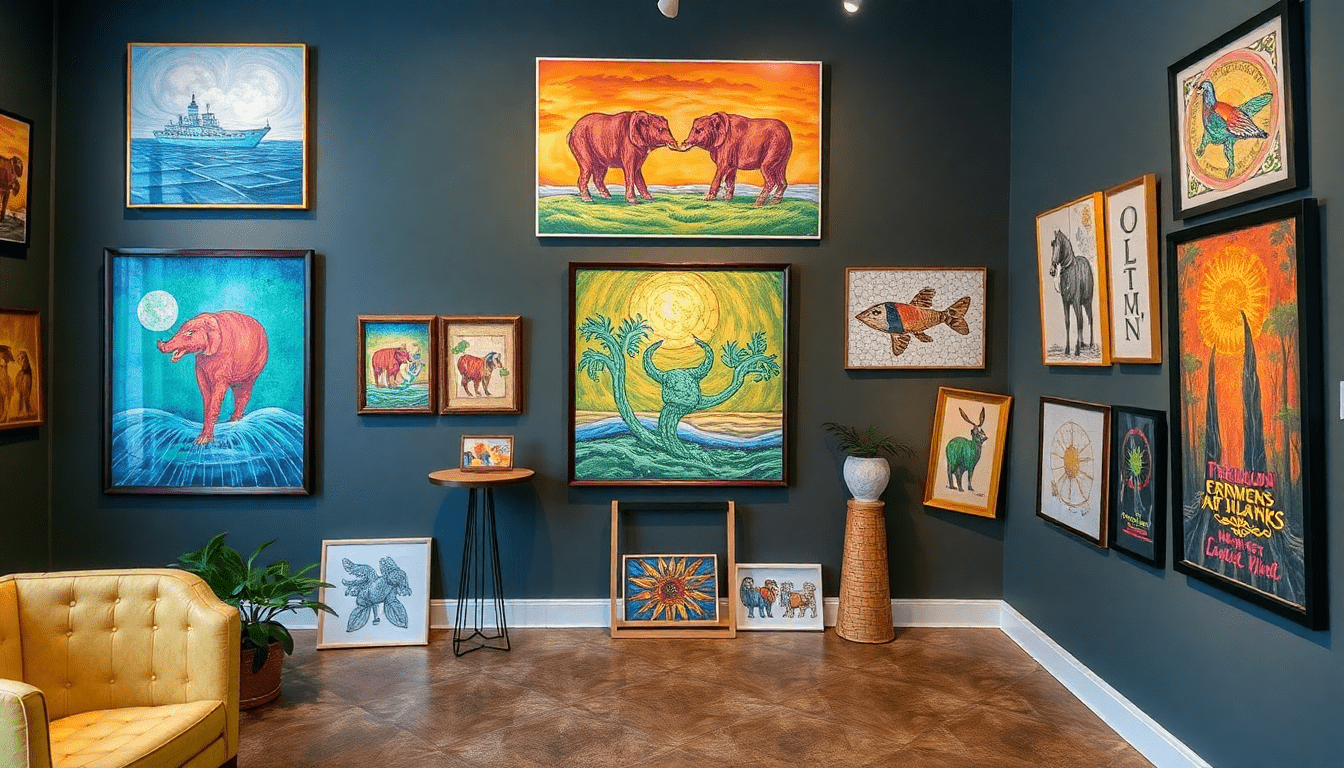
An empty wall can quickly give a room a cold or unfinished feel. Adding a decorative wall art piece to an interior helps structure the space, create ambiance and reflect a part of your personality.
Wall artworks play both an aesthetic and symbolic role: they capture the eye, tell a story and influence the perception of the room. For example, an abstract painting in a contemporary living room, a soothing landscape in a bedroom or a typographic visual in a kitchen each add a consistent touch with the usage of the space. The choice of style depends on the type of room, the existing decor style, but also the emotions you want to convey.
This article helps you determine which wall art to choose according to the room, the most suitable artistic styles and how to match your artwork to your decor.
What style of painting for each room in the house?
Each room has its use, its atmosphere, its constraints. The ideal painting adapts to these elements to create a harmonious effect.
Living Room
The living room is the central room of the house, where guests spend most of their time. A large-format painting, a modern triptych or a black and white photograph are perfectly suited here. Abstract or landscape works help to visually structure a large wall, above a sofa or sideboard.
For a warm atmosphere, opt for warm tones or visible textures. A painting depicting a nature scene, a stylized city or a geometric composition brings an artistic touch without overloading the room. It is also the ideal place to exhibit a statement piece that immediately attracts attention.
Bedroom
In a bedroom, the goal is to create calm and intimacy. Paintings should invite relaxation. Soft colors, rounded shapes, floral motifs, misty or marine landscapes are preferred here.
A minimalist painting, an ink drawing, or even a pastel watercolor easily integrates above the bed or on a side wall. Symmetry and visual balance are important for fostering a serene atmosphere.
Kitchen
Less conventional, the kitchen nevertheless welcomes decorative paintings. You can integrate colorful illustrations, typographic paintings with culinary quotes or illustrated recipes. Medium to small formats are preferable not to visually clutter the space.
A retro, pop or naive style energizes this often functional room. Materials such as metal or painted wood resist moisture and heat better.
Entrance or hallway
Often overlooked, these transitional areas can be enhanced with striking artworks. The entrance can accommodate a graphic portrait, a vintage poster, or a contemporary visual that sets the tone for the home.
In a hallway, consider creating a gallery wall composed of several small paintings, in vertical or horizontal format. This helps to rhythmize the walk while enhancing this space which is sometimes monotonous.
What are the main styles of paintings to consider for your home?
The style of painting strongly influences the perceived atmosphere. Here are the major decorative trends most commonly used in interiors.
Abstract
Abstract paintings focus on shapes, contrasts and colors. They represent nothing figurative, but convey a strong visual energy. Perfect for contemporary interiors, they pair well with white walls or minimalist decor. They can become the focal point of the room. Choose tones in harmony with your furniture or dare to contrast for a bold touch.
Landscape or nature
A landscape painting brings a feeling of escape, calm, or even spirituality. Misty mountains, green forests, soothing coastlines... These paintings are perfect for bedrooms, living rooms or country houses. They also suit Scandinavian or zen decorations very well. Their rendering can be realistic, impressionistic or stylized.
Pop art and urban art
Colorful, dynamic and full of character, pop art or street art paintings infuse modern energy. We find cultural icons, poster détournements or striking graphics. They integrate particularly well into industrial, contemporary or minimalist style interiors. A single painting of this type is enough to transform a neutral room into a vibrant space.
Minimalist
The minimalist style relies on simplicity and balance. Neutral colors, geometric shapes, fine lines: these paintings do not shout but soothe. They are perfect for bedrooms, workspaces or minimalist interiors. Their strength lies in the emptiness, the visual silence they leave.
Classic or figurative
Classic paintings represent scenes of life, portraits, objects or landscapes in a realistic style. They bring an elegant and timeless touch, ideal in a traditional, chic or even rustic interior. Carefully framed, they also integrate into more modern decors, playing on the contrast of styles.
How to choose a painting according to the decoration style of your home?
For a successful integration, the painting should complement the existing decor without overwhelming it. The choice depends on the shapes, colors and materials dominant in the room.
Decor Style Recommended painting styles Modern / Contemporary Abstract, geometric, black and white photo Scandinavian Natural landscape, minimalist, pastel Industrial Pop art, urban art, metallic typography Bohemian / ethnic Tribal art, natural material, warm colors Rustic / countryside Floral watercolor, country scene, oil painting on woodIt is also important to consider the proportions. A large painting stands out on a large wall, while a small format integrates better into a reduced space. For a harmonious decoration, choose a painting whose colors recall those already present (textiles, cushions, rugs).
Conversely, to create a contrast effect, a very colorful or dark painting can liven up a white or beige room. Finally, think about the mounting height : ideally it is at eye level, i.e. approximately 1.60 m from the floor in the center of the painting.
Conclusion
The choice of a painting style in your home is not only about taste, but also about visual harmony, the function of the room and the overall decor style. Abstract, figurative, pop or minimalist, each painting can transform a room, create an atmosphere or convey a message.
It is enough to define your intention, respect the balance of shapes and colors, and not overload the space. By selecting the right format, location and style, a painting becomes a strong element of your interior decoration. Dare to mix, contrast or wall compositions can give even more character to your interior.