The first time I contemplated a carved canoe displayed in a tribal art gallery, I felt this inexplicable connection with centuries of stories whispered by the weathered wood. These vessels, far beyond their utilitarian function, embody the very soul of fluvial civilizations that have shaped their identity to the rhythm of the currents.
Here's what the symbolism of canoes in decorative art brings to your interior: authentic cultural depth, a connection with millennial traditions preserved, and a raw aesthetic that dialogues with contemporary architecture. Many think that tribal art is limited to a few masks on the wall, creating spaces that sorely lack narrative coherence. Rest assured: incorporating canoe symbolism into your decor doesn't require transforming your living room into an ethnographic museum. I will reveal how these meaningful objects can transform your spaces into sanctuaries of authenticity.
The soul of river peoples sculpted in wood
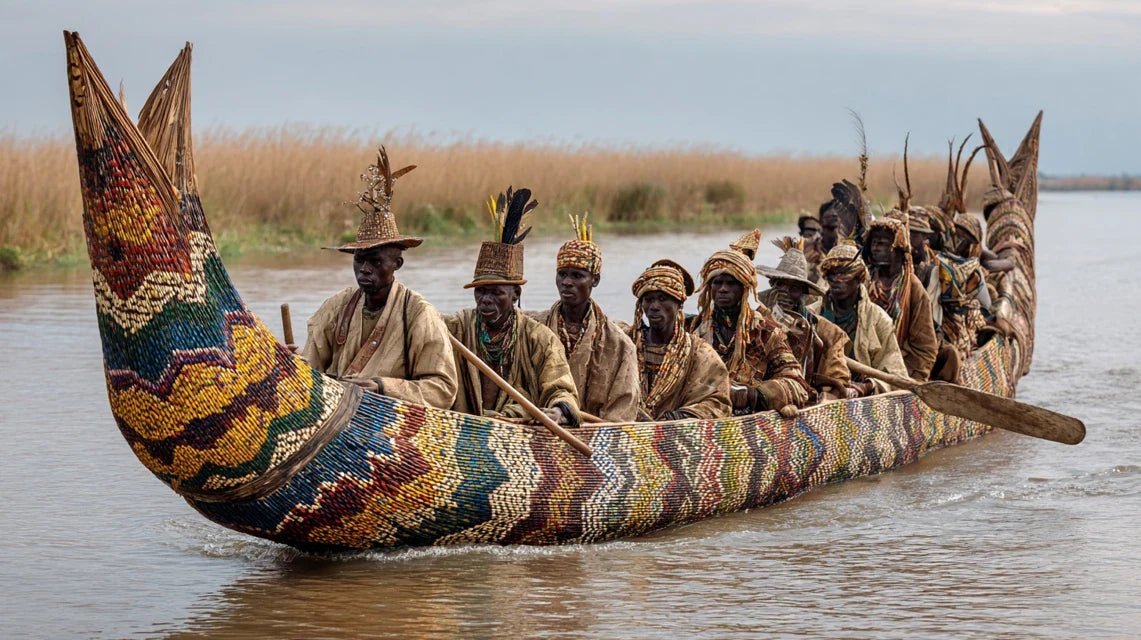
For the riverside communities of West Africa, Amazonia or Oceania, the canoe transcends its simple function as transport. It represents the vital link between land and water, between the world of the living and that of ancestors. On the Congo River, the fishermen's canoes of the Wagenia people display carved prows representing guardian spirits, true protectors against the dangers of the water.
This spiritual dimension permeates every curve, every motif engraved in the wood. The artisans are not simply building a boat: they are giving birth to a lifelong companion, a witness to births, weddings, mourning. The canoe then becomes a member of the family, honored, respected, sometimes even named according to ancestral traditions.
In contemporary decorative art, this symbolism of canoes resonates with our modern quest for authentic connection. Faced with the standardization of interiors, these pieces embody unique narratives, know-how passed down from generation to generation. A carved prow suspended on a wall tells much more than a story of navigation: it evokes resilience, adaptation, harmony with natural elements.
Sacred motifs: deciphering the visual language of canoes
Each ornament engraved on a traditional canoe obeys a precise symbolic language. The geometric patterns that are frequently found are never random. Among the Sepik people of Papua New Guinea, the spirals sculpted on ceremonial canoes represent the eternal cycle of life, while triangular shapes evoke the sacred mountains where ancestral spirits reside.
Totemic animals: sculpted guardians
The symbolism of canoes is particularly expressed through animal representations. The crocodile, omnipresent on boats in the Congo basin, symbolizes power and protection. Its formidable jaw, stylized on the prow, wards off negative influences. The aquatic bird, common in the decorative art of Amazonian canoes, embodies the messenger between worlds, capable of navigating water, walking on land, and rising into the sky.
These animal elements are never mere decorations. They function as cultural signatures, family or clan crests. Integrating a canoe sculpture adorned with a crocodile into your decor invites this protective energy, this primal force that reassures and grounds the space.

Discover this inspiring artwork
When canoes sail into our contemporary interiors
Integrating the symbolism of canoes into modern decorative art creates fascinating dialogues. I have observed how a sculpted canoe paddle, simply leaning against a minimalist white wall, instantly transforms the atmosphere of a room. The contrast between the roughness of ancestral wood and the purity of contemporary surfaces generates a captivating visual tension.
Avant-garde interior designers exploit this duality. A section of canoe suspended horizontally becomes a narrative shelf, carrying books and personal objects as it once carried the hopes of a river community. Sculpted prows, mounted on pedestals, transform into monumental sculptures that anchor reception areas.
The canoe as an architectural axis
In the most daring projects, the canoe does not decorate the space: it structures it. Suspended from the ceiling of a loft industrial, it creates an organic guideline that contrasts with the rigid geometry of the architecture. This aerial presence recalls the fluid movement of the boat gliding on water, infusing poetic dynamism into the whole.
The symbolism of canoes also works as a conversational focal point. Unlike conventional decorative elements, these pieces carry palpable stories. Your guests cannot help but wonder about their origin, their use, their journey to your interior. They become catalysts for dialogue, bridges to other cultures, other ways of life.
Artisanal techniques: honoring the heritageUnderstanding manufacturing methods deeply enriches the appreciation of these objects. Traditional canoes are generally carved from a single tree trunk, often a fromage or iroko, chosen according to precise ritual criteria. The tree is first honored, thanked for its future sacrifice. This sacred relationship between the artisan and the raw material imprints the final object with a particular energy.
The carving process can sometimes take several months. Master craftsmen work with rudimentary tools, their gestures guided by ancestral knowledge passed down orally. Each swing of the adze reveals the latent shape of the wood, releases the spirit of the canoe. This patience, this communion with the material, gives authentic pieces a vibratory presence that industrial reproductions cannot match.
In modern decorative art, this artisanal dimension resonates with the values of slow design. Owning an authentic canoe element is to refuse disposable consumption, to favor objects that have taken time, intention, and know-how. It is to value human hand over machine, the singular over the standardized.

Discover this inspiring artwork
Colors and patinas: the life inscribed in the matterThe symbolism of canoes is also expressed through the patinas acquired over the years of use. Signs of wear do not diminish the value of these pieces: they increase it. These marks tell of the thousands of journeys, the hands that gripped the paddle, the waves that licked the hull.
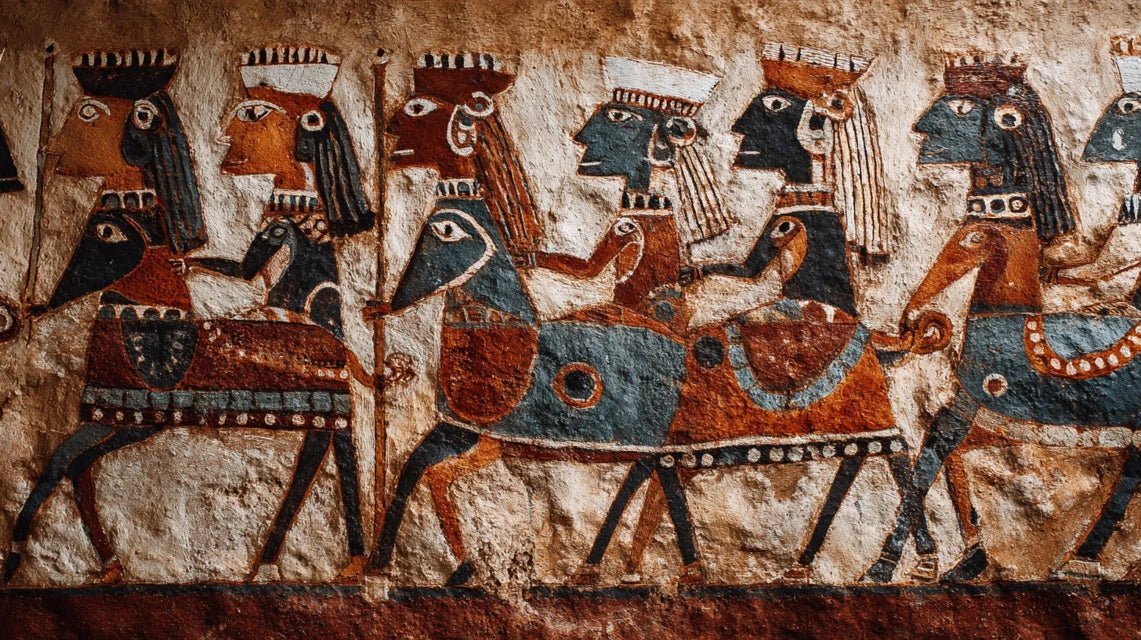
Some ceremonial canoes display pigments ocher, white or black, obtained from earth, lime or charcoal. These colors are never decorative in the Western sense: they encode ritual information, indicate the social status of the owner or the specific function of the boat. Red latrite protects against evil spirits, white kaolin purifies, black charcoal absorbs negative energies.
In contemporary decoration, these earthy tones harmonize wonderfully with the natural palettes currently popular. The warm hues of patinated wood dialogue with raw linen textiles, artisanal ceramics, lush green plants. The canoe becomes the chromatic anchor point around which to orchestrate an organic and soothing atmosphere.
Transform your space into an authentic cultural sanctuary
Discover our exclusive collection of African paintings that capture the essence of fluvial traditions and harmoniously dialogue with the symbolism of canoes to create interiors full of meaning.
Creating a coherent spatial narrative around canoes
The successful integration of canoe symbolism into your decor requires a narrative approach. It's not about randomly accumulating tribal objects, but about composing a visual story that respects the essence of these pieces. A miniature canoe placed on a shelf can dialogue with photographs of fluvial landscapes, mudcloth fabrics, terracotta pottery.
I particularly appreciate compositions that play with scales. A large sculpted paddle vertically responds to miniature canoes arranged in a constellation on a console. This interplay of proportions creates a visual dynamic while evoking the relationship between the individual and their community, a central theme in traditional fluvial societies.
Lighting also plays a crucial role. A grazing spotlight reveals the depth of the sculptures, making the shadows of the engraved motifs on adjacent walls dance. This lighting transforms the static object into a living presence, recalling campfires by the rivers where these canoes were designed and their stories were passed down.
Beyond decoration: a philosophy of life
Inviting canoe symbolism into your interior goes far beyond aesthetics. It's about embracing a philosophy of fluid adaptation, characteristic of fluvial peoples. The canoe advances by following the current, not fighting it. It negotiates with obstacles rather than confronting them brutally.
This wisdom applies wonderfully to our hyperconnected and often rigid contemporary lives. Canoes remind us of the importance of flexibility, observing natural rhythms, patience. They embody a radically different relationship to time from our modern urgency, a cyclical time that follows the seasons, floods, migrations.
Living surrounded by these fluvial symbols subtly influences our daily perception. They act as meditative anchors, bringing our attention back to the essentials: the journey rather than the destination, the process rather than the immediate result, community connection rather than exacerbated individualism.
Preserving and transmitting: your responsibility as a collector
Acquiring elements of traditional canoes carries a cultural responsibility. These objects are the last witnesses to lifestyles threatened by rapid modernization. By preserving them, by valuing them in your decor, you participate in the preservation of an immaterial heritage that is disappearing.
Always inquire about the provenance of your acquisitions. Prioritize pieces from old collections or purchased directly from communities who wish to share their heritage. Avoid any object whose origin seems doubtful or which may have been illegally exported.
Also pass on the stories associated with these objects. When you receive, share what you have learned about the symbolism of canoes, construction rituals, and the beliefs of river peoples. These narratives transform your guests into secondary guardians of these traditions, extending their influence far beyond your walls.
Ultimately, integrating the symbolism of canoes into your decorative art creates more than just an aesthetically pleasing interior. You compose a space that breathes authenticity, murmurs millennial stories, and anchors your daily life in a precious ancestral wisdom. Every morning, contemplating these shapes sculpted by skilled hands, you reconnect with the essential: our belonging to a great human narrative that transcends borders and eras. Start modestly: a paddle, a canoe model, a carved fragment. Let these objects speak to you, guide you towards other acquisitions, gradually compose your own decorative journey along the imaginary rivers of your interior.
Frequently Asked Questions
How to distinguish an authentic canoe from a modern reproduction?
Authenticity is revealed in several subtle details. A traditional canoe presents characteristic irregularities of manual work: slight variations in symmetry, traces of specific tools, patina developed naturally over decades. The wood often shows drying cracks, darker areas where hands have regularly handled it. Modern reproductions generally display a too uniform perfection, chemically treated wood, mechanically engraved patterns without the expressive depth of craftsmanship. Do not hesitate to consult experts in tribal art who can authenticate pieces and tell you their likely history. Even the smell of old wood is different: it is deeper, sometimes slightly musty, while reproductions often smell of industrial varnish.
What maintenance do canoe elements require in an interior?
These antique pieces require minimal but attentive care. Absolutely avoid direct sunlight, which dries out the wood and causes traditional pigments to fade. Gentle dusting regularly with a dry cloth is usually sufficient. To nourish very dry wood, occasionally apply a thin layer of natural oil (linseed, beeswax), testing first on a discreet area. Never attempt to restore damaged areas yourself: these signs of wear are an integral part of the object's history. Maintain a stable humidity level in your interior, as extreme variations can cause additional cracks. If xylophagous insects appear, consult immediately a professional restorer specializing in tribal art rather than using aggressive insecticides.
Can we mix canoes from different cultures in the same decoration?
Absolutely, provided you create an intentional visual coherence. Rather than randomly juxtaposing elements from Africa, Amazonia and Oceania, look for common themes: tapered shapes, earthy color palettes, geometric patterns. Arrange them according to a principle of dialogue rather than exhaustive collection. For example, an Oceanian canoe with complex motifs can converse with a streamlined African prow if you visually link them through consistent lighting or a common neutral support. The key is to respect the integrity of each piece by avoiding accumulations that would trivialize their symbolic power. Think intercultural conversation rather than ethnographic catalog. Each object must retain its breathing space, its ability to tell its specific story while being part of your personal decorative narrative.