I spent twelve years restoring canvases in my family's workshop before specializing in preventive conservation of artworks for public and private spaces. This experience taught me a little-known truth: the beauty of a work only survives if its maintenance remains manageable on a daily basis. How many magnificent textured paintings have I seen relegated to storage, victims not of a lack of love, but of overly complex upkeep?
Here's what a surface for painting adapted to your lifestyle brings: a work that remains vibrant without weekly chores, a decorative investment that lasts through the years without alteration, and above all, the peace of mind knowing that a few simple gestures are enough to preserve its splendor.
You love the dramatic effect of deep relief, the sensuality of an impasto texture, but a little voice whispers to you: “And the dust? And the splashes?” In a doctor's office, a family living room or an open kitchen, this question is not a technical detail, it’s the key to your long-term satisfaction.
Rest assured: choosing between a textured painting and a smooth surface isn't giving up on aesthetics. It's understanding how material interacts with your daily environment. I will reveal the secrets I learned restoring hundreds of artworks damaged by unsuitable cleaning methods.
After this article, you will precisely know what type of surface corresponds to your space, your lifestyle, and your aesthetic requirements, without ever sacrificing visual pleasure.
The smooth surface: the unsuspected ally of high-traffic areas
In my restoration workshop, I developed a simple test with clients: wiping a microfiber cloth over different surfaces. The astonishment is always the same when they discover how easily a smooth surface cleans in seconds, whereas a texture requires patience and technique.
A canvas with smooth varnish or a print on plexiglass offers exceptional resistance to daily aggressions. Dust finds no nook or cranny to cling to. Water splashes, fingerprints, even accidental splatters literally slide without penetrating the material. A simple damp wipe is enough to restore its original shine.
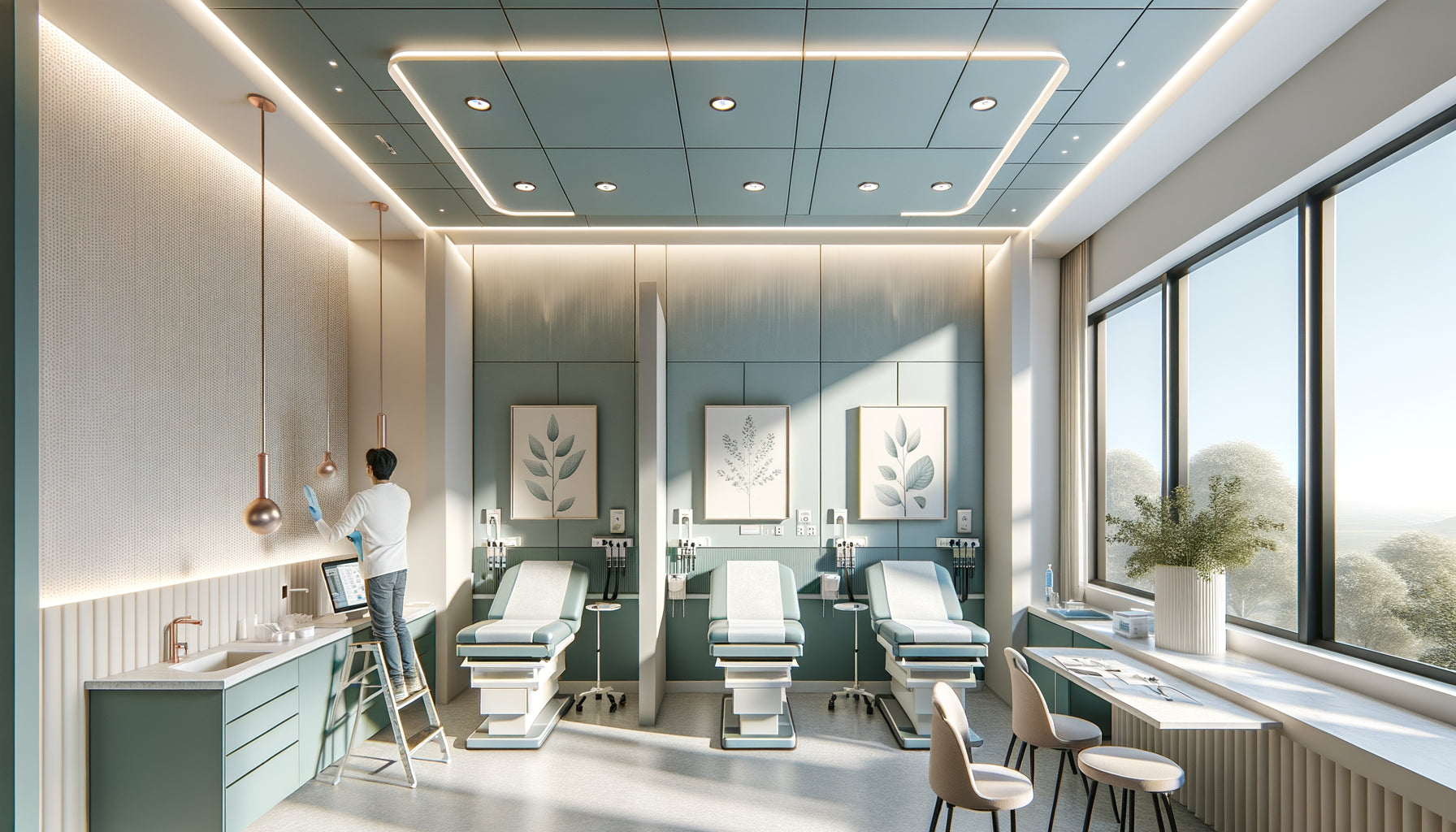
This ease of maintenance becomes crucial in certain environments. I have equipped doctor's offices where hygiene dictates its laws: smooth surfaces allow complete disinfection without damaging the artwork. In designer kitchens, where greasy fumes and condensation are inevitable, a painting with a flat surface lasts through the years without yellowing or residue buildup.
Express cleaning techniques
For a smooth surface, your routine boils down to three gestures: dust with a dry microfiber cloth every two weeks, clean with a slightly damp cloth (pure water or 2% neutral soap and water mixture) once a month, then immediately dry with a clean cloth. Total: two minutes chrono.
I timed the cleaning of a smooth wall art piece measuring 90x60 cm in a clinic hallway: 90 seconds for an impeccable result. This efficiency transforms chores into a trivial gesture, naturally integrated into weekly cleaning. No specialized products, no particular tools, just the consistency of simple gestures.
Relief texture: when material sculpts light
Yet, I cannot deny the magic that occurs when I contemplate a wall art with textured relief under grazing light. Shadows dance in the impasto, the material seems to breathe, each viewing angle reveals a new depth. This tactile dimension, almost sensual, creates a presence that smooth surfaces cannot match.
In my own living room, I hung an abstract canvas with generous reliefs. Every morning, the rising sunlight transforms this work into a moving landscape. Visitors instinctively approach, fascinated by this third dimension. This is what I call the « coefficient of presence »: a textured wall art commands attention differently.
But let's be honest: this material richness comes at a price in terms of maintenance. Reliefs create micro-zones where dust settles comfortably. Hollows retain particles, ridges are exposed to clumsy friction. A hasty cleaning can flatten fragile impasto or leave whitish residue in the hollows.
The real constraints of deep relief
I have restored textured canvases where years of dusting with a duster had created invisible micro-scratches, but which tarnished the whole. Relief requires adapted tools: soft-bristled brush to gently dislodge dust in crevices, blower for the most fragile areas, never direct contact with a damp cloth without precaution.
Allow between 5 and 8 minutes for a respectful cleaning of a textured wall art of similar dimensions. Quadruple that time, but also get a work that transforms your wall into a sculptural event. Is the calculation worth it? It all depends on your relationship to time and decorative objects.

Adapt your choice to your real environment
After twelve years of advising collectors and individuals, I have established a clear map. Smooth surfaces thrive in demanding environments: medical spaces requiring regular disinfection, open kitchens exposed to suspended grease, children's rooms where accidents are frequent, professional offices where maintenance time is limited.
Conversely, textured artworks flourish in protected areas: quiet master bedrooms, cozy libraries, living rooms with little traffic, personal galleries where the artwork becomes contemplation. Ambient humidity also plays a role: a relief absorbs more moisture, risking mold in poorly ventilated areas.
I advised a gallery director who was hesitant about her medical waiting room. Her heart leaned towards textured abstractions, but her pragmatism feared maintenance. The solution? Large-format prints on dibond with a smooth varnish reproducing the illusion of texture. From afar, the texture seems palpable; up close, the surface remains perfectly cleanable. Trompe l'oeil at the service of practicality.
Smart compromises that no one tells you
Between absolute smoothness and maximum relief lies a whole spectrum of possibilities. Light textures (fine impasto, subtle grains) offer a fascinating compromise: sufficient tactile presence to capture the light, relief moderate enough to facilitate maintenance. These intermediate surfaces multiply your options.
Protective varnish: your best ally
A professional secret: a suitable protective varnish radically transforms the maintenance of a textured artwork. On my own creations, I systematically apply a matte or satin varnish that partially fills in the recesses without flattening the reliefs. Result? Dust adheres 60% less, cleaning becomes 40% faster, and the surface is more resistant to splashes.
However, be careful: not all varnishes are suitable. Glossy varnishes accentuate every defect and fingerprint on smooth surfaces. Varnishes that are too thick can run into deep reliefs and create unsightly streaks. A professional will know how to adapt the protection to the exact nature of your artwork.

My decision protocol in three questions
Before investing, ask yourself these three questions that I systematically use with my restaurateur and collector clients:
First question: How often do you pass through this area? A hallway walked ten times a day is not a quiet bedroom wall. The frequency of passage dictates the frequency of soiling, and therefore the necessary maintenance. A smooth painting withstands this constraint without flinching.
Second question: What emotion are you primarily looking for? If you want a sculptural presence, a daily dialogue with the material, accept the additional 5 minutes per month. If you're looking for an elegant visual atmosphere without constraints, the flat surface delivers this promise.
Third question: Will your lifestyle evolve? I have seen childless couples opting for generous reliefs, then biting their fingers when a toddler with sticky hands arrives. Anticipate the next five years: an easy-to-maintain painting remains relevant as life accelerates.
Your space deserves a work as beautiful as it is practical
Discover our exclusive collection of paintings for Medical Offices that combine refined aesthetics and simplified maintenance, specially designed for demanding environments.
Visualize your daily life transformed
Imagine your morning in six months. You pass by your painting while drinking your coffee. If you chose a flat surface, it shines exactly as the day of purchase, without any particular effort on your part. A quick wipe every two weeks, and the shine remains intact. Your decorative investment ages without aging.
Now imagine having opted for the textured relief. Each passage reveals new nuances depending on the time and season. You have integrated its maintenance as a monthly ritual, almost meditative. This work is not just a decorative element; it's a tactile companion that dialogues with your sensitivity.
Both scenarios are valid. Both enrich your daily life. The only mistake would be to choose by default, without having consciously weighed your priorities. A painting adapted to your reality remains a daily pleasure; a poorly chosen painting becomes a silent reproach hanging on the wall.
Start by honestly observing your relationship with time and maintenance. Then let your aesthetic intuition express itself within this realistic framework. Beauty and pragmatism never really oppose each other: they find their balance when we take the time to listen to them both.
Frequently Asked Questions
Does a textured painting really accumulate much more dust?
Yes, it is a physical inevitability. Reliefs create microscopic horizontal surfaces where particles naturally settle, protected from ambient air movement. In my workshop, I measured an accumulation 3 to 4 times greater on textured surfaces compared to smooth surfaces exposed to the same conditions. However, this difference becomes negligible if you regularly dust with a soft brush suitable for the surface. The key is not to avoid dust, but to establish a routine compatible with your lifestyle. A well-maintained textured artwork remains beautiful; a neglected textured artwork visibly dulls in a few months.
Can the same cleaning products be used on both types of surface?
Absolutely not, and it is a mistake I constantly see during my restorations. A smooth, varnished surface can tolerate a slightly damp cloth, or even mild glass or plexiglass cleaners depending on the support. On the other hand, an artwork with relief should never receive liquid sprayed directly: water seeps into the recesses, creating halos or promoting the development of mold under the pictorial layer. For reliefs, prioritize dry dusting with a brush or blower, and reserve moisture for annual professional interventions. The support also matters: a textured canvas is more fragile than an impression on a rigid panel. Always check the manufacturer's recommendations before any intervention, as each painting technique has its own conservation specifics.
In a medical waiting room, is textured relief really not recommended?
It's a matter of priorities and hygiene standards. In a medical office, health protocols often require surfaces that can be quickly and completely disinfected. Smooth surface artworks perfectly meet this requirement: you can clean them with mild disinfectant solutions without compromising the artwork. However, I have equipped high-end medical spaces with moderate reliefs under reinforced protective varnish, strategically positioned away from direct care areas. The soothing aesthetic effect justified the slightly more demanding maintenance. The real question is: who will take care of the cleaning and how often? If your staff has 2 minutes per area, opt for smooth surfaces. If you can dedicate 5 to 8 minutes weekly to careful maintenance, relief remains feasible in reception areas less exposed to contamination.