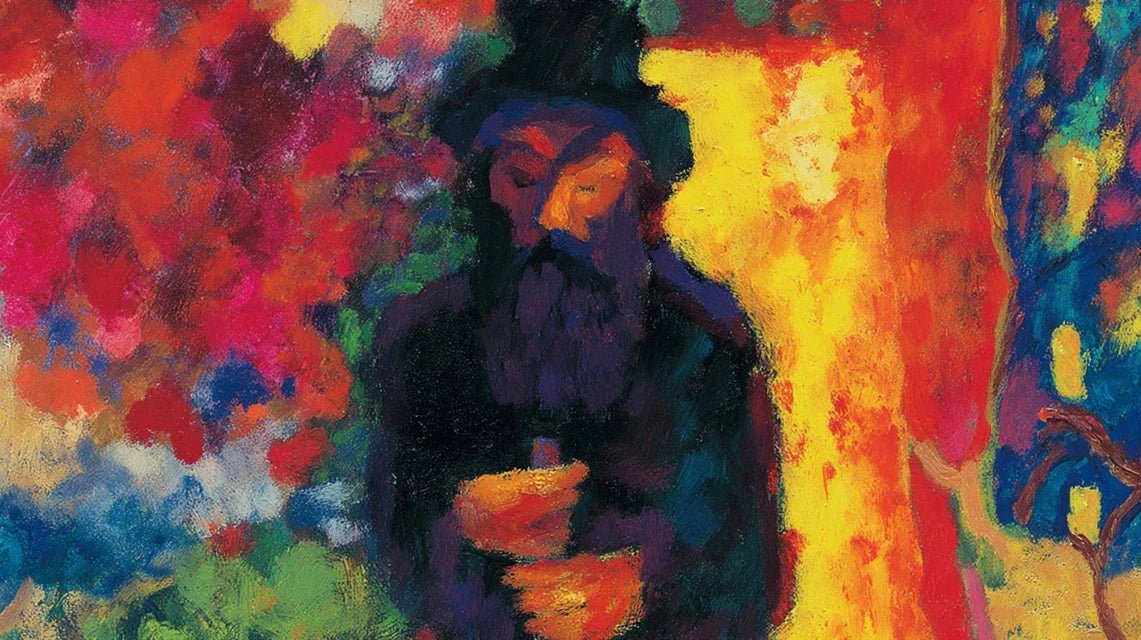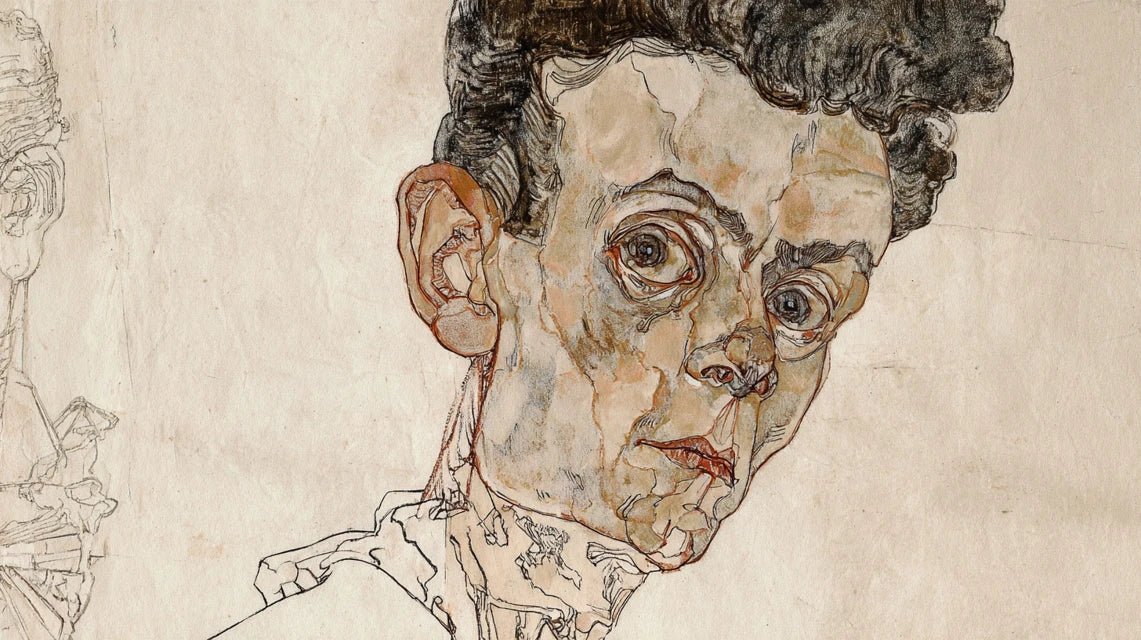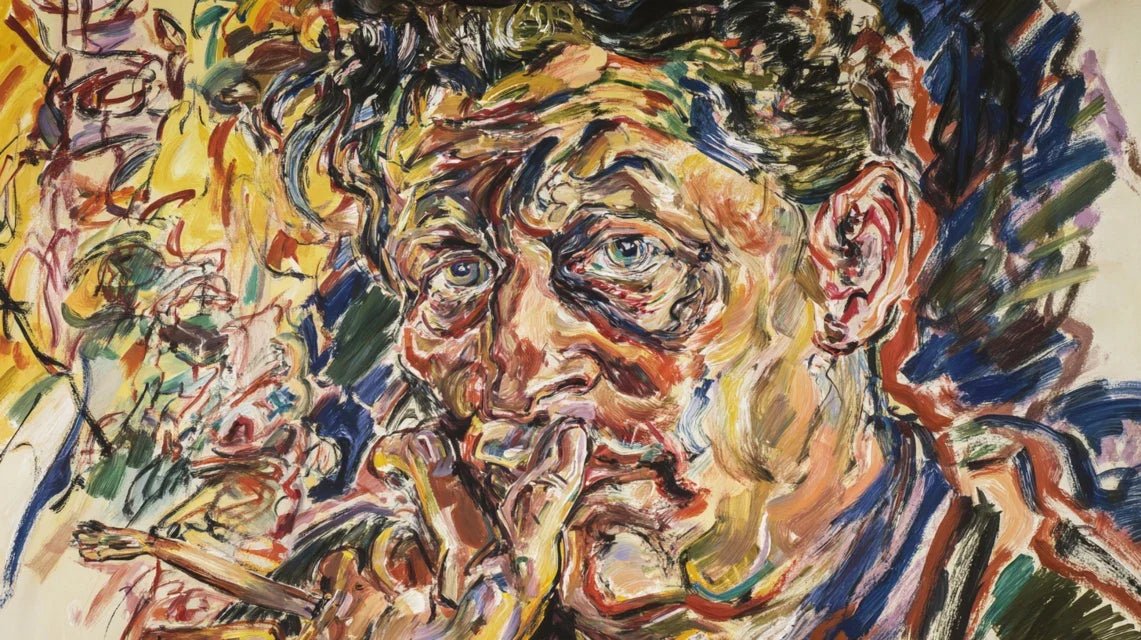
Imagine a man setting up his easel facing an emotional storm, wielding his brushes like swords against the artistic conventions of his time.
Vienna, 1908. In the smoky workshop of the Kunstgewerbeschule, a twenty-two-year-old rebel terrorizes his teachers with portraits so visceral they seem to flay the soul of their models. Oskar Kokoschka is born into modern art, and Europe will never recover.
Nicknamed "the wild beast" by the Viennese press, this revolutionary expressionist will transform his obsessive loves into masterpieces, his war traumas into pictorial innovations, and his rage to paint into a artistic manifesto for an entire century.
Discover the man behind "The Bride of the Wind", the artist who revolutionized portrait art by plunging his brushes into the depths of the human psyche - a total biography
Oskar Kokoschka, the expressionist who painted with his guts
Understanding Oskar Kokoschka means grasping how one man can transform his personal suffering into a universal artistic revolution.
| Biographical highlights | Artistic legacy |
|---|---|
|
Full name : Oskar Kokoschka Birth : March 1, 1886, Pöchlarn (Austria) Death : February 22, 1980, Montreux (Switzerland) Nationality : Austrian (then British, then Swiss) |
Movement : Viennese Expressionism Style : Visceral psychological portraits Key work : "The Bride of the Wind" (1913) Innovation : Revelation of the unconscious through color |
But beyond dates and artistic labels lies a human journey of rare intensity, marked by poverty, destructive passion, and an obsessive quest for psychological truth.
The roots of Oskar Kokoschka: when misery forges a genius
In the small town of Pöchlarn, on the banks of the Danube, a child is born who appears destined to burn his life to illuminate art. Gustav Josef Kokoschka, a Czech goldsmith, and Maria Romana give birth to their second son in a family struck by fate from the earliest days.
The omen of fire : A fire breaks out in Pöchlarn shortly after Oskar's birth. His mother sees it as a sign of destiny - his son will carry within him this devouring flame that consumes everything in its path, including the artistic conventions of his time.
The founding revelation: From adolescence, Kokoschka understands that art must reveal the invisible beneath the visible - a principle that will guide all his creation, from his first drawings to his last self-portraits.
At eighteen years old, a scholarship opens the doors of the Kunstgewerbeschule in Vienna, a school of decorative arts where the last embers of the Vienna Secession still reign.
Oskar Kokoschka and the effervescence of Vienna 1900
In 1904, Kokoschka joins a Vienna in full cultural revolution. Gustav Klimt illuminates his canvases with gold, Sigmund Freud explores the unconscious, Arnold Schoenberg revolutionizes music - and at the heart of this effervescence, a young man living in poverty discovers that art can shatter appearances.
But where the Secession cultivates ornamental beauty, Kokoschka senses that the era calls for a more brutal aesthetic. The Austro-Hungarian Empire is crumbling, the Viennese bourgeoisie dances on a volcano - it takes an art capable of revealing the psychological fractures beneath the gilded veneer of the Belle Époque.
His contemporaries Egon Schiele and Richard Gerstl are already exploring these forbidden territories, but Kokoschka goes further: he wants to paint the soul with the violence of a surgeon operating raw.
In this fin de siècle Vienna, where Gustav Mahler composes his tragic symphonies and where cafes are buzzing with intellectual debates, Kokoschka forges his conviction: modern art must tell the truth about modern man, even if it shocks.
The spirit of the time: Kokoschka perfectly embodies the anxiety of his generation in the face of modernity - he transforms this anxiety into creative energy and invents an art capable of expressing the psychological tensions of his era.
This training in the Viennese crucible explains why his future works will resonate far beyond Austria: they carry within them the DNA of an era that is tipping towards modernity.
Oskar Kokoschka's chaotic beginnings in the art world
1907-1908: Kokoschka is twenty-two years old and his talent explodes like a bomb in the hushed world of Viennese art. But this gift comes with financial insecurity that forces him to accept decorative arts commissions that he executes reluctantly.
One evening in 1908, during an exhibition at the Kunstschau, his paintings provoked a scandal so great that indignant visitors threatened to tear his canvases. "What horror!" exclaimed a bourgeois lady in front of his distorted portraits. For Kokoschka, this was the most beautiful criticism: he had touched upon the nerve of his time.
The salvation came from a providential man: the architect Adolf Loos, an emblematic figure of Viennese modernism. Fascinated by the young painter's audacity, Loos became his mentor and opened the doors to an enlightened clientele. Thanks to him, Kokoschka could finally abandon decorative arts to devote himself to his passion: psychological portraits.
These lean years forged his character as an artist-warrior. Accustomed to fighting for survival, Kokoschka developed this creative rage that would characterize all of his work: painting became an existential battle.
In 1909, he wrote his first play, "Mörder, Hoffnung der Frauen" (Murderer, Hope of Women), considered the first expressionist drama. Art and literature converge within him towards a single objective: to reveal the primitive forces that agitate civilized man.
Oskar Kokoschka, the terrible child who terrorized Vienna
"The wild beast" - this is how the Viennese press nicknamed Kokoschka at the height of his artistic provocations. His portraits flay souls with a surgical precision that deeply disturbs good society.
In 1910, his painting "Children Playing" caused an uproar: these children with faces distorted by anguish reveal the broken innocence of a declining era. The bourgeois public recognizes their own children in them and does not forgive this discomforting truth.
But Kokoschka fully embraces his radicalism. For him, art must disturb, reveal, tear off masks. He develops his theory of "visceral vision": to paint not what the eye sees, but what the unconscious perceives.
The rebel's philosophy: "I paint people as they really are, not as they want to appear. My brush reveals their secret wounds, their repressed desires, their unacknowledged fears. That’s why they hate me... and come back to pose for me."
These controversies, far from discouraging him, nourish his creativity. Each scandal confirms that he is right, that he reveals truths that his time prefers to ignore. Kokoschka understands that modern art must be uncomfortable to be authentic.
This period of controversy forged his international reputation and attracted the attention of visionary collectors who understand that they are witnessing the birth of a revolutionary art.
The pictorial revolution of Oskar Kokoschka and the art of psychological portraiture
1911 marks a pivotal moment: Kokoschka meets Alma Mahler, widow of the celebrated composer Gustav Mahler. This woman seven years his senior, a muse of genius and a heart open to love, will trigger within the artist a creative revolution that will give birth to his greatest masterpieces.
The most productive and tormented period of his career begins. Alma becomes his model, his muse, his obsession. Kokoschka paints her from every angle, in every state of mind, revealing through her his new mastery of pictorial psychology.
"The Bride of the Wind" - Oskar Kokoschka's absolute masterpiece
In 1913, in the intimacy of his Viennese studio, Kokoschka undertakes his most ambitious work. "Die Windsbraut" (The Bride of the Wind) is born from his devouring passion for Alma Mahler. On a canvas the size of their bed, he paints their cosmic love: two bodies entwined sailing on a stormy sea, a metaphor for their turbulent relationship.
This revolutionary painting, now preserved at the Kunstmuseum in Basel, synthesizes all his genius: the expressive power of color, the emotional sincerity of the line, and this unique ability to transform personal experience into a universal vision of passionate love.
Kokoschka's revolutionary technical innovation
Kokoschka develops a revolutionary painting technique: his brushstrokes are scratches and nervous, as if scraping the canvas to reveal psychological truth. He mixes oil and tempera, superimposes impastos and glazes, creating surfaces where the pictorial matter pulsates like a living organism.
Kokoschka facing his Expressionist contemporaries
While artists of Die Brücke privilege primitive spontaneity and those of the Blaue Reiter explore spiritual abstraction, Kokoschka remains faithful to the human figure. For him, modern art must reveal the modern man in all his psychological complexity.
A revealing anecdote: at his first Berlin exhibition in 1910, a critic compared his paintings to "radiographs of the soul." The term hits the mark - Kokoschka has just invented the art of the psychoanalytic portrait, fifteen years before Freud revolutionized psychiatry.
OUR RECOMMENDED PRODUCTS
This period of technical innovation and creative boldness propels Kokoschka to the forefront of modern European art, just before the Great War shatters his life and his art.
Oskar Kokoschka, the passionate man behind the revolutionary artist
Behind the "Viennese fauve" lies a man of extreme sensitivity, capable of loving with the same intensity he puts into painting. His relationship with Alma Mahler reveals a vulnerable and obsessive Kokoschka, ready to sacrifice everything for art and love.
Their breakup in 1914 causes the artist a psychological collapse that he never fully recovers from. Alma refuses to marry him, preferring the future architect Walter Gropius. For Kokoschka, it's more than an abandonment: it's the loss of his inspiring muse.
In his pain, he commits a gesture revealing his excessive personality: he commissions a Munich doll maker to create a life-size replica of Alma, which he treats as a companion for several months before destroying it during an orgiastic party in his Dresden studio.
This anecdote illuminates a fundamental trait of his personality: Kokoschka lives his emotions with the same extravagance he paints his canvases. In him, art and life merge in a rare intensity that explains the expressive power of his work.
Oskar Kokoschka's late success and international consecration
Paradoxically, recognition comes to Kokoschka after the trials of war. Mobilized in 1915, seriously wounded on the Russian front, he returns transformed: the man and the artist have gained tragic depth what they lost in carelessness.
The years 1920 see him as a professor at the Dresden Academy, finally recognized by the European artistic institution. His travels through Europe, north Africa and the Middle East give rise to panoramic landscapes that reveal a new facet of his genius: that of the poet of space.
The evolution of Kokoschka's price on the art market
The art market gradually recognizes the revolutionary value of his work. Today, his paintings reach historic highs that testify to his status as a master of modern art.
| Period | Average Value | Sale Record |
|---|---|---|
| Living (1886-1980) | $1,000 - $50,000 | $200,000 (end of career) |
| Post-mortem (1980-2000) | $100,000 - $500,000 | $2 million (large canvases) |
| Contemporary market (2000-2025) | $500,000 - $2 million | $20.4 million (record 2018) |
This $20.4 million record obtained at Sotheby's in 2018 for the portrait of Joseph de Montesquiou-Fezensac confirms his status as a top-tier artistic investment.
The end of Oskar Kokoschka and his immortal artistic testament
During the last decades, Kokoschka, settled in his villa in Villeneuve on the shores of Lake Geneva, became a living legend. Naturalized British and then Swiss, he continued to paint with intact energy, creating works of new coloristic serenity where expressive violence gives way to wisdom.
On February 22, 1980, in Montreux, one of the last giants of modern art died at the age of 93. His death marks the end of an era: that of the pioneers who invented 20th-century art through boldness and revolutionary conviction.
The lasting influence of Kokoschka on contemporary art
Kokoschka’s legacy still irrigates contemporary art. His technical innovations - expressive impasto, psychological color, the analytical portrait - influence generations of artists, from American abstract expressionists to German neo-expressionists of the 1980s.
Painters like Jenny Saville, Cecily Brown or Anselm Kiefer perpetuate his approach to painting as a psychological exploration. His belief that art must reveal the invisible resonates particularly in our era obsessed with image and appearance.
Recognizing Kokoschka’s legacy: In contemporary art, look for works that prioritize raw emotion over conventional beauty, psychological truth over easy aesthetics - you will find the spirit of the Viennese master there.
Where to discover Kokoschka’s art today: guide to collections
Amateurs can admire his masterpieces in the world's leading museums: the Kunstmuseum in Basel (which houses "The Fiancée of the Wind"), the Leopold Museum in Vienna, the MoMA in New York, or the Tate Modern in London. In France, the Centre Pompidou and the Musée d'Orsay are home to significant works from all his periods.
This international distribution is a testament to the universality of his artistic message: beyond borders and eras, Kokoschka continues to reveal humanity in all its tragic and magnificent complexity.
🎁 Special offer for readers
Because you took the time to inform yourself, enjoy 10% discount on your first order:
⏰ Valid 72h after reading • Applicable to all our products
Oskar Kokoschka: why this expressionist genius still fascinates today
More than forty years after his disappearance, Oskar Kokoschka continues to challenge us by his unique ability to transform personal suffering into universal beauty. His journey - from Viennese poverty to worldwide recognition - embodies the ideal of the modern artist: one who refuses shortcuts to invent a revolutionary artistic language.
In our era saturated with artificial images and conventional beauty, Kokoschka reminds us that authentic art must reveal rather than seduce, question rather than reassure. His lesson remains strikingly relevant: in a world in perpetual mutation, only art capable of telling the truth of its time deserves to cross the centuries.
Discovering Kokoschka today means understanding how a man can transform his obsessions into aesthetic revelations, his traumas into pictorial innovations, his will to live into an immortal artistic testament. It also explains why expressionism remains the artistic movement most capable of expressing the tensions of modernity.
Art as revelation: Let yourself be transformed by meeting this genius of expressionism - his works have the power to awaken your own gaze on art and on yourself.