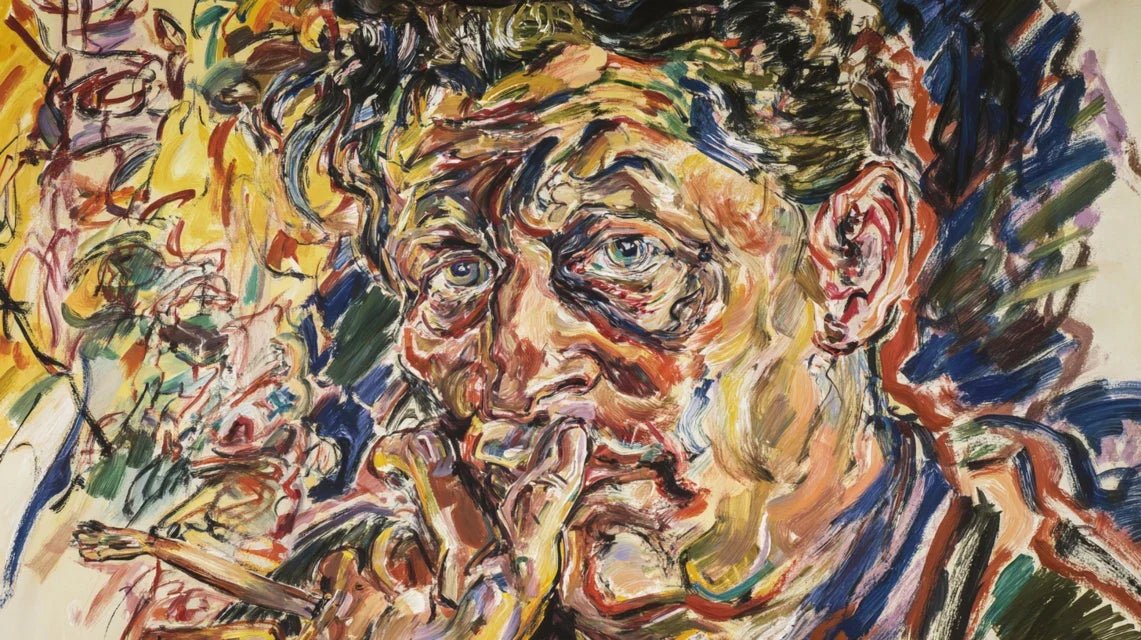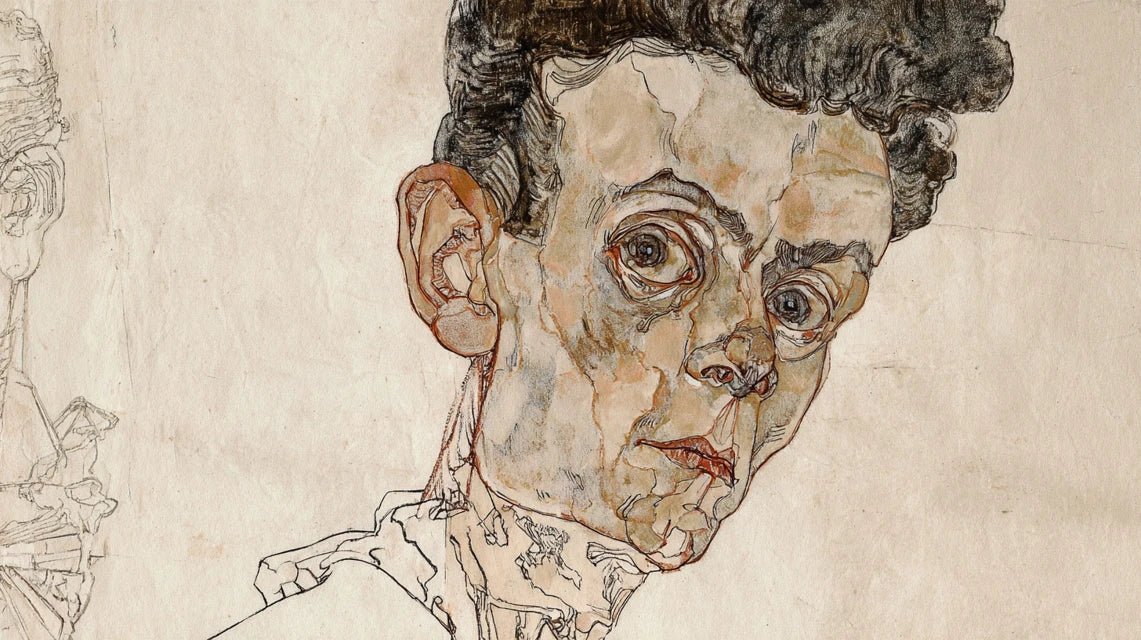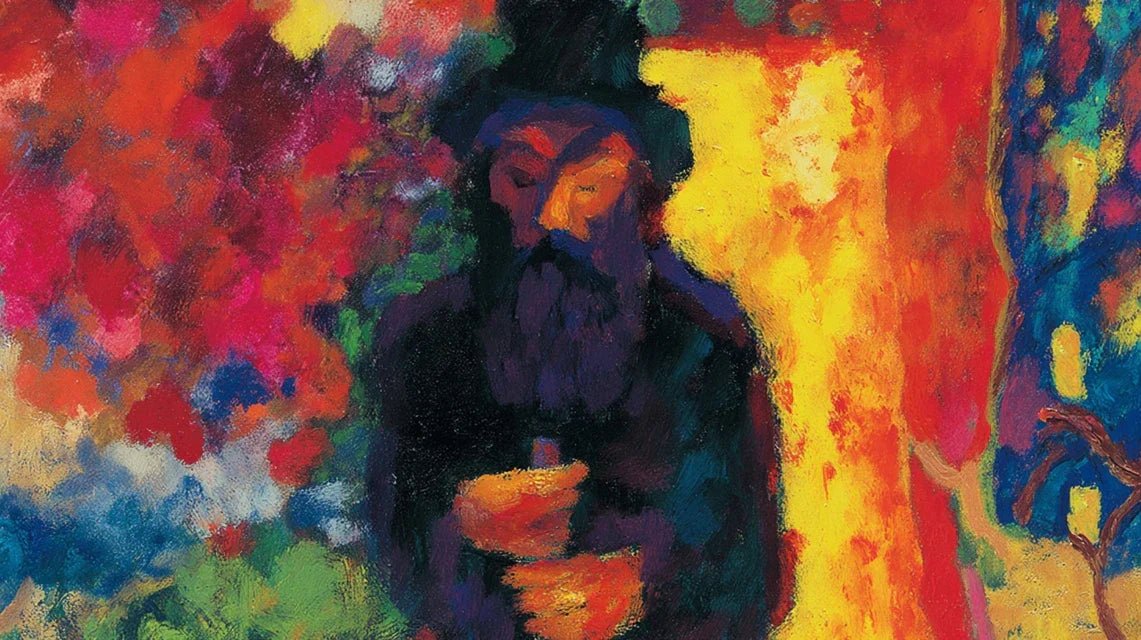
Imagine a fiery man, brush in hand, who dips his colors directly into the tumultuous soul of the German North to create mystical visions of a striking intensity.
Emil Nolde embodies this paradoxical figure of 20th-century art: a Frisian peasant turned master of expressionism, whose golden and saturated red yellows reveal a primitive spirituality as well as a revolutionary modernity. Between biblical visions and desolate landscapes of the Baltic, his work traverses the paradoxes of his time.
Behind the flamboyant colors lies a complex personality, marked by troubling political convictions and an exceptional artistic destiny. From international recognition to Nazi ban, from the Die Brücke group to secret watercolors, Nolde embodies the contradictions of modern German art.
Discover the man behind the myth, the painter behind the controversy, and understand why Emil Nolde remains one of the most fascinating colorists in Western art.
Emil Nolde: The Pioneer of Expressionism with Revolutionary Colors
Knowing Emil Nolde (1867-1956) is to plunge into the heart of the artistic and human contradictions of 20th-century Germany. Few artists embody the paradoxes of their time as much as he does: revolutionary expressionist and Nazi sympathizer, mystical painter and man with racist convictions, master of pure color and victim of censorship.
| Key biographical details | Artistic legacy |
|---|---|
| Full name: Hans Emil Hansen (became Emil Nolde) Birth: August 7, 1867, Nolde (present-day Denmark) Death: April 13, 1956, Seebüll, Germany Nationality: German of Danish origin |
Movement: German Expressionism Style: Saturated colors and expressive brushwork Key work: Dance Around the Golden Calf (1910) Innovation: Revolutionary watercolor techniques |
Nolde's art draws its roots from Nordic traditions while announcing pictorial modernity. His marsh landscapes and religious scenes testify to a deep spiritual quest, served by an audacious technique that makes him one of the most powerful colorists of his time.
Hans Emil Hansen: The Artistic Awakening of a Frisian Farmer's Son
Born Hans Emil Hansen on August 7, 1867 near the village of Nolde, on the German-Danish border, the future master grew up in a family of protestant farmers rooted in the Frisian land. This region of marshes and changing skies would forever mark his pictorial imagination.
The revelation of the Swiss mountains: Around 1894, having become a drawing teacher in industrial design in St. Gallen, Switzerland, Hansen discovered his artistic vocation by creating postcards depicting the Alps as grotesque figures. These works, sold successfully, finally offered him the financial independence necessary to pursue his artistic training.
Primitive intuition as a creative guide: From the beginning, Nolde favored instinctive expression over academicism. This approach, nurtured by his Nordic protestant culture, would become the foundation of his mystical expressionism.
Emil Nolde and the artistic effervescence of Wilhelmine Germany
The era of Wilhelm II (1888-1918) saw a cultural revolution in Germany. Faced with the neo-classical official art, a generation of artists claimed an authentic German aesthetic, pulling from medieval traditions and the primitive arts.
Berlin and Munich became the centers of this expressionist avant-garde. Groups like the Berlin Secession (1898) and Die Brücke (1905) challenged bourgeois aesthetics by advocating a return to the primitive sources of art.
Nolde evolved among personalities such as Max Liebermann, Wassily Kandinsky and future members of Die Brücke : Ernst Ludwig Kirchner, Karl Schmidt-Rottluff. But unlike his urban contemporaries, he drew inspiration from the Nordic landscapes and the biblical spirituality.
The ethnographic discoveries of the era – African and Oceanic arts – overturn the Western vision. Fascinated by these primitive expressions, Nolde develops a synthetic style that reconciles formal modernity with spiritual archaism.
The genius of the Wilhelmine era: Nolde perfectly embodies this generation of German artists who, seeking to surpass French imitation, forge a specifically Germanic expressionism blending Nordic mysticism and pictorial radicalism.
The years of training: from craftsman to revolutionary painter (1898-1906)
His first Parisian years (1899-1900) reveal a Hansen still hesitant between Impressionism and personal research. His canvases from this period, influenced by Manet and the Post-Impressionists, still lack the expressive force that will bring him fame.
The decisive turning point occurs in 1902 with his marriage to Ada Vilstrup, a young Danish actress. On this occasion, Hansen adopts the name Nolde, affirming his attachment to his Nordic roots. This change of identity coincides with a radical artistic transformation.
The couple’s move to Berlin confronts Nolde with the aesthetic struggles of the capital. As a member of the Berlin Secession from 1908, he quickly clashes with Max Liebermann, president of the movement, over the group's overly moderate orientation.
This period of marginalization (1903-1906) shapes the artist’s solitary character. Rejected by the Berlin artistic establishment, Nolde develops an increasingly personal style, marked by unnatural colors and a brutal gesturality that foreshadows radical expressionism.
Emil Nolde and Die Brücke: passionate adhesion and shattering breakup (1906-1907)
In 1906, Karl Schmidt-Rottluff invites Nolde to join Die Brücke, the expressionist group from Dresden. This recognition by the young avant-garde constitutes the long-awaited artistic consecration. The young painters admire his color storm and see him as a precursor to their aesthetic revolution.
But the idyllic period is short-lived from 1907. Nolde, aged 40 years, struggles with the collective discipline and the shared working methods advocated by his younger colleagues. His solitary temperament and his mystical conception of art do not go well with the group spirit.
The breakup occurs around fundamental aesthetic issues. While Die Brücke favors urban art and industrial modernity, Nolde claims a return to primitive sources and traditional Nordic landscapes.
The 1907 breakup letter: "Art is not made in groups, but in the solitude of the soul facing the eternal mystery of creation." This sentence, taken from his correspondence, perfectly summarizes the individualistic artistic philosophy that characterizes all of Nolde's work.
This traumatic experience reinforces his mistrust of collective movements and nourishes a feeling of persecution which will permanently mark his vision of the art world. Paradoxically, this voluntary marginalization liberates his creativity and inaugurates his most productive period.
Creative maturity: Emil Nolde and the peak of Nordic Expressionism
From 1908, Nolde reaches his full artistic maturity. Freed from group constraints, he develops a unique pictorial language that synthesizes Nordic tradition and radical modernity. This period sees the birth of his absolute masterpieces.
It is in Cospeda, at his friend’s house, Hans Fehr, that Nolde discovers in 1908 the revolutionary possibilities of watercolor. This technique, which he masters with an unparalleled genius, allows him to achieve chromatic effects of striking intensity.
Dance Around the Golden Calf (1910): the manifesto of mystical Expressionism
Dance Around the Golden Calf (1910), held at the Pinacoteca di Munich, is the iconic work of this period. This canvas of 88 × 105,5 cm reveals all of Nolde's visionary power. The nude bodies dancing around the golden idol embody both the biblical condemnation of idolatry and the Dionysian celebration of primitive life.
Flaming colors – vermilion reds, golden yellows, ultramarine blues – create a chromatic symphony of an unparalleled expressive violence. This work foreshadows the nine panels of the Life of Christ (1911-1912), a religious cycle where Nolde reaches the peaks of his mystical art.
The revolutionary technique: pure color and instinctive gestural
Nolde revolutionizes watercolor art by applying pure color directly onto wet paper. This "wet-on-wet" technique produces chromatic effusions impossible to control entirely, creating these effects of transparency and fusion that characterize his marsh landscapes and stormy skies.
Emil Nolde facing his contemporaries: Kandinsky, Klee and the Munich school
In 1912, Nolde exhibits with Der Blaue Reiter, the Munich group of Kandinsky and Franz Marc. This collaboration reveals the spiritual affinities between these seekers of the absolute, but also their fundamental differences.
While Kandinsky evolves towards pure abstraction and Paul Klee develops a sophisticated symbolic language, Nolde remains faithful to the expressive figuration and the mystical realism. His Nordic primitivism opposes the Munich intellectualism, creating an original expressionist path.
OUR RECOMMENDED PRODUCTS
This prodigious decade (1908-1918) definitively establishes the international reputation of Nolde. His works integrate the prestigious collections and influence a generation of European artists. But this consecration coincides with the emergence of his problematic political convictions.
Intimate Emil Nolde: The paradox of a mystic with troubling beliefs
Nolde's personality reveals fascinating contradictions. Deeply religious man, nourished by biblical reading and solitary meditation, he also cultivates racist convictions that assert themselves from the 1920s.
His voyage to New Guinea (1913-1914) with a German ethnological expedition marks a decisive turning point. Officially intended to "study the racial characteristics" of local populations, this stay fosters both his primitivist art and his pseudo-scientific theories on the "hierarchy of races"
Ada Vilstrup, his wife, shares and encourages these völkisch ideas. Their private correspondence, revealed by the Nolde Foundation archives in 2016, testifies of a virulent antisemitism and an early adhesion to national-socialist ideologies
This dark side coexists with an authentic artistic genius and a refined aesthetic sensibility. Nolde embodies the tragic paradox of an era where cultural excellence and ideological barbarity can coexist within a single individual.
From international recognition to Nazi prohibition (1912-1945)
Nolde's international recognition is affirmed as early as 1912 with his participation in the exhibitions of Der Blaue Reiter. American and European collectors pounce on his works, establishing his international market value
Paradoxically, this artistic consecration coincides with his adhesion to the Nazi Party as early as 1934. Nolde hopes to become the official artist of the regime, convinced that his Germanic art would embody the völkisch values advocated by national socialism
The tragic irony: Emil Nolde, "degenerate artist" despite himself
In 1937, the Nazi exhibition "Degenerate Art" in Munich presents 33 works by Nolde, more than any other artist. A total of 1052 of his works are confiscated from German museums, marking the official condemnation of his art by the regime he supported.
| Period | Average value | Record sale |
|---|---|---|
| Living (1900-1956) | 500-5000 Reichsmarks | Marsh landscape sold for 8000 RM in 1925 |
| Post-mortem (1956-1990) | 50,000-500,000 DM | Dance around the Golden Calf: 2.5 million DM (1989) |
| Contemporary market (1990-2024) | 200,000-2 million € | Stormy Sea sold for 4.2 million € (Christie's, 2022) |
This posthumous recognition testifies to the intrinsic artistic value of a work that transcends the troubling biographical circumstances. World museums continue to acquire his works while contextualizing their problematic historical dimension
The Later Years and Emil Nolde's Death in 1956
From 1941, Nolde was officially forbidden to sell and exhibit his works. Withdrawn to his property in Seebüll, near the Danish border, he secretly continued to paint small-format watercolors which he would later call his "Unpainted Paintings."
Contrary to the cultivated legend after the war, these works do not constitute a "act of resistance" but rather the natural continuation of his artistic work. His private correspondence reveals that he maintained his loyalty to the Nazi regime until 1945, still hoping for an official recognition.
Emil Nolde and the Influence on Contemporary Art: An Ambivalent Legacy
The technical influence of Nolde on contemporary art remains considerable. His innovations in aquarelle inspire artists such as Gerhard Richter, Anselm Kiefer and the Leipzig School. His expressive treatment of color promises informal art and American abstract expressionism.
The French Fauves (Vlaminck, Derain) and the Austrian expressionists (Egon Schiele, Oskar Kokoschka) acknowledge their debt to his chromatic radicalism. Even Francis Bacon and Lucian Freud pull from his brutal gesture and his expressive realism.
Recognizing Nolde's legacy today: Observe the non-naturalistic colors, the free gesture, and the raw emotion in contemporary art: from David Hockney to Peter Halley, the influence of the Nordic chromatic radicalism endures.
The Nolde Foundation in Seebüll holds the largest collection worldwide. The Museum of Modern Art in New York, the Tate Modern in London, and the Centre Pompidou in Paris possess remarkable ensembles. In Germany, the museums of Munich, Berlin and Hamburg regularly present his works within their critical historical context.
Since the groundbreaking exhibition in Berlin (2019) which revealed his Nazi convictions, museum institutions adopt a contextualized approach, presenting the artistic work while shedding light on biographical dark areas.
🎁 Special offer for readers
Because you took the time to inform yourself, enjoy 10% discount on your first order :
⏰ Valid 72h after reading • Applicable on all our products
Frequently asked questions about Emil Nolde and his work
Born Hans Emil Hansen in 1867 into a family of Frisian peasants, he adopted the name Emil Nolde in 1902 upon his marriage, after his native village. This change reflects his attachment to Nordic roots and his desire to assert a German artistic identity, breaking with his initial artisanal training as a wood sculptor.
A brilliant autodidact, Nolde compensates for the lack of academic training with stays in European private schools: Julian Academy in Paris, Neu-Dachau School in Bavaria. His sculptor apprenticeship gives him an intuitive understanding of volumes and materials, which he transfers to his revolutionary painting technique, prioritizing creative instinct over academic rules.
Nolde revolutionizes watercolor by applying pure color on wet paper (a "wet-on-wet" technique), creating unpredictable chromatic fusions. He sometimes uses his fingers to spread the paint, obtaining these effects of transparency and light gradations characteristic of his marsh landscapes and stormy skies. This instinctive gesture produces works of striking emotional intensity.
Early adherent to the Nazi party (1934), Nolde hoped to become the regime's official artist. But Hitler condemns all modernist art as "degenerate". In 1937, 1052 works by Nolde were confiscated, more than any other artist. This tragic irony reveals the fundamental incompatibility between authentic artistic creation and political instrumentalization, even when the artist ideologically adheres to the system.
The Nolde market remains dynamic despite controversies. His watercolors are sold between €50,000 and €500,000, while his major oils reach €2 to 4 million. Religious works and Seebüll landscapes are particularly sought after. Museum institutions continue to acquire his works, testifying to their intrinsic artistic value beyond the biographical circumstances.
Nolde's technical legacy irrigates contemporary art: Gerhard Richter draws inspiration from his watercolor effects, Anselm Kiefer takes up his brutal gesture, the Leipzig School draws on his figurative expressionism. His chromatic radicalism foreshadows informal art and influences American abstract expressionism. Even David Hockney acknowledges his debt to Nolde's Nordic technical innovations.
Emil Nolde: when artistic genius transcends human contradictions
Emil Nolde remains one of the most fascinating and troubling figures in modern art. His colorist genius and his revolutionary technical innovations have definitively marked European expressionism and continue to inspire contemporary creators.
The recent revelation of his Nazi convictions does not diminish the intrinsic aesthetic value of his work, but raises questions about the complex relationships between art and ideology. Nolde tragically illustrates this paradoxical capacity of human beings to produce beauty while adhering to barbarity.
Today, discovering Nolde means accepting this troubling complexity that characterizes our modern era. His mystical landscapes, his incandescent colors and his primitive spirituality continue to move us, reminding us that authentic art possesses this transcendent force that goes beyond the circumstances of its creation.
Enrichment through critical discovery: Approaching Nolde's work with an informed and critical perspective allows us to fully appreciate his artistic genius while developing our historical analysis skills. It is this cultural maturity that makes us enlightened art lovers.