Insect Repellents: Keep Pests Away Without Damaging Your Wall Art
By Alexandre MARY
⏱️ Reading time: 8 minutes
You discover with horror tiny holes in your favorite artwork, these perforations that disfigure the work you admired every morning.
The smell of rotting wood hangs in the air, and you notice a fine dust on the frame.
Your heart sinks as you imagine these wood-eating insects silently devouring months of artistic passion.
You may have tried commercial sprays, moved the artwork, or even set traps.
But the damage continues, and anxiety grows with each new trace of their presence.
It's perfectly normal that your attempts failed. The harmful insects that attack works of art require a specialized approach,
different from classic domestic extermination methods.
By the end of this article, you will master professional techniques to durably protect your paintings from insects,
and you can finally admire your works with peace of mind, without fearing their silent degradation.
Why are your wall artworks privileged targets for insects?
Every day of delay in insect protection exposes your paintings to irreversible damage.
Like an old book that crumbles page after page,
your works lose their structural integrity and aesthetic value. The opportunity to preserve their original beauty diminishes with each new generation of insects.
🎨 Collector's testimony : Marie-Claire discovers that her grandmother’s inherited painting, valued at €3000, has galleries hollowed out by woodworms.
In three months, the heritage value fell by 60% and restoration would cost more than the artwork itself.
💬 Conversation with a decor expert
"I'm afraid that chemical treatments will damage the paint or discolor my painting. Isn’t it better to avoid any product?"
It's like refusing an umbrella for fear of it getting in the way, when it's going to rain.
Specialized treatments for artworks are formulated to be neutral on pigments. The risk of degradation by insects is a thousand times greater than the risk of preventive treatment.
"I've always been told that humidity should be avoided for paintings, so insects can’t develop, right?"
This rule was valid for mold, but wood-eating insects actually love dry environments!
A modern interior with heating creates the perfect conditions for woodworms and other wood pests.
The golden rule of conservation : It’s better to prevent 99% of insect attacks than to try to restore 1% of damage.
Like an artistic immune system, preventive protection offers lasting peace of mind in a maximum of 30 days.
Finally Understand Why Your Artwork Attracts Pests
You regularly find fine sawdust under your frames, sometimes hear faint nocturnal scratching,
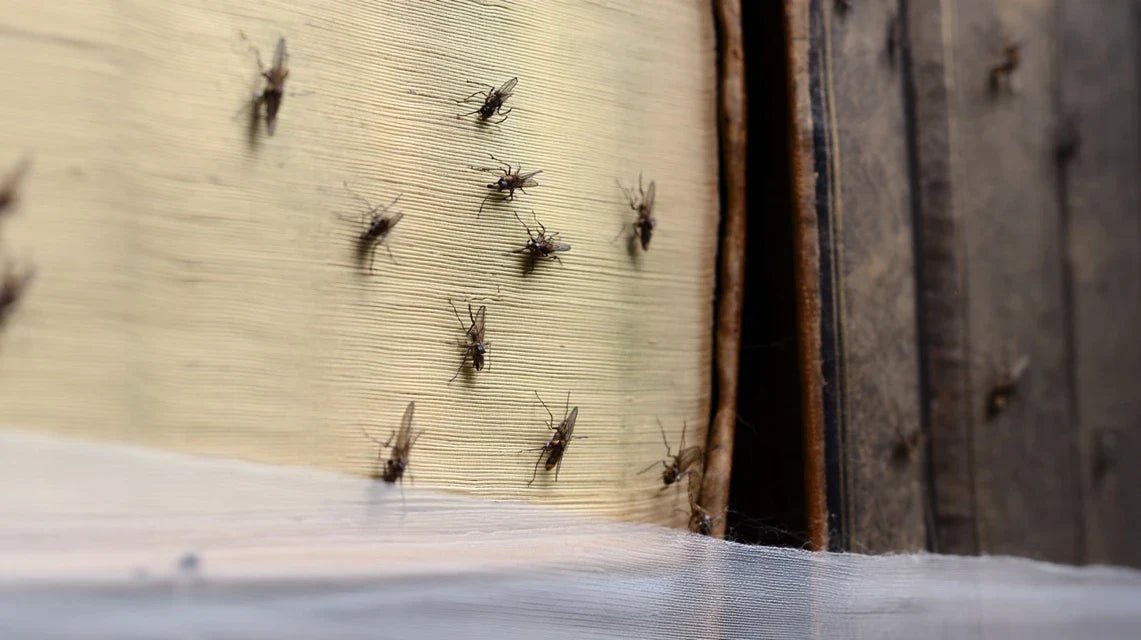
or discover dead insects near your wall art.
These signs reveal that your interior offers a perfect habitat for several species of destructive insects.
The problem isn't you, but the general lack of knowledge about the specific needs of these pests.
Imagine your artwork as an all-you-can-eat buffet for these little creatures:
the wood of the frame, natural glue, and sometimes even certain organic pigments constitute their favorite foods.
Cellulose: The Invisible Magnet That Attracts Destroyers
Contrary to what most homeowners think, it's not the age of the artwork that attracts insects,
but the cellulose composition of the support and frame.
It’s like an irresistible perfume constantly diffusing:
wood fibers, linen canvas, and even some natural varnishes emit olfactory compounds that insects detect from meters away.
This discovery completely transforms your approach: instead of passively suffering,
you can neutralize these attractive signals and make your artwork "invisible" to pests.
🔍 Quick test: Examine the corners of your wooden frames with a magnifying glass.
If you notice tiny holes 1-2mm in size or fine powder,
the infestation has already begun and action must be taken within 48 hours.
The "Microclimate" Effect: Why Some Walls Are More Affected
Professionals know this: temperature variations near walls create microscopic air currents
that disperse the attractive pheromones of artwork.
Think of these currents as invisible highways that guide insects directly to your artwork.
The more exposed the wall is to sunlight or close to a radiator, the more intense these "scented paths" become.
As a result: you notice that some artworks are systematically attacked first,
and others remain intact. It's not chance, it’s the physics of airflow that determines priority targets.
The Seasonal Factor That No One Suspects
Here's the secret museums jealously guard: the reproductive cycles of xylophagous insects
correspond exactly to the heating periods in our homes.
You can observe this at home: damage mysteriously appears between October and March,
when dry, warm air activates the metabolism of larvae already present in the wood.
This revelation changes everything about your protection schedule:
instead of treating urgently after discovering damage, you anticipate biological cycles for maximum effectiveness.
🎯 The 4 Early Warning Signals:
Fine dust under the artwork: Larvae dig and expel their droppings, like mini-drills at work
Minor nighttime cracking: The activity peaks in the dark, when the wood contracts slightly
Small flying insects near artworks: Adults are looking for a place to lay eggs; this is the critical time to intervene
Unusual sweet smell: Some species produce pheromones detectable by trained human olfaction
The main trigger: fluctuating relative humidity
The decisive factor is not the humidity level itself, but its rapid variations.
Like an accordion that expands and contracts, the wood "breathes" and releases its attractive compounds in bursts.
You can identify this by monitoring areas where humidity changes abruptly: near windows, doors, or heat sources.
The 15% variation rule: If the humidity in your room fluctuates by more than 15% in 24 hours,
your paintings emit signals attracting insects. A simple hygrometer allows you to control this crucial parameter.
❌ Common misconception
✅ Scientific reality
💡 Simple mechanism
🎯 Concrete action
Old paintings attract more insects
Age does not influence attractiveness
It's the composition, not age
Protect all your paintings equally
A dry environment repels pests
Xylophagous insects prefer dryness
Less competition with mold
Maintain stable 45-55% humidity
Chemical treatments damage art
Specialized formulas are neutral
Molecules designed for art
Choose museum-certified products
Damage appears randomly
Predictable biological cycles
Reproduction linked to seasons
Treat preventatively in September
The progressive method for durable and invisible protection
Rest assured, protecting your artworks requires neither technical expertise nor expensive equipment.
Like building a house, we proceed with solid foundations then gradual refinements.
Each step brings you closer to total peace of mind regarding the threat of insects,
with visible results from the first week.
🏗️ Protection overview: Three complementary phases like layers of protective varnish:
immediate securing (effect in 48h), preventive treatment (6 month protection),
and intelligent monitoring (permanent early warning).
Step 1: Create an immediate protection barrier
Starting with this step gives you the psychological advantage of instant control.
Like installing foundations before building, you establish a secure base
that will allow you to sleep soundly tonight, knowing that your artworks are protected.
🛠️ Your anti-insect protection kit
Specialized art repellent: Odorless, colorless liquid that forms an invisible film on surfaces.
Look for the "pigment safe" mention on the label. Available from art conservation suppliers or online.
Avoid household insecticides containing harsh solvents for varnishes.
Microfiber applicator: Ultra-fine cloth that leaves no lint and allows even application.
The principle: microfibers retain the product and release it gradually.
Recognize quality by its silky softness. Impact on result: no visible traces on the artwork.
Accurate digital hygrometer: Measuring instrument that displays temperature and humidity in real time.
Essential because fluctuations in humidity activate wood's attractiveness.
Visible benefit: you anticipate favorable conditions for insects.
Now, let's move on to step-by-step implementation
🎯 Application of the protective treatment
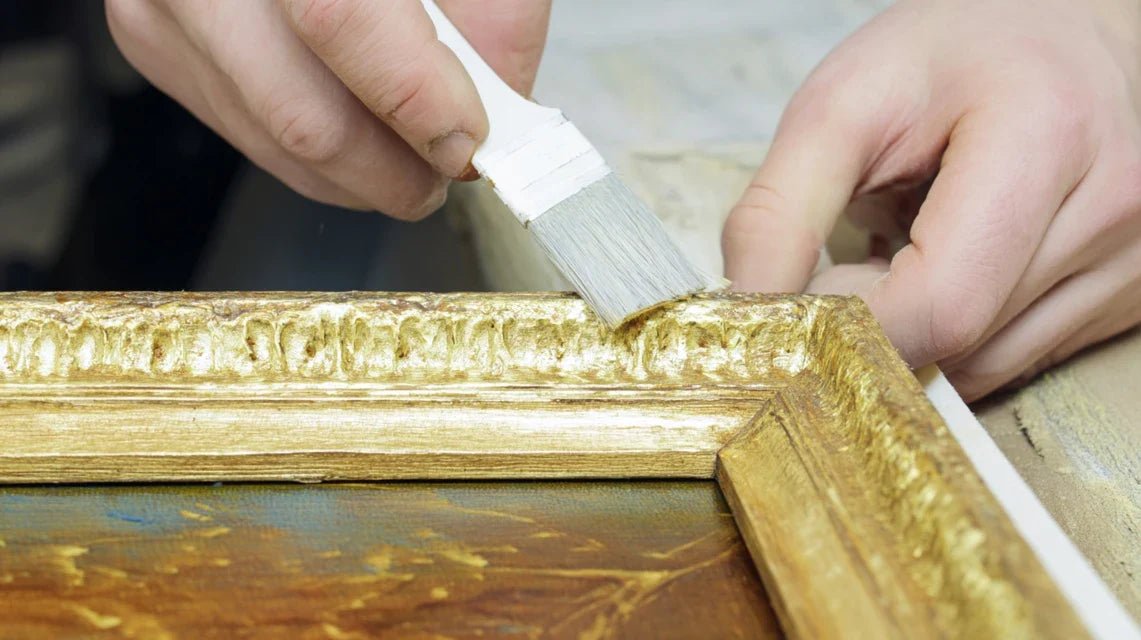
Preparatory surface cleaning: Gently dust the frame and around the painting with a soft brush.
This step eliminates residues that would prevent the treatment from adhering.
Important technique: light circular movements, never back and forth which could scratch.
It's simpler than ordinary furniture cleaning.
⏱️ Time: 5 minutes | ✅ Successful when: No visible dust, smooth surface to the touch | ⚠️ Caution: Never clean directly on the paint, only the frame and support - many try to "do well" by cleaning the entire artwork
Application of protective repellent: Lightly soak the microfiber cloth and dab the wooden areas of the frame.
The product penetrates and forms an invisible chemical barrier.
Crucial technical point: light dabs rather than rubbing, to avoid halos.
The difficulty is less than applying wax to a piece of furniture.
⏱️ Time: 3 minutes | ✅ Successful when: Uniform surface without excessive shine, product completely absorbed | ⚠️ Caution: Avoid excess that could run onto the canvas - the error often comes from haste
Installation of control hygrometer: Place the instrument 50cm from the painting, not too close (false readings), nor too far (not representative).
It monitors conditions that reactivate artworks' attractiveness.
Important detail: avoid direct drafts which disrupt measurements.
Easier than programming an alarm clock.
⏱️ Time: 2 minutes | ✅ Successful when: Stable display, consistent reading with your feeling | ⚠️ Caution: Do not stick it to the wall - a common mistake because you want "to fix it well"
🔍 Immediate protection check: Your artwork looks identical to before treatment,
l'hygrometer shows stable readings, and you feel that sense of accomplishment.
If you encounter any difficulties, start again with less product. Congratulations, you have just created a professional protected zone!
OUR RECOMMENDED PRODUCTS
Step 2: Setting up an active prevention system
You are now moving to the next level: intelligent prevention.
This step transforms your approach from defensive to offensive.
Instead of suffering attacks, you create an environment naturally hostile to insects.
The snowball effect begins: fewer insects = less attractiveness = reinforced protection.
🔬 Advanced prevention tools
Repellent essential oil diffuser: Device that vaporizes molecules naturally repellent (cedar, lavender, eucalyptus).
Works by olfactory saturation of the surrounding air. Available in specialty stores.
Quality criterion: adjustment of diffusion intensity. Economical alternative: bowls with pure oils less effective.
Specialized pheromone traps: Devices that attract and capture adult insects before reproduction.
The principle: irresistible chemical lures for pests, harmless to humans.
Quality index: specification of targeted species on the packaging. Impact: interruption of the reproductive cycle.
Humidity regulator absorber: System that automatically maintains a stable humidity level.
Important because fluctuations reactivate the attractiveness of the wood. Recognize good quality: precise indication of absorption capacity.
Visible benefit: end of variations that stress your artworks.
🛡️ Installation of the preventive system
Strategic positioning of the diffuser: Install the device halfway between your main paintings, at frame height.
This position creates a "protective cloud" that encompasses your entire collection.
Essential technique: orientation of the flow towards risk areas, never directly on the artworks.
Complexity comparable to plugging in a dehumidifier.
⏱️ Time: 10 minutes | ✅ Successful when: Subtle fragrance perceptible without being annoying, homogeneous diffusion | ⚠️ Attention: Gradual intensity - start low then adjust, otherwise risk of olfactory saturation
Deployment of pheromone traps: Fix the devices in the corners of the room, natural passageways for flying insects.
They intercept breeders before they reach your paintings.
Technical point: height 1m50, away from drafts that disperse the pheromones.
Ease equivalent to installing smoke detectors.
⏱️ Time: 8 minutes | ✅ Successful when: Subtle but accessible traps for control, pheromones active according to instructions | ⚠️ Attention: Respect the expiration date of the lures - a common mistake is forgetting to renew
Humidity regulator calibration: Program the device to maintain 50% relative humidity with a maximum variation of 5%.
It stabilizes the environment and reduces the emission of attractive compounds by the wood.
Important setting: slow cycle to avoid hygrometric shocks.
Ease of use of a classic thermostat.
⏱️ Time: 5 minutes | ✅ Successful when: Stable display of the hygrometer, silent operation | ⚠️ Attention: Central positioning in the room - tendency to hide it which reduces effectiveness
✨ Validation of the preventive system: Your room benefits from a controlled environment with subtle fragrance,
stable hygrometry, and active monitoring of breeders. In 48 hours, you will notice a more serene atmosphere.
The system is now working for you 24/7!
Step 3: Mastering Expert Monitoring and Optimal Maintenance
You are now reaching the level of professional conservation.
This step makes the difference between an enlightened amateur and a true connoisseur in art protection.
You develop "the expert eye" that detects threats before they materialize,
and your guests will notice this aura of mastery surrounding your perfectly preserved works.
🎓 Expert Monitoring Protocol
Systematic weekly inspection: Examine each painting under raking light to reveal micro-damage invisible in normal lighting.
This museum technique allows for ultra-early detection.
Precise method: flashlight held parallel to the surface, slow left-to-right movement.
Difficulty level of a routine car inspection.
⏱️ Time: 15 minutes for 5 paintings | ✅ Successful when: Detection of surface variations, suspicious shadows revealed | ⚠️ Attention: Never touch the surface during inspection - natural reflex to control
Environmental data recording and analysis: Note daily humidity and temperature values to identify at-risk patterns.
This anticipatory monitoring reveals conditions favorable to insect outbreaks.
Analytical technique: search for variations greater than 10% in 24 hours, correlation with seasons.
Comparable to keeping a gardening notebook.
⏱️ Time: 3 minutes per day | ✅ Successful when: Clear trends identified, anticipation of critical periods | ⚠️ Attention: Essential regularity - irregularity falsifies trend analysis
Preventive maintenance of protection systems: Renew essential oils, check the effectiveness of traps, recalibrate devices according to wear.
This maintenance preserves the optimal efficiency of your installation.
Technical protocol: rotation of fragrances to avoid insect habituation, sensor cleaning.
Ease of maintenance of household appliances.
⏱️ Time: 20 minutes per month | ✅ Successful when: All systems functional, efficiency maintained | ⚠️ Attention: Marking maintenance dates - frequent oversight that compromises effectiveness
The connoisseur's progression rule: Move to the next step when you instinctively detect anomalies,
when your hygrometer becomes a daily reflex, and when your protection gestures become automatic.
Expertise is measured by peace of mind, not technical complexity.
Congratulations! You now master the professional subtleties of insect protection.
These advanced techniques give you the decisive advantage of museum conservators,
and your works benefit from a protection that few private collectors know how to implement.
🏆 Professional conservator's secret: Create "control zones" with small samples of untreated wood near your paintings.
If insects attack them preferentially, your protection is working perfectly.
This is the early warning system used by museums, almost infallible for validating the effectiveness of your treatments.
💭 "How long does it take to see results?"
"I'm afraid of investing time and money without being sure it really works..."
Your hesitation is perfectly understandable - we invest our energy in what matters to us.
The beauty of this method is its immediate validation: from 48h, you no longer find new sawdust under your paintings.
In 2 weeks, the traps reveal a drastic drop in captures. Start with a single painting to test effectiveness,
then extend protection with confidence.
🎯 Immediate validation test: Photograph the current state of your frames, then re-photograph in 15 days.
The visual comparison will convince you better than any speech, and you will see the protection at work concretely.
Traps to absolutely avoid to protect your artistic investments
Attention, some well-intentioned approaches can worsen the situation or damage your works.
These mistakes are so common that even experts have made them at the beginning. Let's prevent them together.
⚠️ Using standard household insecticides: The temptation is strong to use what you have on hand, but these products contain solvents that attack varnishes and pigments.
Consequence: permanent halos and irreversible discoloration. Solution: always choose products "neutral for works of art".
This mistake affects 90% of beginners, you are not alone!
⚠️ Treating directly on the paint: The desire to "protect well" leads to applying the product everywhere, but the painted surface should never be chemically treated.
Consequence: permanent alteration of texture and colors. Alternative: treat only the frame and environment.
Natural reflex that must be consciously controlled.
⚠️ Overdosing essential oils: More concentrated does not mean more effective, and excess creates an unpleasant olfactory saturation.
Consequence: rejection of the system by those around you and reduced effectiveness. Correct method: start with the minimum dose then adjust gradually.
Very understandable beginner's mistake in enthusiasm.
⚠️ Neglecting seasonal variations: Treating once and forgetting ignores the biological cycles of insects.
Consequence: re-infestation the following season despite initial efforts. Effective approach: adapt treatment to peaks of pest activity.
Classic trap of the "miracle one-time treatment".
⚠️ Placing traps directly on artworks: The idea of protecting as closely as possible seems logical, but traps must intercept insects before they reach the paintings.
Consequence: total ineffectiveness and unsightly appearance. Optimal position: periphery of the area to be protected.
Error of apparent logic that even some professionals make.
🛡️ Anti-error verification system: Before each intervention, check that the product bears the mention "art conservation",
test on a hidden area, respect the indicated dosages, and keep "before/after" photos to validate safety.
Warning signs: persistent strong odor, visible change in appearance, skin reaction upon contact.
Because you took the time to inform yourself, enjoy 10% discount on your first order:
ART10
⏰ Valid for 72h after reading • Applicable to all our products
❓ Your most frequently asked questions about insect protection
🕐 How long does a complete treatment last?
A well-applied treatment effectively protects for 6 to 8 months under normal conditions.
To optimize this duration, renew essential oils every 2 months and monitor humidity.
Concrete example: treated in September, your painting remains protected until the following spring,
covering the entire critical period of xylophagous insect activity.
💰 What budget should I allocate to protect a collection of 5 paintings?
Allow approximately €150 to €200 for the complete initial equipment (products, applicators, hygrometer, diffuser).
Replenishment consumables cost €30-40 per year. Compared to the price of restoration (€800 minimum),
this is an investment that quickly pays for itself and also preserves the heritage value of your works.
🤔 Is it really safe for my family and pets?
Absolutely, specialized art care products are formulated to be neutral for human and animal health.
The essential oils used are the same as in aromatherapy, at lower concentrations.
Rassuring technique: start with minimal doses and gradually increase according to your olfactory tolerance.
Even sensitive people generally tolerate these gentle treatments very well.
🔧 Do I need any specific technical skills?
No prior expertise required! If you know how to gently clean a piece of furniture and follow instructions,
you already master 90% of the necessary gestures. The most advanced techniques are learned naturally with practice.
Rassuring advice: start with a less valuable painting to gain confidence, then apply your new skills to the entire collection.
🎨 Will this work on all types of paintings?
The method adapts to all artistic supports: oil on canvas, acrylic, watercolor, pastels, engravings.
The only difference is that works on paper require extra precautions for humidity.
Advanced technique: for mixed techniques or fragile works, focus protection on the environment (diffuser, traps)
instead of applying products directly.
🌟 Your new life as a serene collector
Imagine yourself in a few weeks, contemplating your perfectly protected artworks
in that deep satisfaction of knowing they will last through the years without alteration.
No more that nagging anxiety when discovering a new small hole, no more frustration seeing your artistic investments threatened.
Your entourage will notice this new confidence emanating from your approach to collecting.
This mastery of preventive conservation transforms your relationship with art: you no longer react, you anticipate.
These skills also apply to your antique furniture, musical instruments, and precious books.
You develop "the eye of the conservator" which will impress professionals and enrich your artistic conversations.
The hardest part was understanding the hidden mechanisms - it's done!
Now, your first step: examine your paintings under raking light to make your initial diagnosis.
You have all the tools to succeed, and every day of protection counts for the future of your works.
🚀 Your moment has arrived: Your artworks deserve this professional protection, and you now have the keys to offer it.
Start today with your favorite artwork - in 30 days, you will contemplate the result with the pride of a true connoisseur!
📚 Deepen your knowledge of art conservation
Discover our other expert guides on the optimal maintenance of antique frames, risk-free cleaning techniques,
and the secrets of museum lighting to sublimate your artworks.