Imagine yourself facing the portrait of Elizabeth I of England, this dress embedded with pearls and golden threads that captures every ray of light. This painting doesn't simply show a queen: it proclaims power, asserts status, dictates the codes of an entire era. For over three centuries, court portraits have been much more than simple artistic representations. They were the first fashion magazines, the Instagrams of their time, transforming clothing into a universal language of social hierarchy.
Here's what court portraits brought to the history of fashion: they transformed clothing into a political statement, created the first dress codes of social distinction, and established fashion as a universal language of power. These majestic canvases, hung in palaces and reproduced throughout Europe, literally invented the idea that our clothing choices define our place in society.
Have you ever wondered why we attach so much importance to our appearance at important events? Why a quality suit or an elegant dress instantly changes the perception others have of us? This reality finds its roots in the European courts of the 16th and 17th centuries, where every detail of clothing told a story of rank, allegiances, and ambitions.
The good news is that understanding this fascinating relationship between art and fashion sheds light on our contemporary approach to style. By exploring how court portraits shaped fashion as a social marker, we discover the visual foundations of our current dress culture.
This article takes you on a journey through the galleries of palaces, where each brushstroke built the sartorial language that still influences our choices today.
The Court Portrait: When Canvas Becomes Political Manifesto
In the European courts of the Renaissance, having one's portrait painted was not an act of vanity, but a calculated political strategy. Court portraits served as visual communication in an era without photography, television, or social networks. How could a monarch assert his authority over territories he would never visit? How could a duchess affirm her rank against her rivals? The answer lay in these monumental canvases that traveled from castle to castle.
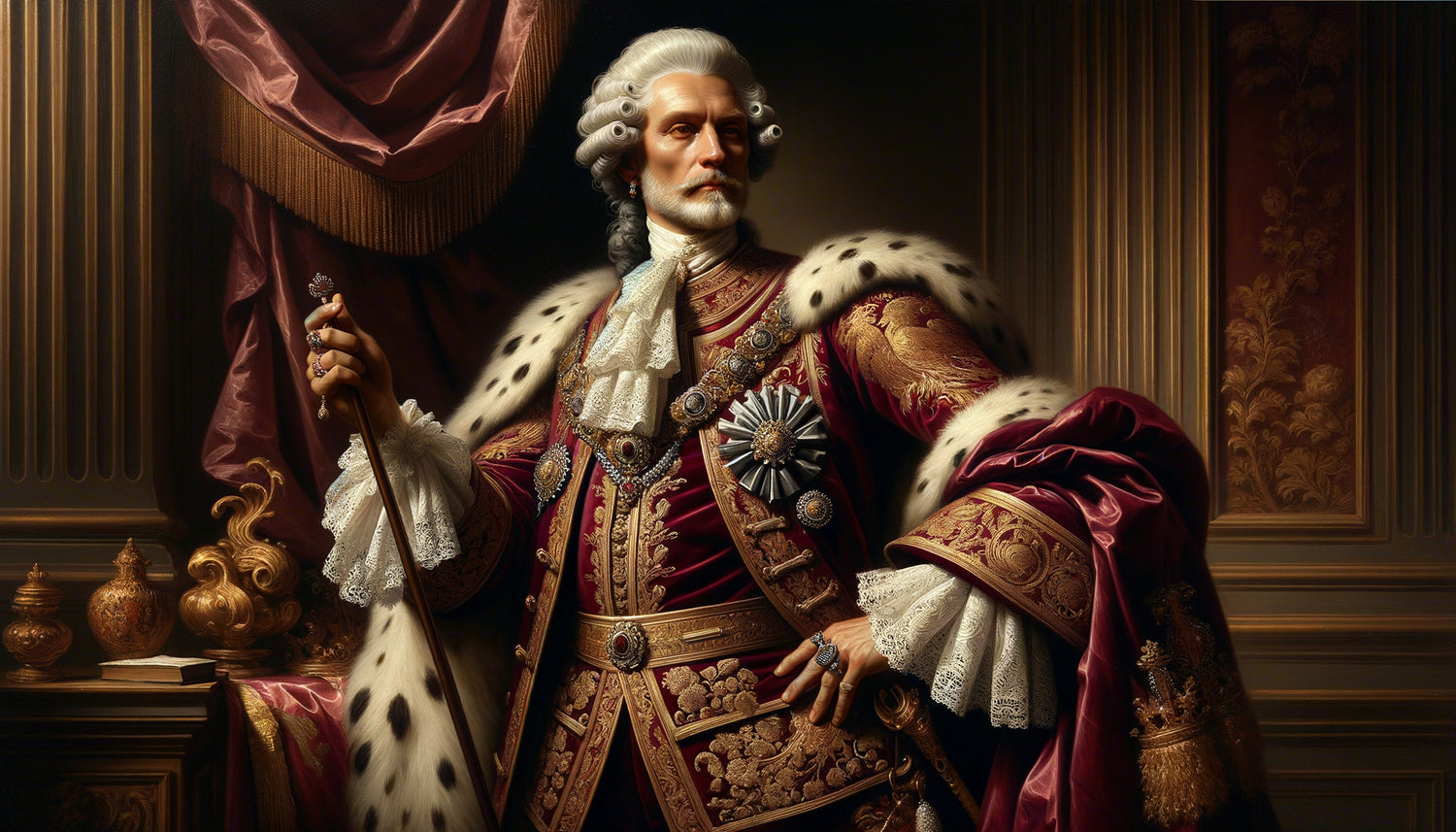
The court painter did not capture reality: he built a visual identity. Every element of clothing was meticulously chosen and represented. Precious fabrics, spectacular jewels, elaborate hairstyles were not random. Fashion became a legible social marker for anyone who knew the codes. A lace-laden farthingale signaled membership in the high nobility. A brooch adorned with a particular coat of arms revealed family alliances. Purple, reserved for royalty, proclaimed divine legitimacy.
These portraits circulated throughout Europe, creating a visual network of clothing references. Ambassadors studied them to decipher power dynamics. Courtiers observed them to adapt their own wardrobes. Court portraits thus established the first international standards for aristocratic fashion, transforming clothing into a codified system of social communication as precise as language.
The Emergence of Fashion as a Language of Distinction
Before the 16th century, clothing primarily indicated function: the monk wore his robe, the knight his armor, the peasant his work clothes. But something changed when court portraits began to disseminate images of extraordinarily sophisticated garments. Fashion was born from this tension between artistic representation and social reality.
Painters such as Hans Holbein the Younger, Anthony van Dyck or Nicolas de Largillierre did not simply reproduce clothing: they magnified it. They spent hours rendering the texture of a velvet, the shimmer of a satin, the transparency of a muslin. These hyperrealistic representations created a mimetic desire among those who contemplated them. Suddenly, clothing no longer served solely to cover or protect: it displayed, proclaimed, differentiated.
This transformation gave rise to the first codified dress hierarchies. At the court of Louis XIV, for example, the right to wear certain fabrics or colors was strictly regulated. Sumptuary laws defined who could wear silk, fur or gold embroidery. But these rules were based directly on what royal portraits showed. The Sun King used his countless portraits as silent dress edicts. Appearing in such a costume, with such laces or ribbons, meant authorizing those elements in court fashion.
The Revolution of Dress Detail
What is fascinating about this relationship between court portraits and the emergence of fashion is the obsessive attention to detail. On the state portraits of the 17th century, one can count the pearls of a necklace, identify the embroidery technique of a bodice, analyze the construction of a puffed sleeve. This precision was not gratuitous: it created a visual vocabulary that tailors, seamstresses and textile manufacturers could decode and reproduce.
Archives reveal that artisans regularly consulted portraits exhibited in public galleries to understand trends. A portrait showing the queen with a new form of collar immediately generated orders from milliners. Court portraits functioned as the first fashion catalogs, long before the invention of specialized magazines in the 19th century.

When Painted Clothing Dictates the Clothes Worn
Here's a fascinating paradox: often, the clothes depicted in court portraits did not exist exactly as they appeared on the canvas. Painters idealized, combined several outfits, added fanciful elements to strengthen the composition. Yet, these pictorial creations then became models that were sought to be reproduced in reality.
Take the example of Marie Antoinette's portraits by Elisabeth Vigée Le Brun. The airy dresses, hats adorned with feathers and flowers, romantic drapes represented on these canvases launched a real fashion revolution. Ladies of the court demanded from their seamstresses creations inspired by the portraits, even if it involved considerable technical feats. Art was now dictating fashion, not the other way around.
This dynamic created a spiral of innovation. Painters, knowing that their portraits directly influenced trends, competed in boldness in representing clothing. Courtiers, eager to assert their status, ordered increasingly spectacular outfits for their own portraits. Fashion became a social marker constantly renewed, where clothing innovation signaled not only rank, but also modernity and cultural refinement.
The Progressive Democratization of an Elite Language
In the 18th century, a new phenomenon emerged: the engraved reproduction of court portraits. These prints, much less expensive than the original paintings, circulated widely in the urban bourgeoisie. Suddenly, aristocratic dress codes become visually accessible to a wider social class. This is the beginning of a movement that will lead, two centuries later, to the democratization of fashion.
Merchants, lawyers, doctors studied these engravings to adapt their appearance. Of course, they could not afford precious fabrics and authentic jewelry, but they adopted their cuts, silhouettes, proportions. Fashion as a social marker no longer distinguished only nobility from the people, but created subtle gradations within the rising bourgeoisie.
This dissemination paradoxically reinforced the importance of original court portraits. The more dress codes spread, the more aristocrats had to innovate to maintain their visual distinction. Extravagances began to appear: the monumental hairstyles of the 1770s, increasingly wide panniers, vertiginous heels. Court portraits documented this escalation, while also fueling it.

The Contemporary Legacy of a Visual Revolution
Today, when we browse through a fashion magazine or scroll on Instagram, we unknowingly perpetuate a tradition born in the galleries of palaces. The idea that an image of clothing can be as influential as the garment itself finds its origin in court portraits. Fashion photography, globally broadcasted fashion shows, influencers presenting outfits: all of this descends directly from this revolution initiated by court painters.
The relationship between court portraits and the emergence of fashion as a social marker teaches us something fundamental: we never simply wear clothes, we wear meanings. Each clothing choice communicates an identity, a belonging, an aspiration. Court portraits codified this language, making it conscious, strategic and universal.
In our contemporary interiors, incorporating references to this history enriches our relationship with aesthetics. A painting evoking the timeless elegance of court portraits does not simply decorate a wall: it recalls the narrative power of clothing and the sophistication of an era when every visual detail conveyed a message.
Transform your space into a gallery of timeless elegance
Discover our exclusive collection of fashion paintings that celebrate the artistic heritage where style has become a universal language of refinement.
Conclusion: Clothing as Visual Memory
Court portraits accomplished a major cultural transformation: they elevated clothing to the rank of sophisticated language, capable of communicating power, identity and social belonging. This relationship between artistic representation and clothing reality literally invented fashion as we know it: a system in perpetual renewal where appearance defines status.
Today, understanding this history, we look at our own wardrobe differently. Each piece we choose fits into this long tradition where clothes are never neutral but always carry meaning. Court portraits have bequeathed us the awareness that style is an art of living, a form of personal expression as well as a social marker.
By integrating this historical dimension into your decoration, by choosing works that evoke this codified elegance, you are not just beautifying a space: you are joining a centuries-old tradition of visual sophistication. The next time you admire a classic portrait, remember: you are contemplating one of the first chapters in the history of modern fashion.
FAQ : Court Portraits and Fashion as a Social Marker
How did court portraits concretely influence the fashion of the time?
Court portraits acted as visual catalogs before the invention of photography. When a sovereign or great lady was depicted wearing a new style of clothing, this portrait was publicly displayed, copied in engravings and widely disseminated. Courtiers, eager to show their proximity to power, reproduced these styles with their tailors. Textile artisans studied the details of the portraits to understand new embroidery techniques, innovative cuts or fabric combinations. A single portrait could launch a trend that spread throughout Europe in a few months, creating a standardization of aristocratic dress codes across different courts. This influence was so powerful that some sovereigns deliberately used their portraits as tools of cultural soft power, imposing their clothing aesthetic as a standard of refinement.
Why is it said that fashion became a social marker thanks to portraits?
Before the golden age of court portraits, clothing primarily indicated a person's function or profession. The major transformation occurred when portraits began to document and disseminate extremely precise dress codes associated with social rank. These paintings showed that a duke did not simply wear beautiful clothes, but a specific combination of fabrics, colors, jewelry, and accessories that proclaimed exactly his position in the hierarchy. Sumptuary laws certainly regulated who could wear what, but portraits made these distinctions visually obvious and desirable. More importantly, they created emulation: seeing these magnificent images generated in the lower classes the desire to access these status markers. Fashion thus became a visual language of social distinction that everyone could read, but only some could speak authentically. It is this tension between aspiration and accessibility that made fashion a dynamic social marker, constantly evolving.
Does this relationship between art and fashion still exist today?
Absolutely, and in an even more intense way! The logic initiated by court portraits has been multiplied by fashion photography, cinema, and now social networks. When a celebrity appears in an outfit at a prestigious event, the photographs circulate instantly and influence millions of people, just as a royal portrait once circulated between European courts. Haute couture shows function like portrait galleries: they present clothes often unwearable in everyday life, but which establish aesthetic codes that ready-to-wear fashion will then decline. Fashion influencers on Instagram play the role that court painters used to play: they create idealized images that define aspirational dress standards. The major difference is the speed of diffusion and the relative democratization of access to these codes, but the fundamental mechanism remains identical: carefully constructed images dictate what is considered elegant, desirable, and socially valued. Our era perpetuates this centuries-old tradition where the image of clothing possesses as much, if not more, power than the garment itself.