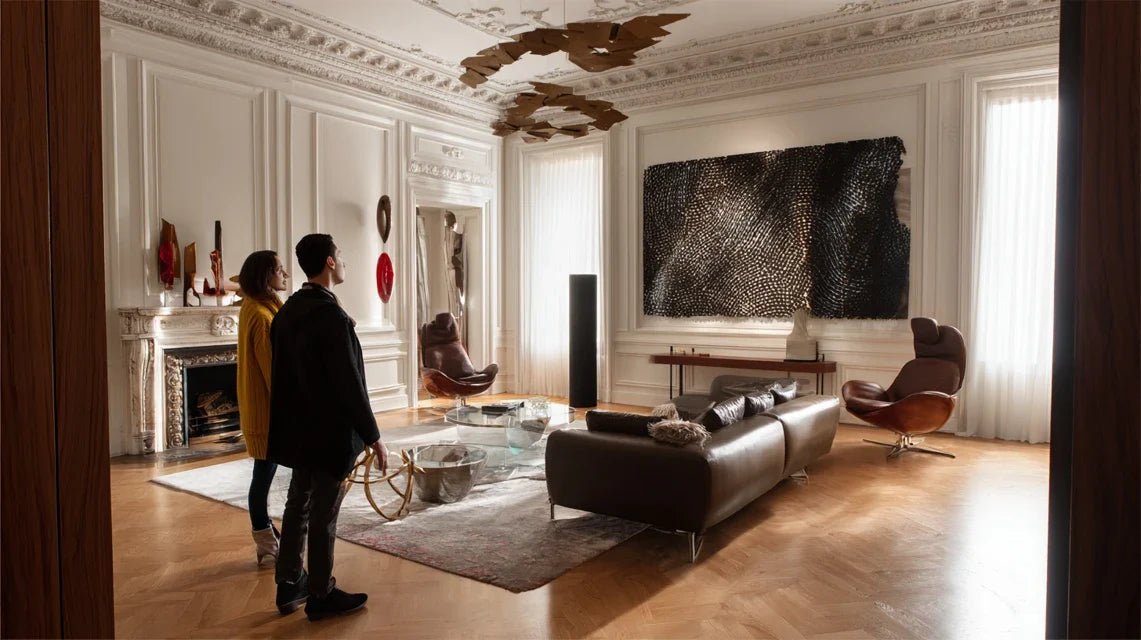
You've just acquired this beautiful artwork that you’ve been eyeing for weeks. Yet, once hung in your living room, something feels off. Your guests are perplexed by the piece, some even seem uncomfortable. This cultural misunderstanding leaves you feeling disoriented.
The vibrant colors that transported you in the gallery now appear garish under your lighting. The symbols that seemed poetic trigger mixed reactions. Your surroundings don't grasp the emotional depth that seduced you.
You may have tried to explain your choice, to contextualize the work, but it’s no use. This invisible cultural barrier turns your artistic crush into a source of social discomfort. You begin to doubt your taste, your ability to choose a piece that harmonizes with your environment.
Rest assured, this situation is nothing unusual. The problem doesn't come from your artistic sensitivity, but from the lack of knowledge of cultural codes that influence our perception of art. Each work carries within it the DNA of its culture of origin, sometimes creating perceptual discrepancies.
By the end of this article, you will master the keys to cultural reading that will transform your relationship with art. You will know how to anticipate reactions, choose works that create connections rather than misunderstandings, and develop a coherent collection that reflects your personality while respecting the sensibilities of those around you.
Why does the culture of origin of a painting so profoundly influence our perception?
This question is crucial today as our interiors become globalized. Ignoring the cultural impact of a work risks creating aesthetic dissonances that turn your space into a source of tension rather than a haven of peace. Imagine a chef mixing spices without knowing their origins: the result could be disastrous. With art, it’s the same. Waiting to understand these mechanisms exposes you to impulsive purchases that never truly integrate into your world.
🎨 Concrete example: Sarah, a fan of contemporary art, had acquired an abstract work with red and gold colors, thinking it would bring warmth to her minimalist living room. Her Asian guests consistently saw symbols of fortune and prosperity in it, creating a palpable discomfort during dinners. The work, beautiful in itself, generated cultural interpretations that disrupted the atmosphere.
💬 Conversation with a decor expert
The golden rule of intercultural art: A well-integrated work is one that dialogues with its environment rather than imposing itself. Like a successful conversation, it creates benevolent curiosity rather than confusion. You will feel it in the atmosphere of your room within weeks.
Understanding what's really happening in your space
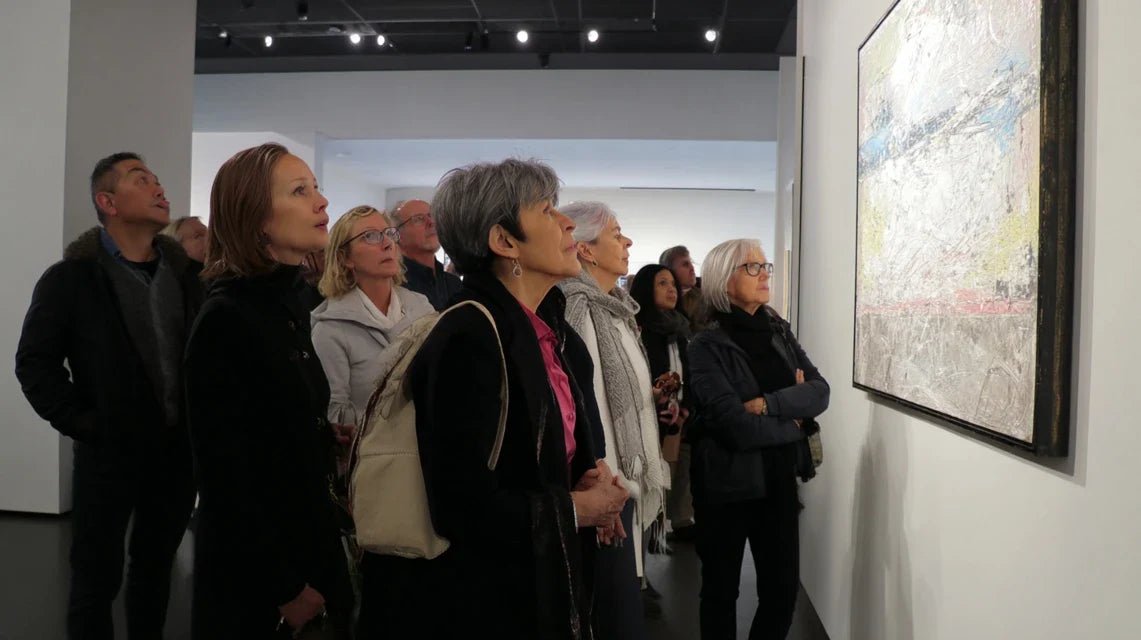
Do you recognize yourself in these situations? Your favorite painting elicits questioning looks. Your guests change the subject when you mention your latest acquisition. Some works create a tense atmosphere for no apparent reason.
What's happening is an invisible clash of cultural references. Your brain and that of your guests do not draw on the same visual libraries to decode the work. It’s not a lack of taste, it's a natural neurological mechanism.
Imagine two people looking at the same cloud: one sees a dragon, the other a lamb. With art, it's the same but more complex, because our cultural references shape our aesthetic reading grid from childhood.
The first hidden cause: universal symbols that are not
Contrary to popular belief, there is no universal artistic language. What you perceive as harmonious can be interpreted as aggressive, spiritual or even disrespectful depending on the culture of the observer. The color red, for example, evokes passion in the West but happiness in Asia.
It's like wearing an elegant garment that turns out to be a mourning costume in another culture. The intention is pure, but the received message is different. This lack of awareness generates silent misunderstandings that alter the atmosphere of your interior.
Understanding these nuances transforms your decorative approach. You move from a passive decor to a mastered decor, where each artistic choice contributes to creating the desired atmosphere. Your collection becomes a cultural bridge rather than a wall.
🔍 Instant test: Observe your guests' reactions to your current artworks. Note the works that spark spontaneous questions versus those that go unnoticed. This difference reveals the cultural impact of your artistic choices.
Each culture has developed its own painting techniques which convey specific emotions. European oil painting evokes depth and reflection, while Asian watercolor suggests fluidity and ephemerality. These techniques carry unconscious emotional codes.
It's like the difference between a handwritten calligraphy and modern typography: same message, different emotional impact. Your brain automatically associates certain techniques with specific cultural and emotional universes.
This lack of awareness explains why some works "speak" to you immediately while others remain silent. Your unconscious cultural sensitivity filters your artistic perception, creating preferences that you believe are purely aesthetic.
The invisible power of proportions and compositions
Each artistic tradition uses sacred proportions which create a specific visual harmony. The Western golden ratio, Japanese zen proportions, African dynamic balances generate different sensations in your space.
Spot these proportions in your favorite works: look at how the elements are distributed in space, where the focal points are located, how the eye follows the composition. These details reveal the artist's cultural approach.
Mastering these codes allows you to compose your decor like a conductor directs his symphony. Each work finds its place in a global harmony that reflects your personality while respecting the multiple sensibilities of those around you.
🎯 5 revealing signs of cultural impact:
- Observation time: A culturally accessible work retains attention longer than a work with complex decoding Spontaneous reactions: Immediate comments reveal your guests' automatic cultural associations Overall atmosphere: Some works change the energy of the room according to their emotional cultural chargeThe trigger element: cultural emotional resonance
- Observation notebook: A simple notebook to note your aesthetic discoveries. Choose one that makes you want to write, because you will record important revelations in it. Avoid digital applications which create a distance from your emotions. The handwritten trace reveals nuances that the digital erases.
- Cultural reading grid: A simple system for identifying artistic influences in your space. You will learn to spot Western, Asian, African or contemporary codes without becoming an art history expert. This grid reveals the hidden consistencies of your decor.
- Emotional impact meter: A method for evaluating the atmosphere generated by each work. You will be able to distinguish a soothing work from a stimulating one, crucial information for creating the desired atmosphere in each room.
- Emotional resonance test: A simple method to evaluate the universal impact of an artwork. You’ll be able to distinguish between an artwork that divides and one that unites, a key skill for creating enriching conversations around your collection.
- Visual harmony grid: A system to assess cultural compatibility between different artworks. This grid reveals successful associations and those to avoid, preventing costly mistakes in time and money.
- Cultural acceptance barometer: A tool to anticipate the reactions of your entourage without sacrificing your artistic personality. You’ll learn to broaden tastes rather than force them.
- Evolving collection plan : A system to plan your acquisitions by creating visual dialogues between different cultures. This avoids impulsive purchases that disrupt your ensemble. This strategic approach optimizes your art budget. Cultural dialogue notebook : A tool to document the visual interactions between your artworks. You learn to create artistic conversations that enrich your space without creating visual cacophony. Gradual integration method : An approach to introduce new cultural influences without abruptly changing your existing environment. This method avoids traumatic decorative revolutions for those around you.
The real difference is the ability of a work to create an emotional resonance that transcends cultural barriers. Like a smile that crosses all cultures, some works possess this emotional universality which unites rather than divides. You can identify it by the quality of silence that settles when someone discovers the work: an admiring silence rather than a perplexed one. This subtle difference reveals the real cultural impact of your artistic choices.
The rule of cultural resonance: A well-chosen artwork creates benevolent curiosity rather than confusion. It invites discovery without creating barriers. Test it by observing your guests' initial reactions.
| ❌ Closed perception | ✅ Cultural openness | 💡 Mechanism | 🎯 Practical benefit |
|---|---|---|---|
| This artwork doesn't speak to me | This artwork reveals a different universeCuriosity replaces rejection | Enrichment of your collection | |
| My guests don’t understand it | My guests discover a culture | Sharing replaces incomprehension | Enriching conversations |
| This style doesn't fit in my home | How to integrate this aesthetic? | Adaptation replaces exclusion | More creative decoration |
| It’s too different from my tastes | It's an opportunity for evolution | Growth replaces stagnation | Development of your sensitivity |
Your practical guide to mastering intercultural art
Now that you understand the mechanisms, let’s move on to action. This progressive method will allow you to transform your perspective on intercultural art. Like a gardener who prepares their soil before planting, you will first analyze your space, then choose artworks that create the desired harmony. The process is simpler than it seems, and the results are immediately visible.
🗺️ Your roadmap in 3 steps: First, you will decode your current environment to understand the cultural influences already present. Then, you’ll learn how to identify bridging artworks that create connections. Finally, you'll master the art of composing a coherent collection that reflects your personality while respecting multiple sensibilities.
Step 1: Decoding the cultural DNA of your space
Starting with this analysis is fundamental because your current decoration already reveals your unconscious cultural preferences. Like an archaeologist studying their discoveries, you will reveal the hidden influences that shape your aesthetic universe. This awareness will give you immediate satisfaction: finally understanding why certain decorative choices seem natural to you!
🔍 Your cultural analysis tools
Let's move on to practical application now
🎯 Your cultural audit in 3 actions
Visual inventory of your space: Photograph each work in its context, including the surrounding decorative elements. This overview reveals the visual dialogues between your artistic choices. Note your immediate feelings for each area. This objective approach reveals your cultural automatisms.
⏱️ Time: 30 minutes | ✅ Successful when: You have a clear view of the dominant cultural influences | ⚠️ Attention: Do not judge your past choices, observe them to understand your aesthetic evolution
Analysis of reactions from your entourage: Ask three people from different cultures to describe the atmosphere of your space in three words. Their answers reveal the real cultural impact of your artistic choices. Note the convergences and divergences without interpreting them immediately.
⏱️ Time: 45 minutes | ✅ Successful when: You identify the works that create consensus and those that divide | ⚠️ Attention: Remain neutral to criticism, it reveals valuable cultural codes
Mapping of your cultural preferences: Create a visual diagram of your artistic influences by classifying your works by cultural origin and emotional impact. This mapping reveals your natural trends and possible areas for exploration.
⏱️ Time: 25 minutes | ✅ Successful when: You clearly visualize your artistic "cultural profile" | ⚠️ Attention: Some works mix several influences, this is normal and even enriching
✅ Validation of your analysis: You must now understand why some works "speak" to you immediately while others remain silent. You identify the cultural patterns that guide your artistic choices. If you still feel confused, reread your notes looking for recurrences rather than exceptions.
OUR RECOMMENDED PRODUCTS
Step 2: Identify and choose your gateway artworks
Now that you've mastered your cultural environment, you’ll learn how to identify artworks that create connections rather than barriers. This skill transforms your approach to art: you move from impulsive buying to strategic acquisition. The effect is cumulative: each well-chosen artwork facilitates the integration of the following ones, creating a harmonious collection that grows naturally.
🎨 Your cultural selection criteria
🔍 Your artwork selection method
First impression test: Observe your instinctive reaction to an artwork, then ask yourself what universal emotion it evokes. Gateway artworks generate emotions that everyone can identify: serenity, dynamism, contemplation. This immediate recognition reveals their potential for integration.
⏱️ Time: 2 minutes per artwork | ✅ Successful when: You identify the main emotion without hesitation | ⚠️ Attention: Beware of artworks that generate immediate emotional confusion
Analysis of technique and colors: Examine how the artist uses universal visual codes: balance, contrast, movement. Gateway artworks master these fundamentals while bringing their cultural specificity. This analysis reveals the true artistic sophistication.
⏱️ Time: 5 minutes per artwork | ✅ Successful when: You distinguish between mastered technique and fleeting trends | ⚠️ Attention: Technical complexity does not guarantee emotional impact
Projection into your space: Visualize the artwork mentally in your environment, imagining the reactions of different visitor profiles. This projection reveals potential cultural obstacles and opportunities for discovery. You develop your artistic cultural intelligence.
⏱️ Time: 3 minutes per artwork | ✅ Successful when: You anticipate reactions without fearing them | ⚠️ Attention: Unanimity is not the goal, benevolent interest is sufficient
🎯 Validation of your selection : Your chosen artworks should evoke positive curiosity rather than rejection. They naturally integrate into your existing decor while bringing a new dimension. If a work still generates doubts, let it "mature" for a few weeks before deciding.
You are now reaching the level of an experienced curator. You no longer suffer your artistic choices, you orchestrate them. This mastery allows you to create evolving collections that tell your story while respecting multiple sensibilities. Your interior becomes a living cultural dialogue of which you are the conductor. Your guests feel this harmony without necessarily understanding it intellectually, but it enriches their experience of your space.
🎼 Your tools for cultural composition
🎨 Your intercultural collection strategy
Creation of thematic zones : Organize your space into micro cultural environments that dialogue with each other. Each zone can explore a different influence while maintaining an overall global coherence. This approach avoids visual dispersion while maximizing cultural richness.
⏱️ Time : 1 hour per zone | ✅ Success when : Each zone has its own personality while integrating into the whole | ⚠️ Attention : Avoid cultural partitions that are too marked
Planning future acquisitions : Establish a schedule for enriching your collection by identifying cultural gaps and opportunities for deepening. This planning avoids impulsive purchases and optimizes your art budget in the long term.
⏱️ Time : 45 minutes | ✅ Success when : You have a clear vision of the desired evolution | ⚠️ Attention : Remain flexible to unexpected artistic opportunities
Global harmony test: Evaluate the emotional impact of your complete collection by hosting a discovery evening with guests from diverse cultures. Their reactions reveal the success of your intercultural approach and any necessary adjustments.
⏱️ Time: One evening | ✅ Success when: Your guests feel welcome and intrigued | ⚠️ Attention: Prioritize authenticity over spectacular effects
🏆 Validation of your mastery: Your collection tells a coherent and evolving story. You anticipate reactions without fearing them, you integrate new influences without upsetting the whole. Your space becomes a catalyst for enriching conversations about art and cultures.
The rule of mastered evolution: Your collection must be able to welcome new influences without losing its identity. Test this ability by imagining the integration of a work very different from your current style. If the exercise seems natural to you, you master intercultural art.
You now have a cultural sensitivity that transforms your relationship with art. This skill gives you a considerable advantage: you create inclusive spaces that enrich the experience of all your guests, regardless of their cultural background.
🎯 Secret of an experienced curator: The most valuable works are those that create generational bridges as much as cultural ones. Look for pieces that touch both children and adults, traditionalists and avant-gardists. This emotional universality reveals the true artistic quality and guarantees a lasting value to your collection.
🤔 Frequent question from art lover
"How do I know if a contemporary work of Asian inspiration will really fit in my Western living room?"
This hesitation is perfectly understandable! Contemporary works inspired by Asia often possess this universal quality that transcends cultural borders. Here's the infallible test: observe whether the work generates an immediate emotion that you can name (serenity, dynamism, contemplation). If so, it has this ability to engage in intercultural dialogue. Contemporary art draws on traditions while speaking a modern language accessible to all. Also test compatibility with your current lighting: successful works reveal new facets according to the luminosity, creating a visual richness that enriches your daily life.
💡 Immediate practical test: Ask three people to describe in one word the emotion inspired by the work. If their answers converge towards positive emotions, the work has this universal quality that guarantees a successful integration.
Cultural Pitfalls to Absolutely Avoid
After years of supporting art lovers, I have identified the recurring mistakes that turn a promising collection into a source of discomfort. These errors are predictable and therefore avoidable, but they can cost you dearly in terms of time, money, and artistic satisfaction.
- ⚠️ Decorative Exoticism: Choosing a work solely for its exotic appeal without understanding its cultural significance. This superficial approach often creates aesthetic misinterpretations that become embarrassing over time. Instead, first explore the artistic universe of the work to understand its codes. This is a mistake made by 70% of beginners, but it can be easily corrected with curiosity.
- 🚫 Incoherent Mixing: Accumulating works from different cultures without creating a visual dialogue between them. Your space then becomes an artistic catalog rather than a harmonious environment. Look for points of convergence (colors, emotions, techniques) rather than differences. This approach transforms diversity into richness.
- ❌ The "Ethnographic Museum" Effect: Presenting each work as an cultural specimen rather than a living artistic creation. This rigid approach kills artistic emotion and creates an uncomfortable distance. Instead, integrate your works into your daily life; they are meant to be lived in, not contemplated.
- 🔄 Cultural Uniformity: Avoiding all external influences for fear of doing wrong, creating a culturally poor space. This excessive caution limits your artistic evolution and deprives those around you of enriching discoveries. Start with small cultural openings to develop your confidence.
- 💸 The "Cultural" Impulse Purchase: Acquiring a work during a trip or exhibition without thinking about its future integration. These impulsive purchases often end up relegated to a closet. Always take a photo of the work and visualize it in your space before buying.
🛡️ Your Cultural Verification System: Before each acquisition, check that the work evokes an immediate positive emotion, that it visually dialogues with your existing environment, that you can explain your choice in simple terms, and that it enriches your collection without unbalancing it. If any of these criteria are lacking, let your decision mature for a few weeks.
🎁 Special Readers Offer
Because you took the time to inform yourself, enjoy 10% discount on your first order:
⏰ Valid 72h after reading • Applicable to all our products
❓ Your Questions About Intercultural Art
A basic sensitivity develops in 2-3 months of regular practice, but mastery takes about a year. To speed up the process, visit a different gallery each month and document your reactions. The key is regularity rather than intensity: 15 minutes of daily observation are better than a monthly marathon visit.