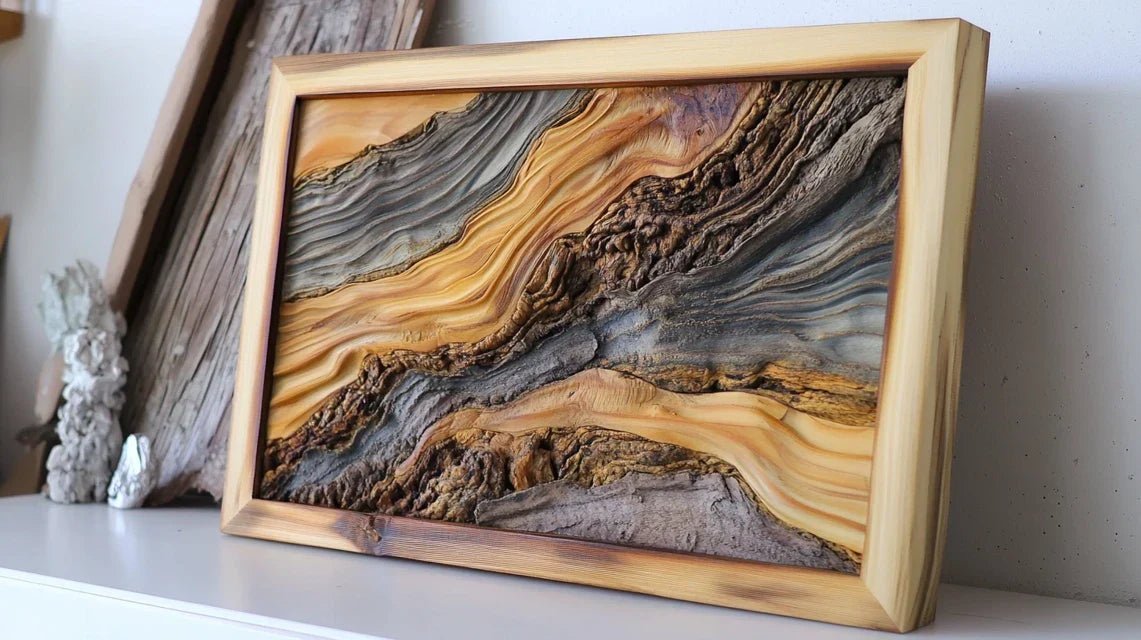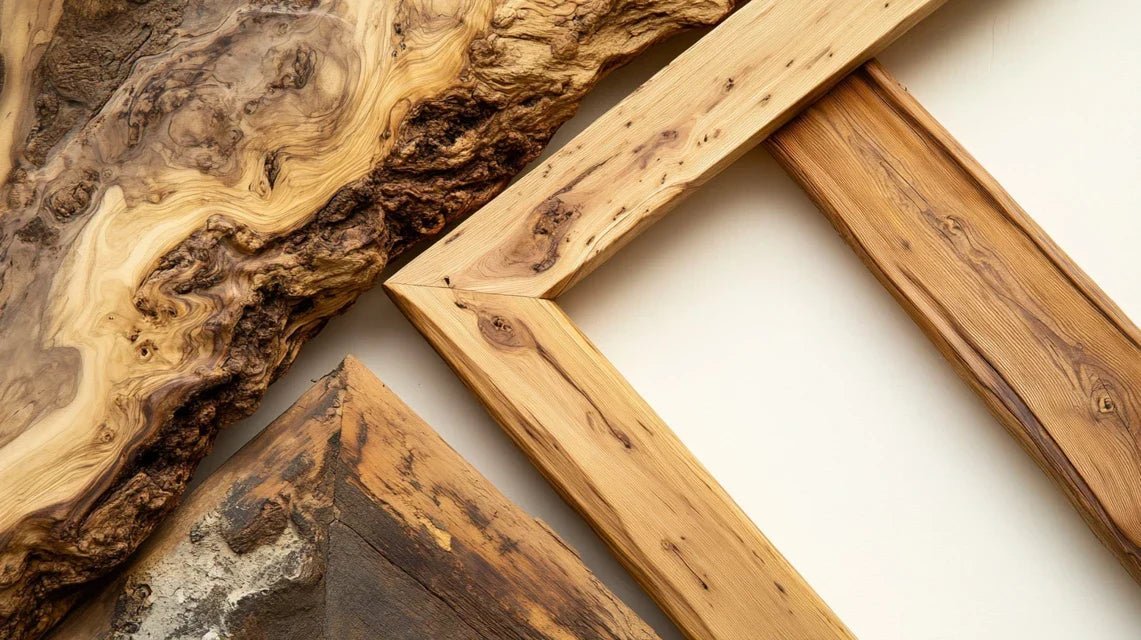
Solid wood frames have crossed the centuries, constantly reinventing themselves, going from purely functional elements to true masterpieces in interior decoration.
Today, these artworks evolve between tradition and modernity, offering a palette of aesthetic expressions that adapt to all interior styles. Discover how solid wood frames have managed to preserve their timeless charm while embracing contemporary trends.The Historical Heritage of Solid Wood Frames
Solid wood frames have a rich history dating back several centuries. Originally designed to protect and enhance precious works of art, they have evolved over time into decorative elements in their own right. This evolution is a testament to their cultural importance and their ability to transcend their primary function to become sought-after design objects.
- During the Renaissance: appearance of the first ornamental gilded wood frames
- In the 17th century: development of distinct national styles (Italian Baroque, French Louis XIV)
- In the 19th century: diversification of wood species and simplification of motifs
- In the 20th century: return to minimalist aesthetics and natural materials
Heritage value: A solid wood frame is much more than just a decorative accessory. It is a witness to the history of design and craftsmanship that brings authenticity and character to your interior, while potentially increasing the value of the works it frames.
Wood Species: From Classic to Contemporary
Timeless Traditional Woods
Certain species have crossed eras without ever losing their beauty, becoming timeless classics of framing. Oak, walnut, mahogany and cherry continue to seduce with their distinctive grain, exceptional durability and patina that enhances over time. These noble woods offer unparalleled warmth and depth that instantly creates a refined atmosphere in any space.
Maintenance tip: To preserve the natural beauty of your traditional solid wood frames, avoid direct sunlight which can discolor the wood. A simple regular dusting with a soft, slightly damp cloth is usually sufficient to maintain their shine. Apply a thin layer of beeswax once a year to nourish the wood and revive its color.
Contemporary Trends
The contemporary era has seen new approaches emerge in the use of solid wood for frames. Ash, maple and birch seduce with their light shades that harmonize perfectly with modern interiors. Natural and minimally treated finishes are preferred to enhance the authenticity of the material. There is also a growing interest in recycled woods or those from sustainably managed forests, reflecting a contemporary ecological concern.
Exotic and Rare WoodsFor those who appreciate originality, exotic woods such as teak, rosewood or zebrawood offer spectacular grains and colors. These precious essences bring a touch of exclusivity and often become the focal point of a room. However, their use should be carefully considered taking into account ethical considerations regarding their origin and exploitation.
- Teak: remarkable resistance to humidity and characteristic honey hue
- Rosewood: deep veins ranging from brown-red to purple
- Zebrawood: distinctive zebra patterns alternating dark brown and cream
The Innovation of Finishes
Beyond the wood species themselves, it is often in the treatment of the wood that lies the contemporary aspect of a frame. Brushed finishes that highlight the grain, water-based stains that preserve the natural texture, or oil treatments that offer a very sought-after matte finish are all modern techniques that reinvent the aesthetics of solid wood.
| Wood Species | Characteristics | Decorative Style | Durability |
|---|---|---|---|
| Oak | Prominent grain, warm hue | Rustic, traditional, countryside | Excellent (50+ years) |
| Maple | Fine grain, light hue | Scandinavian, minimalist, contemporary | Very good (30-40 years) |
| Walnut | Elegant veins, dark hue | Classic, sophisticated, timeless | Excellent (50+ years) |
| Bamboo | Nodal structure, yellow-green hue | Eco-design, zen, exotic | Good (20-30 years) |
Frame Styles: From Ornamentation to Simplicity
The Evolution of Profiles
One of the most visible transformations in the evolution of solid wood frames concerns their profiles. While classic frames were characterized by complex moldings and sculpted ornamentation, the contemporary trend favors clean lines and simple geometric shapes. This evolution reflects a broader change in our relationship with aesthetics, where decorative overload has gradually given way to minimalist elegance.
- Baroque Frames: Highly sculpted profiles with floral motifs, acanthus leaves, and gilding
- Classic Frames: Graduated moldings with discreet ornamentation and harmonious proportions
- Contemporary Frames: Straight lines, sharp angles, and almost total absence of ornamentation
The Renaissance of Craftsmanship
Paradoxically, as contemporary design tends towards simplicity, there is a renewed interest in traditional artisanal techniques. Hand-made frames, with perfect joints and meticulous finishes, are increasingly valued for their uniqueness and incomparable quality. This movement is part of a broader trend toward authenticity and handmade goods in a world dominated by mass production.
- Dovetail Joint: Ancestral technique offering exceptional strength
- Wood Carving: Creation of unique motifs adapted to the style of the interior
The Influence of Global Design
Solid wood frames are not immune to major trends in interior design. Thus, Scandinavian aesthetics have popularized light-colored wooden frames with straight lines, while industrial style has brought back raw woods with aged finishes. Globalization has also enabled a crossbreeding of influences, with frames incorporating elements of Japanese, African or South American design.
- Nordic Style: Frames in bleached birch or pine with thin profile and right angles
- Wabi-Sabi Style: Irregular wood frames celebrating natural imperfections
The frame as an architectural element: In contemporary decoration, the solid wood frame is no longer simply an accessory but becomes a structural element in its own right, capable of structuring space and creating focal points. Its choice should therefore be integrated into a global reflection on the layout of your interior.
OUR RECOMMENDED PRODUCTS
Discover our selection of products specially chosen for you. Click on the images to learn more.

Wall mounting hooks 12kg max - complete set
39.99 €
|
Wall mounting hooks 24kg max - complete set
49.99 €
|
Crochets de fixation mural 36kg max - kit complet
59,99 €
|
Why choose our products: All our wall hooks are made with high quality materials to guarantee exceptional durability and robustness. Easy and quick installation without special tools.
Integrating Solid Wood Frames into Modern Interiors
Beyond their aesthetic evolution, solid wood frames have transformed their role in contemporary interior decoration. They have become true design tools, allowing to create original compositions and strong visual points of interest.
- The Wall Composition (Gallery Wall): Harmonious mix of different sizes and styles of frames to create a coherent ensemble
- The Frame as a Sculptural Object: Use of imposing frames as autonomous decorative elements, even without content
- Architectural Integration: Frames recessed into niches or aligned with structural elements
- Material Contrast: Association of wood with metal, glass or concrete to create material dialogues
- Superposition: Technique of stacking several frames partially to create depth
- Monumental Frame: Use of oversized frames as a focal point in a room
- Calculated Asymmetry: Off-center arrangement creating dynamic visual tension
Arrangement Tip: To create a balanced wall composition with solid wood frames, start by laying out the frames on the floor before fixing them to the wall. Take a photo of the final arrangement for reference and use kraft paper cut to the dimensions of each frame to mark their exact location on the wall before drilling.
[HTML]Solid Wood Frames as a Sustainable Investment
In the age of responsible consumption, solid wood frames represent an informed choice for several environmental and economic reasons. Their inherent durability makes them heirloom objects that oppose the planned obsolescence of manufactured products.
The Ecological Aspect
Solid wood, when sourced from sustainably managed forests, is one of the most ecological materials available. Unlike frames made from composite or plastic materials, solid wood frames are biodegradable and have a reduced carbon footprint. Furthermore, their exceptional longevity limits the need for renewal and therefore waste production.
Patrimonial Value
A quality solid wood frame does not lose value over time. On the contrary, some models can acquire the status of collectibles or antiques, increasing in value over the years. This patrimonial dimension is particularly relevant for frames that feature exceptional artisanal work or are made from rare woods.
Adaptability Over Time
The beauty of a solid wood frame also lies in its ability to evolve. A simple sanding and new finish can radically transform its appearance to adapt it to a new decor or current trends. This adaptability makes it a truly durable investment over time.
Criteria for Choosing a Quality Solid Wood Frame
- Wood Quality: Check for the absence of problematic knots and grain homogeneity
- Precision of Assemblies: Angles must be perfectly joined without visible gaps
- Material Stability: Properly dried wood will not warp over time
- Finish: Examine the regularity and depth of the tint as well as the absence of defects
- Fixing System: Opt for robust mechanisms that will securely hold your artwork
Future Trends in Solid Wood Frames
The market for solid wood frames continues to evolve, driven by technological innovations and emerging aesthetic trends. Here are the directions this sector is taking for the coming years:
- Advanced Personalization
- Hybridization of Materials
- Integrated Technologies
- Multifunctionality
- Enhanced Eco-responsibility
- Expressive Minimalism
Frequently Asked Questions about Solid Wood Frames
Maintaining a solid wood frame is relatively simple. Regular dusting with a slightly damp microfiber cloth is usually sufficient. Avoid direct exposure to sunlight and heat sources, which can dry out the wood and alter its color. Once a year, apply a thin layer of natural beeswax to nourish the wood and restore its shine. In case of small scratches, a retouching pencil adapted to the color of the wood can work wonders.
Absolutely! The wide variety of wood species, finishes and profiles allows you to find solid wood frames adapted to all decorative styles. For a Scandinavian interior, favor light woods such as birch or ash with thin and refined profiles. In an industrial decor, patinated woods with raw finishes will blend in perfectly. For a classic style, opt for noble woods such as walnut or mahogany with worked moldings. Solid wood frames also match contemporary interiors when chosen in minimalist lines and neutral tones.
The fundamental difference lies in the composition of the material. A solid wood frame is made from a piece of solid wood, directly from the tree, preserving all the natural characteristics of the wood (grain, knots, color variations). Conversely, a reconstituted wood frame (MDF, particleboard) is composed of particles or fibers of wood compressed with resins. Solid wood offers superior durability, unique character and can be restored, while reconstituted wood offers uniform appearance and generally lower cost, but shorter longevity.
The choice should take into account several factors in balance. First, consider the style and colors of the artwork itself: a classic painting will generally be enhanced by a traditional ornate frame, while a contemporary photograph will better suit a frame with clean lines. The wood tone must establish a harmonious dialogue with the dominant colors of the work without overshadowing them. Then, take into account the environment in which the frame will be displayed to ensure consistent integration with your decor. Finally, the size of the artwork naturally determines the proportions of the frame, keeping in mind that a mat can create a beneficial visual breathing space between the artwork and its framing.
The Solid Wood Frame: Between Tradition and Innovation
The evolution of solid wood frames perfectly illustrates the ability of some traditional elements to reinvent themselves to remain relevant in our contemporary interiors. From ornate Baroque to current minimalism, these objects have managed to preserve their essence while adapting to the aesthetic evolutions of each era.
Choosing a solid wood frame today means choosing an authentic and living material that tells a story and will continue to evolve with you. It is also opting for a responsible approach, by favoring a durable and ecological object in the face of the abundance of ephemeral products that saturate our daily lives.
Whether it's highlighting a cherished work of art, creating a focal point in your interior or simply bringing a touch of natural warmth to your decor, the solid wood frame remains a timeless ally whose relevance does not diminish. Between respect for artisanal traditions and openness to contemporary innovations, it perfectly embodies the balance we all seek in our living spaces.