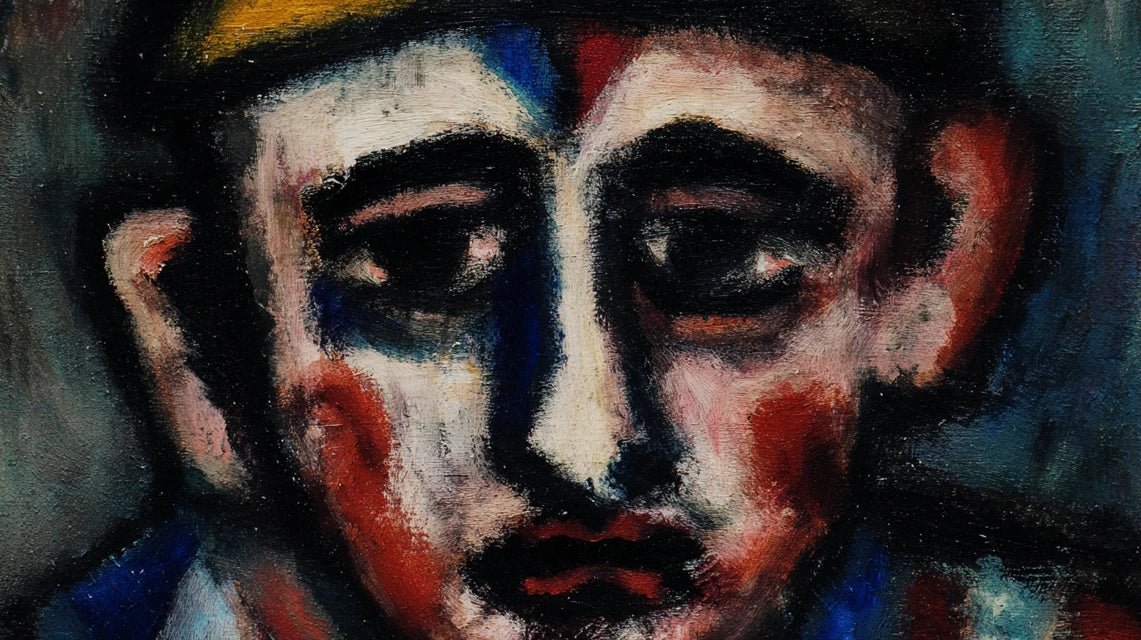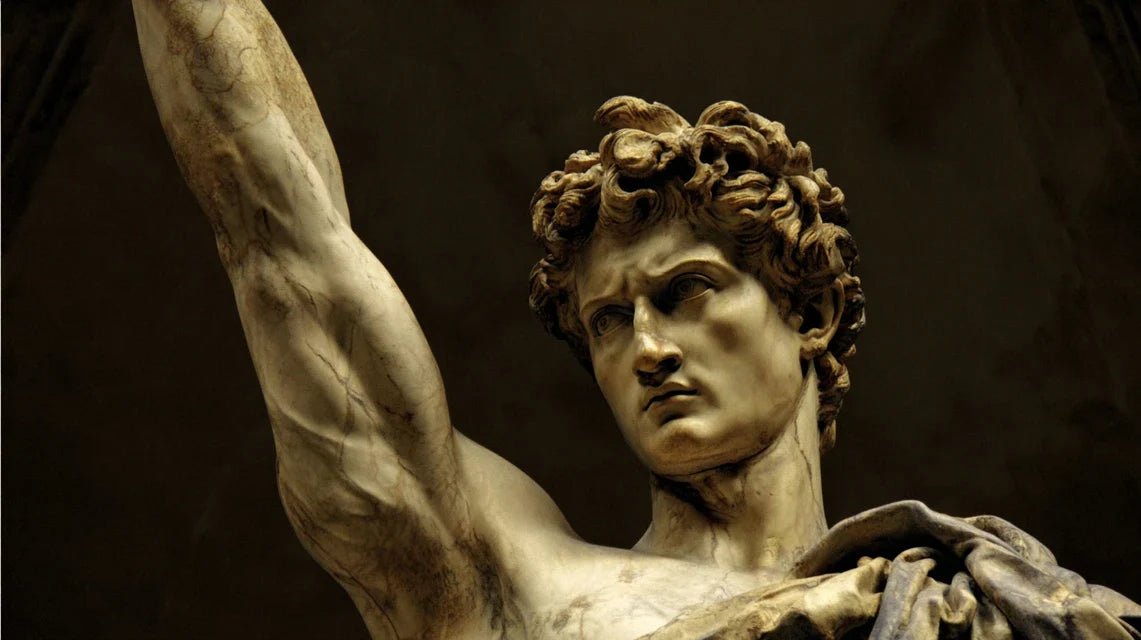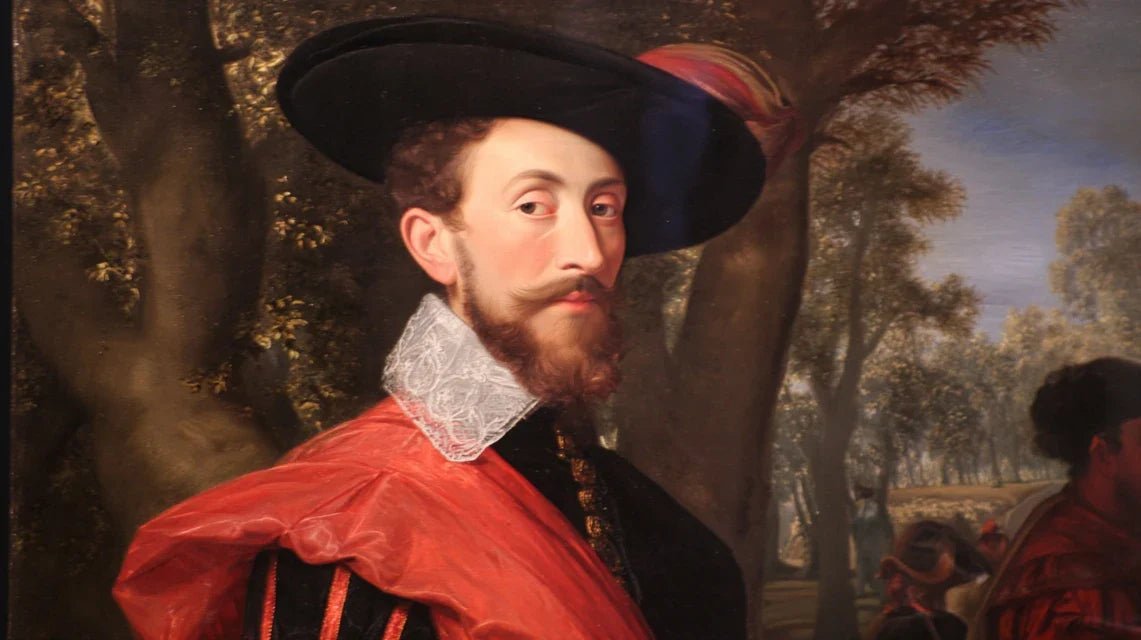
This boy is Tiziano Vecellio, who history will remember as Titian. In the smoky workshops of Venice, he learns the art of capturing not only faces, but souls. His brushes reveal the secrets of the powerful, his flamboyant colors transform Venetian painting, and his revolutionary technique liberates art from the constraints that had imprisoned it for centuries.
Why be interested in this man who lived nearly 90 years, a very rare occurrence in the 16th century? Because Titian is not only a painter, he is a visionary who dared to defy conventions. He painted sacred and profane love, immortalized the Venus of Urbino which still inspires artists today, and created a pictorial language so modern that it already foreshadows Baroque art.
This biography will reveal how a child from the mountains became the undisputed master of Venetian color, forever transforming the art of painting - let's discover together the man behind the genius
Tiziano Vecellio: The Venetian Genius Who Revolutionized the Art of Color
Knowing the true story of Titian allows us to understand how a simple mosaic apprentice became the most sought-after painter in Europe. Behind the legends lies a man of fierce ambition, capable of manipulating his own image to appear older than he was, in order to surround himself with an aura of venerable patriarch.
| Biographical Highlights | Artistic Legacy
|---|
|
Full name: Tiziano Vecellio Birth: around 1488-1490, Pieve di Cadore Death: August 27, 1576, Venice Nationality: Republic of Venice |
Movement: Venetian Renaissance
Tiziano Vecellio: From the Mountains of Cadore to the Gilded Workshops of Venice
In the small town of Pieve di Cadore, nestled in the heart of the Dolomites, a child grows up destined to shake up European art. His father, Gregorio Vecellio, is not just a notary but an influential man: militia captain, mining inspector, respected figure from a family of lawyers and administrators. This family wealth will allow young Tiziano to follow his artistic vocation.
The irresistible call of art: Around the age of nine, an event changes everything. Uncle Antonio, a state official in Venice, discovers the exceptional artistic talent of his two nephews, Tiziano and Francesco. He immediately understands that these children's hands are destined to create beauty. The two brothers leave the mountains to join the Most Serene Republic, where an apprenticeship awaits them that will shape their destiny.
The fundamental revelation: With Giovanni Bellini, Titian discovers a principle that will guide his entire career: the primacy of color over line. While Florentines prioritize drawing and perspective, Venetians understand that color can express pure emotion, capture living light and reveal the soul of beings.
Titian and the splendor of Venetian Renaissance (1488-1576)
When Titian is born, Venice rules the seas and dominates European trade. The Most Serene Republic lives its golden age: sumptuous palaces are reflected in the canals, merchants accumulate fabulous fortunes, and the arts experience an unprecedented flourishing. This economic prosperity fuels an insatiable thirst for beauty and prestige.
The Venetian artistic atmosphere contrasts sharply with that of Florence or Rome. Here, there are no scholarly theories about perspective: painters prioritize the sensuality of color, golden light effects, the expression of emotions. The University of Padua disseminates humanist ideas, but Venice interprets them in its own way, more hedonistic and poetic.
His contemporaries include Leonardo da Vinci, Michelangelo, and Raphael. But while these brilliant rivals exhaust themselves in disputes between proponents of drawing and defenders of color, Titian forges his own path. He intuitively understands that Venetian art possesses a particular soul: that of light dancing on water.
Historical events deeply mark his creation. The wars in Italy bring powerful foreigners to Venice, creating an international clientele for his portraits. The discovery of America transforms trade routes, but Venice adapts. Titian also possesses this ability to adapt: he evolves artistically while remaining true to his own genius.
The secret of Venetian timelessness: Titian understands that Venetian art should not imitate ancient models as in Rome, nor seek mathematical perfection as in Florence. It must express living beauty, capture the fleeting moment when light reveals the essence of beings and things. This revolutionary vision will make him a forerunner of modern art.
Titian: The Years of Learning and Conquest (1508-1516)
Despite his precocious talent, Titian's early professional life is not a smooth journey. In 1508, he receives his first important commission: to decorate with Giorgione the facades of the Fondaco dei Tedeschi, the warehouse for German merchants near the Rialto Bridge. Contemporary critics are amazed: the work of young Titian surpasses that of his master!
But this burgeoning recognition is accompanied by formidable challenges. The exterior frescoes, exposed to Venetian weather, quickly degrade. Only a few fragments testify today to this revolutionary work. For an artist of twenty years, seeing his work disappear is a cruel lesson: art must conquer not only beauty but also durability.
In 1510, a tragic event shakes everything up: Giorgione dies of the plague. Overnight, Titian inherits unfinished works and an orphaned clientele. This sudden responsibility shapes his character: he learns to finish canvases in the spirit of the deceased master while gradually asserting his own artistic personality. The Pastoral Concert is born from this ambiguous period.
A decisive encounter marks these years: that of Pietro Aretino, a scandalous writer and influential man. Aretino becomes Titian's friend, advisor, and sometimes matchmaker. Thanks to him, the painter understands the importance of worldly networks and learns to navigate the murky waters of Venetian politics.
These initial difficulties reveal a fundamental trait of Titian’s character: his ability to adapt. Rather than suffering the events, he transforms them into opportunities. Giorgione's death opens the way for him to an exceptional career.
Titian and scandals: when art defies the morals of his time
Titian’s art leaves no one indifferent. His sensual Venuses shock as much as they fascinate. In an era where female nudity remains the preserve of mythological goddesses, Titian dares to paint women of flesh and blood, with provocative gazes, suggestive poses. These canvases, officially presented as learned allegories, are in reality created to satisfy the erotic tastes of the aristocracy.
The Venus of Urbino of 1538 causes a scandal. This nude woman, lying on a bed in a bourgeois interior, is nothing like the idealized Venuses of Antiquity. Her direct gaze, her hand placed on her intimacy, her servants bustling in the background transform the goddess into a courtesan. The Church is outraged, moralists protest, but commissions flow in.
Titian fully embraces his artistic vision. For him, art must express real beauty, not an abstract beauty conforming to ancient canons. He refuses to dissociate the sacred from the profane, the ideal from the sensual. This revolutionary philosophy flourishes in his religious works themselves: his Assumption shows a Virgin of overwhelming humanity.
The passionate defense of his art: Questioned about the sensuality of his works, Titian is said to have replied: "I paint what I see, and I see beauty wherever it is found. Why limit art to the imitation of cold statues when life offers us so many wonders?" This provocative attitude reveals a man sure of his genius and determined to impose his vision.
This aesthetic audacity already foreshadows future artistic revolutions, from Caravaggio to Manet, who will draw inspiration from his creative freedom.
Titian and the Assumption: the birth of a revolutionary genius
In 1516, with the death of Giovanni Bellini, Titian is appointed official painter of the Republic of Venice. This recognition marks the beginning of his most creative period. He gradually abandons the influence of Giorgione to develop a personal style of unparalleled power.
The commission that reveals his genius arrives the same year: to create a monumental altarpiece for the church of Santa Maria dei Frari. Titian tackles a traditional theme, the Assumption of the Virgin, but treats it with revolutionary audacity. When the work is unveiled in 1518, emotion seizes the spectators.
The Assumption of the Virgin by Titian: a masterpiece of sacred art
This monumental canvas, seven meters high, transforms religious art. Titian abandons traditional static composition to create an upward movement of striking dynamism. The Virgin rises towards the heavens in a whirlwind of vibrant colors: vermilion red, luminous gold, ultramarine blue. Each character participates in this spiritual elevation through their expressive gestures.
Titian's revolutionary technique liberates color from all constraints. Contours dissolve into light, volumes are born from the magic of color alone. This anti-Florentine approach affirms the specificity of Venice: here, color no longer serves only to color drawn forms, it becomes the 'very essence of creation'.
Titian's technical innovations: towards liberated painting
Titian revolutionizes the use of oil paint. He superimposes colored layers, plays on transparency, uses impasto to create textural effects. His brushes, sometimes replaced by his fingers, directly model the colored paste. This tactile, almost sculptural technique gives an unprecedented physical presence to his characters.
Titian facing Michelangelo and Raphael: the affirmation of Venice
While Michelangelo favors drawing and sculpture, and Raphael seeks classical harmony, Titian invents a third way: that of 'pure emotion' expressed through color. This fundamental difference is revealed during his trip to Rome in 1545-1546.
Faced with the works of the Florentine master, Titian does not feel intimidated. He understands that his strength lies elsewhere: in his ability to render life vibrant, to capture the fleeting moment when emotion surfaces on a face. Revealing anecdote: seeing the Sistine Chapel, he is said to have declared that Michelangelo knew how to draw, but did not know how to paint.
OUR RECOMMENDED PRODUCTS
This artistic revolution definitively establishes Titian as the undisputed master of the Venetian school and one of the greatest painters of all time.
Titian the man: between family passion and artistic ambition
Behind the genius painter lies a man passionately attached to his family and origins. In 1525, Titian married Cecilia Soldano, daughter of a barber, with whom he already has two sons: Pomponio and Orazio. This union of love, uncommon at the time, reveals a man capable of defying social conventions to follow his feelings.
Tragedy strikes in 1530: Cecilia dies shortly after giving birth to their daughter Lavinia. This loss deeply upsets Titian. Whether he remarries is unknown, but his correspondence reveals a devoted and demanding father. He dreams that Pomponio will become a cardinal, encourages Orazio towards painting, and cherishes particularly Lavinia, whom he portrays in several touching portraits.
His personality blends artistic pride and human humility. Titian knows his worth and does not hesitate to make even the most powerful sovereigns wait. But he remains faithful to his friendships, especially that which binds him to Pietro Aretino and the sculptor Jacopo Sansovino. This inseparable trio embodies the spirit of Venetian Renaissance: cultured, hedonistic, free.
This emotional richness shines through in his art. His portraits reveal a profound understanding of human nature, acquired through contact with exceptional personalities but also within the intimacy of his own family experience.
Titian at the summit: from European glory to market records
International recognition arrives with the meeting of Charles V in 1530. The emperor, captivated by the Venetian's talent, grants him the title of Count Palatine and Knight of the Golden Spur, a hitherto unprecedented honor for a painter. This ennoblement confirms Titian as the equal of the greatest princes.
The success culminates during his trip to Augsburg in 1548. Titian, aged sixty, undertakes this long journey to paint Charles V and the participants in the Imperial Diet. His Charles V at the Battle of Mühlberg revolutionizes equestrian portraiture: the emperor becomes an epic hero while retaining his melancholic humanity.
Titian's fortune: record prices and artistic heritage
The evolution of Titian’s price reflects his exceptional place in art history. His works reach peaks that testify to their artistic value and rarity.
| Period | Average Value | Record Sale |
|---|---|---|
| During his lifetime (1488-1576) | 50 to 500 gold ducats2000 ducats for Philip II’s Poems||
| Posthumous (XVIIe-XVIIIe s.) | Stability then growthEuropean royal collections||
| Contemporary market | 15-50 million euros$97 million for Diana and Actaeon (2012)
This exceptional valuation is explained by the increasing rarity of his works on the market and their continued influence on contemporary art.
Titian's death and the immortality of his genius (1576)
Titian’s last years are marked by intensified creativity. Aged nearly 90, he paints with a technical freedom that astonishes his contemporaries. His Pietà, intended to adorn his tomb, reveals profound spirituality and absolute technical mastery.
The plague epidemic that struck Venice in 1576 first claimed his favorite son, Orazio. A few weeks later, on August 27, 1576, Titian himself passed away. Plague or old age? The mystery remains, but Venice loses its most illustrious artistic representative.
Titian's influence on contemporary and modern art
Titian’s legacy irrigates four centuries of artistic creation. Rubens copied his works, Velázquez drew inspiration from his portraits, Delacroix admired his colorism. More recently, Manet transposed Olympia from Venus of Urbino, while the Impressionists rediscovered his freedom of touch.
Contemporary artists such as Gerhard Richter or Lucian Freud acknowledge their debt to the one who freed color from all constraints. This lineage reveals Titian’s timeless modernity.
Recognizing the Titan legacy: In contemporary art, look for this freedom of pure color, this ability to express emotion through the magic of chromatics alone, this boldness that places sensory truth above aesthetic conventions.
Where to discover Titian today: essential museums and collections
To grasp Titian’s genius, visit the Louvre Museum (The Man with the Glove, Pastoral Concert), the National Gallery in London (Bacchus and Ariane, Diana and Acteon), the Offices of Florence (Venus of Urbino), and of course Venice where the Assumption majestically dominates the Frari.
Each visit reveals new secrets of this absolute master who continues to teach us the art of seeing and feeling.
🎁 Special offer for readers
Because you took the time to inform yourself, enjoy 10% discount on your first order:
⏰ Valid 72h after reading • Applicable to all our products
Frequently asked questions about the biography of Tiziano Vecellio, known as Titian
Tiziano Vecellio, known as Titian, was born around 1488-1490 in Pieve di Cadore to a wealthy notary and administrator family. His father Gregorio Vecellio held important positions such as captain of the militia and mining inspector. This bourgeois origin explains why he could receive artistic training from the age of nine, when his uncle Antonio discovered his talent and sent him to Venice.
Titian began his apprenticeship with the mosaicist Sebastiano Zuccato, then entered the workshop of Gentile Bellini before joining that of Giovanni Bellini, the greatest Venetian painter of the time. It is there that he meets Giorgione, with whom he collaborates from 1508 on the frescoes of the Fondaco dei Tedeschi. This Venetian training instilled in him the primacy of color over drawing.
Titian revolutionizes the use of oil paint by liberating color from any linear constraint. He superimposes colored layers, plays on transparencies, uses his fingers as much as his brushes to model the paste. This tactile technique creates unprecedented material effects and gives an extraordinary physical presence to his characters, already foreshadowing modern art.
His consecration began in 1516 when he became official painter of Venice after the death of Giovanni Bellini. The Assumption of the Virgin (1518) reveals his genius to the general public. His meeting with Charles V in 1530 opened up European courts for him. The emperor granted him the title of Count Palatine in 1533, an unprecedented honor for an artist. Philip II of Spain then became his main patron.
Titian’s works achieve record prices on the international art market. In 2012, Diana and Acteon sold for $97 million. Authentic canvases generally sell between €15 and €50 million depending on their importance. This exceptional valuation is explained by their increasing scarcity and their major influence on Western art.