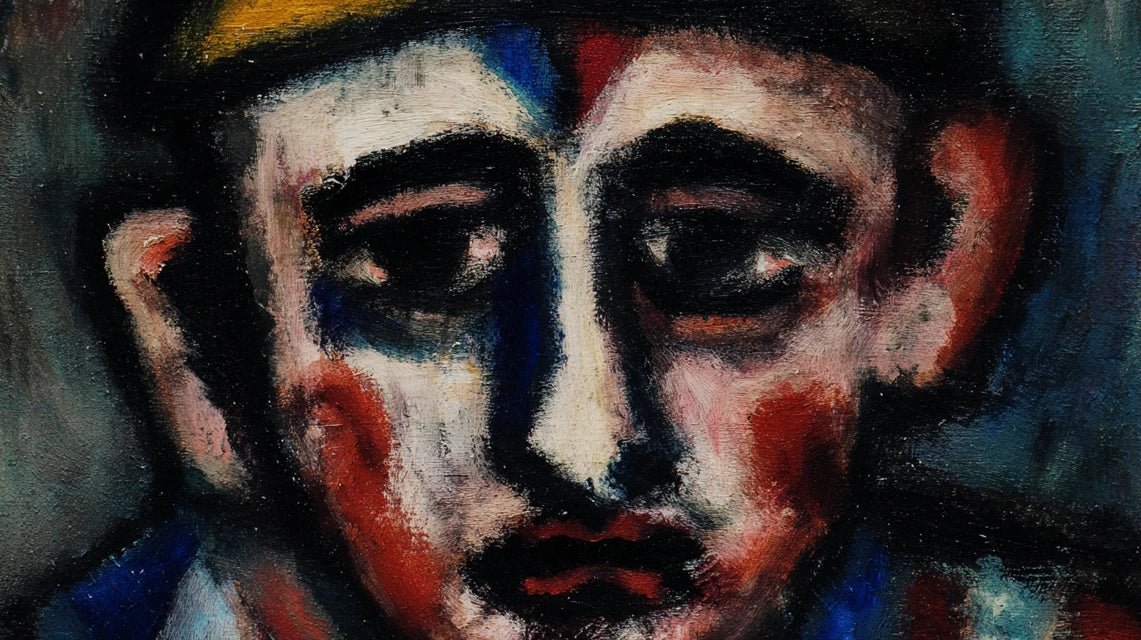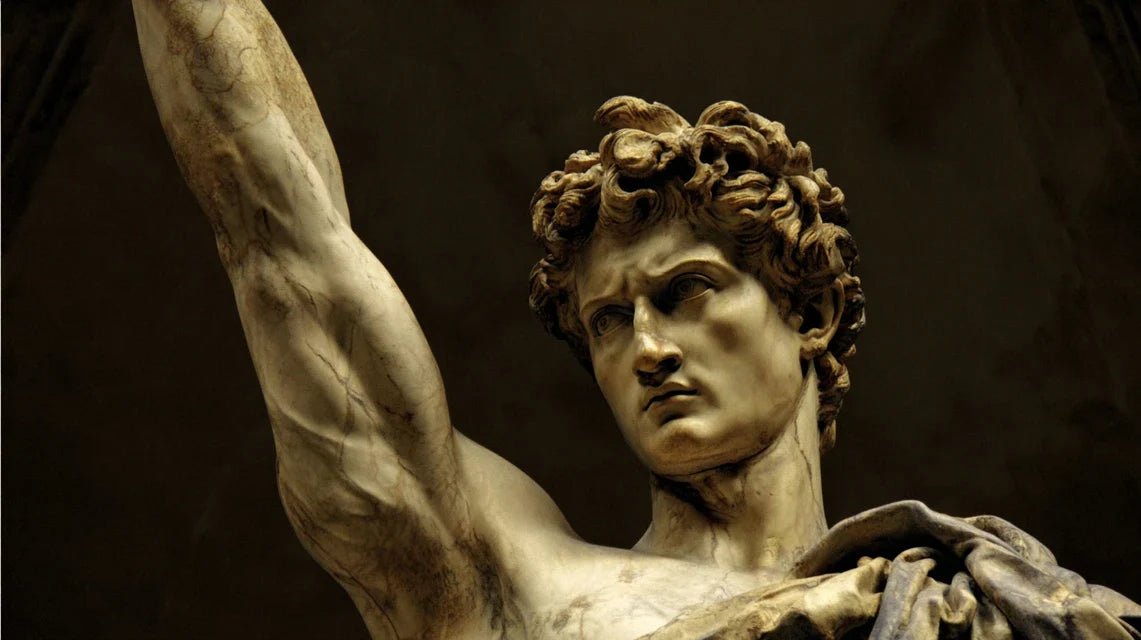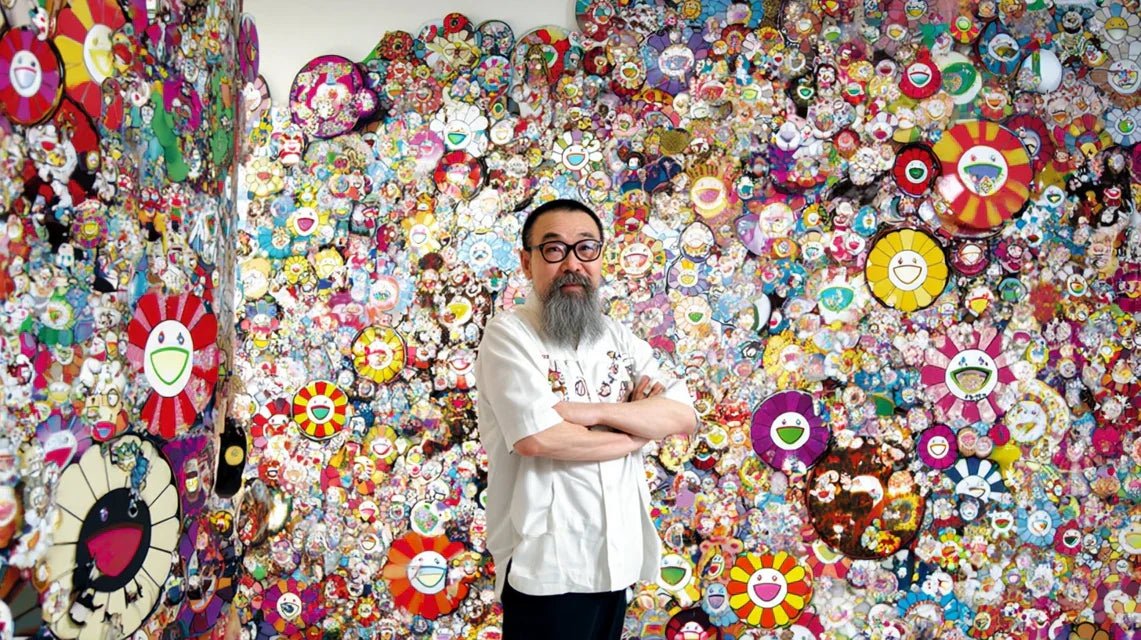
This almost surreal vision became reality thanks to Takashi Murakami, the undisputed master of the Superflat movement who revolutionized our perception of contemporary art by definitively erasing the boundaries between popular culture and fine arts.
Discovering Murakami's universe is like diving into a hypnotic aesthetic where smiling flowers coexist with Buddhist references, where apparent superficiality hides a scathing critique of Japanese post-war consumer society.
This biography reveals how a manga enthusiast became the most influential Japanese artist of his generation - a unique artistic success story blending centuries-old tradition and modern pop culture
Takashi Murakami: The Japanese Artist Who Democratized Contemporary Art
Understanding Takashi Murakami is grasping the very essence of the cultural transformation of contemporary Japan. This multifaceted artist has managed to bring Japanese art into the collections of the world's leading museums while revolutionizing the luxury industry.
| Biographical Highlights | Artistic Legacy |
|---|---|
|
Full name: Murakami Takashi (村上 隆) Born: February 1, 1962, Tokyo Education: Doctorate Tokyo University of the Arts Nationality: Japanese |
Movement: Founder of Superflat
Takashi Murakami: The Tokyo Childhood of a Future Artistic Revolutionary
Born in 1962 in Tokyo, Takashi grew up in a Japan undergoing economic reconstruction, lulled by the emergence of manga and anime culture which would definitively mark his creative imagination.
The revelation of animated colors: As a child, Murakami spends hours in front of the television drawing his favorite anime heroes, dreaming of becoming an animator rather than a traditional artist - a passion that will shape his unique vision of popular art.
The fundamental creative principle: From his studies, Murakami developed his revolutionary theory of the "flat" in Japanese art - this absence of perspective that characterizes both Hokusai's prints and modern cartoons.
This rigorous academic training, crowned with a doctorate in 1993, gave him the technical keys necessary to radically rethink contemporary Japanese aesthetics.
Takashi Murakami and the bursting of Japan's economic bubble in the 1990s
The 1990s mark a decisive turning point for Japan: the burst of the economic bubble plunges the country into a profound identity crisis that directly nourishes Murakami's art.
This period sees the birth of a generation of Japanese artists dubbed "Neo-Pop" by critic Noi Sawaragi, seeking to redefine Japanese cultural identity in the face of massive Westernization.
Unlike his contemporaries who get bogged down in Europeanizing conceptual art, Murakami makes the radical choice of drawing on otaku culture - these enthusiasts of manga and anime considered marginal by the Japanese artistic establishment.
This visionary decision coincides with the global emergence of J-pop culture: Pokemon, Hello Kitty, and Studio Ghibli begin their worldwide conquest, paving the way for Murakami's "kawaii" art.
The perfect cultural alchemy: Murakami intuitively grasps that the apparent superficiality of Japanese popular culture actually reveals the deep traumas of a post-war society searching for bearings.
This unique context of crisis and cultural renaissance explains why his works resonate so powerfully: they perfectly embody the soul of contemporary Japan between tradition and modernity.
Takashi Murakami: The lean years before international recognition
The 1990s represent a period of intense creative doubts for Murakami. Having graduated in traditional art in a conservative Japanese artistic world, he struggles to find his way between cultural heritage and contemporary expression.
His first solo exhibition in Tokyo in 1989 goes completely unnoticed. The Japanese artistic establishment, focused on Western conceptual art, rejects his early experiments mixing pop references and traditional techniques.
The turning point came in 1994 thanks to a grant from the Asian Cultural Council which allowed him to spend a year in New York as part of the PS1 International Studio Program. This American immersion revealed his artistic path.
In New York, he discovers the art of Jeff Koons and the Warholian simulacrum that deeply inspires him. He understands that art can fully embrace its commercial dimension without losing its critical legitimacy - a revelation that transforms his practice.
These years of trial and error forge his legendary determination and entrepreneurial vision of art, which would later lead to his global success with the creation of his Kaikai Kiki empire.
Takashi Murakami and the scandals of assumed otaku art
The early 2000s see Murakami trigger an earthquake in the art world with his works explicitly inspired by otaku culture and its sexual excesses, deeply shocking the art establishment.
His sculpture "Hiropon" (1997) depicts a young girl with disproportionate breasts squirting milk - a work that violently divides critics and collectors due to its deliberately provocative and infantilizing aesthetics.
Murakami fully embraces this strategy of provocation, declaring his desire to show "the raw reality of contemporary Japanese sexuality" through the manga aesthetic that official art refuses to face.
The philosophy of popular art: "I want to create an art that is accessible to all, that speaks the visual language of our time rather than that of cultural elites," he declares in response to conservative critics.
These controversies, far from harming him, establish his reputation as a visionary artist capable of revealing the unspoken truths of a changing Japanese society, preparing for his imminent international success.
His ability to transform controversy into artistic legitimacy reveals a genius of cultural marketing that will influence an entire generation of contemporary artists.
Takashi Murakami and the Superflat revolution: when Japanese art conquers the world
The year 2000 marks the creative peak of Murakami with the theorization of the Superflat movement and the creation of his most iconic works that revolutionize international contemporary art.
This period sees the birth of his hypnotic Flower Balls - these psychedelic floral compositions with saturated colors that instantly become iconic and define the "kawaii" aesthetic in contemporary art.
"727": the flagship work that reveals Takashi Murakami's artistic genius
His masterpiece "727" (1996) perfectly synthesizes his vision: Mr. DOB, his alter ego with Mickey ears, surfs a wave directly inspired by Hokusai's "The Great Wave," creating a striking dialogue between traditional art and pop culture.
This triptych work reveals the conceptual depth of Superflat: by visually flattening cultural references, Murakami reveals the sociological flattening of contemporary Japan between tradition and consumerism.
Murakami's revolutionary techniques: between tradition and digital innovation
His creation method blends tradition and modernity: preparatory sketches in a notebook, digitization, Photoshop retouching, then manual application of acrylic and gold leaf using the ancestral techniques of Nihonga.
Murakami facing his contemporaries: Yoshitomo Nara and the Neo-Pop generation
Unlike Yoshitomo Nara and his melancholic children, Murakami chooses vibrant colors and apparent optimism, creating an art that is more accessible but no less critical of Japanese society.
His strategy of artistic democratization - producing simultaneously works for museums and affordable derivative products - revolutionizes the contemporary art market and inspires a whole generation of artists.
OUR RECOMMENDED PRODUCTS
This aesthetic revolution paves the way for his legendary collaborations with the luxury industry, which will definitively propel his art towards global recognition.
Takashi Murakami: the obsessive personality behind the artistic empire
Behind the pop artist lies a complex personality, perfectionist to the point of obsession, who works daily for more than 12 hours in his Tokyo studios surrounded by hundreds of assistants and collectible figurines.
His intimate relationship with kawaii objects reveals a preserved childlike part: compulsive collector of toys and anime derivative products, he draws on this personal passion for the emotional authenticity of his artistic creations.
This duality between formidable businessman and eternal child marvels shines through in every work: technical sophistication at the service of rediscovered innocence that universally touches the international public.
His collective creation method, inspired by Japanese animation studios, reveals a charismatic leader capable of uniting creative teams around his unique artistic vision.
Takashi Murakami: the commercial explosion that revolutionizes the art market
The international recognition explodes in 2002 with the Louis Vuitton collaboration orchestrated by Marc Jacobs: this revolutionary partnership generates more than $300 million in a single year and redefines the codes of global luxury.
This commercial consecration coincides with his entry into the most prestigious museum collections: MoMA in New York, Tate Modern in London, Centre Pompidou acquire his major works, definitively legitimizing his art.
The spectacular evolution of prices: from Takashi Murakami emerging artist to global icon
His artistic rating experiences a dazzling progression which perfectly illustrates the explosion of the Asian contemporary art market on the international scene.
| Period | Average value | Record sale |
|---|---|---|
| 1990s-2000s | €5,000 - €50,000 | $100,000 (€727, 1999) |
| Louis Vuitton era (2003-2010) | €100,000 - €500,000 | $15 million (€My Lonesome Cowboy, 2008) |
| Current market (2020-2025) | €200,000 - €2 million | €6.7 million (€Flower Ball, 2024) |
This exceptional valuation positions Murakami among the most highly valued living artists worldwide, confirming the lasting impact of his aesthetic revolution on the global contemporary art market.
Takashi Murakami in 2025: The sixty-year-old artist who continues to surprise
At 63 years old, Murakami remains creatively vibrant, multiplying ambitious projects between prestigious museum exhibitions and commercial collaborations that constantly renew his artistic language.
2025 marks a historic turning point with the reissue of his Louis Vuitton collaboration celebrated by a global campaign with Zendaya, proving the timelessness of his aesthetic and his ability to appeal to new generations.
Takashi Murakami’s influence on international contemporary art
His impact on current art is considerable: from Kaws to Yue Minjun, a whole generation of artists embraces the fusion between erudite art and popular culture, definitively legitimizing this approach in global cultural institutions.
The Superflat techniques now influence digital art, contemporary animation, and even streetwear fashion, demonstrating the revolutionary scope of his aesthetic vision.
Recognizing the Murakami legacy: Observe the explosion of artist-brand collaborations, kawaii aesthetics in Western art, and the museum legitimization of pop culture - all revolutions initiated by his creative genius.
Where to discover the universe of Takashi Murakami: essential museums and galleries
His works are permanently exhibited at the MoMA New York, the Museum of Contemporary Art Los Angeles, the Fondation Louis Vuitton Paris, and in numerous Gagosian galleries around the world for a total immersion into his colorful universe.
The exhibition "JAPONISME → Cognitive Revolution" currently presented at Gagosian New York until July 2025 reveals his latest creations inspired by Hiroshige and confirms the intact creative vitality of this master of contemporary art.
🎁 Special readers offer
Because you took the time to inform yourself, enjoy 10% discount on your first order:
Frequently asked questions about Takashi Murakami's biography
Takashi Murakami, born in 1962 in Tokyo, is a Japanese contemporary artist trained in traditional Nihonga art who revolutionized the world of art by creating the Superflat movement. His international fame exploded in 2003 thanks to his collaboration with Louis Vuitton which generated $300 million and transformed the luxury industry.
His style is born from the fusion of his academic training in traditional Japanese painting (Nihonga) and his childhood passion for manga and anime. He develops the theory of "Superflat" which unites the two-dimensional aesthetic of classical Japanese art with contemporary pop culture, creating a revolutionary visual language.
Superflat, theorized by Murakami in 2000, refers to both the traditional "flat" aesthetic of Japanese art and the critique of post-war consumer society. This movement revolutionizes contemporary art by legitimizing references to popular culture (manga, anime, kawaii) within prestigious artistic institutions.
Murakami revolutionizes art by democratizing access to works through his commercial collaborations (Louis Vuitton, Supreme, Kanye West) while maintaining a presence in the world's leading museums. He blurs the boundaries between high art and popular culture, inspiring a whole generation of contemporary artists.