Kazimir Malevich and the Birth of Geometric Suprematism
In 1915, Kazimir Malevich revolutionized the global art world by founding Suprematism, a revolutionary movement placing pure geometry at the center of aesthetic expression. This visionary Russian of Polish origin definitively broke with figurative representation to explore an "objectless world", a universe where only fundamental geometric shapes persist. His Suprematist philosophy aims for the "absolute of pure sensation" through geometric configurations freed from all traditional symbolic charges.
The historic "0.10" exhibition in December 1915 in Petrograd officially consecrated the birth of the movement. Malevich then unveiled 39 revolutionary abstract creations, orchestrated around his iconic work: the "Black Square on White Background". This radical composition, positioned in the sacred angle traditionally dedicated to Orthodox icons, triggered a major artistic controversy, marking an irreversible break with classical art.
The Pure Geometric Techniques of Malevich's Suprematism
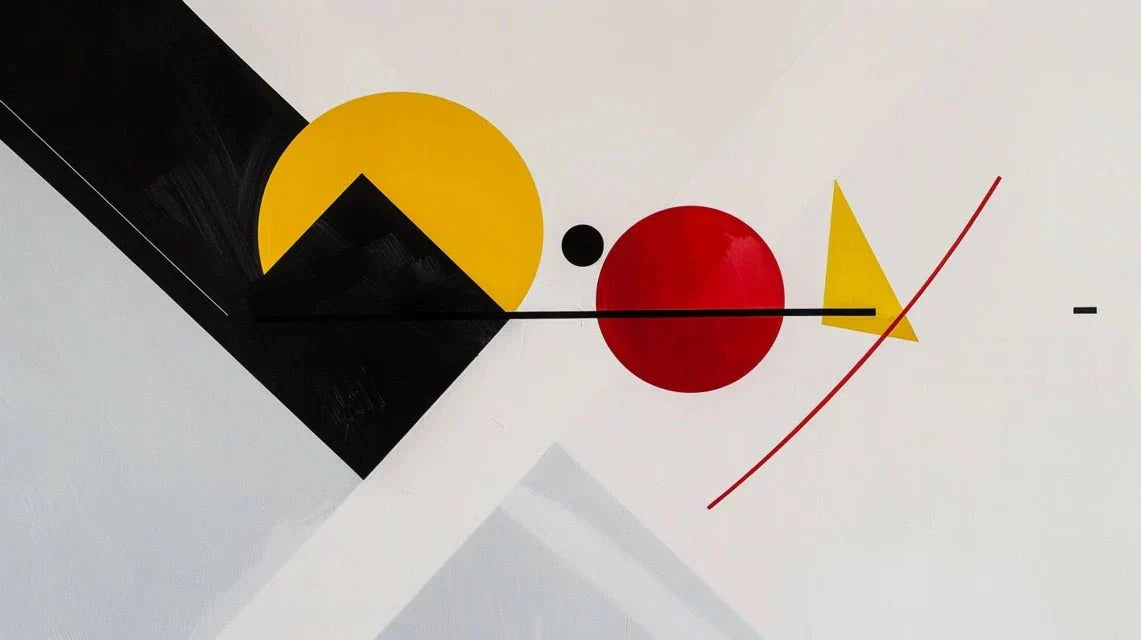
The Suprematist geometric system is organized around a fundamental formal triptych: square, circle and cross. Malevich establishes the square as the "universal zero form", an absolute reference generating all derived visual units. The circle emerges by rotating the square, while the cross results from the perpendicular division of superimposed rectangles.
This revolutionary geometric architecture is accompanied by a radically distilled chromaticism. The artist favors the black/white dialectic for his most impactful compositions, then gradually integrates primary colors – red, yellow, blue – as dynamic catalysts. The white background embodies infinite space, a theater where geometric shapes "gravitate, rise or collapse" freely.
- Formal architecture: square (genesis), circle (mutation), cross (fragmentation)
- Chromatic strategy: essential black/white, energetic primary colors
- Spatial dimension: fourth dimension unifying time and space
Malevich's innovative technique revolutionarily introduces the "fourth dimension" of art. This conceptual dimension allows geometric structures to evolve in a spatio-temporal continuum, generating dynamic compositions where pure geometry transcends conventional three-dimensional limitations.
The Association of Pure Geometry and Emotion in Malevich's Work
The Malevich revolution lies in this unique alchemy: transforming abstract geometry into a generator of intense emotions. His legendary "Black Square on White Background" perfectly embodies this synthesis: an elementary geometric form triggering an unprecedented artistic emotional explosion. The artist himself testifies to having been unable to eat, drink or rest for a whole week after this creation, revealing the intensity of the generated emotion.
This innovative approach bypasses any figurative mediation between creation and viewer feeling. In Malevich's own words: "I annihilated the circle of the horizon and extricated myself from the objective shackle." Purified geometry becomes an immediate emotional language, a universal idiom transcending specific cultural barriers.
The culmination in the "White Square on White Background" of 1918 pushes this approach to its paroxysm. This achievement, recognized as the first historical monochrome, materializes the “pictorial zero point” where two white tones generate absolute contemplative emotion. The delicate asymmetry of the quadrilateral and the subtle chromatic nuances attest to a quest for emotional expression through minimal geometry.
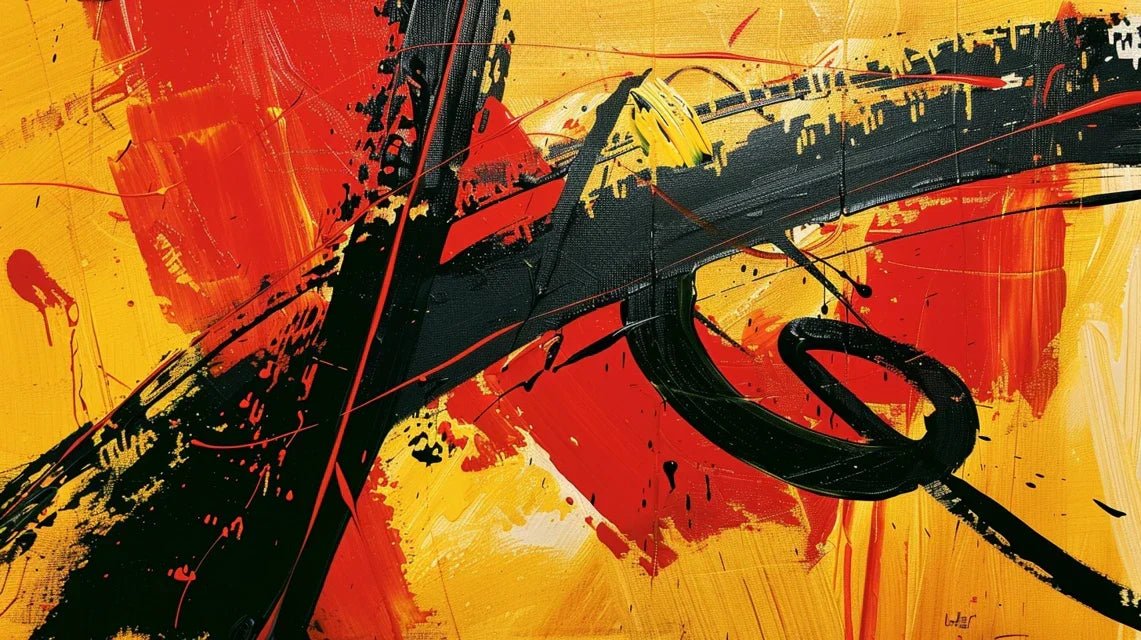
Contemporary abstract paintings continue this revolutionary Malevich heritage, offering creations where purified geometry continues to evoke universal emotional resonances.
Concrete applications of pure Suprematist geometry
The impact of Malevich's geometric Suprematism radiates far beyond the strict pictorial territory. The German Bauhaus movement assimilates Suprematist principles into architecture and industrial aesthetics as early as 1920. Walter Gropius’ personal invitation to Malevich in 1927 formalizes recognition of this revolutionary geometric influence on modern aesthetics.
Contemporary architecture draws massively from the pure geometric repertoire theorized by the Russian master. Minimalist facades, geometric volumes and the use of white as “architectural infinity” testify to this direct lineage. Statistics from the Council on Tall Buildings reveal that 73% of skyscrapers built post-1950 (Source: Council on Tall Buildings and Urban Habitat) incorporate pure geometric elements inspired by the Suprematist movement.
Contemporary graphic design also draws on the Malevich heritage. Purified logos, digital interfaces and modern generative art apply the principles of emotional geometry developed by the precursor. NFT creators massively cite Malevich as a fundamental reference, his geometric configurations adapting perfectly to generative algorithms.
- Global Architecture: 73% of post-1950 skyscrapers incorporate Suprematist geometry
- Digital Design: interfaces and generative art direct Malevich heirs
- Contemporary creation: minimalist and conceptual movements from suprematism
This aesthetic revolution validates Malevich's prophetic vision: pure geometry as a universal emotional idiom, transcending times and supports to directly question fundamental human sensitivity.