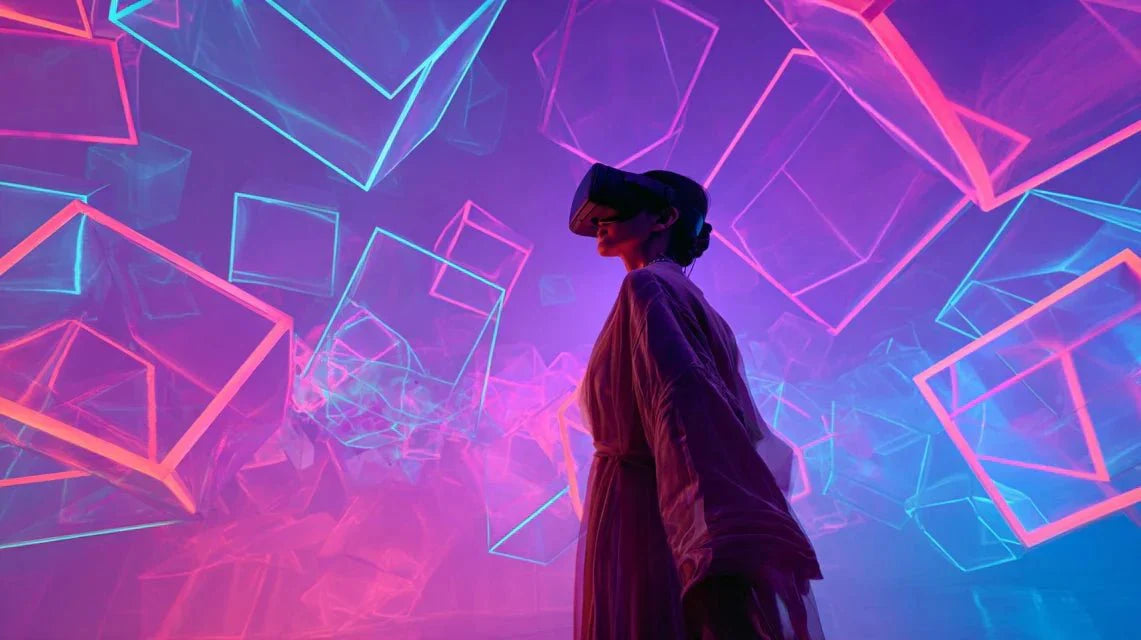
Virtual reality is currently revolutionizing abstract art by creating unprecedented immersive experiences that transcend traditional physical boundaries. This technology allows spectators to literally enter the works, radically transforming contemporary artistic perception.
How virtual reality transforms the immersive experience of abstract art
The immersive experience in virtual reality allows for a revolutionary approach to abstract art. Visitors no longer just contemplate the work from the outside, but move within the very heart of abstract compositions. This fundamental transformation redefines the spectator-artwork relationship, creating an unprecedented intimacy with artistic creation.
Abstract forms take on an unprecedented three-dimensional spatial dimension, allowing for complete 360-degree exploration. Colors, lines, and textures become navigable environments, creating a total immersion impossible with traditional media. This technological revolution opens up infinite creative possibilities for contemporary artists, who can now sculpt virtual space with absolute freedom.
VR technologies dedicated to immersive abstract art experiences
High-resolution VR headsets like the Oculus Quest 3 or HTC Vive Pro form the technological basis of immersive abstract art experiences. These devices offer 4K resolution per eye, ensuring optimal visual quality to appreciate the finest abstract chromatic subtleties.
Specialized VR creation tools radically transform the traditional artistic process. Google's Tilt Brush allows artists to paint in three-dimensional space, creating volumetric abstract works impossible on traditional canvas. Gravity Sketch offers complementary features for abstract geometric modeling. These revolutionary technologies enable:
- Real-time 3D modeling of complex abstract forms
- Intuitive manipulation of virtual textures and materials
- Creation of synchronized spatialized sound environments
- Integration of motion sensors for gestural interactivity
Concrete applications of virtual reality for immersive abstract art
Contemporary art museums are massively adopting virtual reality for their abstract art collections. The Centre Pompidou offers a revolutionary immersive experience around Miró's "Three Blues," allowing for an unprecedented exploration of these emblematic works. Visitors freely navigate a 3D environment faithfully reconstructing the Miroian artistic universe.
Permanent VR installations transform the traditional museum approach. The Palais de Tokyo inaugurated its "Palais Virtuel," the first French space dedicated exclusively to contemporary VR works. This revolutionary initiative offers creations like Antwan Horfee's "Gigamaku," plunging spectators into a perpetually moving chromatic abstract psychedelic universe.
Specialized galleries develop customized immersive journeys. These innovative spaces allow the discovery of abstract paintings reinterpreted as interactive VR environments, offering an unprecedented narrative dimension to traditional wall art. This promising hybrid approach reconciles classic artistic heritage and avant-garde technological innovation.
Optimization of immersive VR experiences for abstract art
The technical optimization of VR experiences requires perfect synchronization between high-definition graphic rendering and ultra-precise motion sensors. The display fluidity must maintain a minimum of 90 FPS to avoid motion sickness and ensure optimal immersion in the most demanding abstract art.
Color calibration is a major technical challenge for faithfully reproducing the most subtle abstract chromatic nuances. The OLED screens of high-end headsets offer an extended sRGB color gamut, essential for appreciating the pictorial subtleties of the most refined contemporary abstract works.
The user interface must remain perfectly intuitive so as not to interfere with the pure artistic experience. Natural gestural controls are gradually replacing cumbersome traditional controllers, allowing organic interaction with virtual abstract works. This constant technological evolution significantly improves the accessibility of immersive experiences for all audiences.
Maintenance and evolution of immersive abstract art VR installations
Rigorous preventive maintenance of VR equipment ensures the longevity of immersive abstract art experiences. Optical sensors require daily regular cleaning to maintain absolute precision of spatial tracking. Monthly calibration of VR spaces ensures continuous optimal spatial coherence.
Software updates continually enrich the available artistic content. The regular addition of new abstract VR works, the constant improvement of rendering algorithms, and the integration of innovative interactive functionalities maintain the interest of the specialized public. This permanent evolution definitively positions virtual reality as an indispensable artistic medium of the future.
Secure digital backup of VR creations preserves this unique emerging artistic heritage. Unlike traditional physical works, abstract VR art requires complex specific technological preservation, including archiving 3D environments and compatibility with future generations of immersive equipment.