Succulent painting: its unique characteristics
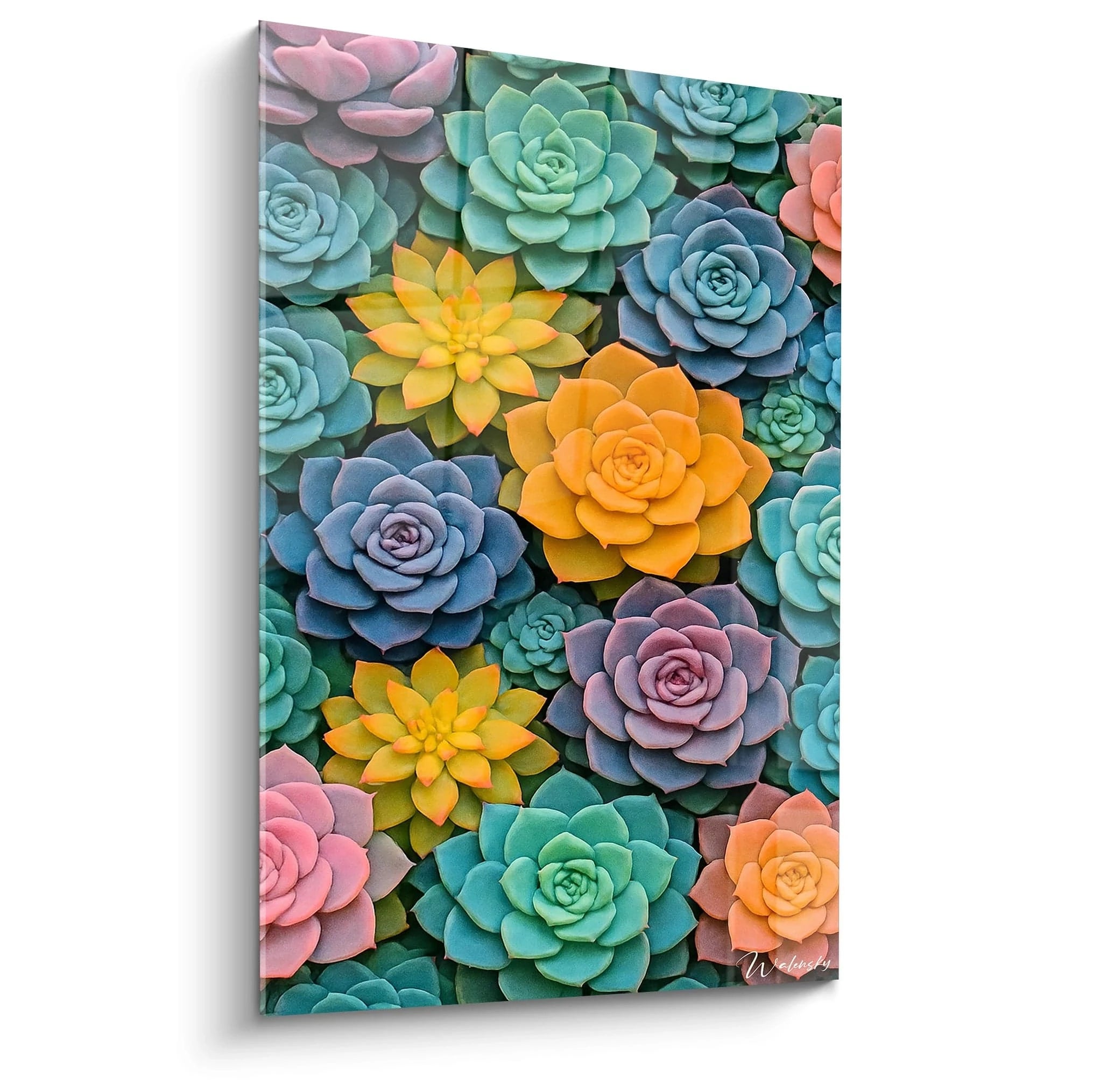
This succulent painting immediately captivates with its dense and vibrant composition of succulent plants with perfect geometric shapes. The work presents a colorful mosaic of overlapping succulent rosettes that completely fill the visual space, creating total immersion in a lush miniature garden.
The first impression is striking thanks to the harmony of pastel colors that complement each other mutually. The exceptional sharpness of every detail reveals the velvety texture of fleshy leaves, while the absence of background highlights only these botanical beauties. The distinguishing element lies in the diversity of varieties represented, each with its own shape and color palette, creating a succulent painting of extraordinary visual richness.
How this colorful and harmonious succulent painting is structured
The organization of this colorful and harmonious succulent painting is based on a circular composition where each plant strategically occupies its space. The largest rosettes serve as focal points, dispersed uniformly throughout the work, while the smallest ones fill the interstices, creating a sense of natural profusion.
The guidelines follow the radiating shapes of the succulents themselves, each plant forming a spiral pattern that naturally guides the eye to its center. This organic yet mathematically precise structure gives the succulent painting a sensation of order within abundance. The perspective adopts a frontal viewpoint that allows full appreciation of the symmetry of each specimen, as if the viewer were observing a succulent garden from above.
The colors of the succulent painting and their harmony
The chromatic palette of this succulent painting is remarkably diverse while maintaining perfect visual coherence. The dominant hues revolve around:
- Soothing blue-green that forms the chromatic base and evokes freshness
- Tender pink and lavender that bring softness and femininity to the composition
- Vibrant orange and solar yellow that create energetic accent points
- Tender green that unifies the whole and recalls the natural origin of the subject
These colors harmonize thanks to their comparable intensity and gradual transitions. The contrast between cool blue tones and warm orange tones generates pleasant visual tension, reinforcing the impact of the succulent painting while preserving its soothing character.
Textures and technical details of the pastel succulent painting
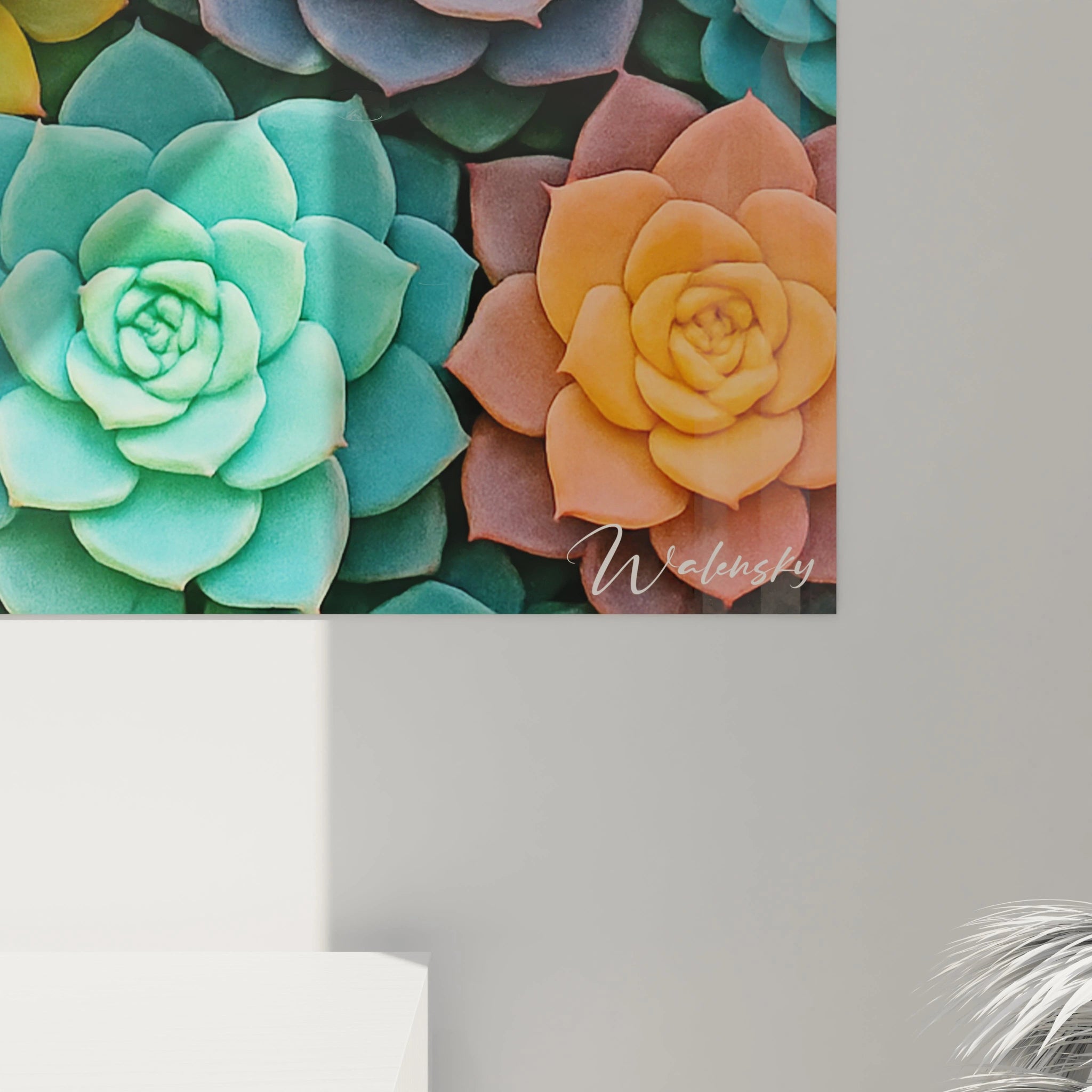
This pastel succulent painting distinguishes itself through hyperrealistic rendering of plant textures. Each leaf presents a smooth and fleshy surface characteristic of succulent plants, with an almost tactile quality that makes you want to touch the work. The rounded edges of the leaves subtly capture light, creating a striking volume effect.
The technique employed reveals exceptional mastery of light and shadow interplay, particularly visible in color transitions on each leaf. The centers of the rosettes present meticulous details, particularly in the smallest newly formed leaves. This meticulous attention to botanical microstructures gives the pastel succulent painting a visual depth that rewards prolonged and careful observation.
What makes this geometric succulent painting unique
The truly distinctive aspect of this geometric succulent painting lies in the perfect juxtaposition between mathematical order of forms and spontaneity of chromatic variations. Each succulent presents fascinating geometry with spiral patterns and radial arrangements that evoke Fibonacci sequences observed in nature.
The composition avoids any monotony thanks to the diversity of varieties represented, each with its own structure and color palette. Uniform yet subtle lighting highlights this botanical wall decoration without creating distracting shadows, allowing every detail to be fully appreciated. The complete absence of elements outside the plants themselves creates a unique contemplative immersion in the succulent universe.
Depth and details of the succulent painting
The visual experience of this succulent painting transforms remarkably depending on observation distance. From afar, the work appears as a harmonious colorful mosaic where repetitive patterns create a soothing rhythm. This overview allows appreciation of chromatic balance and general composition.
When approaching, a new universe of details gradually reveals itself. Individual leaf textures become perceptible, as well as subtle shade variations within each plant. At very close range, extraordinary nuances are discovered such as the slightly darker borders of certain leaves, delicate color transitions, and even the suggestion of tiny plant epiderma. This wealth of details makes this succulent painting contemporary botanical art a work that renews itself with each observation.
Where and how to highlight your multicolor succulent painting
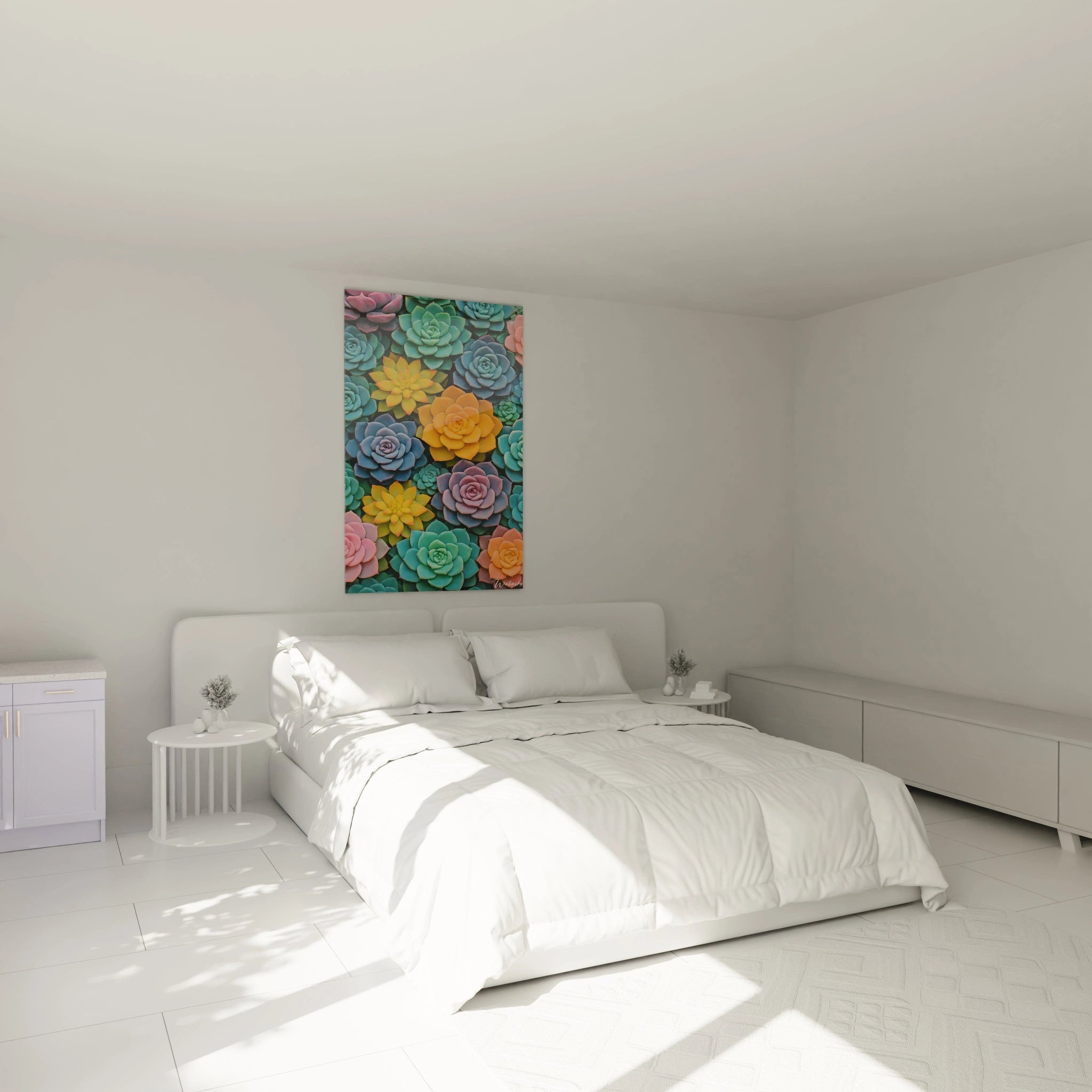
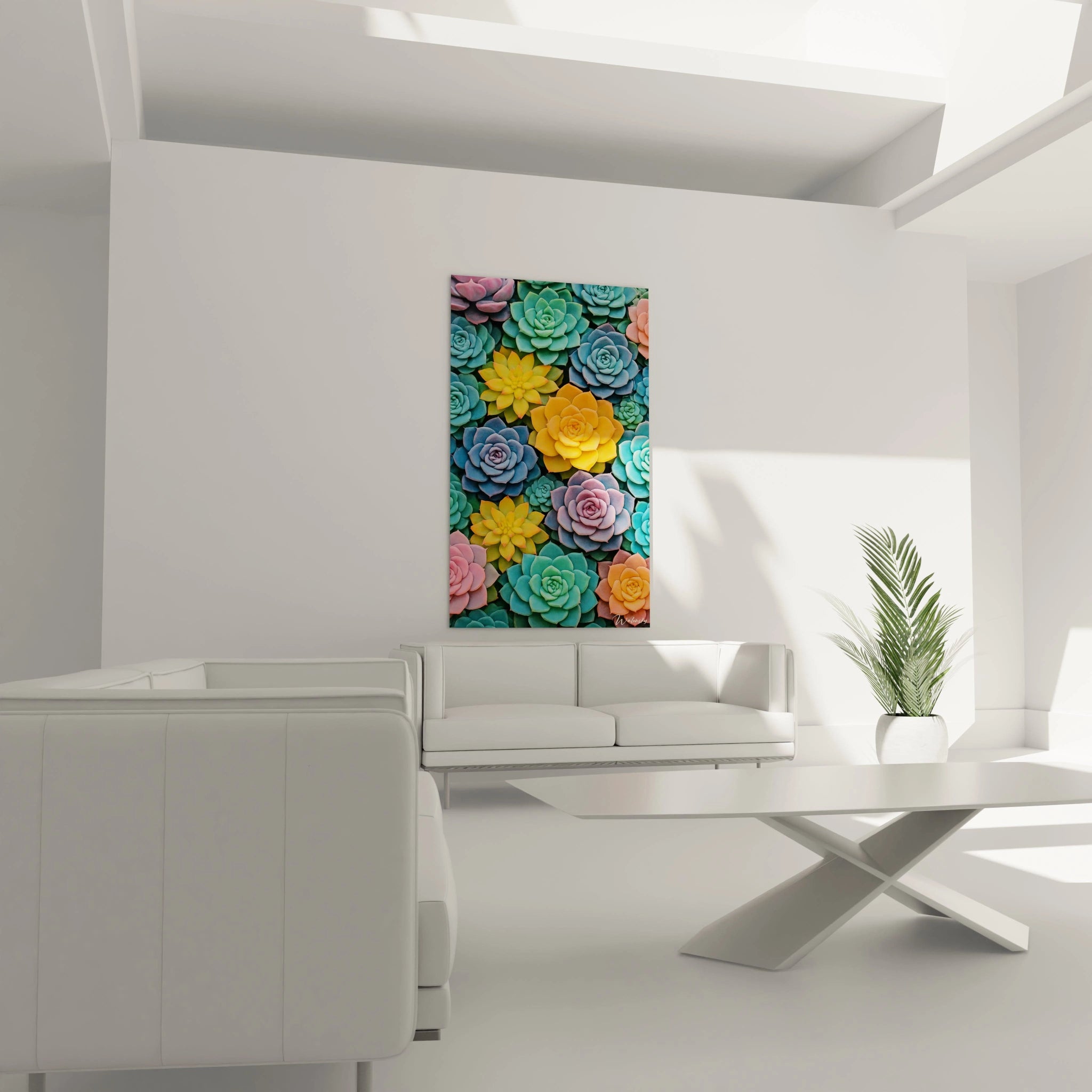
This multicolor succulent painting will integrate perfectly into a contemporary interior with clean lines where it can play the role of a vibrant focal point. Environments with neutral tones – white, beige or light gray – will constitute an ideal setting to showcase the chromatic richness of the work.
Direct but non-glaring lighting, ideally full-spectrum LED light, will fully reveal the subtle nuances and depth of the image. For optimal visual harmony, combine this wall decoration with accessories in blue-green, powder pink or soft orange tones that will echo the dominant colors of the painting. Avoid visually busy environments that could compete with the detail density of this striking botanical artwork.